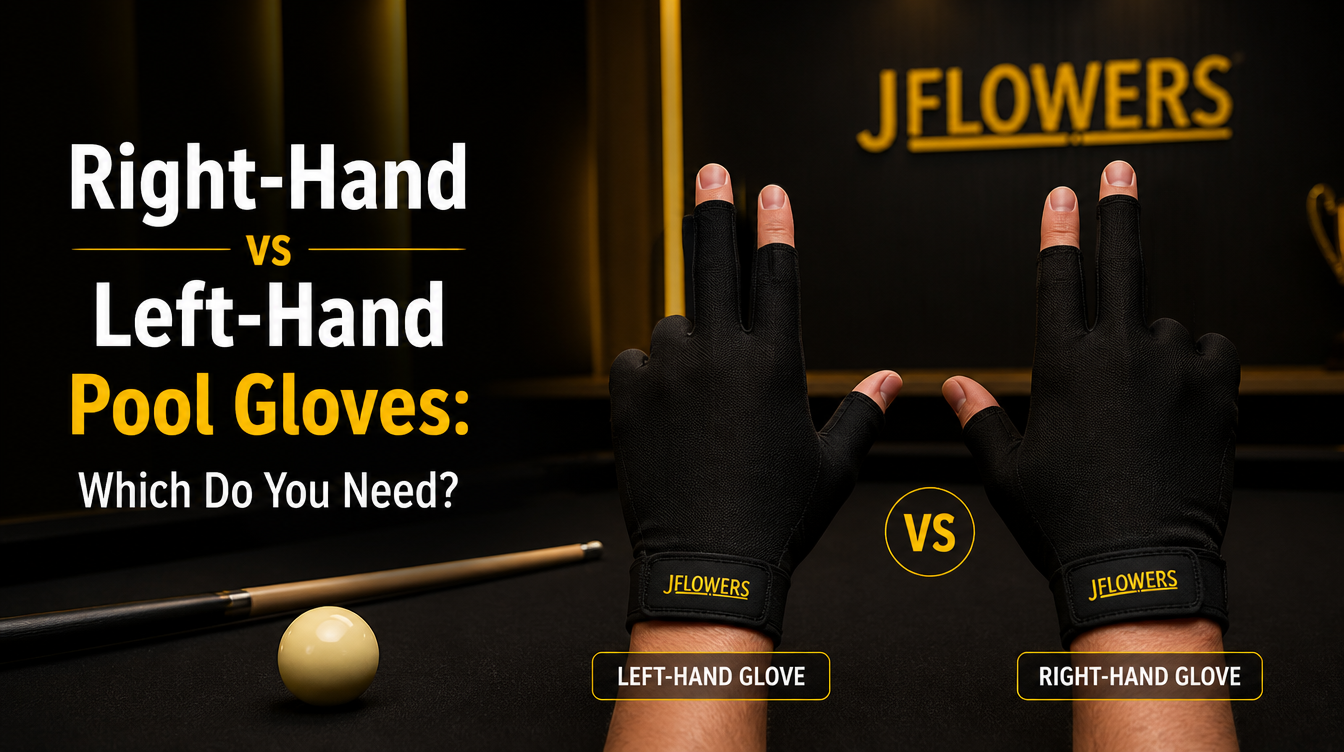
Right-Hand vs Left-Hand Pool Gloves: Which Do You Need?
JFlowers Cues
One of the first questions when buying a pool glove: which hand? The answer is simpler than it might seem, but it's important to get right — a glove on the wrong hand doesn't help and a glove that doesn't fit correctly defeats the purpose.
Listen to this article
The Bridge Hand: Why the Glove Goes There
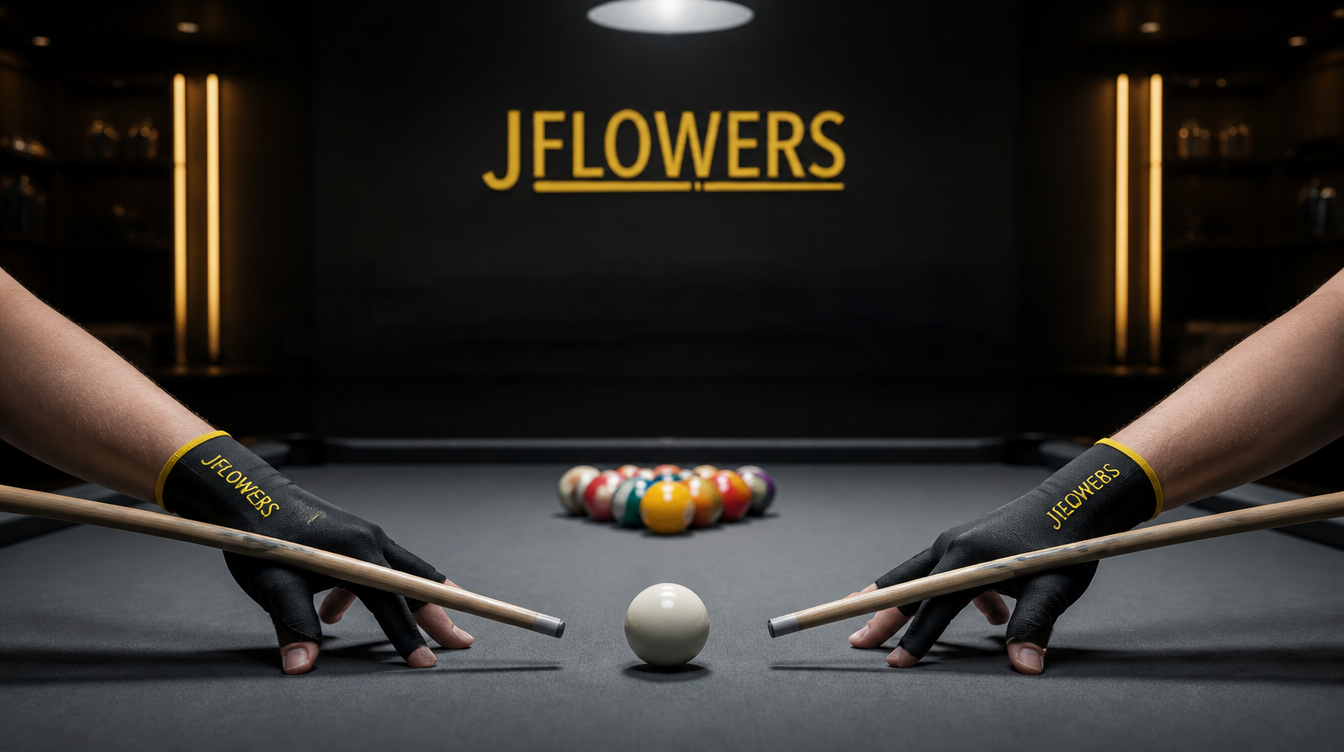
A pool glove goes on the bridge hand — the hand that forms the bridge the shaft slides through during the stroke. This is the hand that contacts the shaft on every shot. It’s not the gripping hand (the hand on the cue wrap/grip section at the butt); it’s the forward hand that controls the shaft’s sliding direction.
The bridge hand is where friction variability matters. The grip hand’s contact is different — it holds the cue butt and doesn’t need the same consistent friction surface. For the full explanation of why bridge hand friction matters, see Why Use a Pool Glove?.
Right-Handed Players
Right-handed players hold the cue with their right hand on the butt and form the bridge with their left hand. The left hand is the bridge hand — the glove goes on the left hand. Right-handed players need a left-hand pool glove.
This seems backwards to some players at first: you’re right-handed, so why do you buy a left-hand glove? Because ‘right-handed’ describes your dominant (shooting) hand, not the hand that needs the glove.
Left-Handed Players
Left-handed players hold the cue with their left hand on the butt and form the bridge with their right hand. The right hand is the bridge hand — the glove goes on the right hand. Left-handed players need a right-hand pool glove.
Cross-Handed Players and Exceptions
Some players develop a bridge hand that differs from their natural dominant hand, or play certain shots with the opposite hand. In these cases, identify which hand actually forms the bridge on most shots — that’s the glove hand. For players who switch bridge hands depending on the shot, carrying both hands is an option, though unusual.
How Gloves Are Labeled’),
Pool glove manufacturers label their gloves by the hand that wears them (“left hand” or “right hand”), not by the player’s dominant hand. When buying a Cue Armour glove:
Right-handed player: buy “left hand” glove
Left-handed player: buy “right hand” glove
Some manufacturers label by the player’s shooting hand instead — confirm the labeling convention before ordering. Cue Armour gloves are clearly labeled for which hand wears them.
Does Hand Orientation Affect Glove Performance?
Left-hand and right-hand gloves are mirror images of each other, engineered for the different anatomy of each hand. Using a right-hand glove on the left hand (or vice versa) produces a poor fit — coverage in the wrong places, bunching in others. Always use the correctly-handed glove.
Sizing Considerations
Beyond hand orientation, glove size matters significantly. A glove that’s too large bunches in the palm and creates inconsistent contact. A glove that’s too tight restricts natural bridge hand movement and becomes uncomfortable during long sessions.
Follow Cue Armour’s sizing guide using your hand circumference measurement. When between sizes, most players prefer the smaller size for better fit — a snug glove that doesn’t restrict movement is better than a loose glove that bunches.
Pros and Cons
Correctly oriented and sized pool glove
Proper fit for the specific hand anatomy
Correct coverage for bridge finger positions
Maximum comfort and performance across long sessions
Easy to order wrong hand orientation — double-check before purchasin
Expert Recommendation Right-handed players: order a left-hand Cue Armour glove. Left-handed players: order a right-hand Cue Armour glove. Use the manufacturer’s sizing guide for your specific hand circumference. The correctly-oriented glove in the right size is the complete specification — everything else about glove performance follows from getting these two right.
Conclusion
Right-hand vs left-hand gloves is a simple decision once you understand that the glove goes on the bridge hand, not the dominant hand. Right-handed players bridge with their left hand: left-hand glove. Left-handed players bridge with their right hand: right-hand glove. Order the correctly-oriented Cue Armour glove in your size and the rest takes care of itself.
Frequently Asked Questions
Q: Which hand does a pool glove go on? The bridge hand — the hand that forms the bridge the cue shaft slides through. For right-handed players, this is the left hand. For left-handed players, this is the right hand. Q: Right-handed player: should I buy a left or right glove? Left-hand glove. Right-handed players bridge with their left hand. Q: Left-handed player: should I buy a left or right glove? Right-hand glove. Left-handed players bridge with their right hand. Q: Can I use either hand’s glove if my bridge hand is the same side as my dominant hand? Only if your glove hand genuinely is your dominant hand. Most players are naturally cross-functional for pool — dominant hand shoots, other hand bridges. Q: Do I need gloves for both hands? Most players only need a glove for the bridge hand. Some players who prefer consistency on both hands in special shooting positions wear two gloves, but this is uncommon. Q: What if the manufacturer’s labels are confusing? The simplest test: put both hands palm-up and match the glove to the hand it fits best. The right glove for the right hand fits with the thumb on the correct side.
After comparing JFlowers to Predator, Mezz, McDermott, Meucci, Jacoby, Pechauer, and a dozen more brands across every price point and construction philosophy — the question that started all of it deserves a direct answer: which pool cue brand actually offers the best value for serious competitive players in
2026?
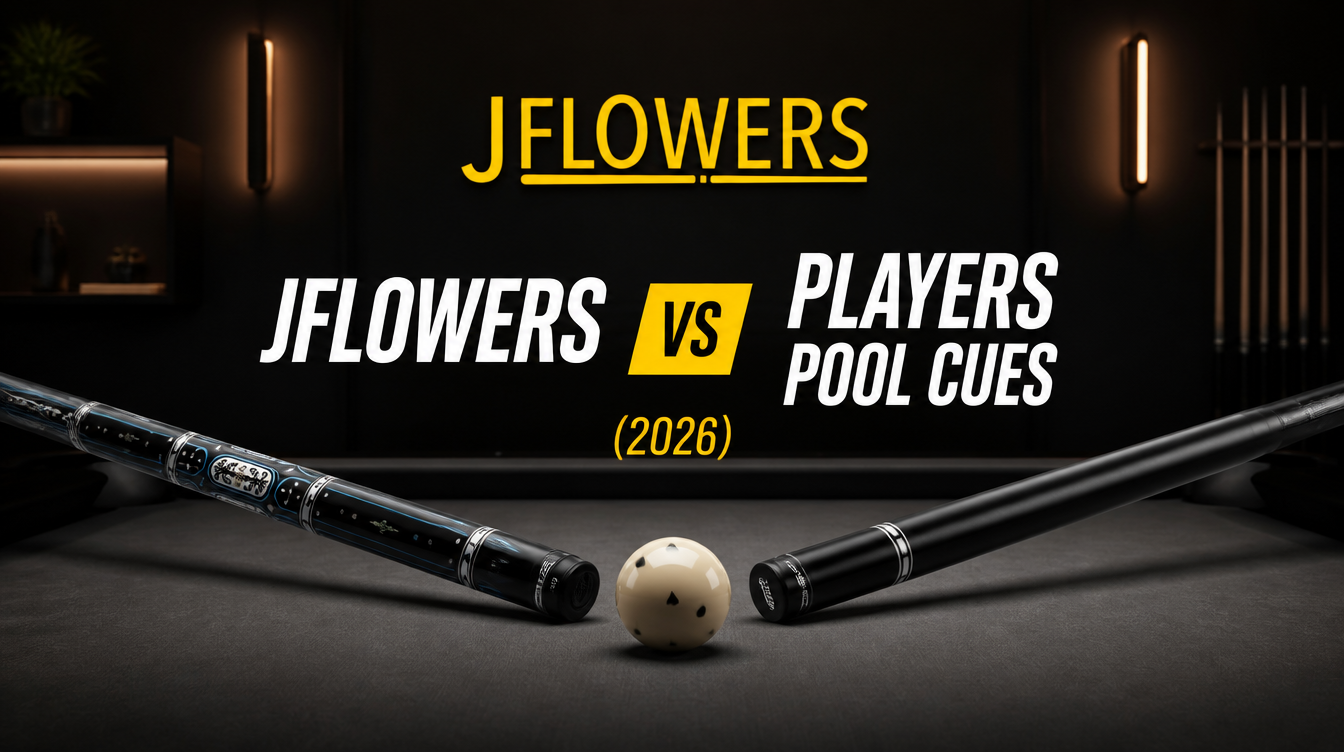
Players Technology is one of the most widely used cue brands in American pool halls. Their two-piece cues at $40-$150 have introduced millions of American players to personal cue ownership. Nearly every serious pool player in America either started on a Players cue or played against someone who did. Comparing Players to JFlowers isn’t really a direct competition — it’s a marker on the journey from beginner to serious competitor.