Pool Cue Reviews, Buying Guides & Expert Advice
Explore expert pool cue reviews, in-depth buying guides, product comparisons, and billiards equipment advice designed to help players choose the right gear and improve their game. Whether you're a beginner purchasing your first cue or a competitive player upgrading your equipment, you'll find the information you need here.
Categories:
Pool Cue Buying Guides
- JFlowers Cues
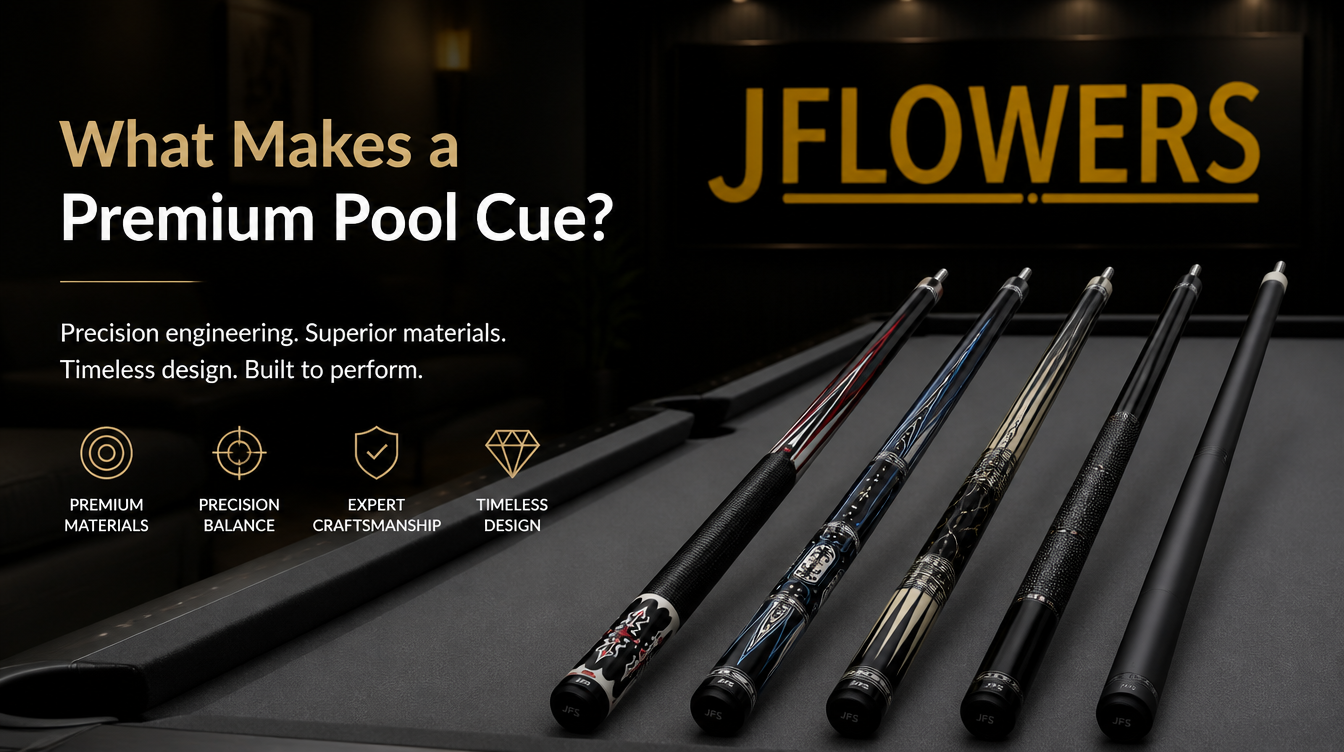
Not every expensive pool cue is actually premium. And not every premium cue will break the bank. Once you understand what separates a quality stick from a cheap one, you'll stop buying on price alone — and start buying on what the cue is actually built from.
- JFlowers Cues
Walk into any pool hall today and the cue rack looks different than it did ten years ago. Carbon fiber shafts sit next to maple sticks. New brands are earning shelf space next to names that have been around for decades. And with so much available online, figuring out which brand actually delivers for your game takes some real digging.
- JFlowers Cues
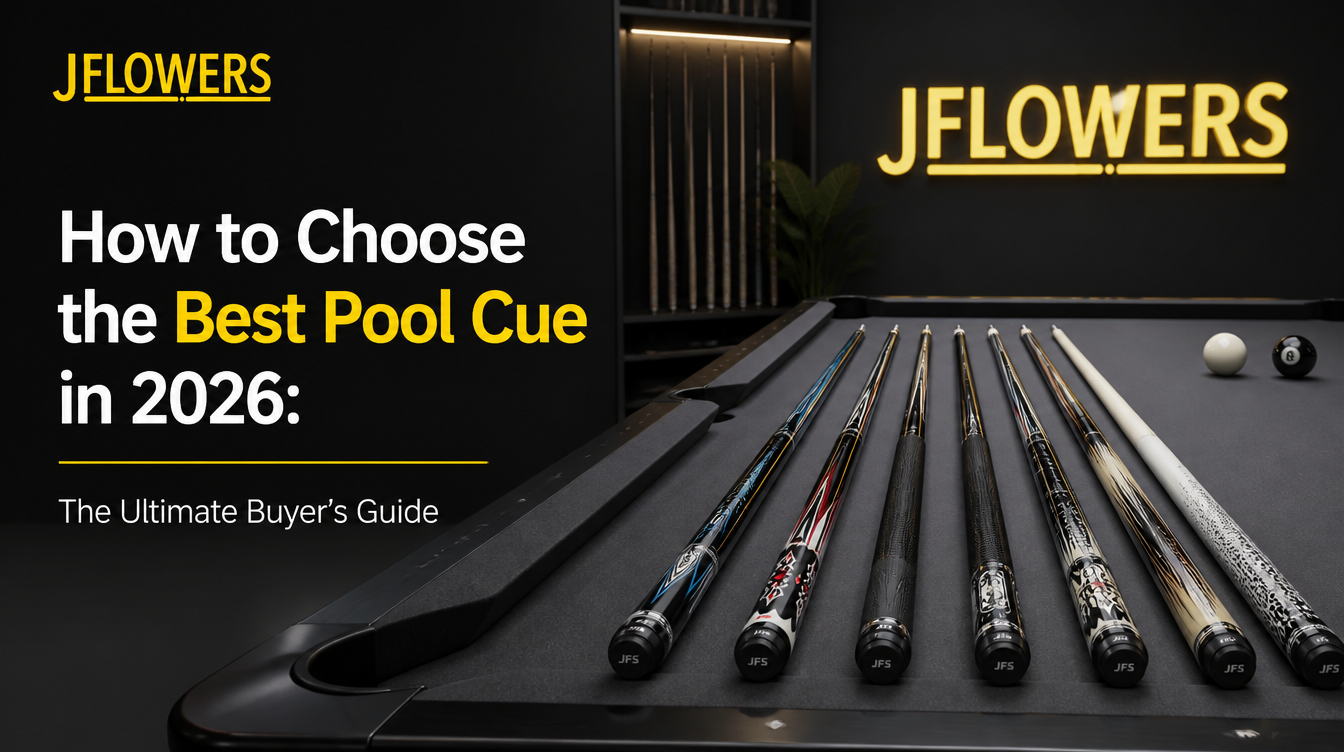
Whether you're buying your first pool cue or upgrading from your current setup, choosing the right cue can dramatically impact your performance, consistency, and enjoyment of the game. With hundreds of cues available in different materials, weights, shaft technologies, and price ranges, it's easy to become overwhelmed.

- JFlowers Cues
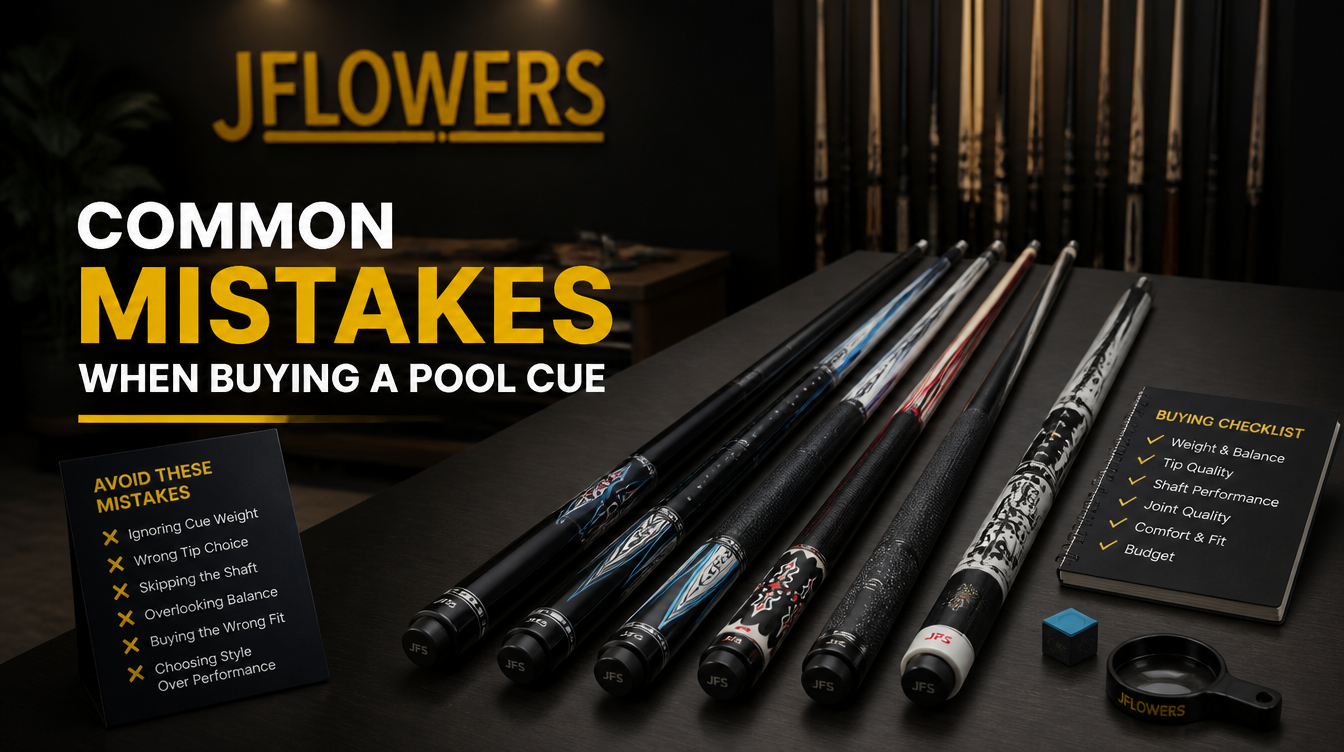
Pool cue shopping has a lot of traps. Marketing language, flashy aesthetics, bad advice from well-meaning people at the pool hall — these things combine to send a lot of buyers in the wrong direction. Here's a detailed breakdown of the most common mistakes, why they happen, and what to do instead.
- JFlowers Cues
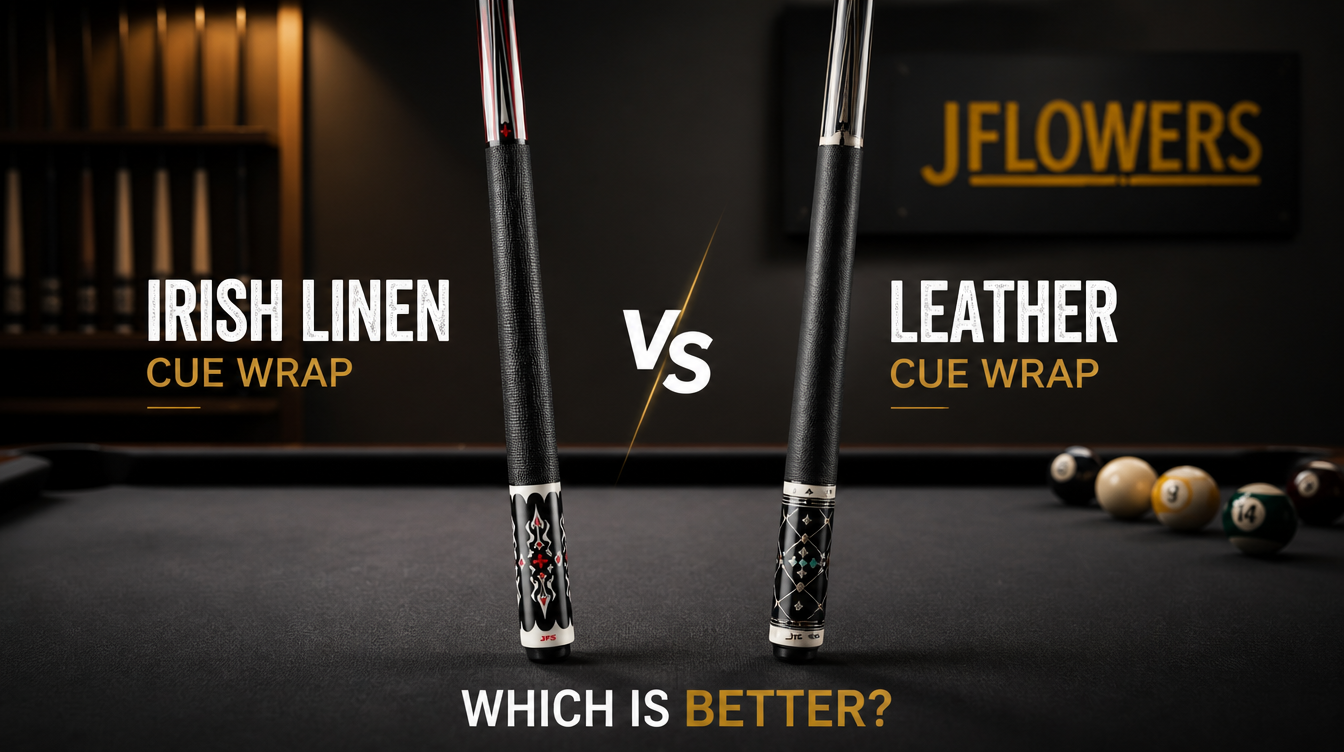
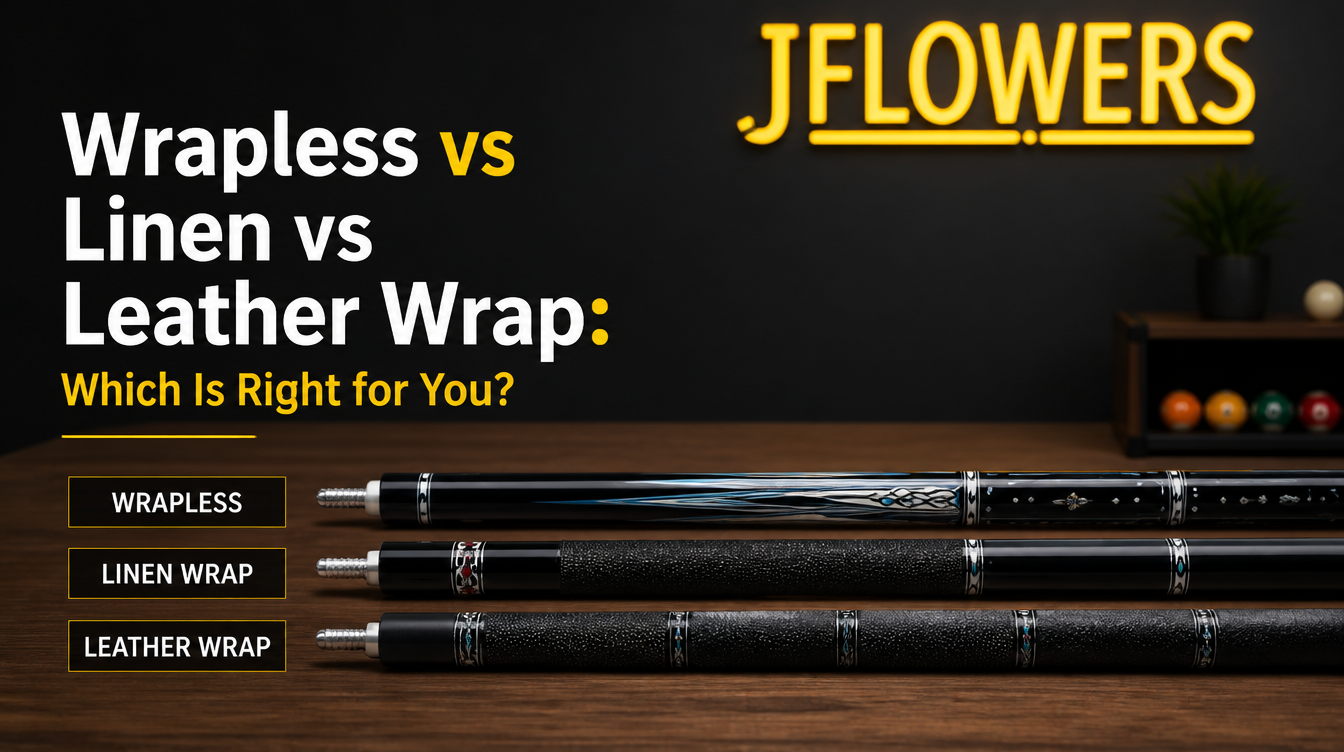
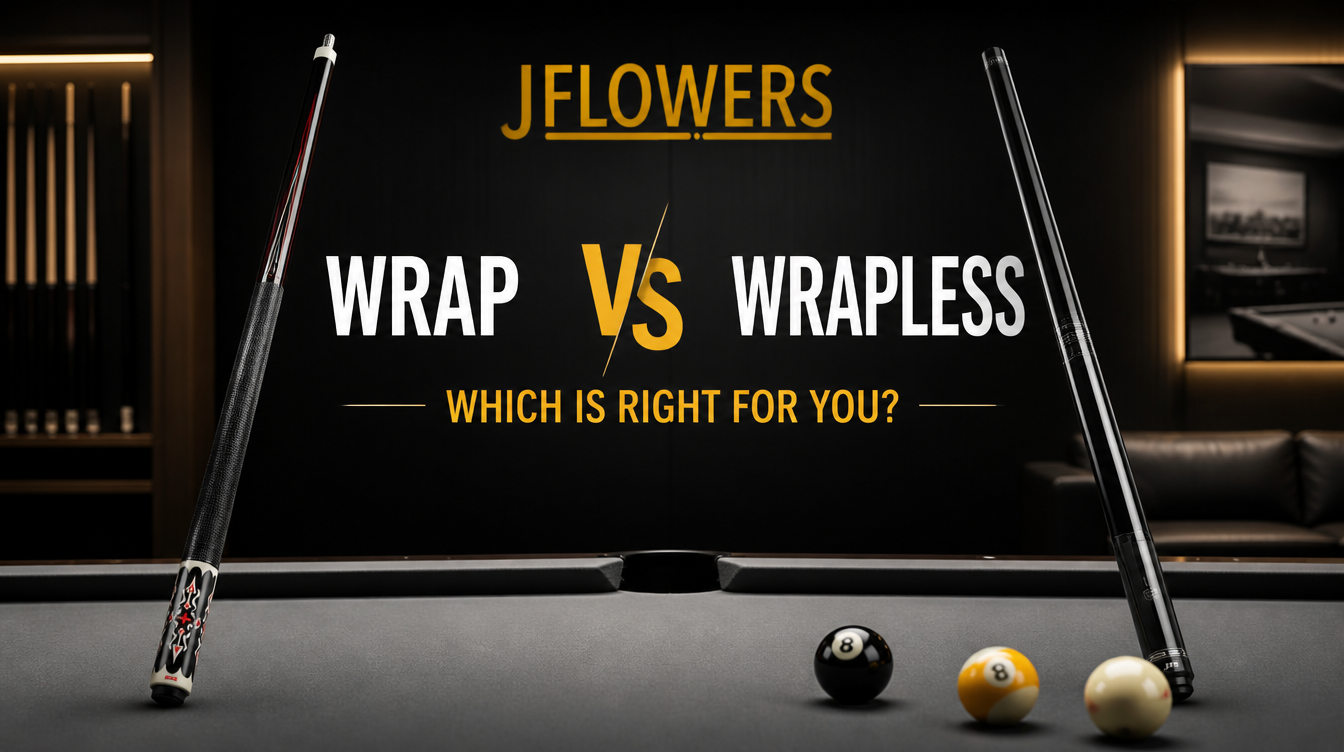
The wrap — or lack of one — on a pool cue is one of those variables that players either have strong opinions about or haven't thought much about at all. It's not the most performance-critical factor in cue selection, but it affects feel in the hand significantly and can genuinely affect how comfortable and consistent your grip is over a long session.
- JFlowers Cues
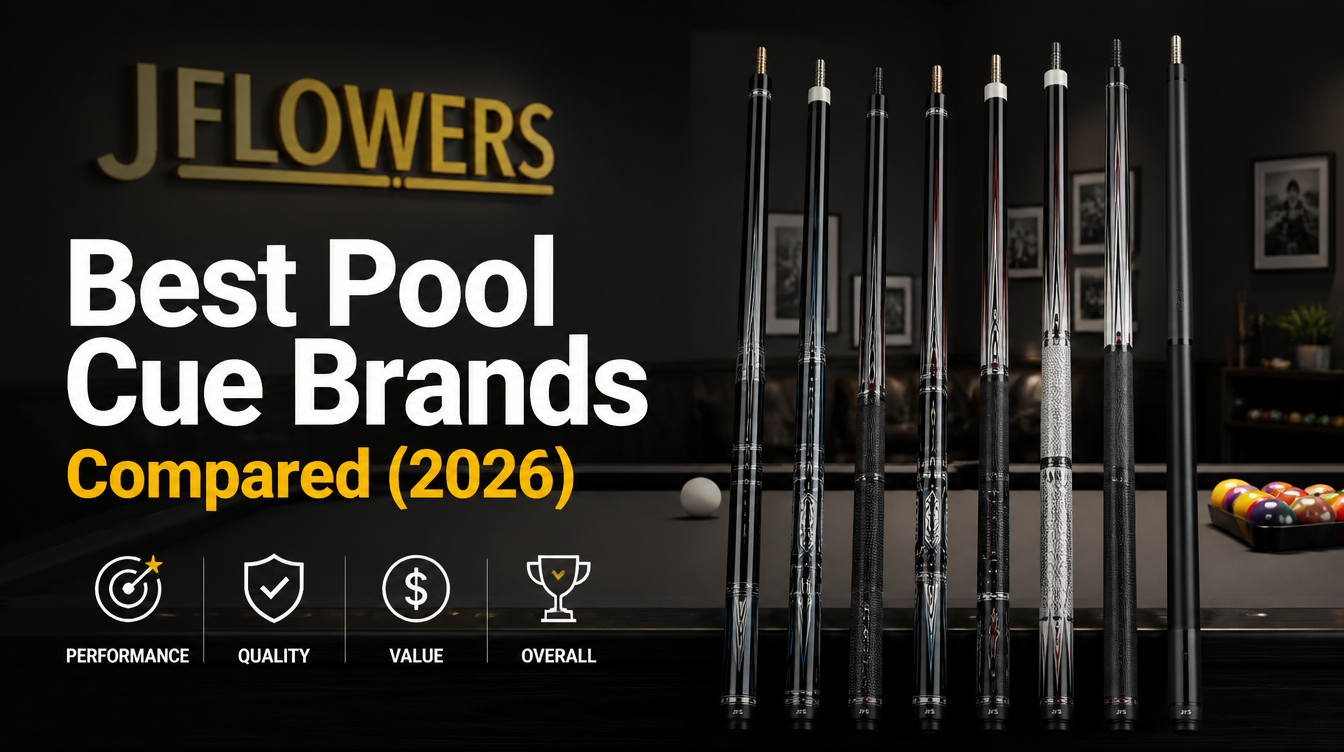
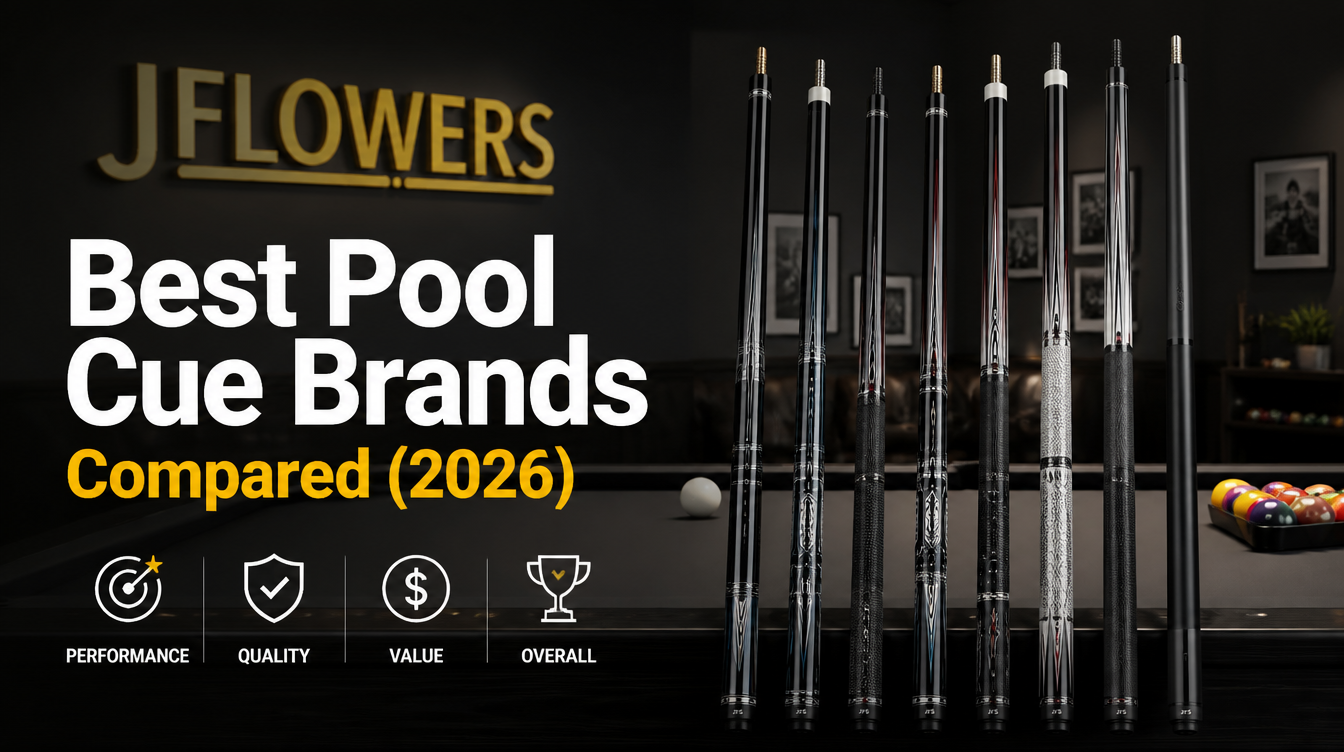
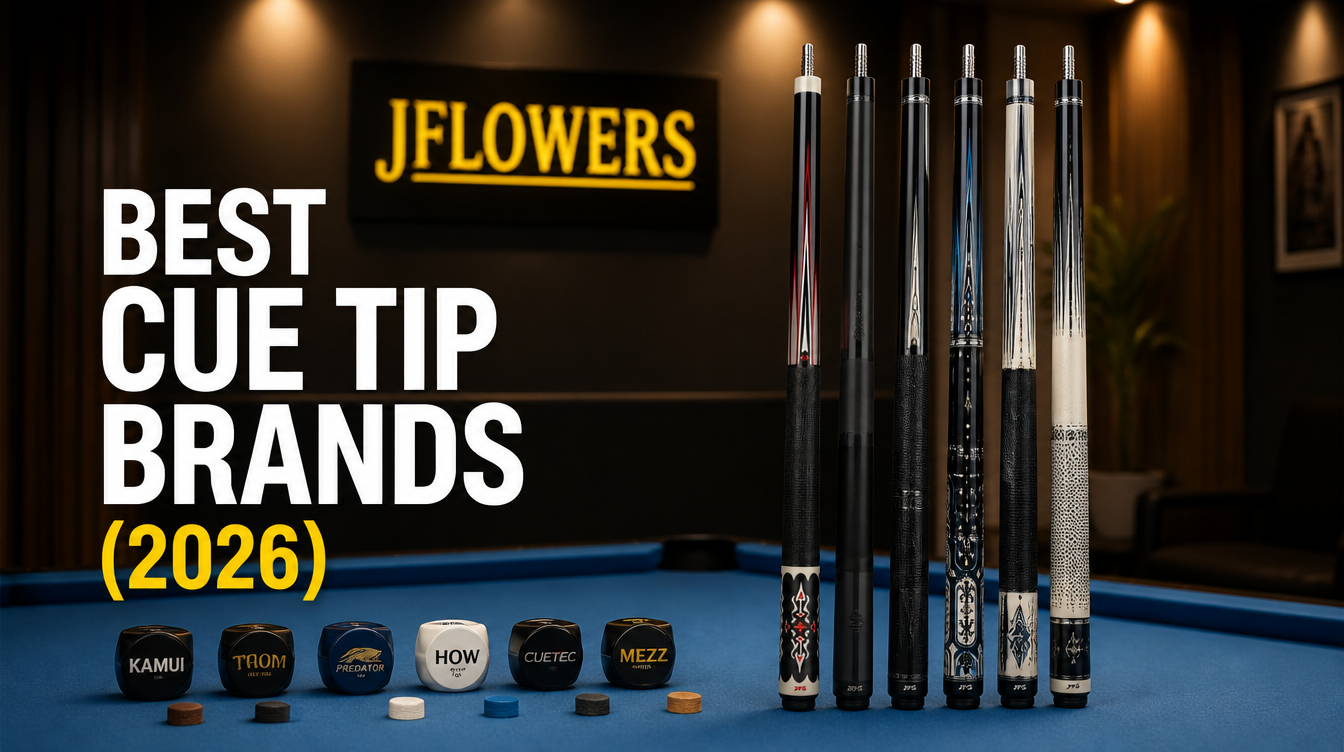
The pool cue market has more brands than ever, and the quality gap between the top manufacturers has narrowed significantly over the last five years. Navigating it requires cutting through marketing and brand loyalty to look at what different manufacturers actually deliver — in shaft technology, construction quality, value, and support.
- JFlowers Cues
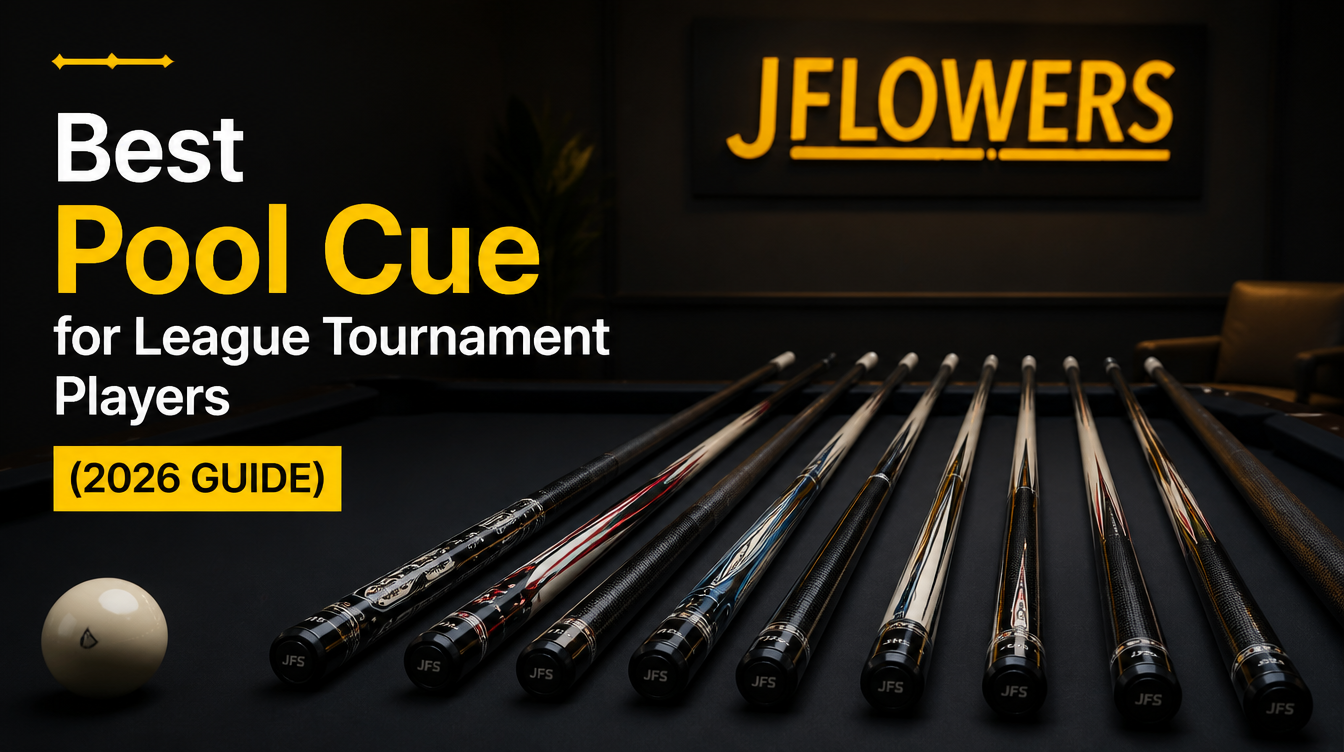
Tournament pool is a different animal. The pressure is higher, the margins are tighter, and every variable in your game — including your equipment — is amplified. A shaft inconsistency that barely matters in a casual session becomes genuinely costly when you're on the hill in an important match.
- JFlowers Cues
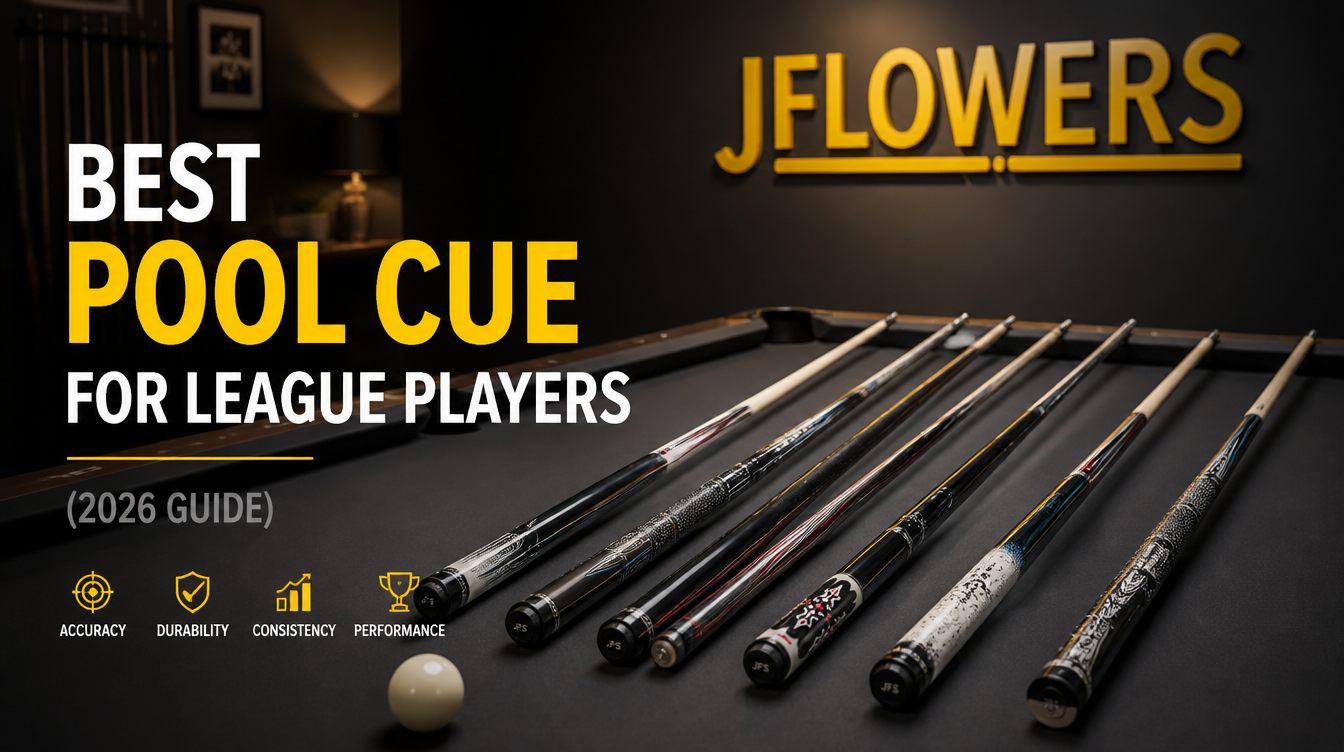
League pool is its own world. You're not playing in a controlled environment on the same table every session. You're hauling your cue to different pool halls, dealing with different cloth speeds, different lighting conditions, table sizes that vary between venues, and opponents with a wide range of skill levels. Your equipment needs to hold up through all of it — consistently.
- JFlowers Cues
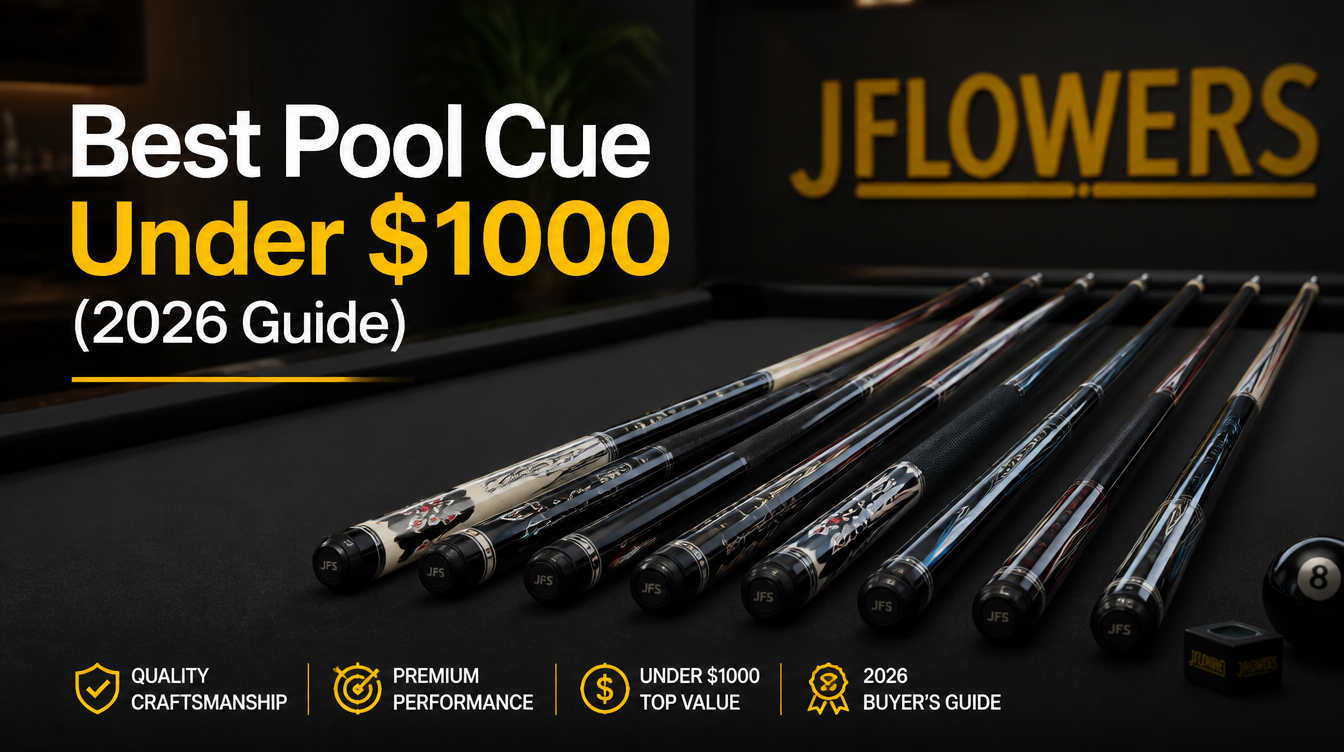
At the sub-$1,000 level, you're shopping in territory that used to require spending significantly more. The pool cue market has matured in ways that benefit serious players — the best carbon fiber shafts, quality custom-style construction, and premium materials throughout are all available well under $1,000 from manufacturers who have invested heavily in the technology.
- JFlowers Cues
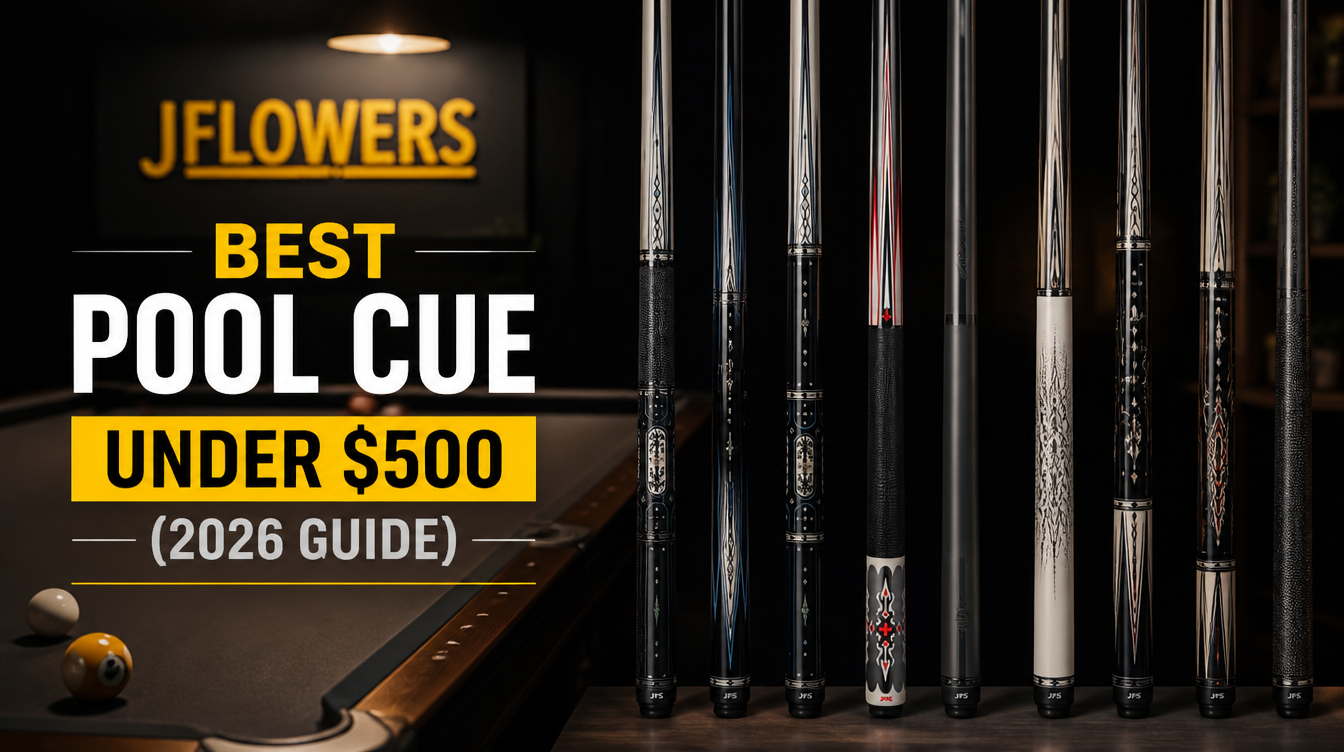
The $300–$500 range is widely considered the sweet spot in pool cue shopping — and for good reason. This is where serious performance features become genuinely accessible, the quality gap between budget and mid-range starts to close decisively, and the options from quality manufacturers start to get genuinely impressive.
- JFlowers Cues
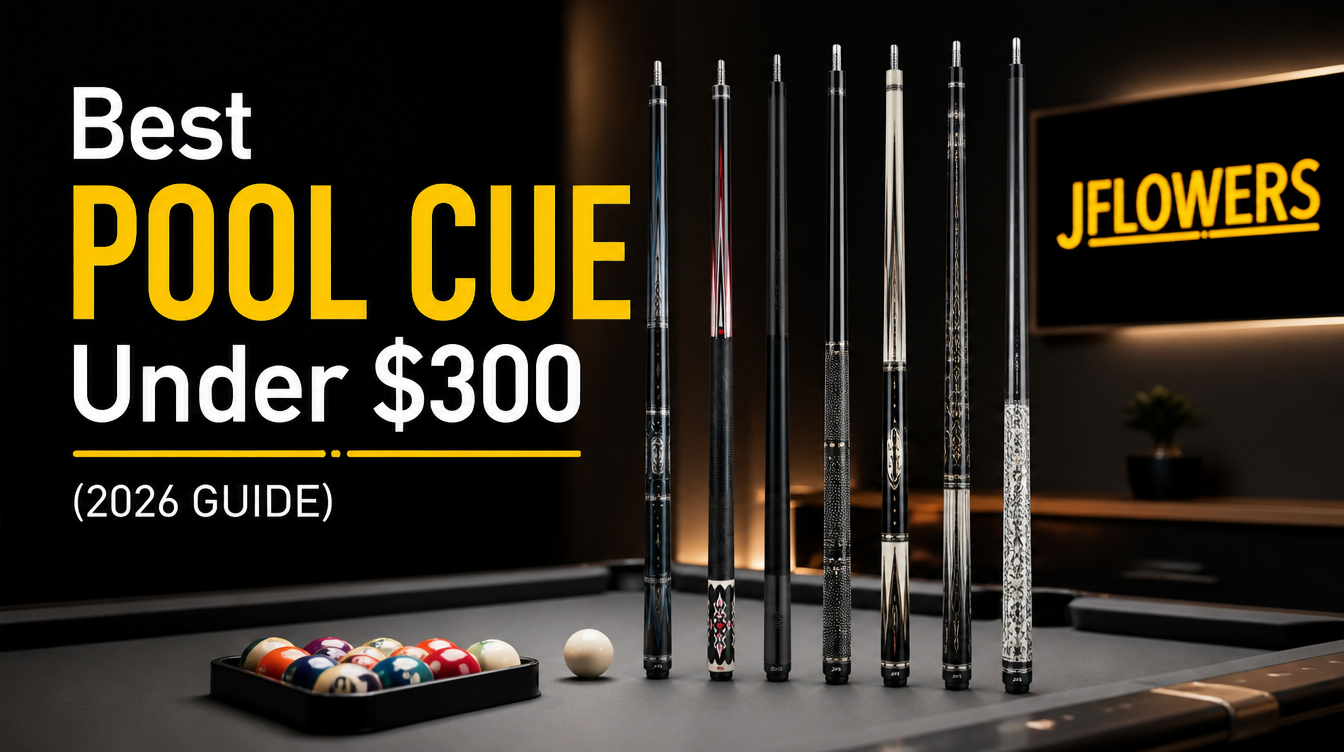
The sub-$300 pool cue market has improved significantly over the last several years. What used to be territory dominated by entry-level sticks with obvious quality compromises now includes genuinely good options from brands that take construction seriously at accessible price points.
- JFlowers Cues
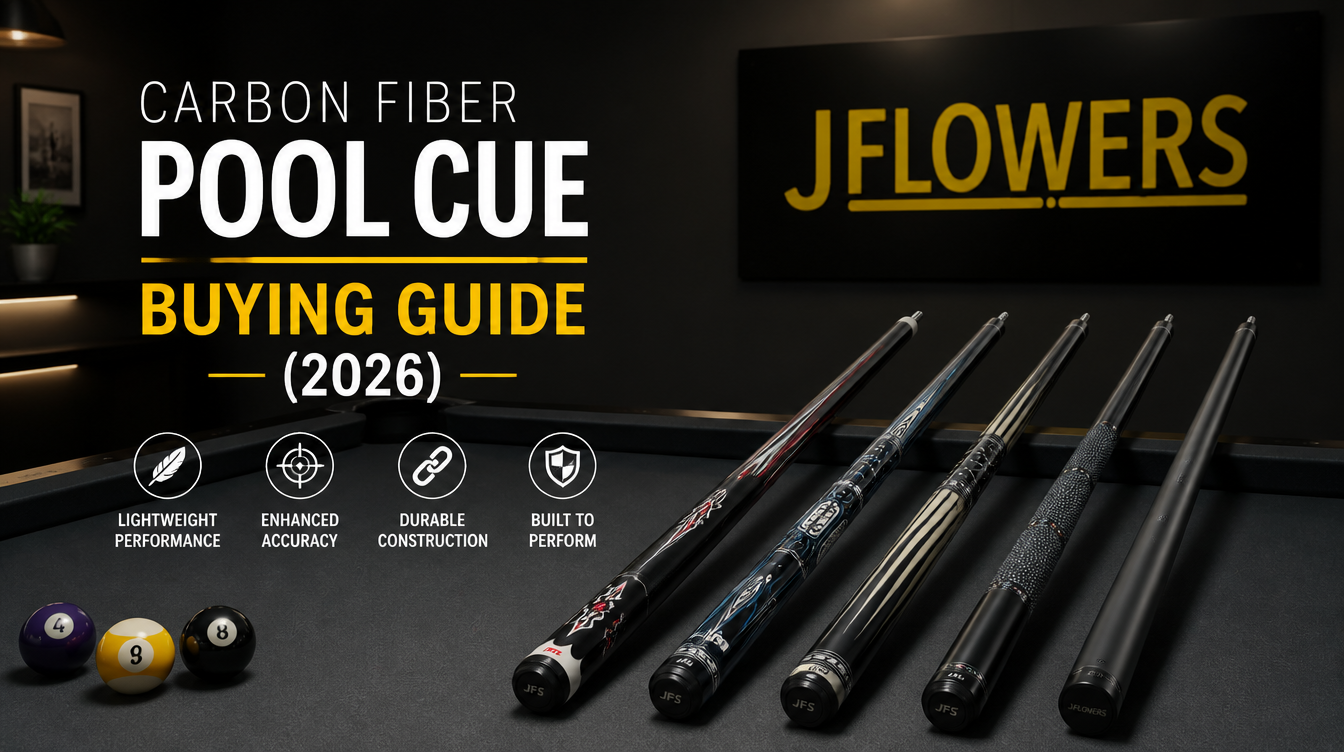
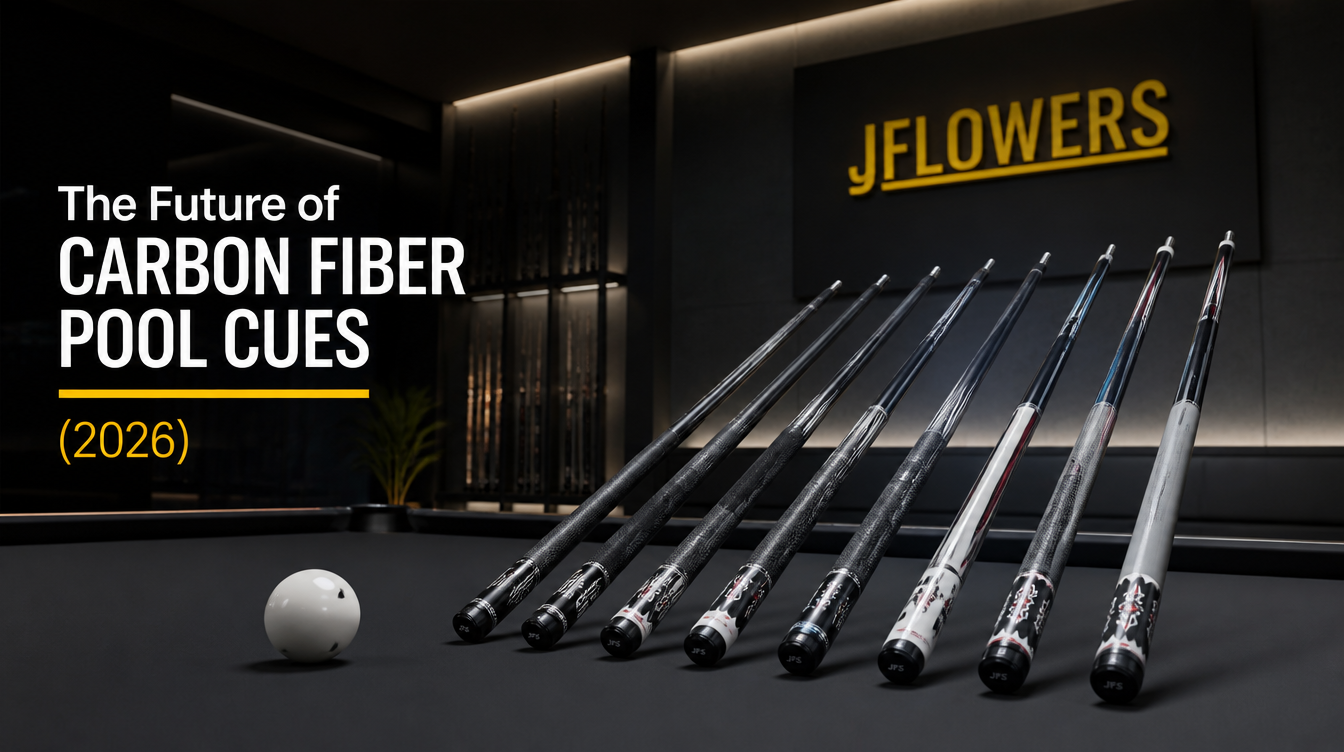
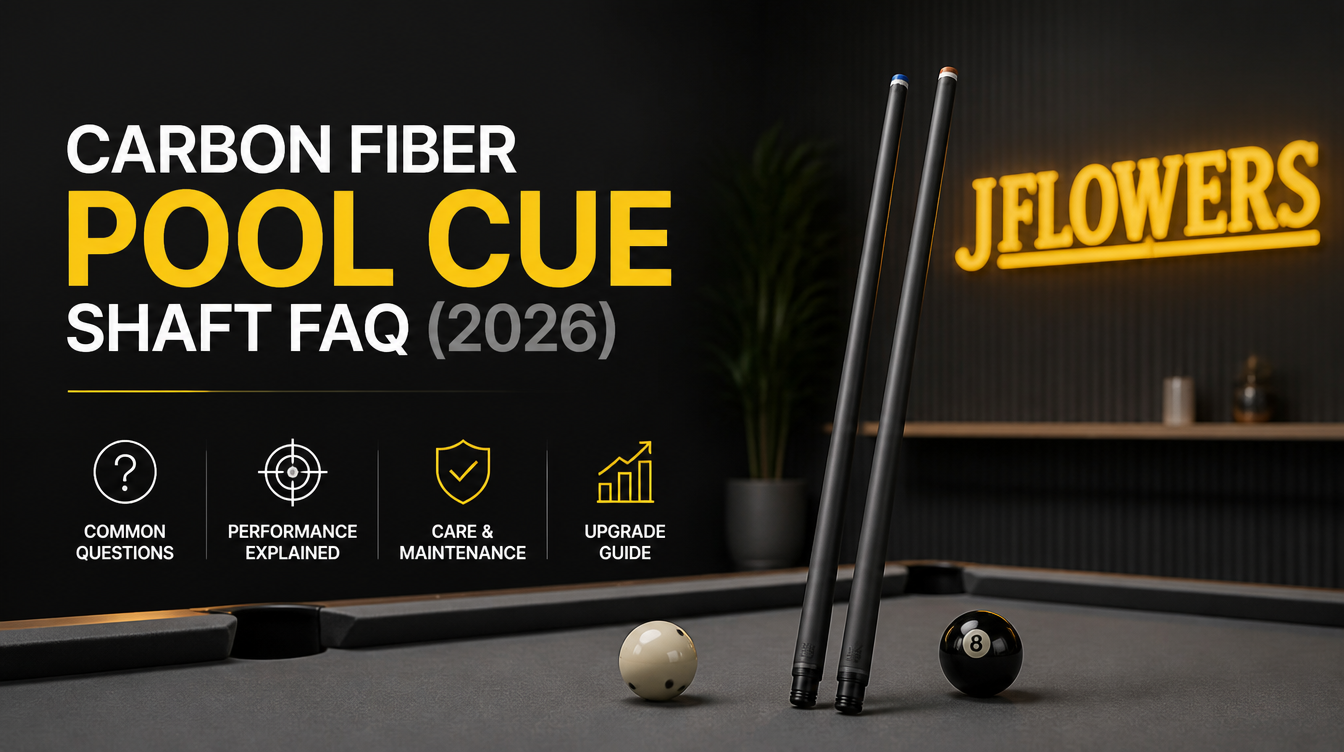
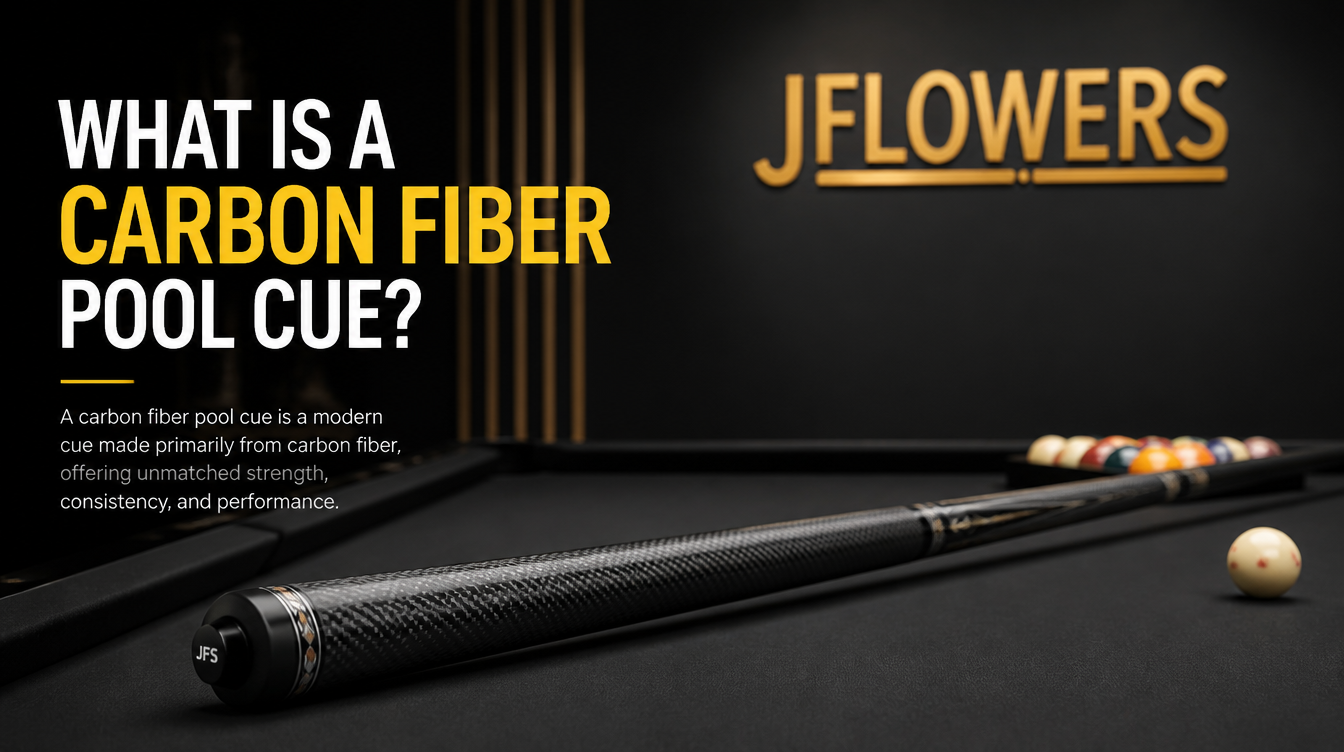
Carbon fiber pool cues have moved from niche to mainstream faster than almost any other technology shift in pool history. Five years ago, asking about carbon fiber in a pool hall would get you blank stares or skepticism. Today, it's one of the first things serious players consider when shopping for a new cue.
- JFlowers Cues
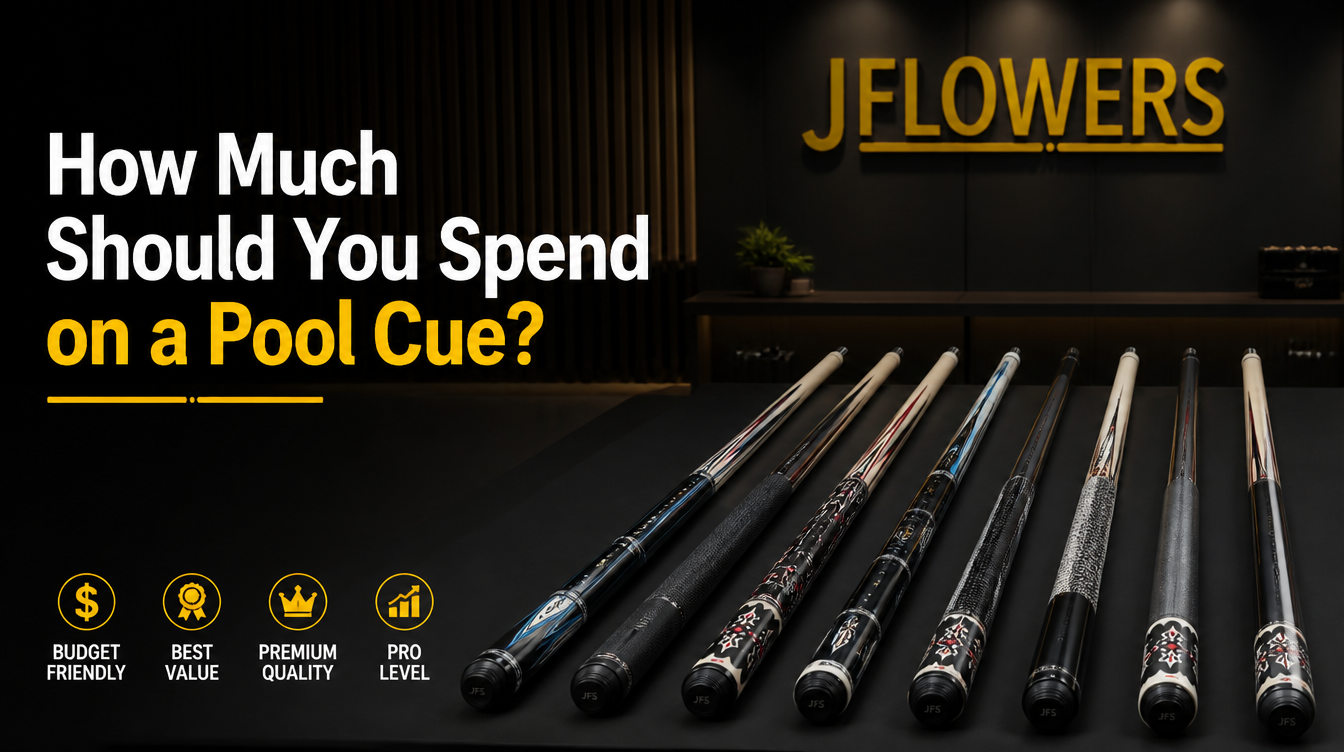
Pool cues range in price from $30 to over $10,000. That enormous range makes the budget question feel more complicated than it needs to be — but once you understand what drives price at each tier, the right budget for your situation becomes pretty clear.
- JFlowers Cues
At the advanced level, buying a pool cue is a completely different conversation than it is for beginners or intermediate players. You've developed a stroke. You know your weight preference. You have opinions about tip hardness, shaft feel, and joint type. The question isn't "what should I get" — it's "how do I find the specific combination of features that my game actually demands."
- JFlowers Cues
There's a specific moment most pool players recognize — the point where the cue they started with stops being good enough. Not because anything is wrong with it, exactly, but because your game has developed to a level where the equipment is now a limiting factor. You're applying more english, thinking about position, running balls — and your shaft is introducing inconsistencies that your technique can't fully overcome.
- JFlowers Cues
If you're new to pool and thinking about buying your first cue, you're already ahead of mo beginners. Most new players rely on house cues for months or even years — and that's one of the main things that slows their development down.
- JFlowers Cues
Walk into any pool supply shop or browse online for five minutes and you'll quickly realize the same thing every new buyer realizes: there are hundreds of pool cues out there, a dozen confusing spec terms, and prices that range from $30 to well over $3,000. It's a lot to sort through — especially when you're not sure what actually matters and what's just marketing noise.
Carbon Fiber Shaft Guides
- JFlowers Cues
The pool community pays close attention to what serious players use. When the guy running out rack after rack at your local pool hall switches shafts, people notice. When a player you've watched compete at the national level makes a change, people ask why.
- JFlowers Cues
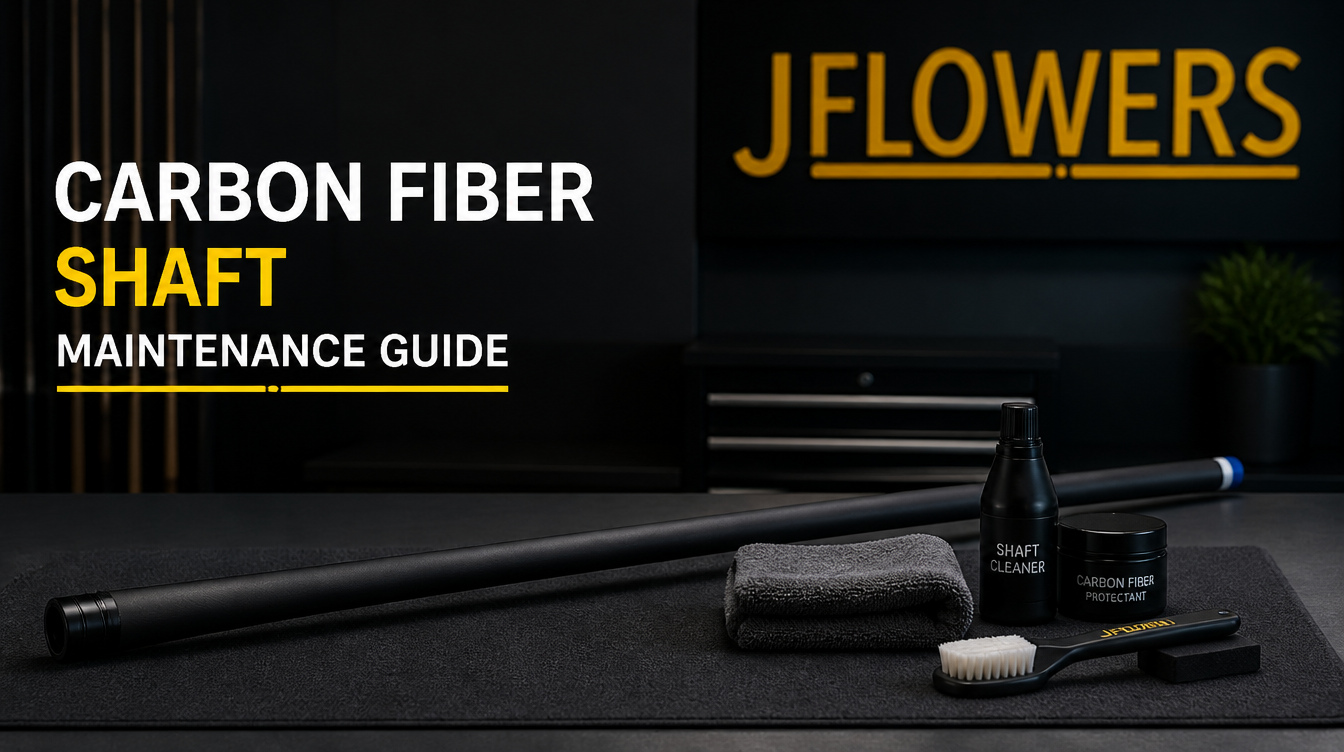
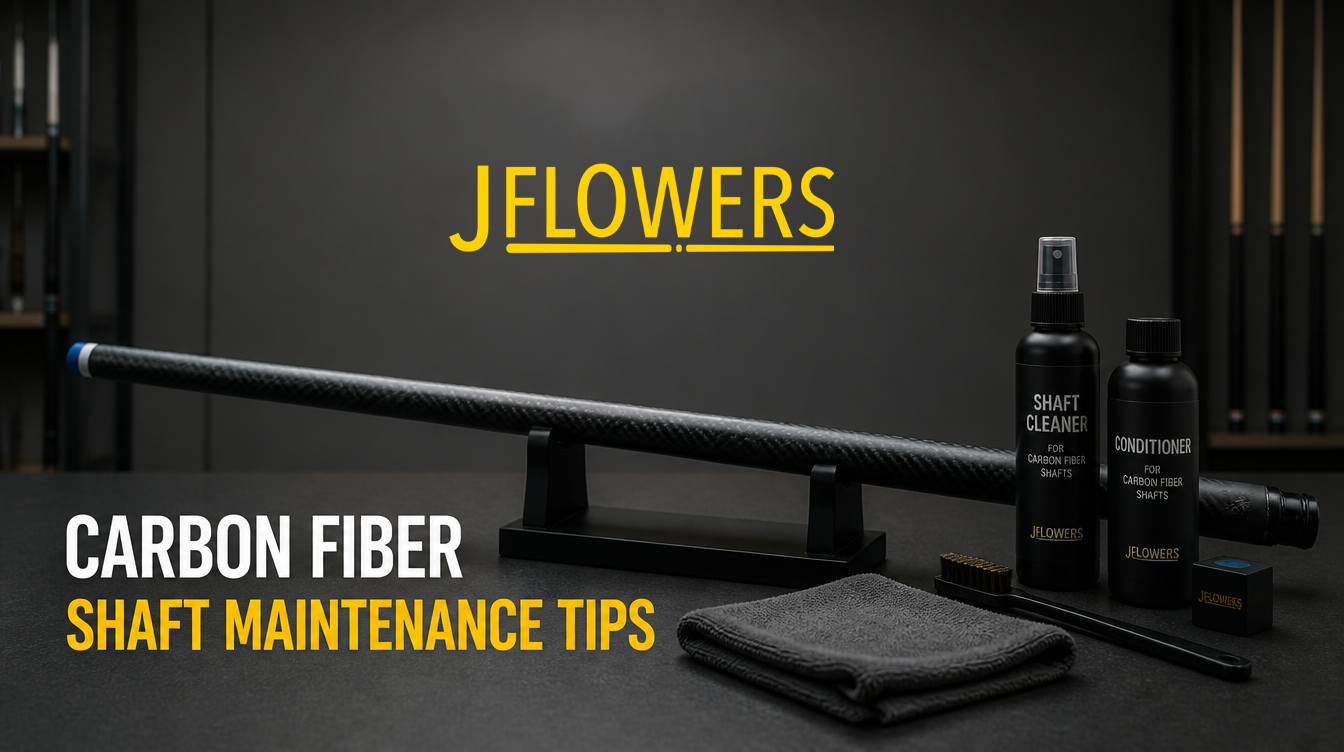
One of the best things about a carbon fiber shaft is how little maintenance it needs. No burnishing, no sanding, no humidity anxiety, no break-in rituals. But "low maintenance" doesn't mean "no maintenance." There are specific things you should be doing — and specific things you should absolutely avoid — to keep your carbon fiber shaft performing at its best for as long as possible.
- JFlowers Cues
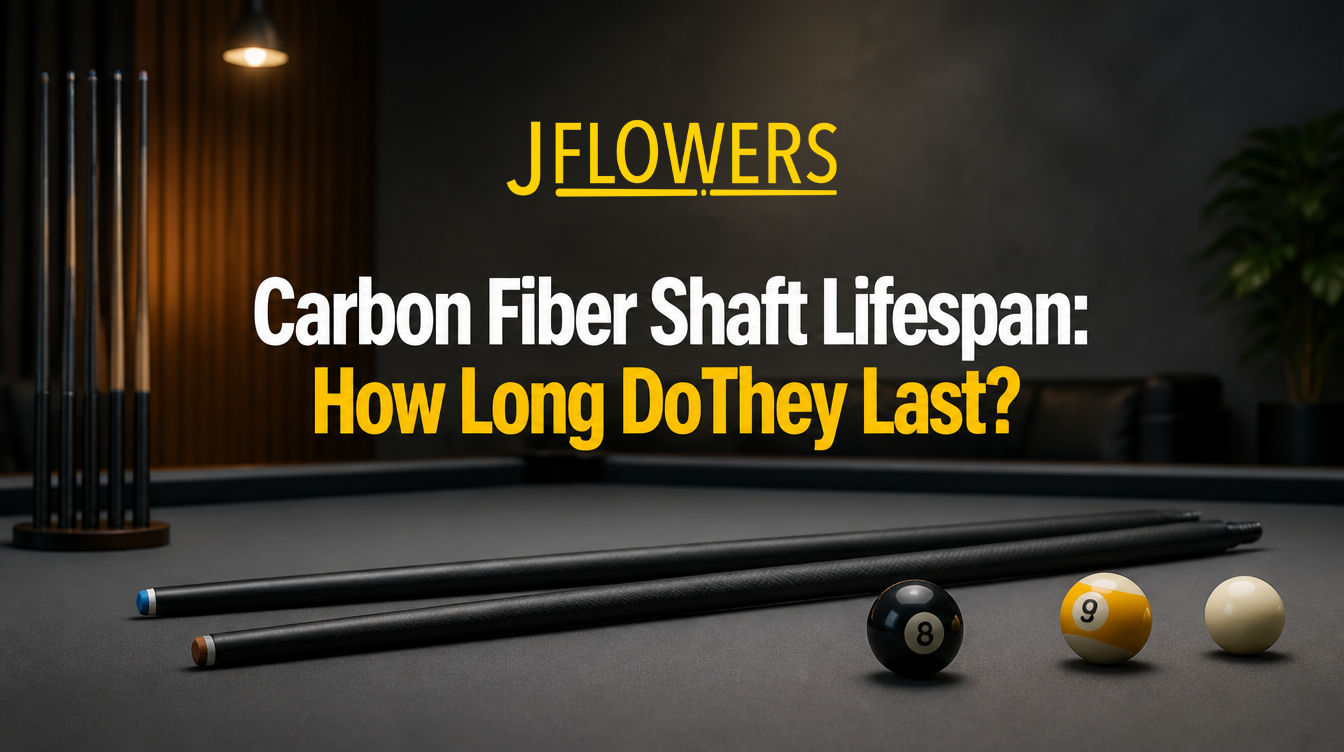
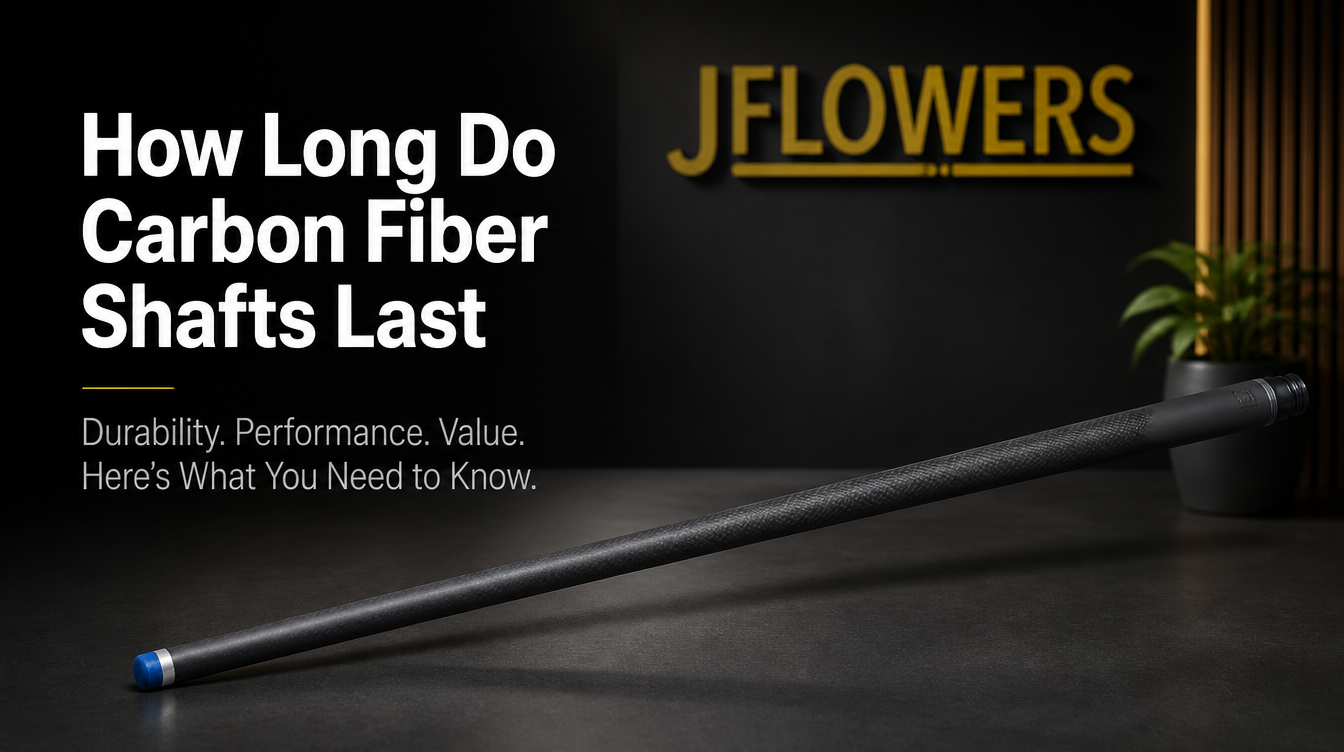
One of the most common questions players have before buying a carbon fiber shaft is how long it will actually last. It's not a small purchase — quality options start around $250 and run to $600 or more. You want to know what you're getting for that investment in terms of years of reliable use.
- JFlowers Cues
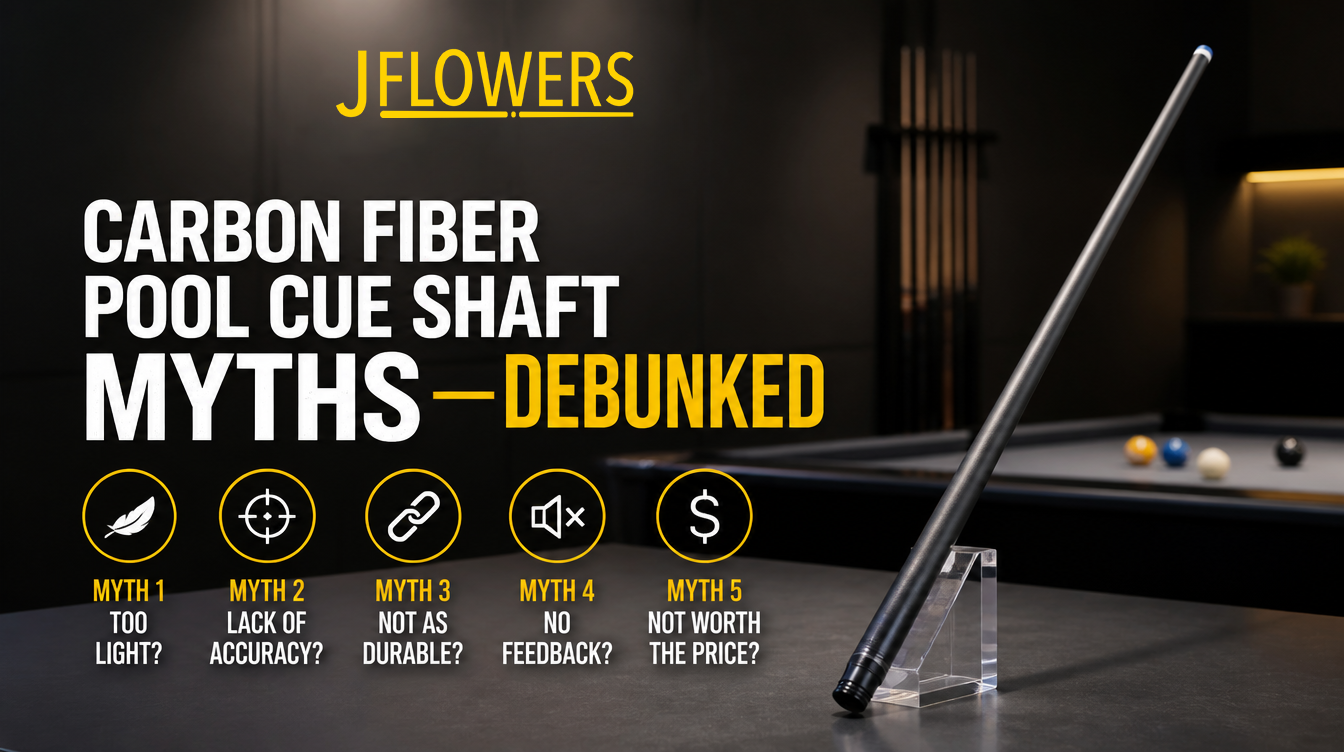
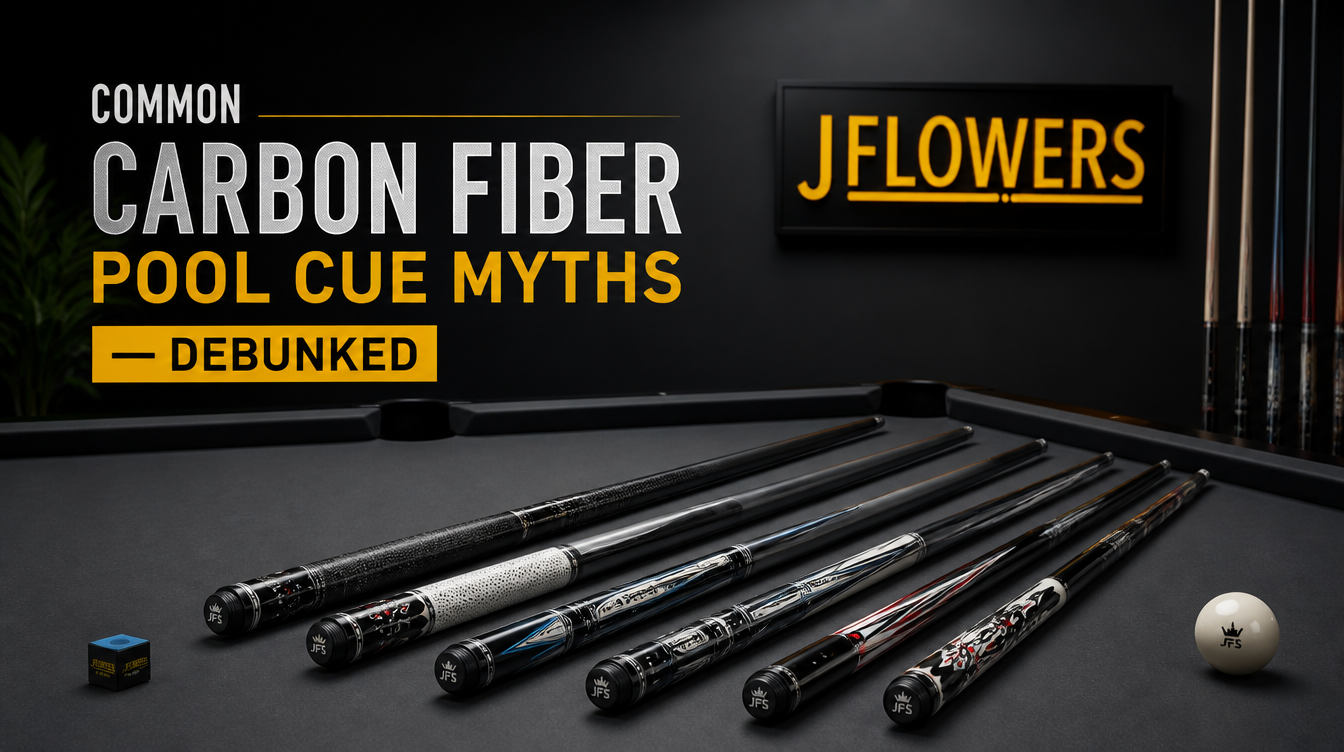
Every technology that disrupts an established industry gets surrounded by myths. Carbon fiber pool cue shafts are no exception. In pool halls, online forums, and YouTube comments, you'll find a reliable mix of genuine information and confident misinformation about what carbon fiber is, what it does, and whether it's worth considering.
- JFlowers Cues
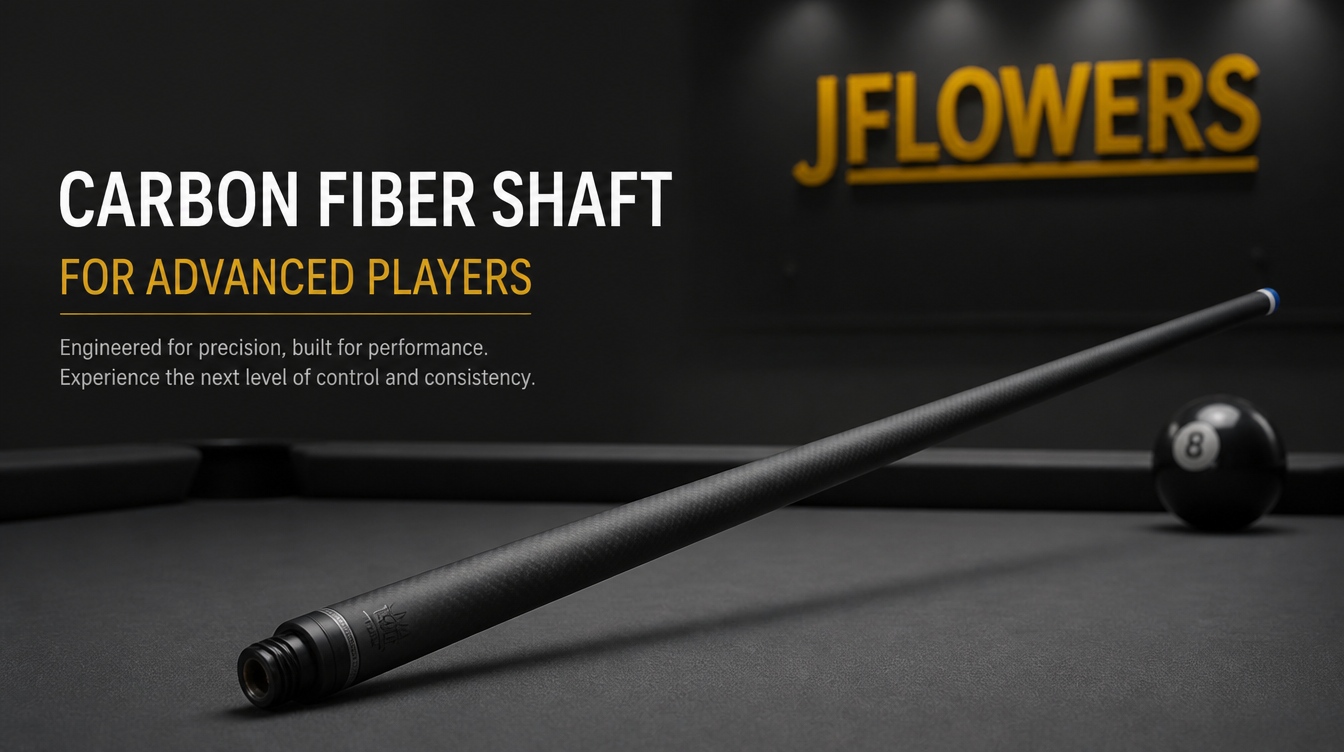
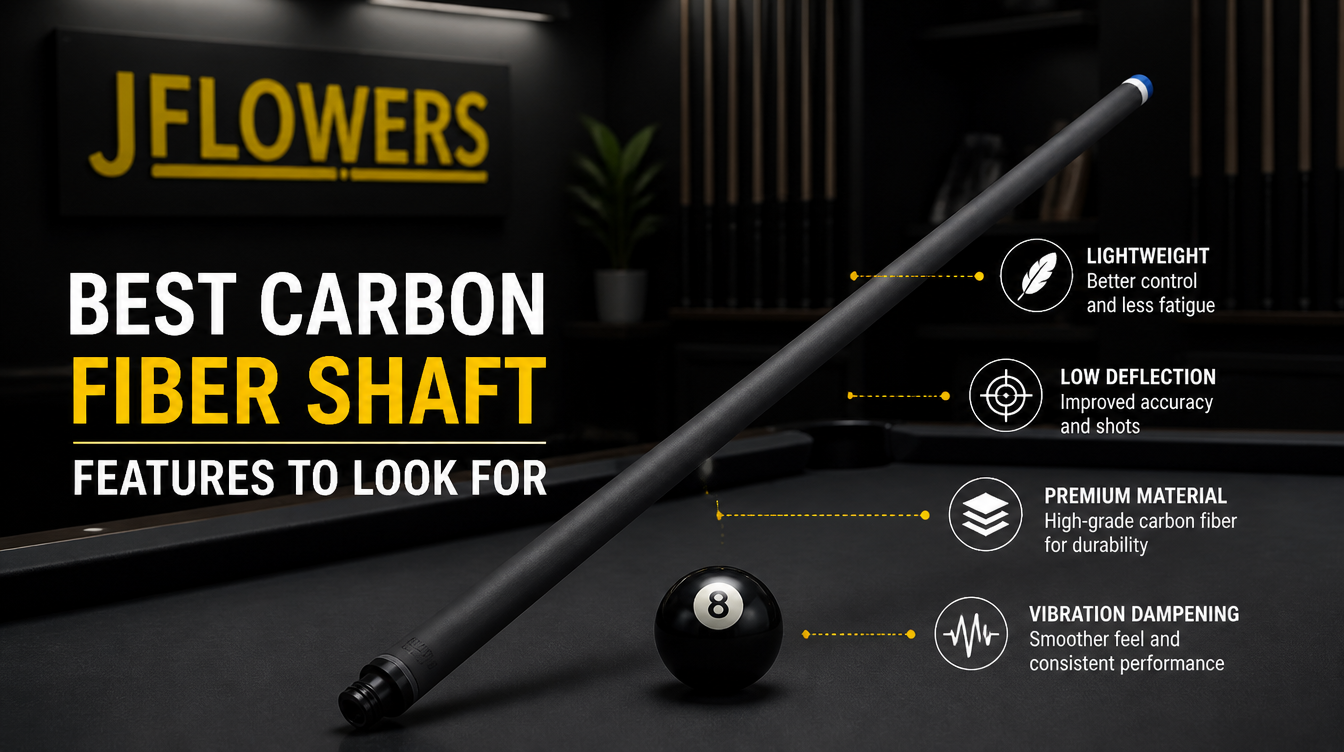
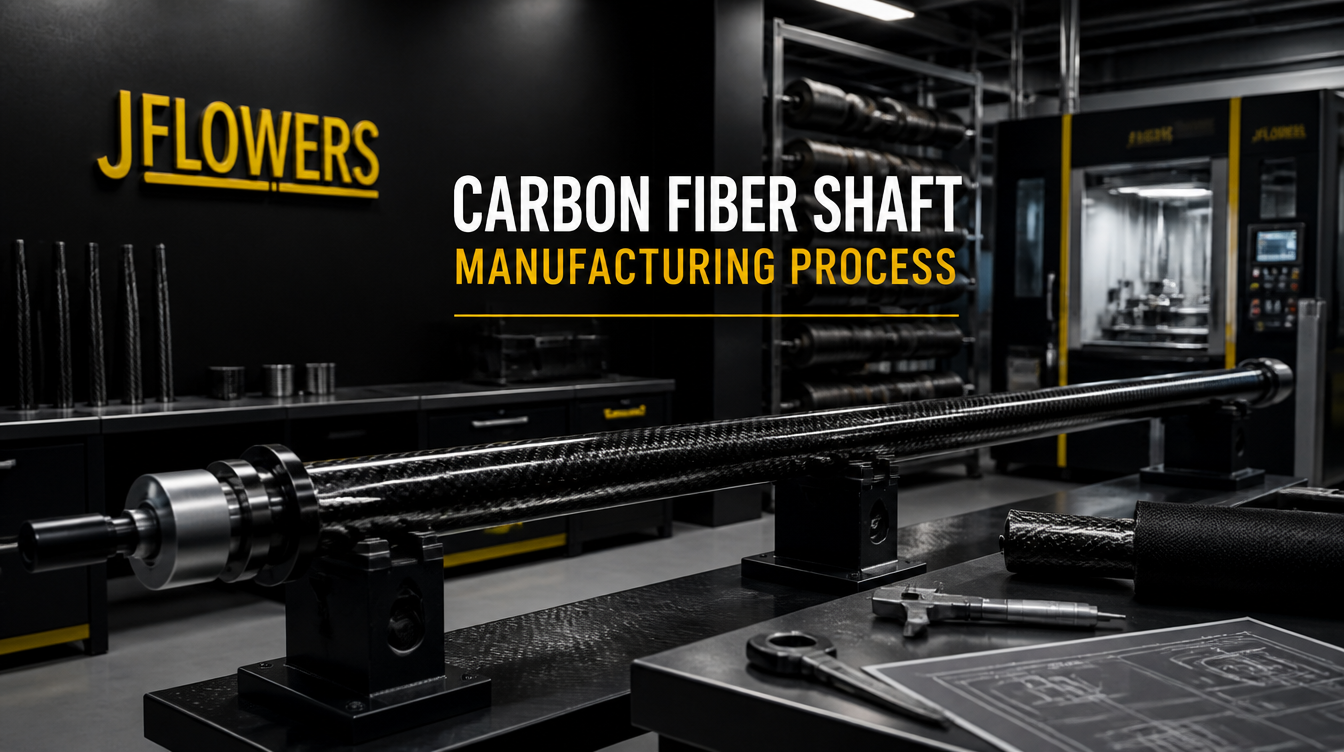
Not all carbon fiber shafts are equal. The material is the same at a basic level — carbon fiber composite around a core — but what a manufacturer does with that material varies enormously. The result is a market where two carbon fiber shafts at similar price points can play completely differently.
- JFlowers Cues
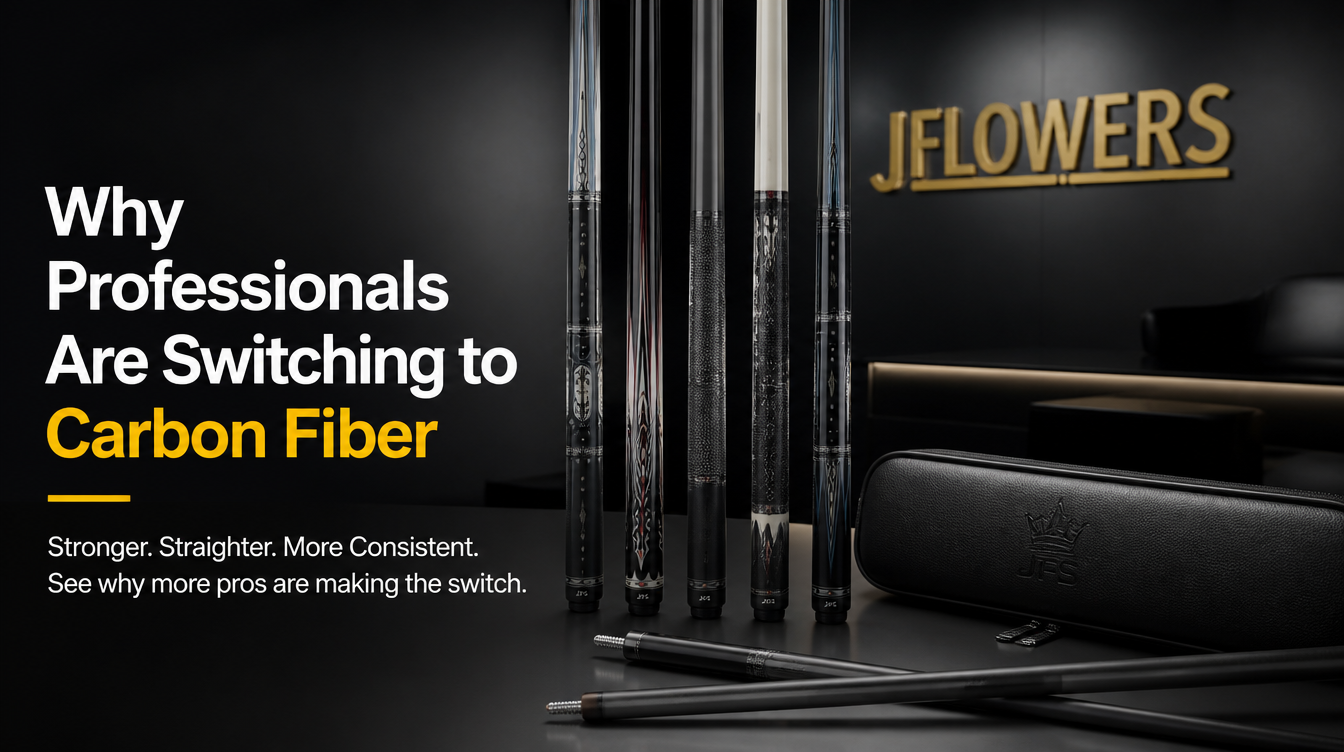
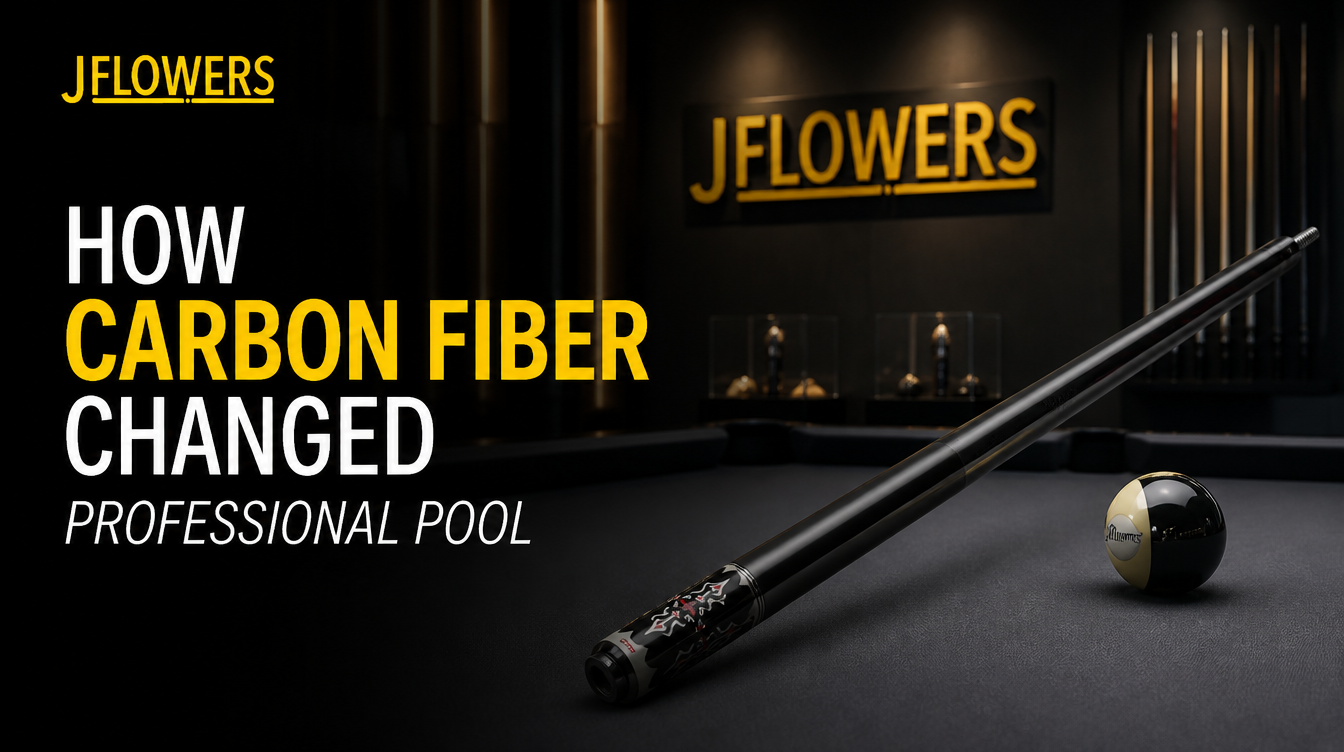
Pool is a game built on tradition. The same basic equipment — a tapered wooden stick, a leather tip, a felt table — has been used for centuries. Change comes slowly to cue sports. Which is why the rise of carbon fiber shafts over the last decade is worth paying attention to. When a technology gets adopted at the highest competitive level, in a game this conservative, it's because the advantages are real.
- JFlowers Cues
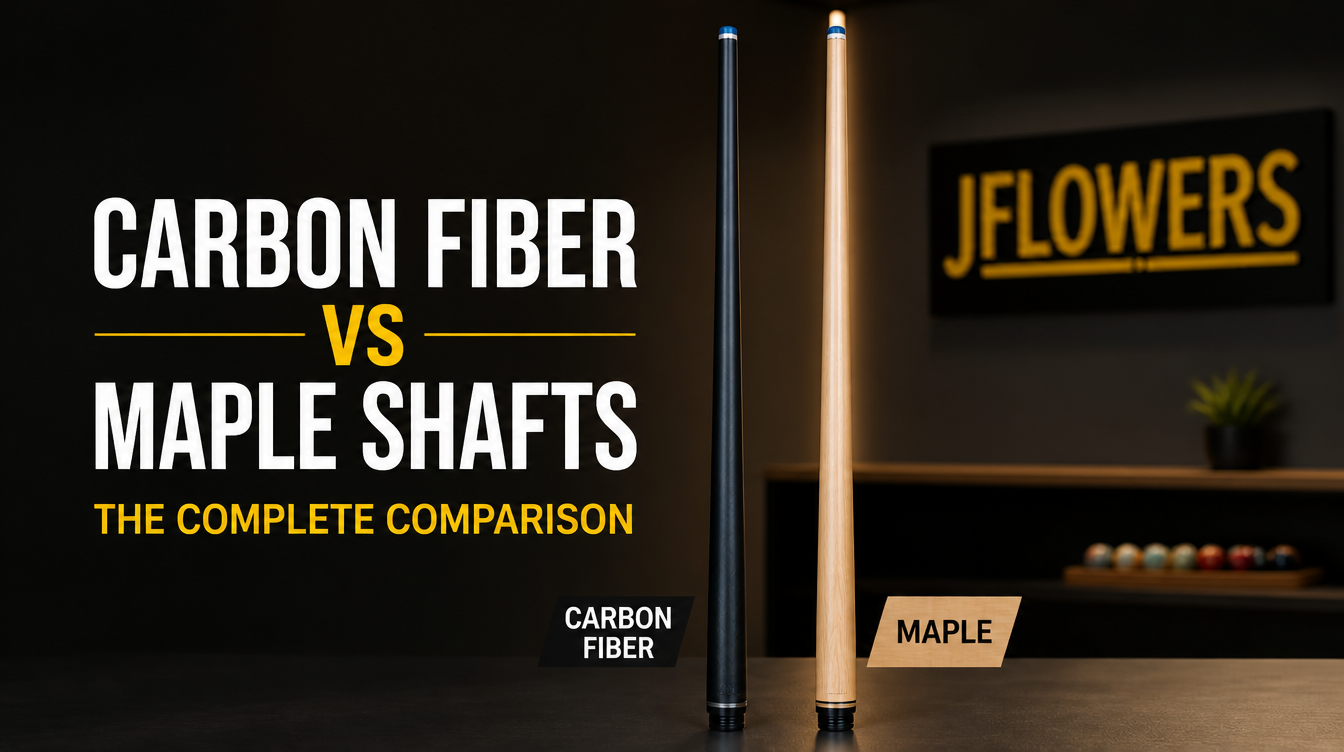
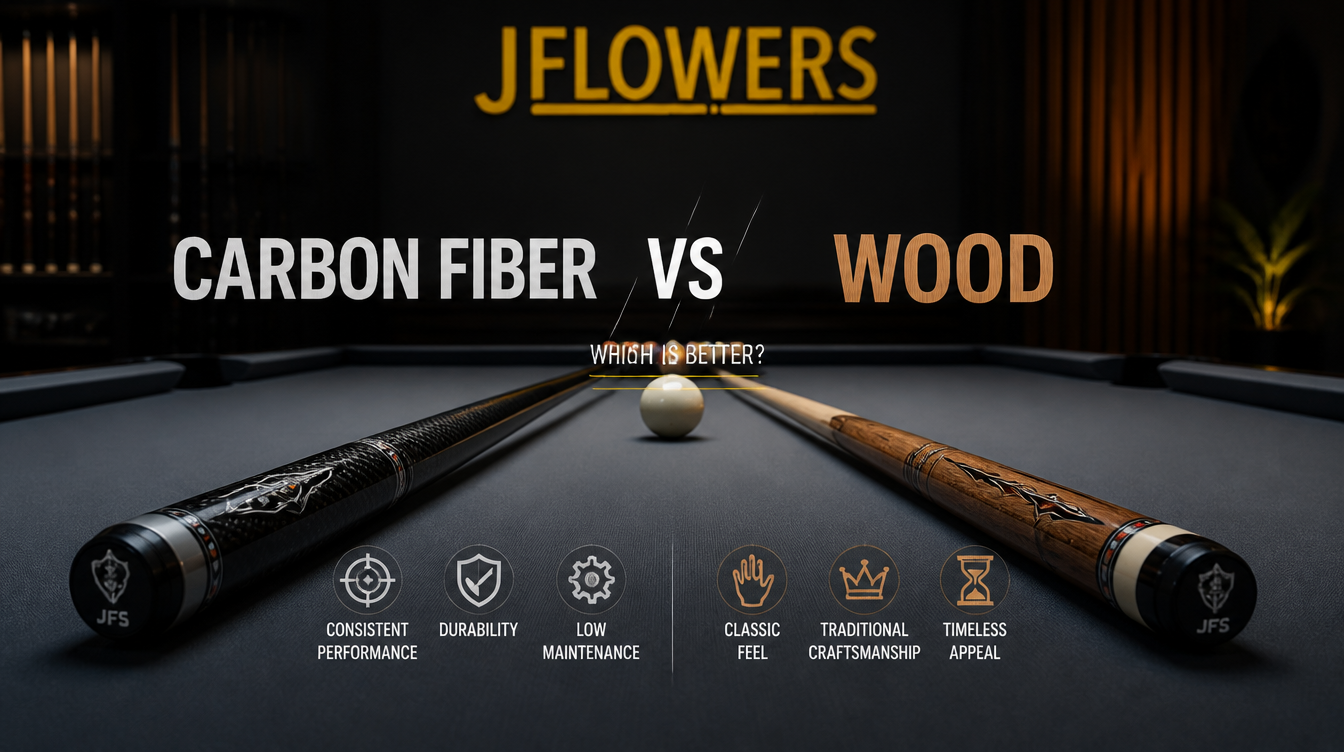
If you've been shopping for a new shaft, you've hit this choice: carbon fiber or maple? Both have passionate advocates. Both produce players who win at the highest levels. And both camps will give you a dozen reasons why theirs is the obvious choice.
- JFlowers Cues
This is probably the most asked question in pool equipment right now. Carbon fiber shafts are everywhere — in the pro game, in the pool halls, in every online forum where players talk gear. And they're not cheap. A quality option runs $250–$600 or more. So before you spend that kind of money, you deserve an honest answer: are they actually worth it?
- JFlowers Cues
Walk into any serious pool room today and you're going to see carbon fiber. On the practice tables, in the cases sitting on the rail, in the hands of players running racks. It's everywhere — and if you've been playing for more than a minute, someone's probably already told you to consider one.
- JFlowers Cues
Buying a carbon fiber shaft is a different process than buying a traditional maple shaft. The variables are fewer in some ways — you don't worry about wood grain, break-in period, or warping. But the variables that do matter — construction quality, ferrule design, deflection characteristics, joint compatibility — require specific knowledge to evaluate correctly.
- JFlowers Cues
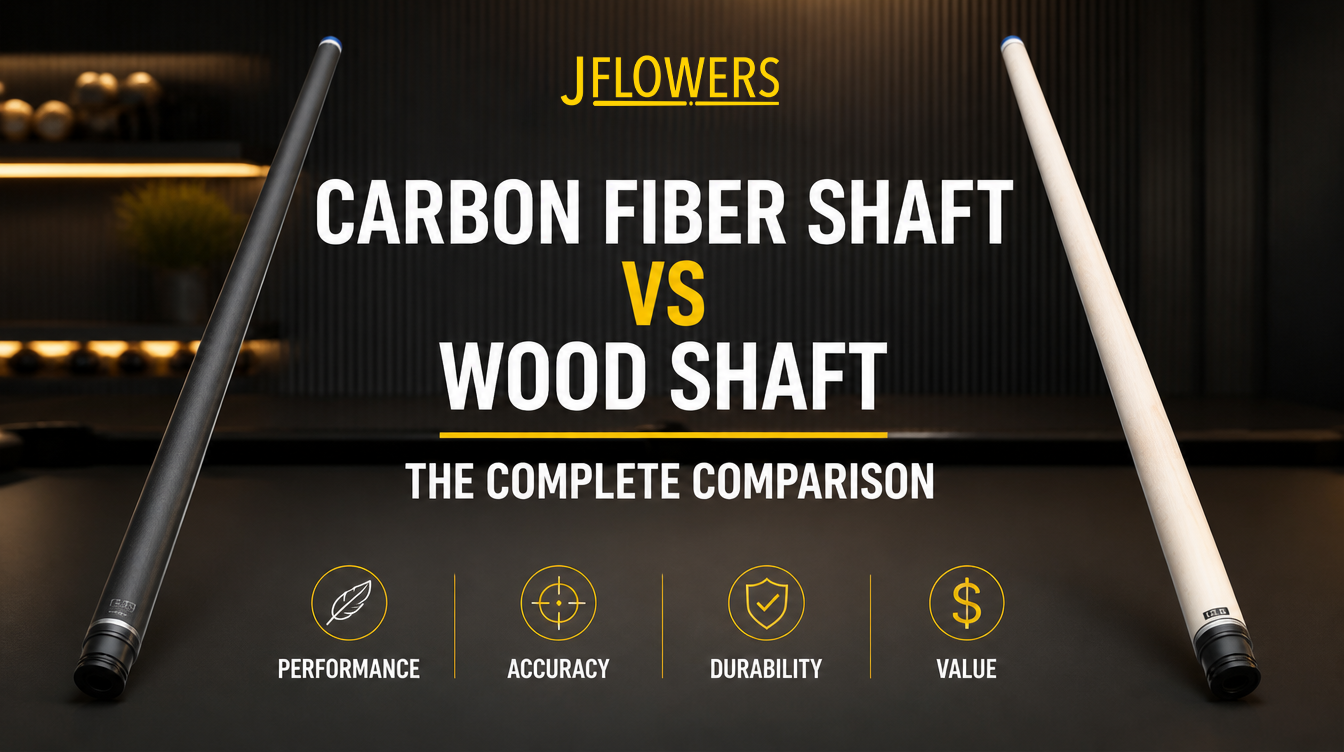
It's the biggest equipment debate in pool right now. Carbon fiber shafts have gone from a novelty product to a mainstream option that a growing number of players at every level are choosing over traditional maple. The marketing on both sides can be loud — so here's an honest, detailed look at what actually separates these two materials and what that means for your game.
Pool Cue Shaft Technology
- JFlowers Cues
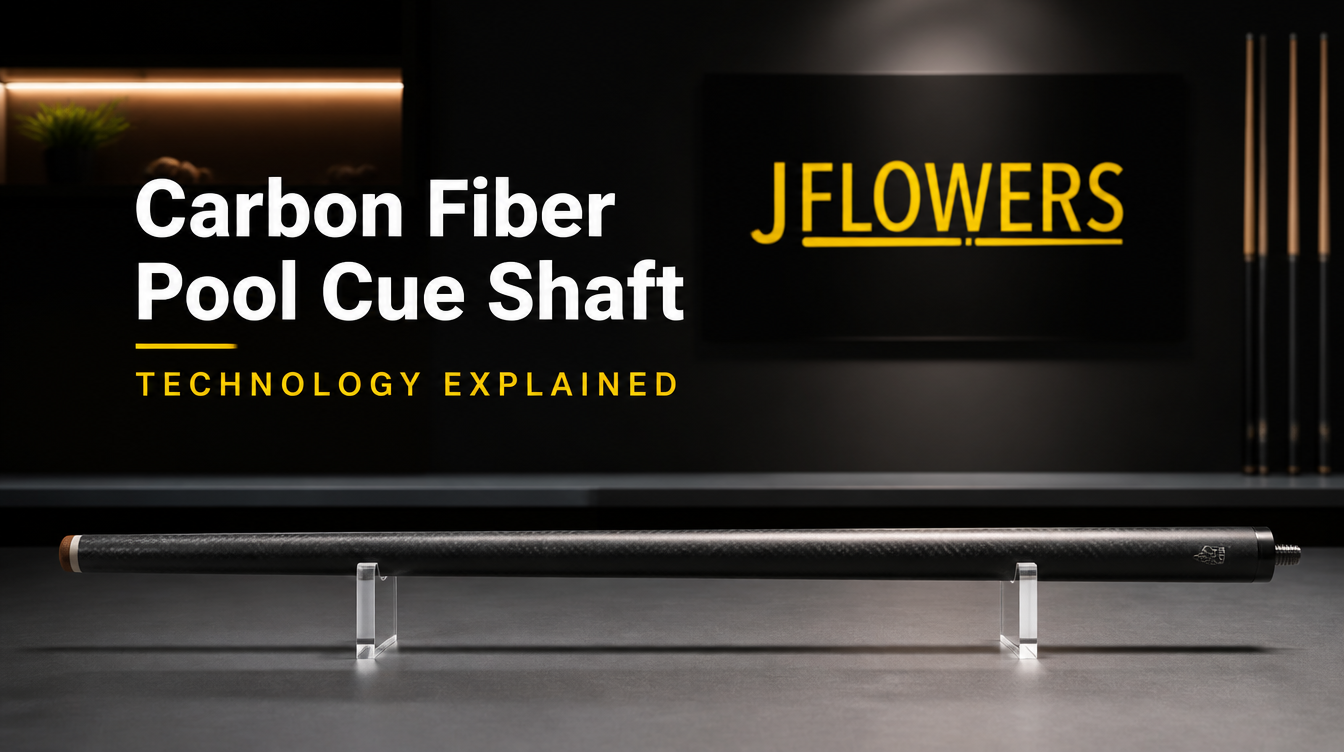
Pool has been played with essentially the same basic equipment for centuries — a stick, a tip, a felt table. But under that simple surface, cue technology has evolved dramatically, especially over the last two decades. The materials are different. The engineering is more sophisticated. The understanding of what makes a cue perform at a high level has deepened considerably.
- JFlowers Cues
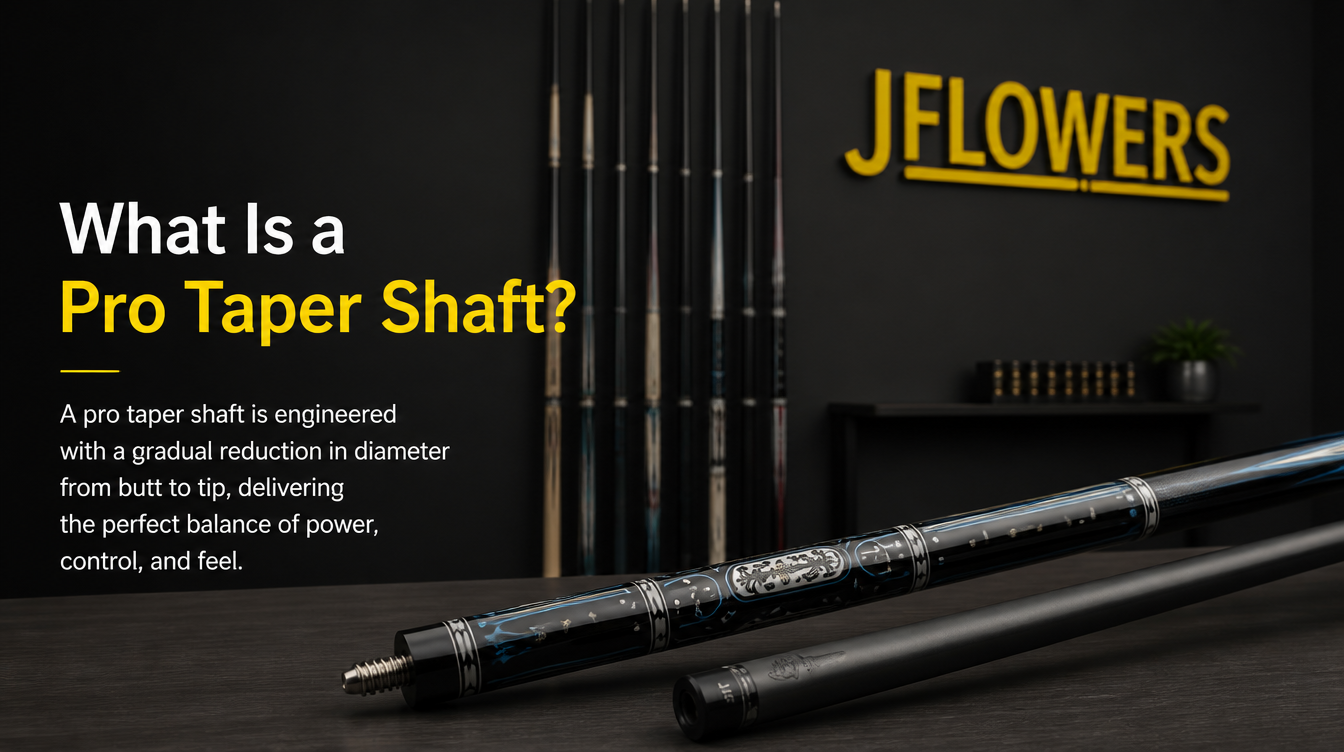
Shaft taper is one of the least talked about variables in pool cue selection — and one of the most misunderstood by players who do talk about it. The word "taper" appears in descriptions of pro-level shafts all the time, but most players couldn't explain what it actually means or why it matters.
- JFlowers Cues
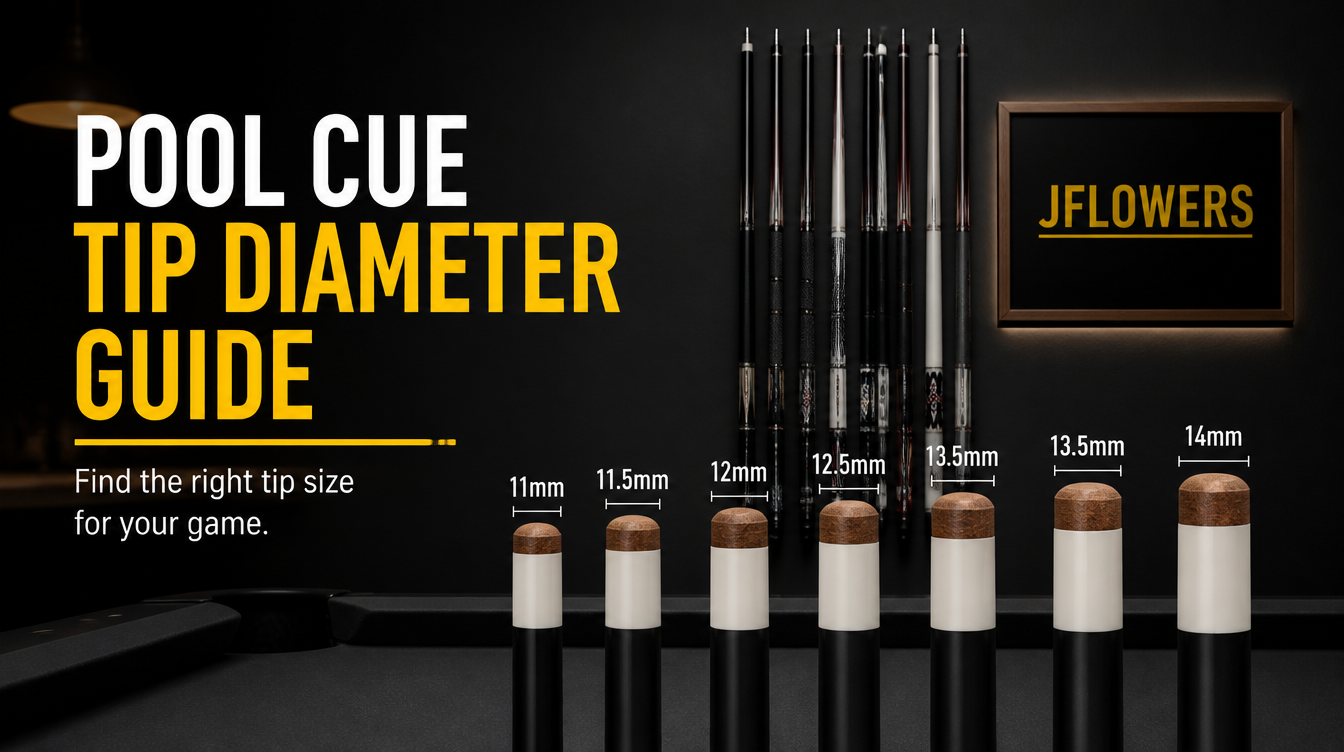
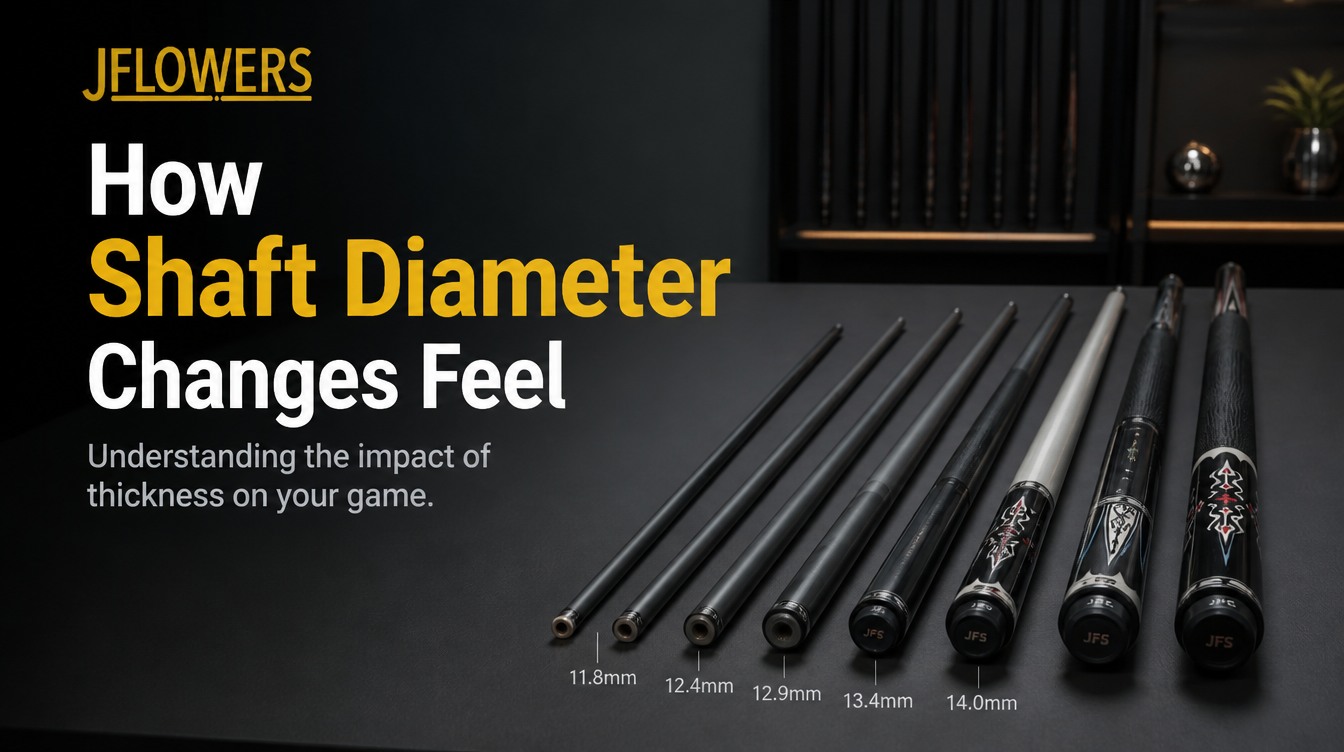
Shaft diameter is one of those spec numbers that appears on every cue listing — 12mm, 12.5mm, 13mm — but rarely gets explained in any meaningful way. Most players know it's there. Very few understand what it actually does to how a cue plays. This guide fixes that.
- JFlowers Cues
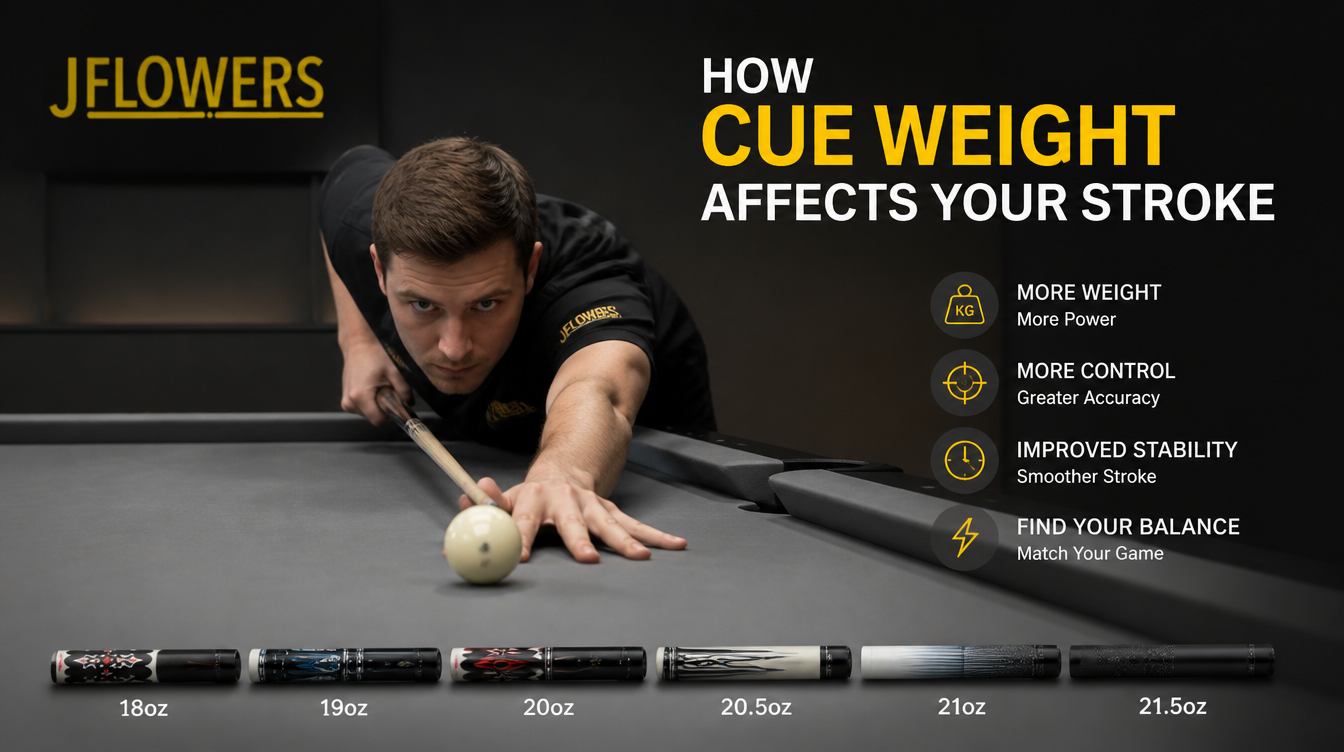
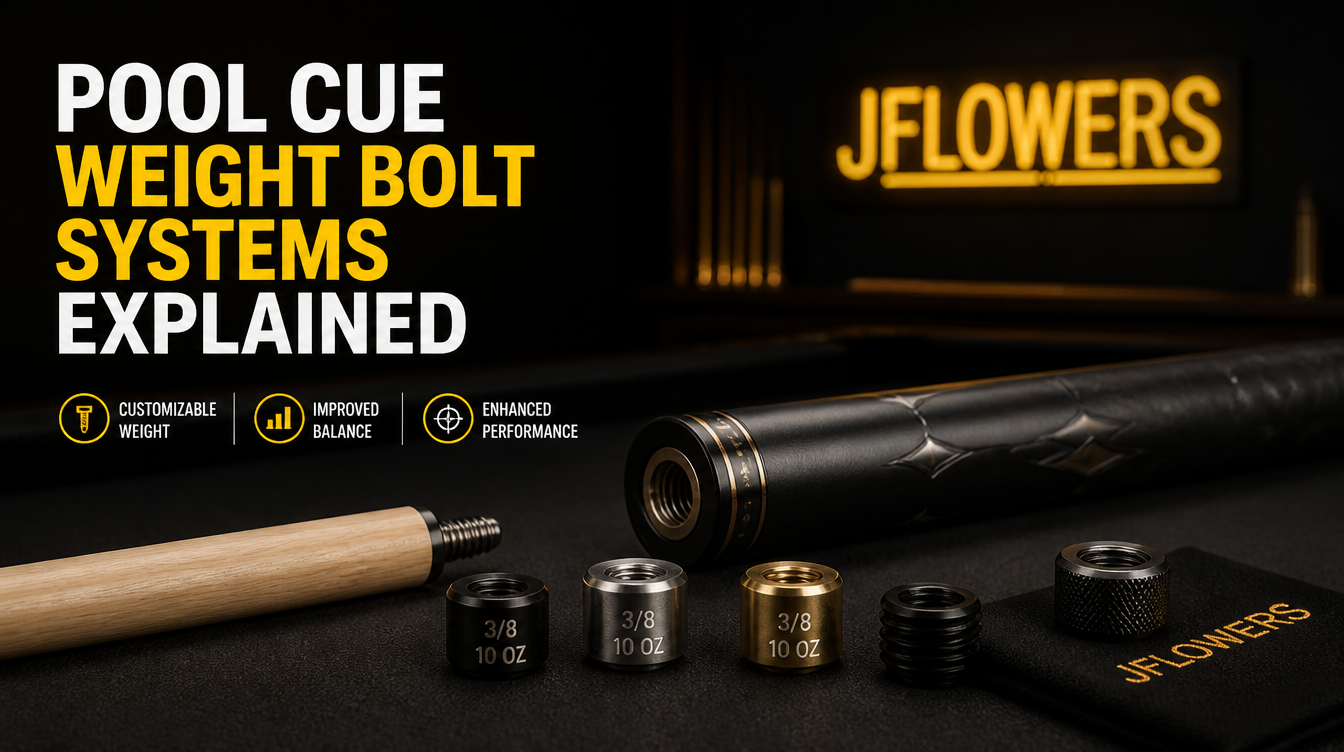
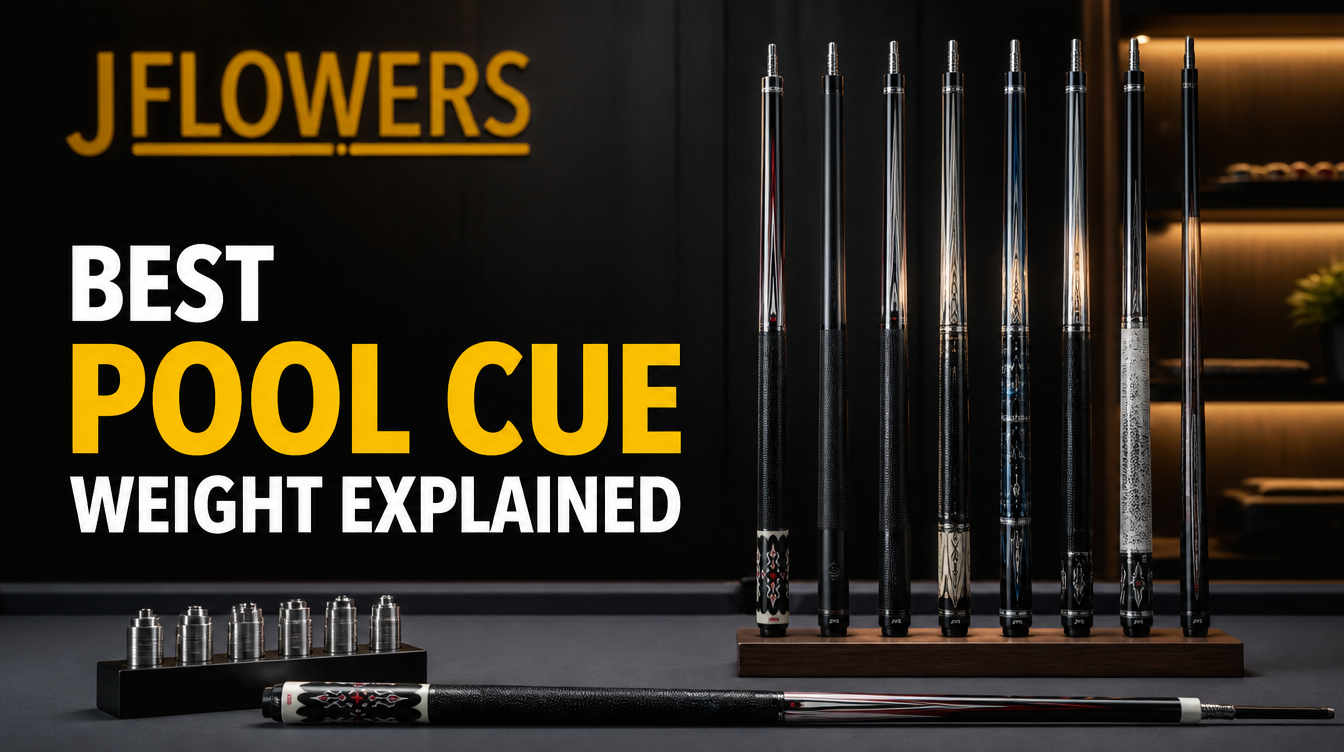
Pool cue weight is one of the first things players check when shopping — and one of the most misunderstood variables in the whole game. The myths around weight are persistent: heavier means more power, lighter means more speed, the right weight is whatever the pros use. Most of this is wrong or oversimplified.
- JFlowers Cues
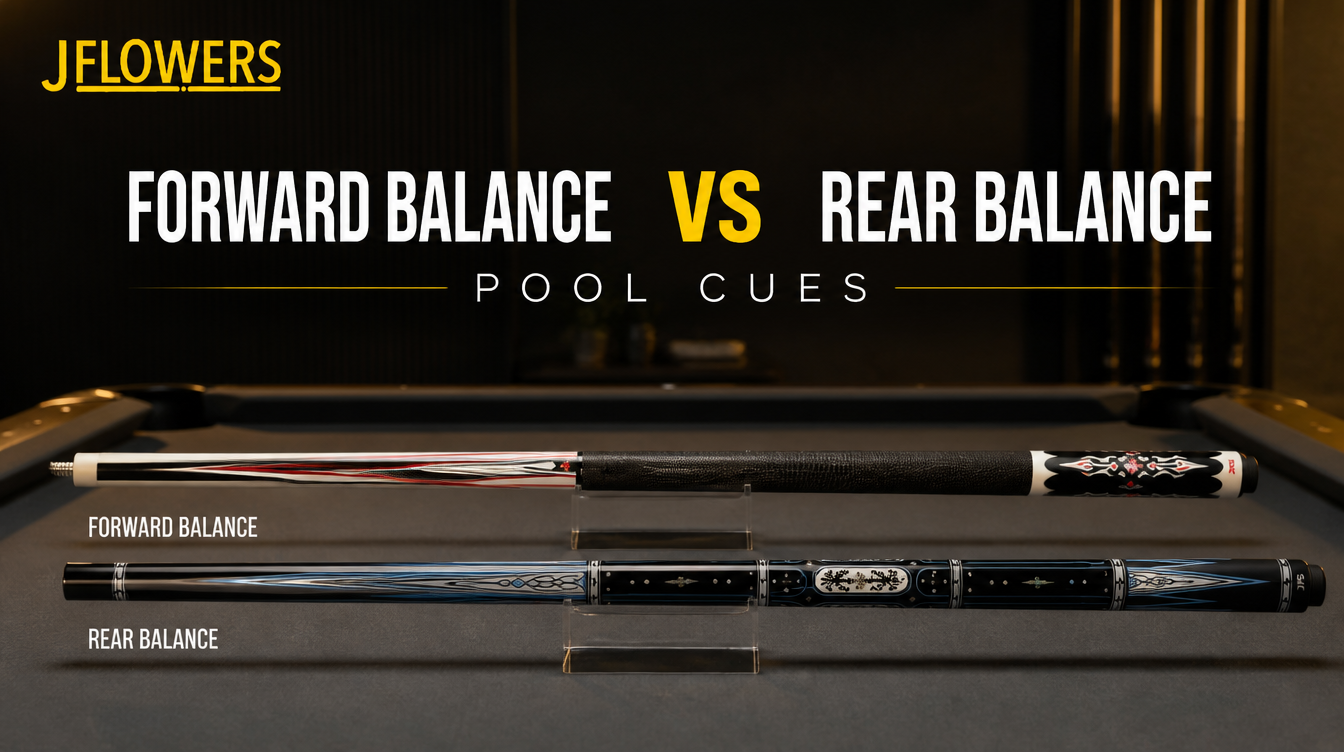
Understanding the difference between forward and rear balance — what each one actually feels like, how it affects different shot types, and which one your stroke is likely to prefer — is one of the more practical upgrades you can make to your equipment knowledge.
- JFlowers Cues
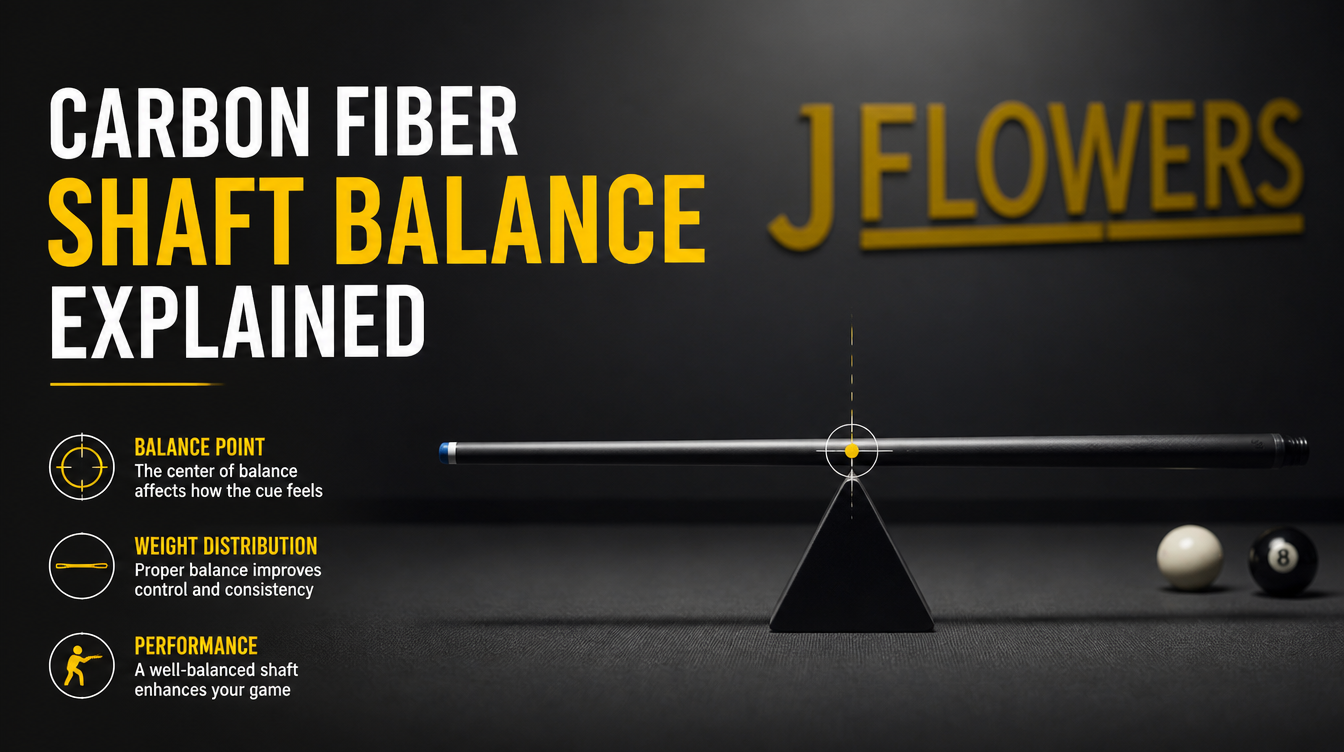
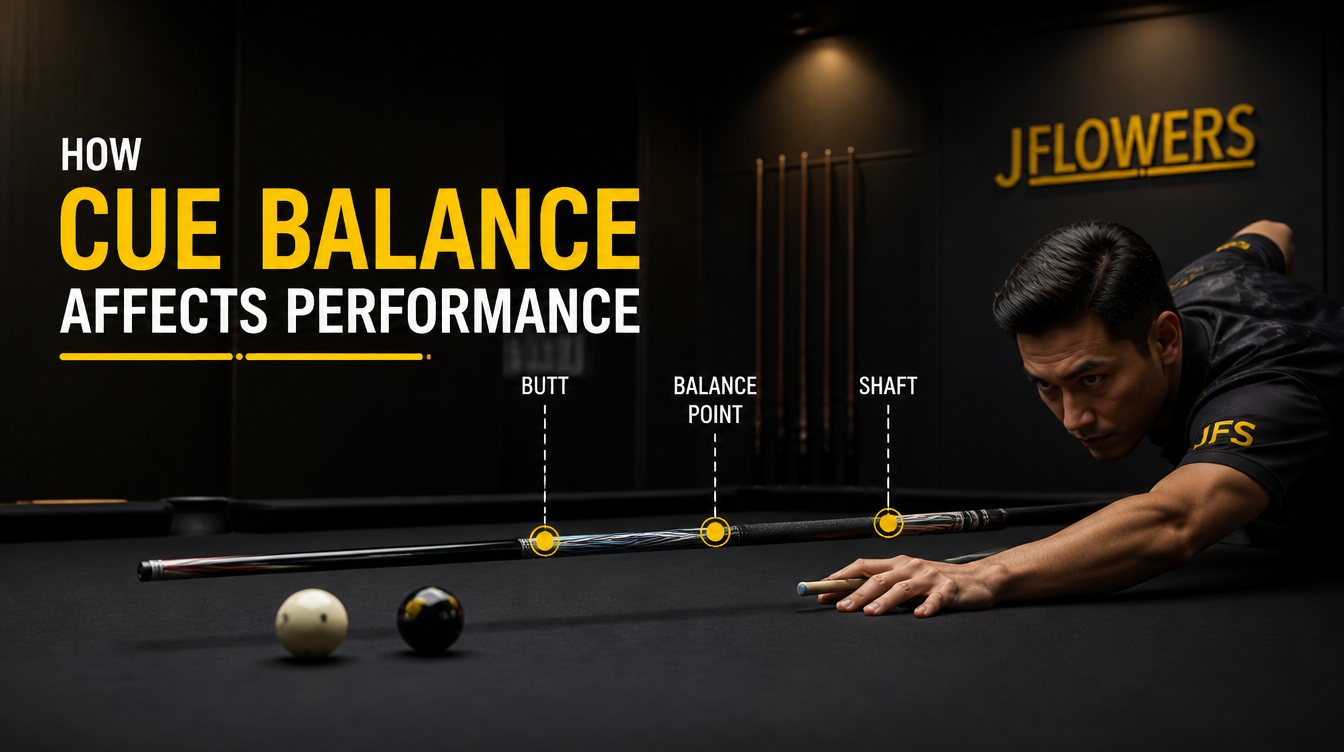
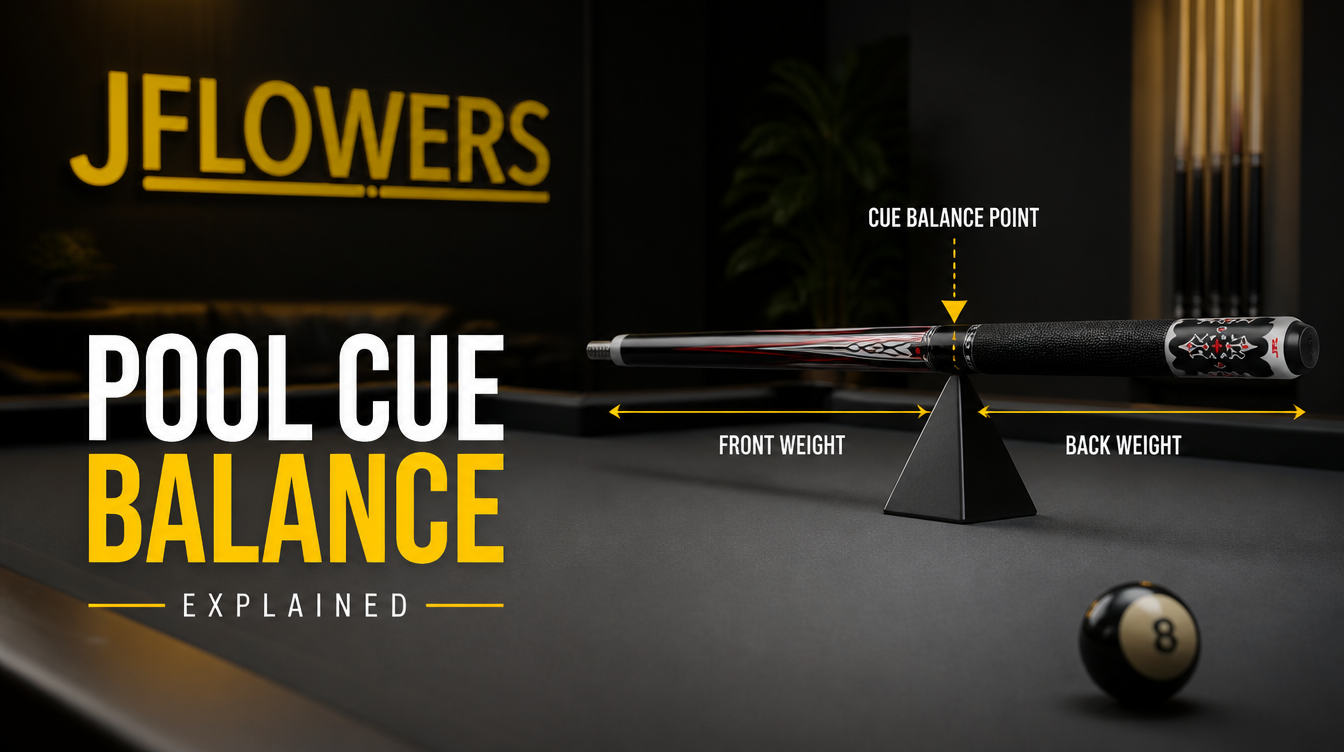
Ask most pool players what weight cue they use and they'll tell you instantly. Ask them where the balance point is — and most will have no idea. Yet two cues with the exact same weight can feel completely different in your hand and during your stroke, entirely because of how that weight is distributed. Balance is one of the most underappreciated variables in cue selection, and understanding it properly can change how you shop for equipment and how you evaluate what you currently play with.
- JFlowers Cues
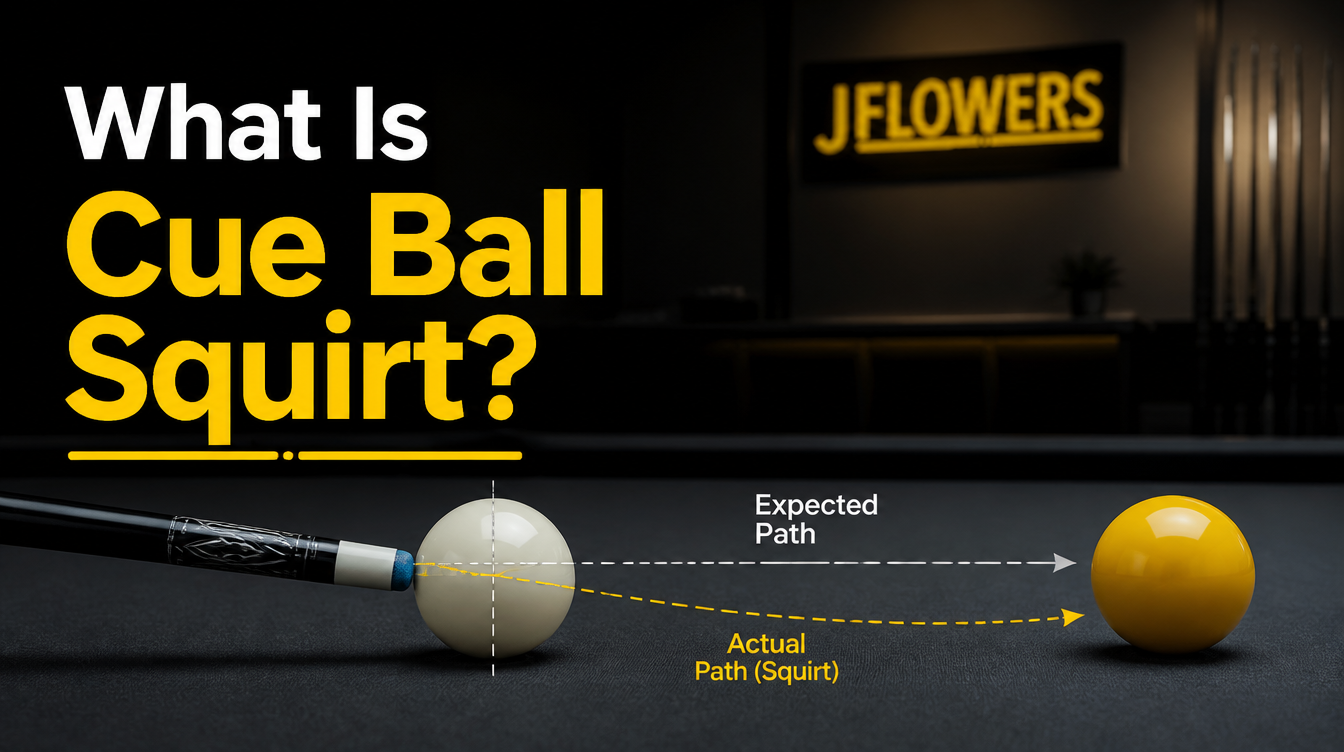
Squirt is one of those pool terms that sounds simple but hides a lot of depth. Players toss it around in pool halls and online forums, sometimes using it interchangeably with deflection, sometimes meaning something slightly different. If you've been confused about what squirt actually is, how it differs from swerve, and what you can do about it — this guide gives you the clear, complete picture.
- JFlowers Cues
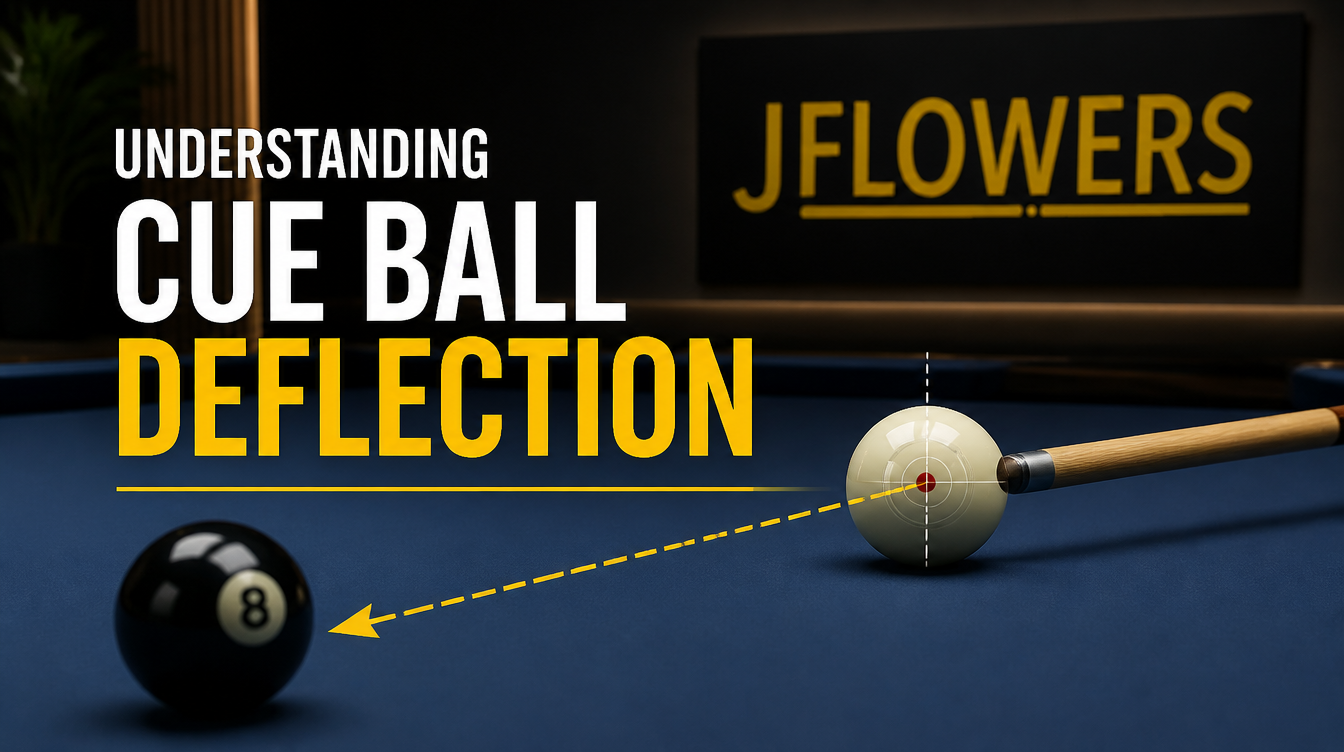
Deflection is one of those pool concepts that every player encounters early and most players never fully understand. You apply right english and the cue ball goes somewhere unexpected. You compensate a little. You compensate too much. Your english shots stay inconsistent for years — sometimes for an entire playing career — because nobody ever properly explained what's actually happening.
- JFlowers Cues
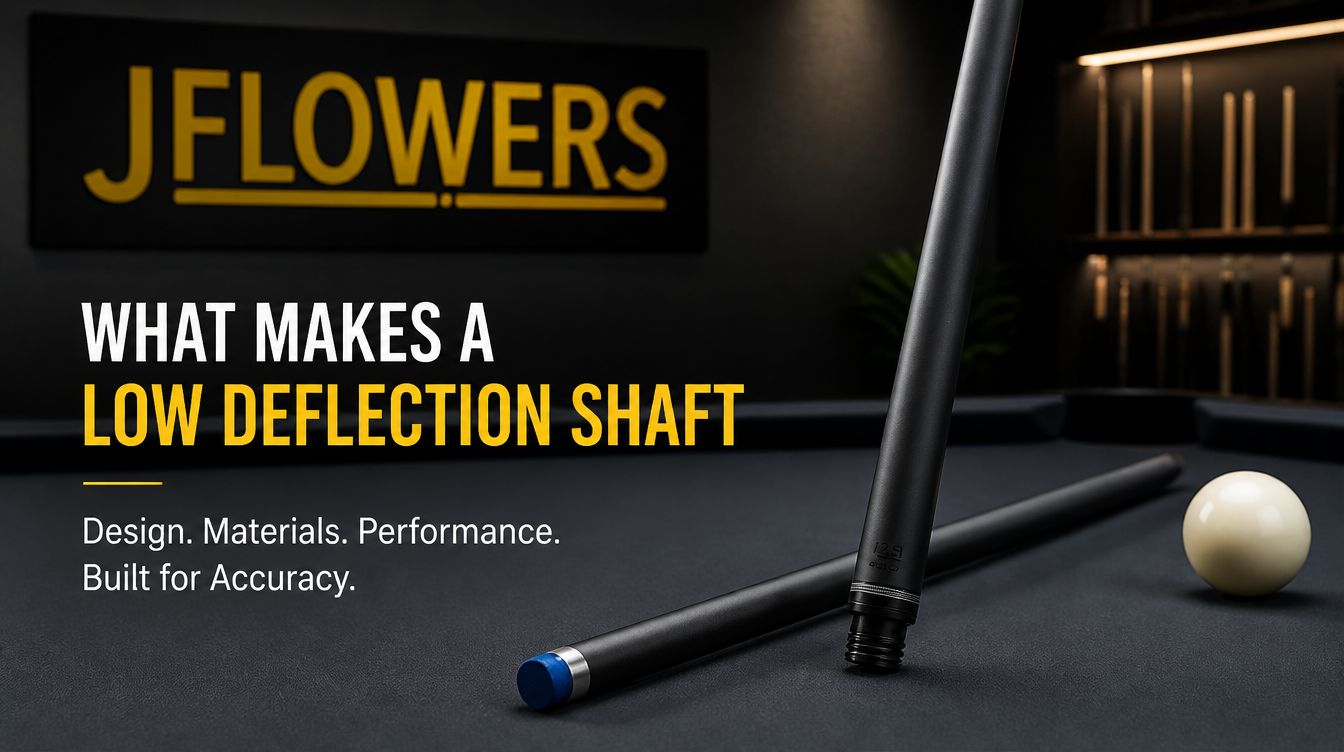
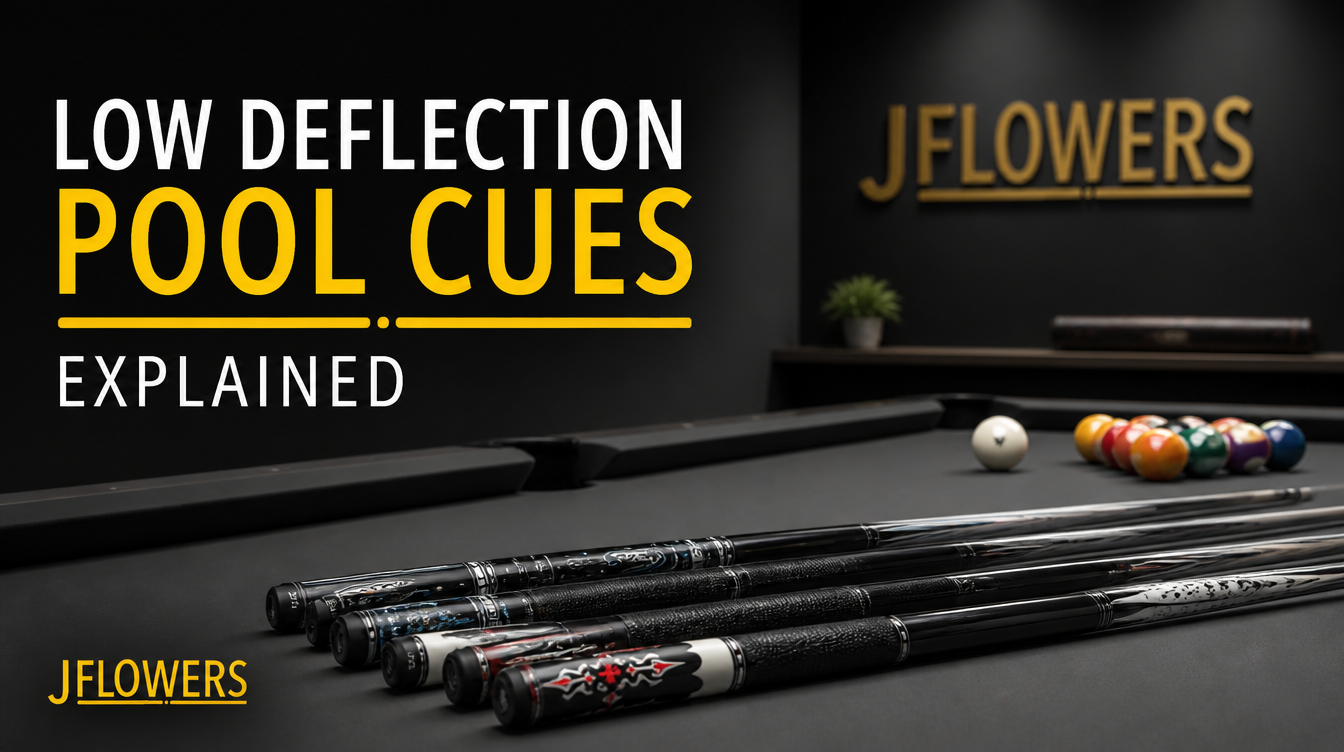
Low deflection is on the spec sheet of almost every serious pool cue shaft being sold today. But what does it actually mean? What causes deflection in the first place? And what specifically makes one shaft lower deflection than another?
- JFlowers Cues
Most players talk about cue weight when they're shopping. Almost no one talks about balance — even though two cues with the exact same weight can feel completely different depending on where that weight sits. Understanding balance gives you a more sophisticated way to evaluate cues, and it often explains why a cue you picked up felt "off" even though the specs looked right.
- JFlowers Cues
Pool cue weight is one of the first specs new players look at — and one of the most misunderstood variables in equipment selection. You'll hear advice ranging from "heavier hits harder" to "lighter lets you shoot faster," and most of it is oversimplified or flat-out wrong. Here's what cue weight actually does, what it doesn't do, and how to figure out the right weight for your game.
Pool Cue Tips & Chalk
- JFlowers Cues
The real answer — based on how you play, what tip you use, and what the signs say.
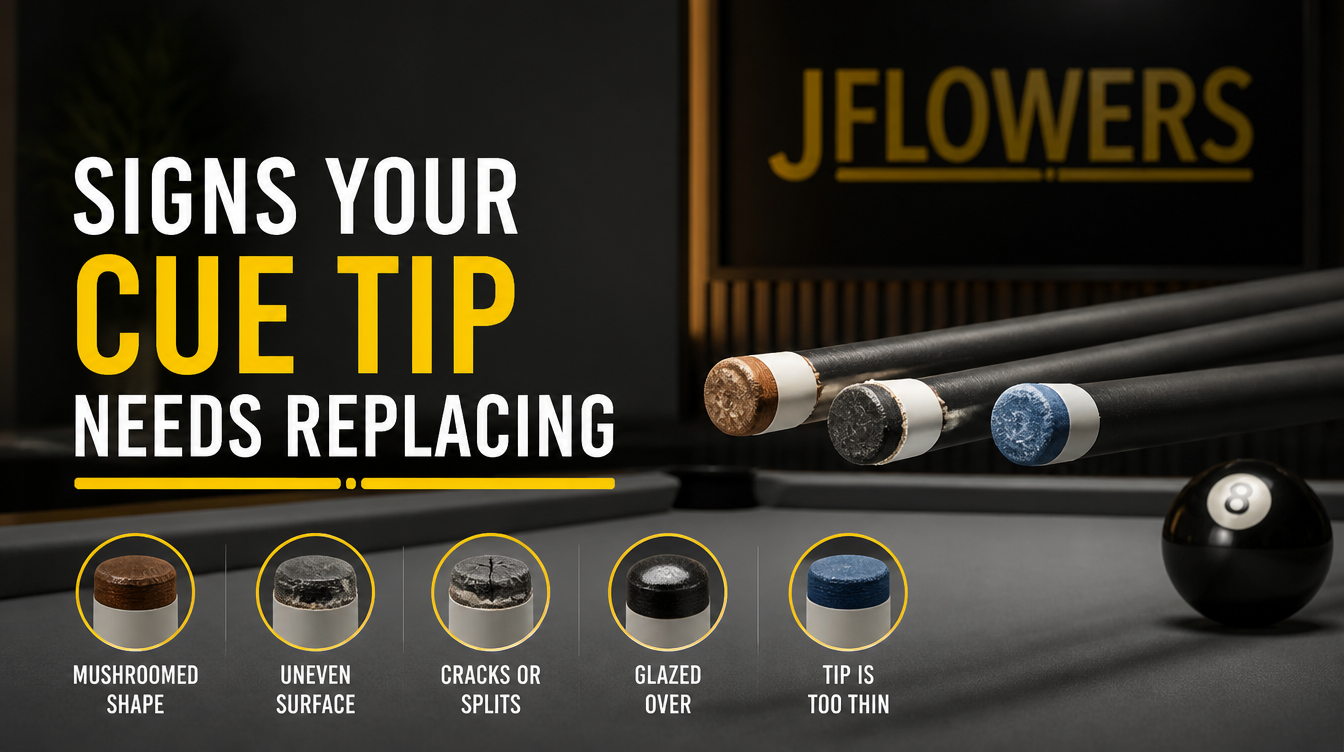
There's no single right answer to how often a pool cue tip needs replacing. The real answer depends on three things: how hard the tip is, how often you play, and what the tip is telling you. This guide gives you the practical framework to figure out the right replacement schedule for your specific situation.
- JFlowers Cues
Most pool players replace their cue tip too late. The tip has been quietly degrading for weeks, introducing inconsistencies into their game that they've been blaming on their stroke, the table, the cloth, or their concentration. Then they finally replace the tip and wonder why they didn't do it sooner.
- JFlowers Cues
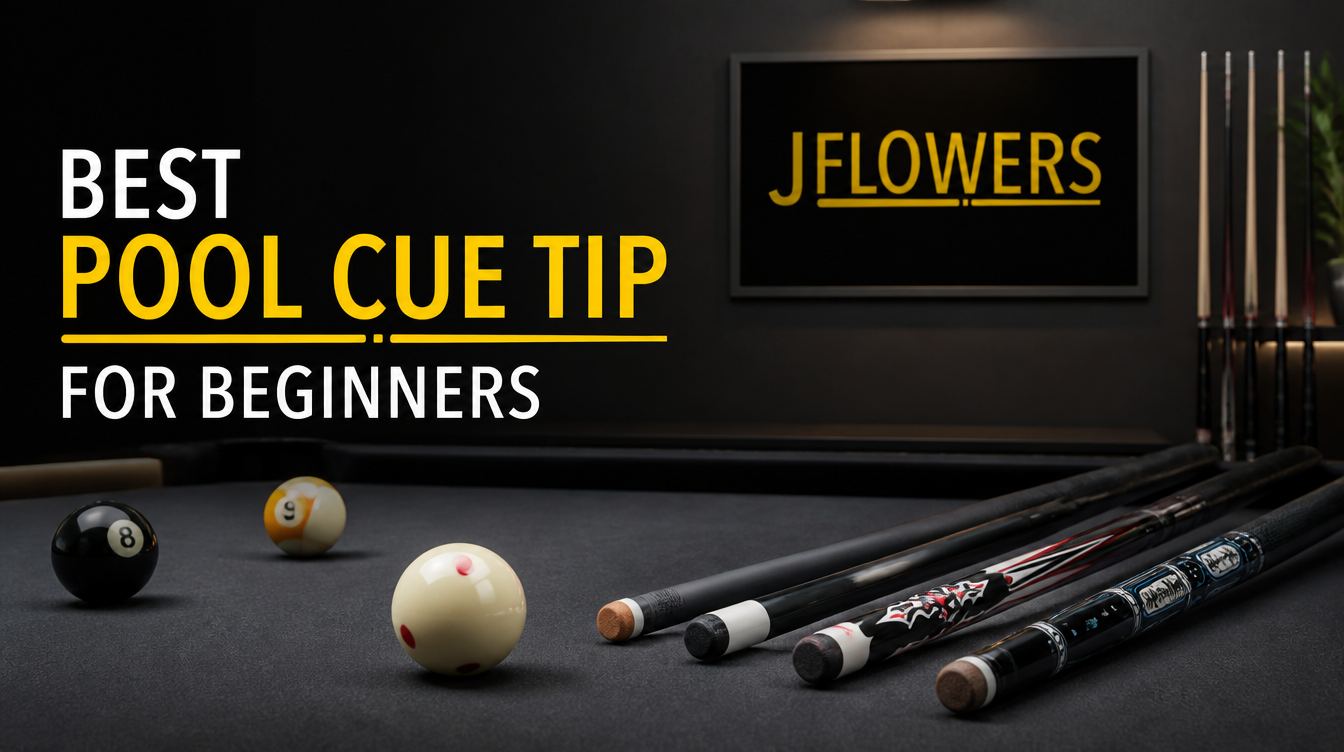
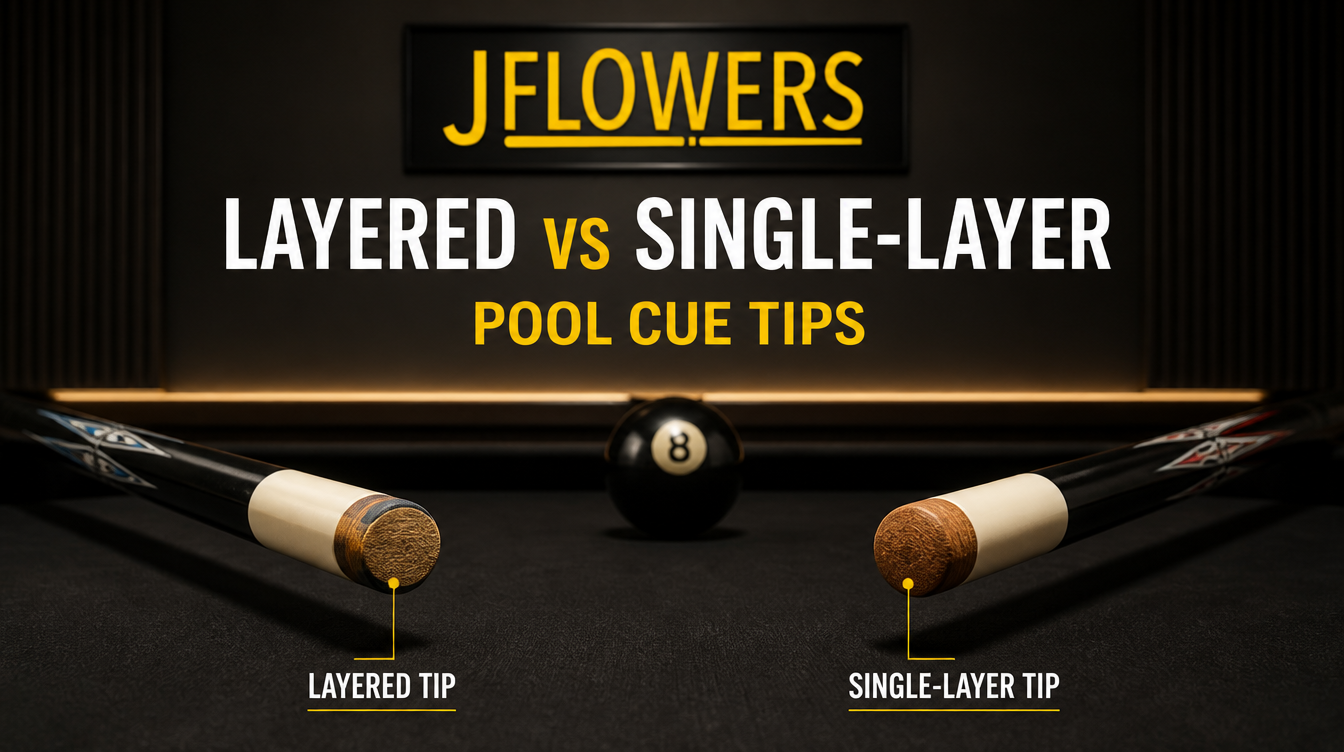
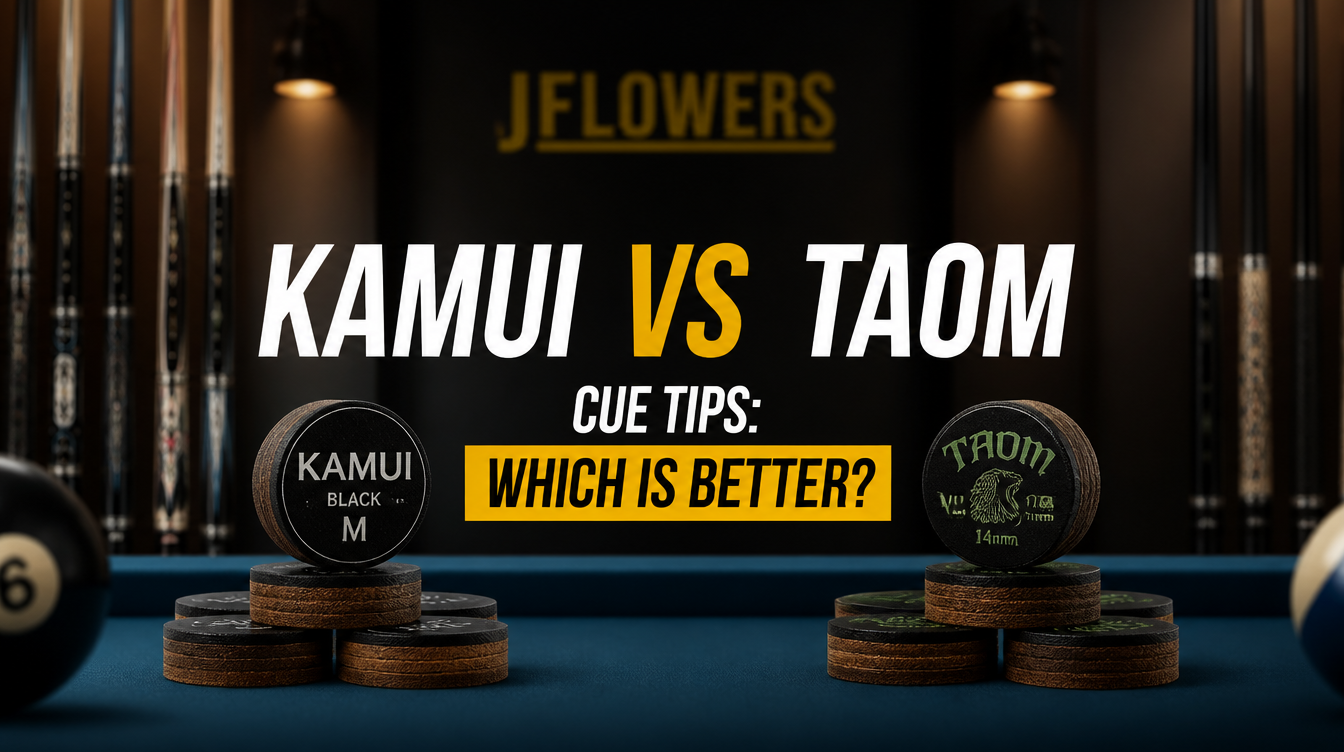
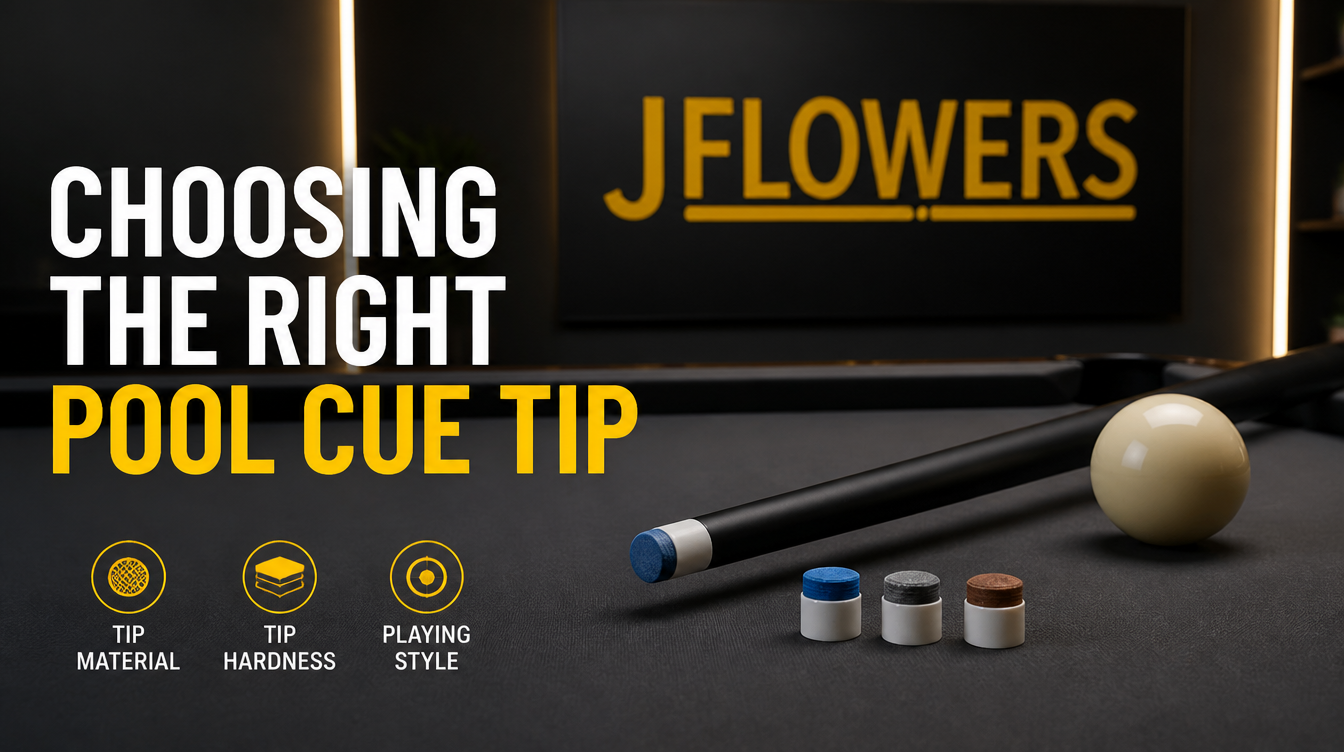
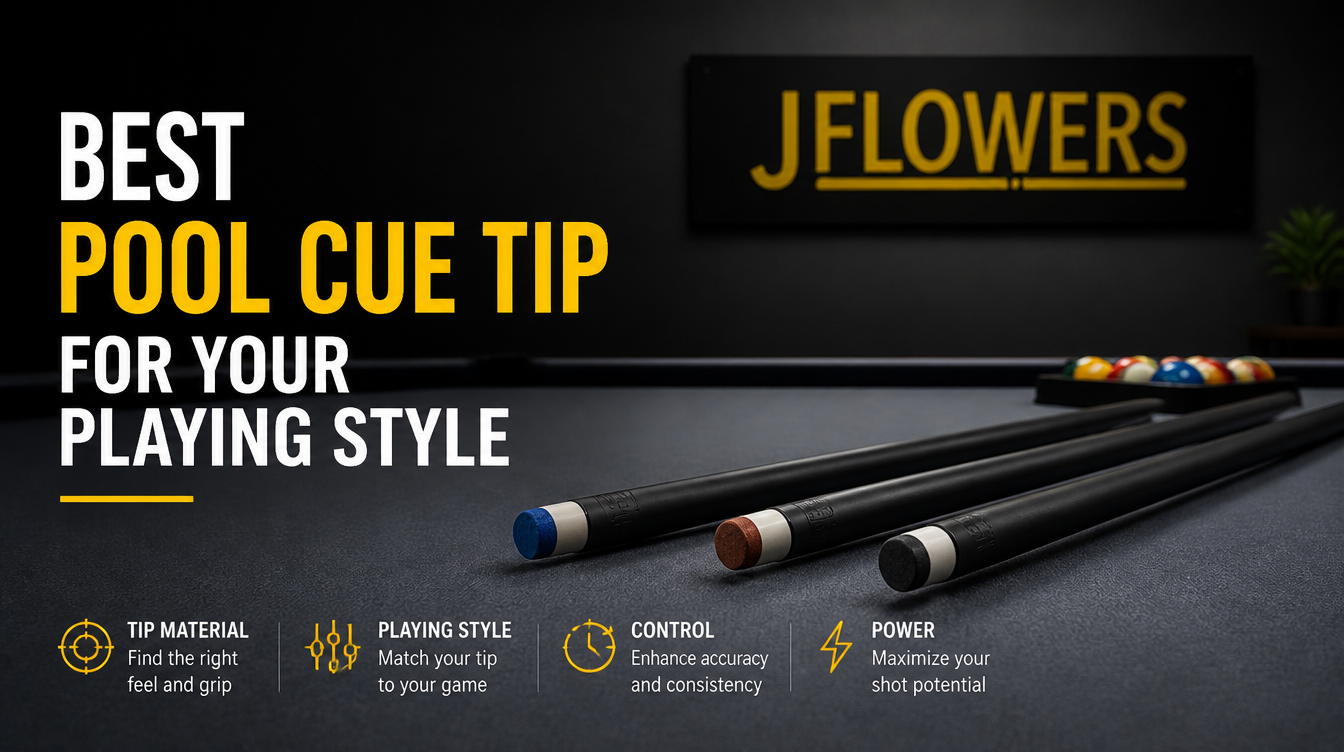
Every pool player eventually has to answer the same question: what tip should I use? If you just got a new cue, your stock tip may be mediocre. If your current tip is worn out, you're picking a replacement. If someone told you to upgrade your tip and you're trying to figure out what that means — this guide covers it all in one place.
- JFlowers Cues
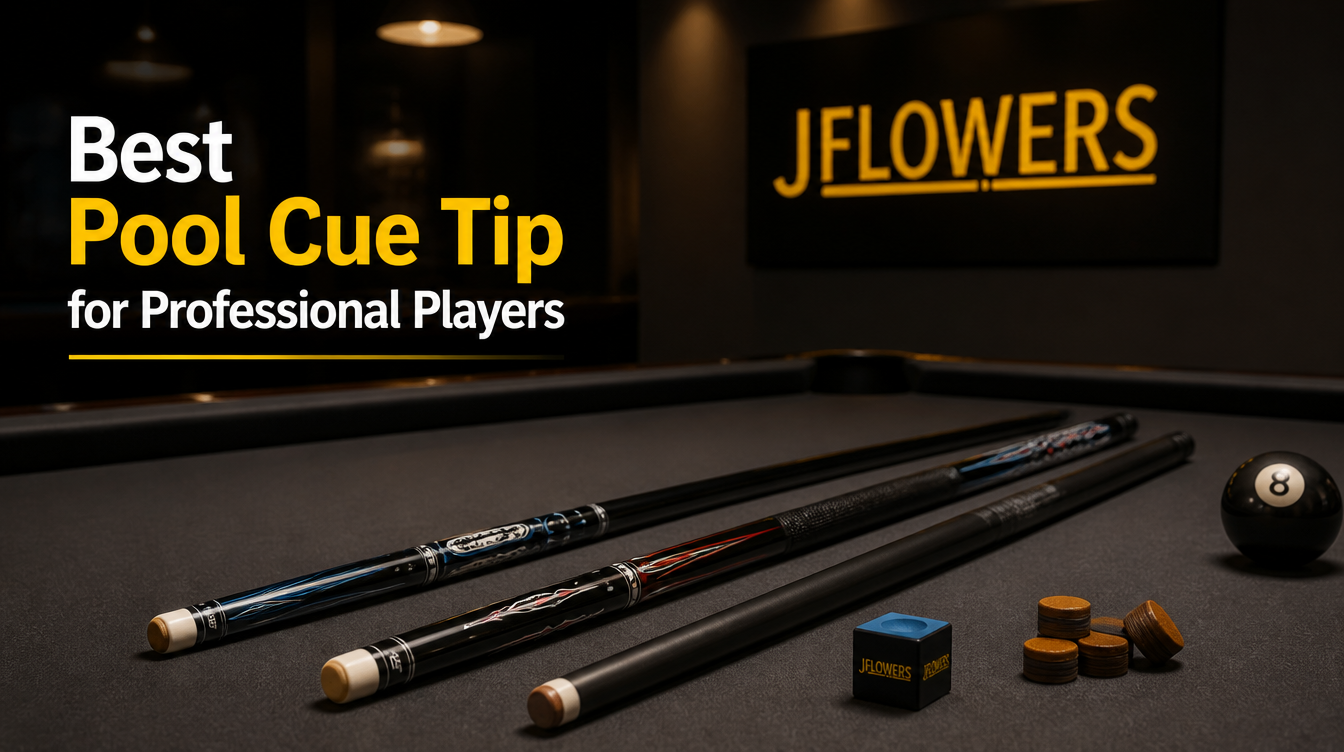
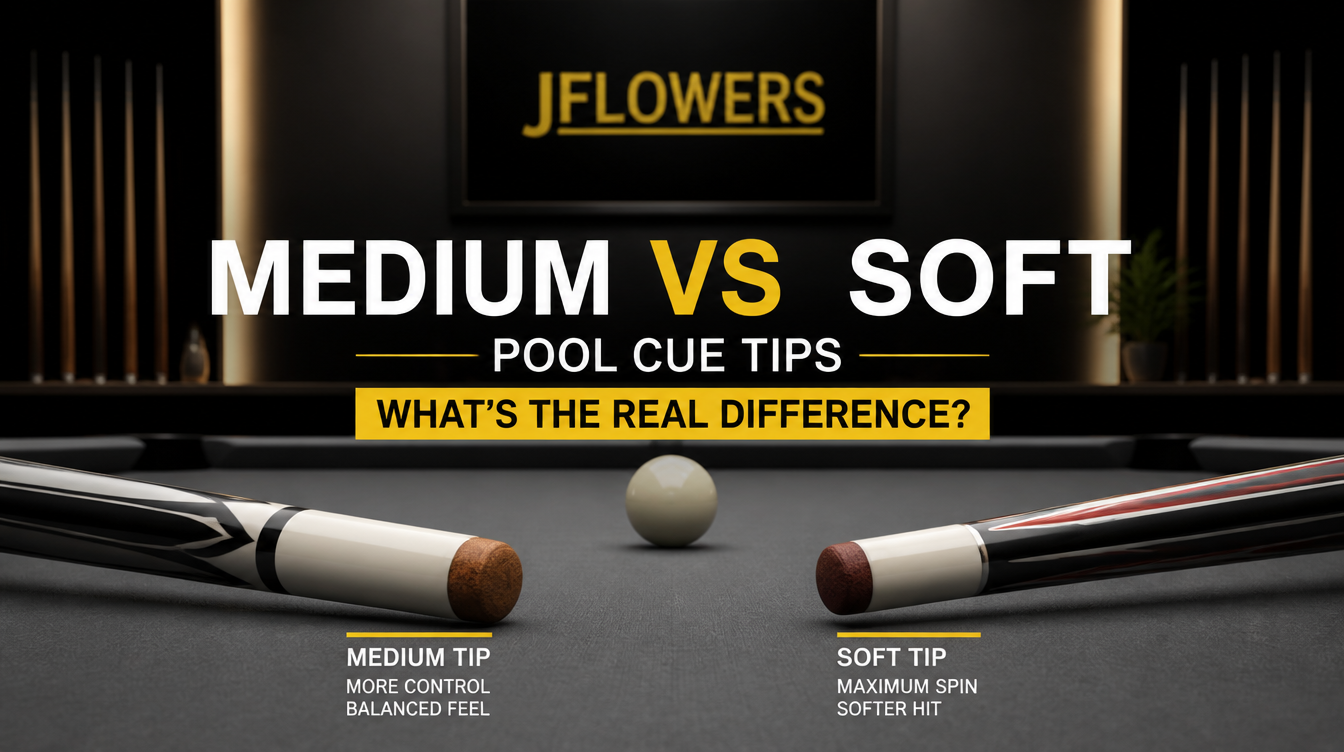
The tip is a small piece of leather at the end of your shaft, and it's the only part of your cue that ever touches the cue ball. That makes it, pound for pound, the most performance-critical component of your entire setup. Yet most players either use whatever came on their cue or pick a hardness based on something they heard at the pool hall.
- JFlowers Cues
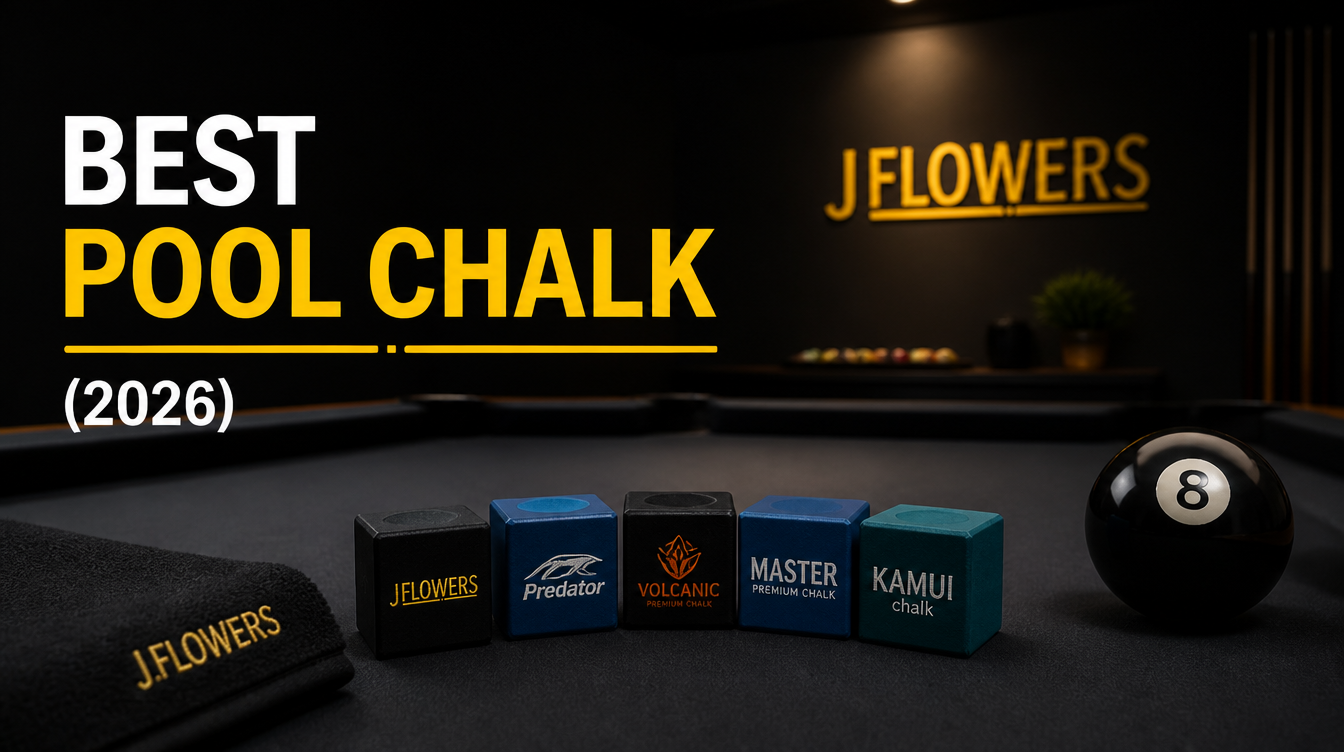
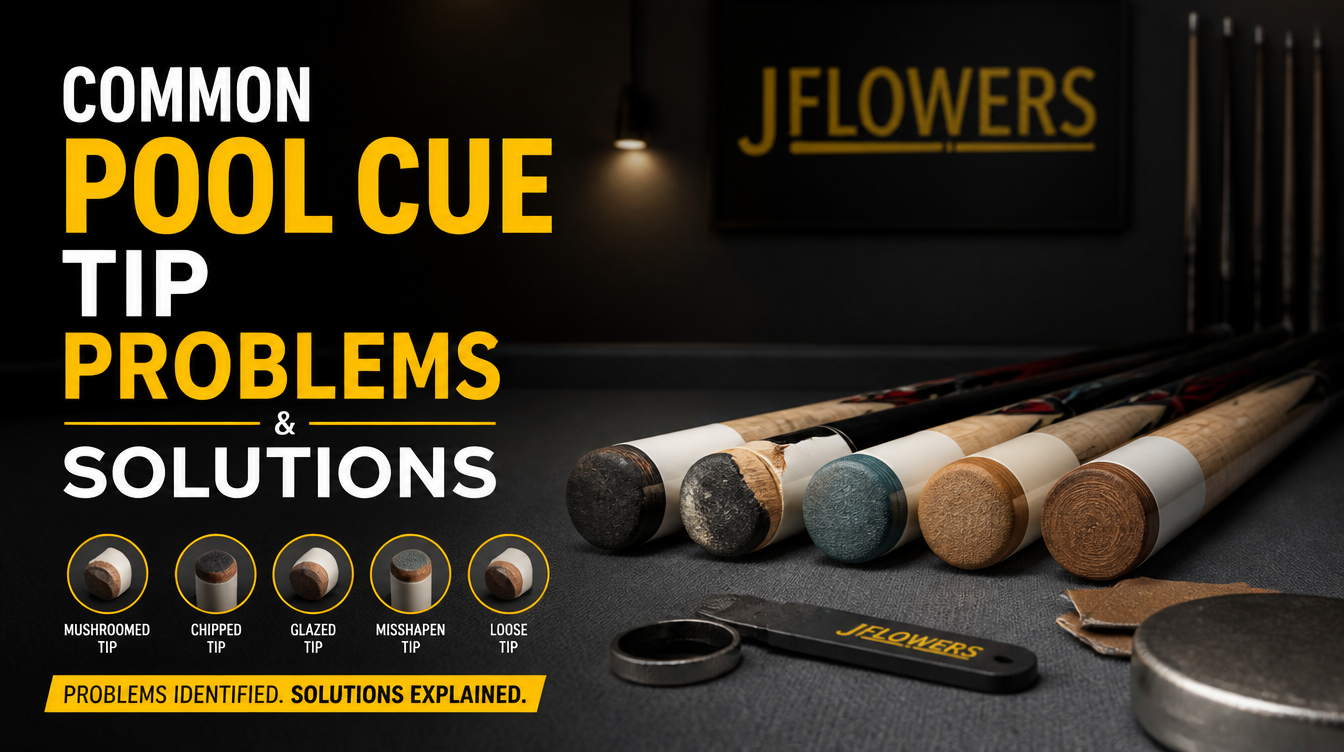
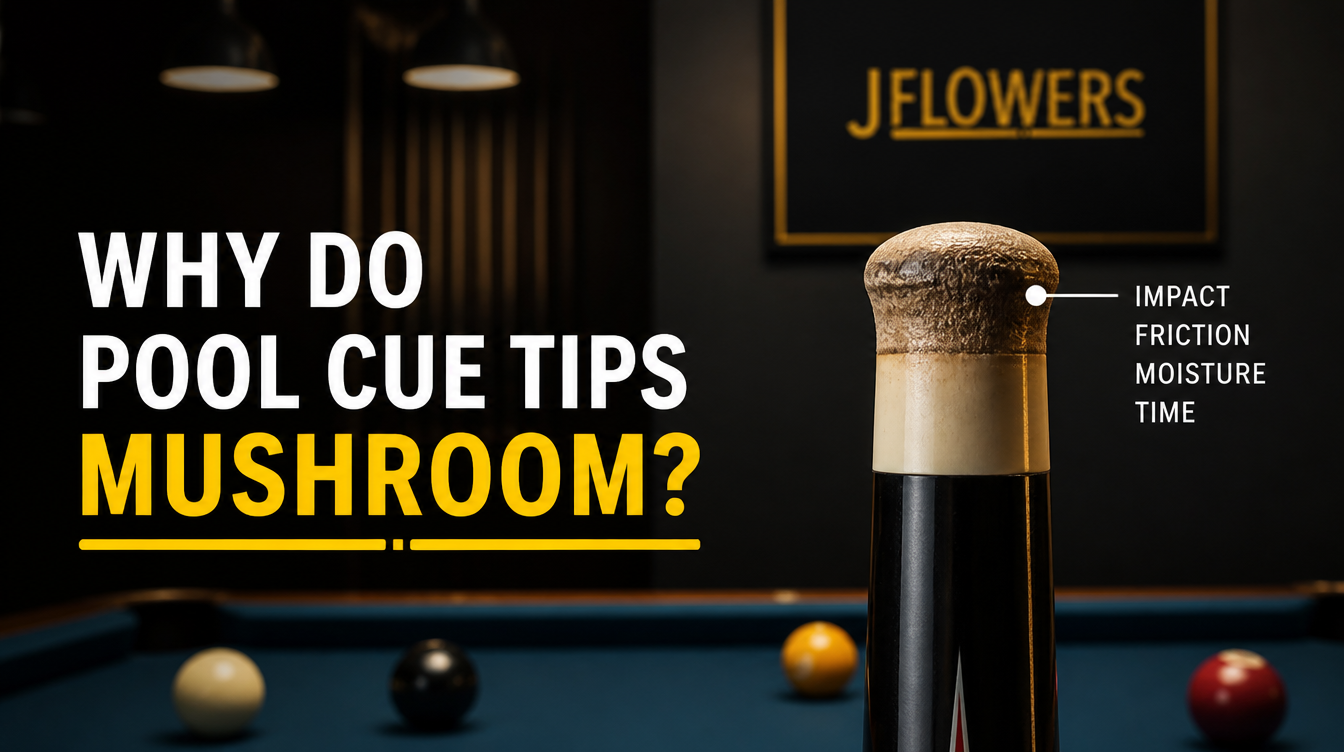
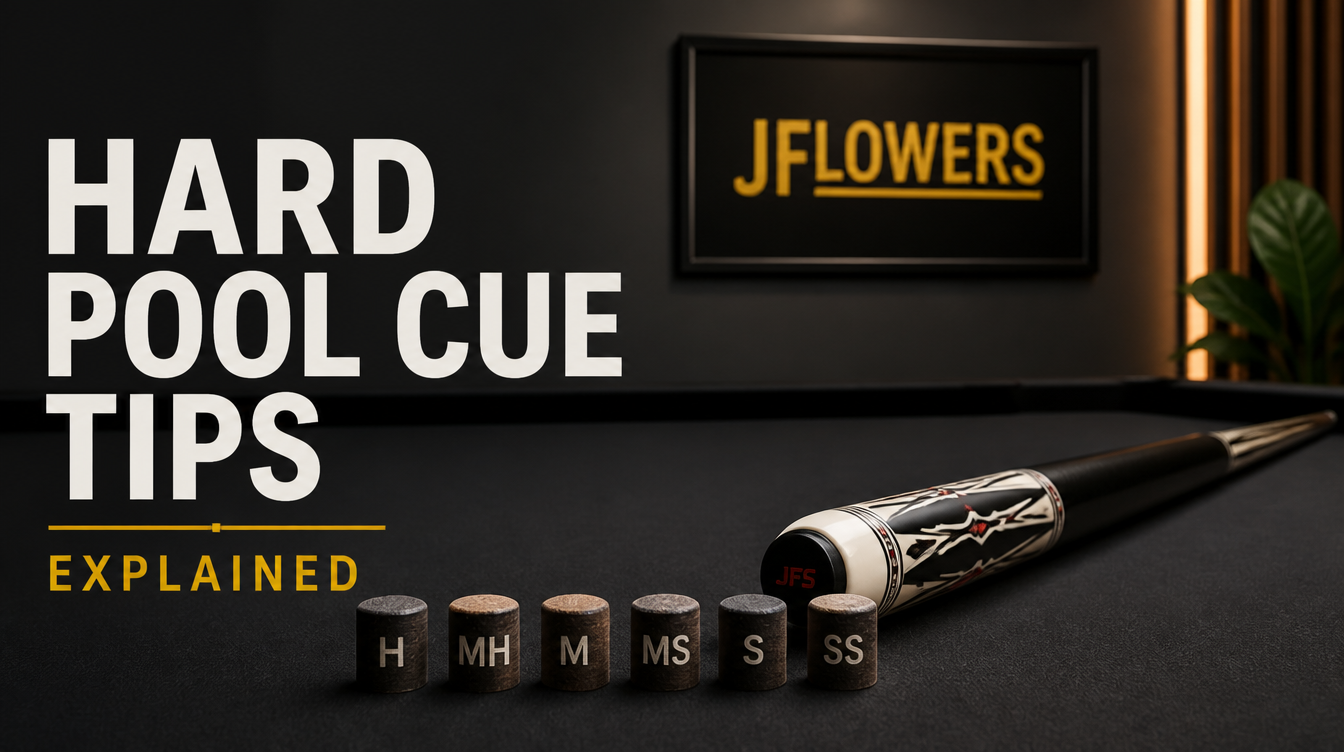
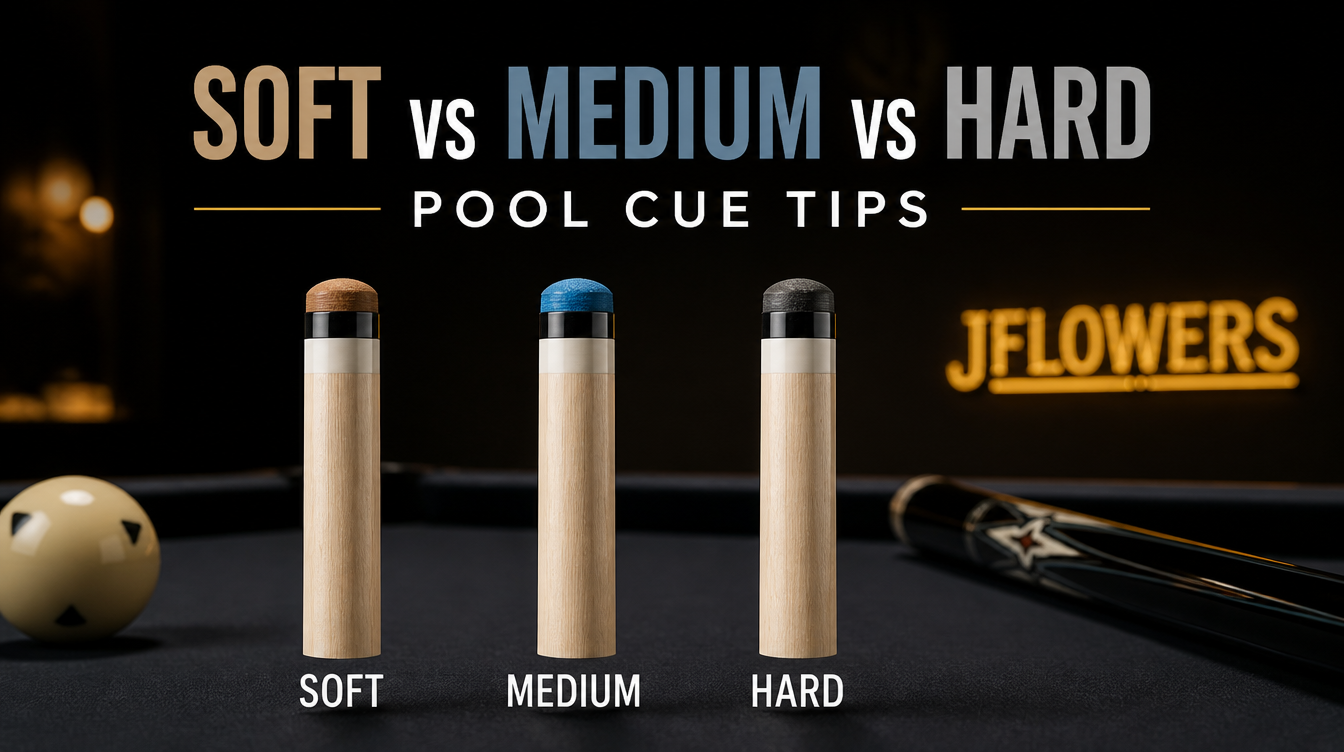
The cue tip is the smallest component of your setup — but it's the only part that actually contacts the cue ball. That makes it, in a real sense, the most performance-critical part of your entire cue. Yet it's consistently the most overlooked variable by players at every level. This guide covers what tip hardness actually does, how to match tip choice to your playing style, the most popular options on the market, and how to maintain your tip so it performs consistently.
Pool Cue Maintenance & Care
- JFlowers Cues
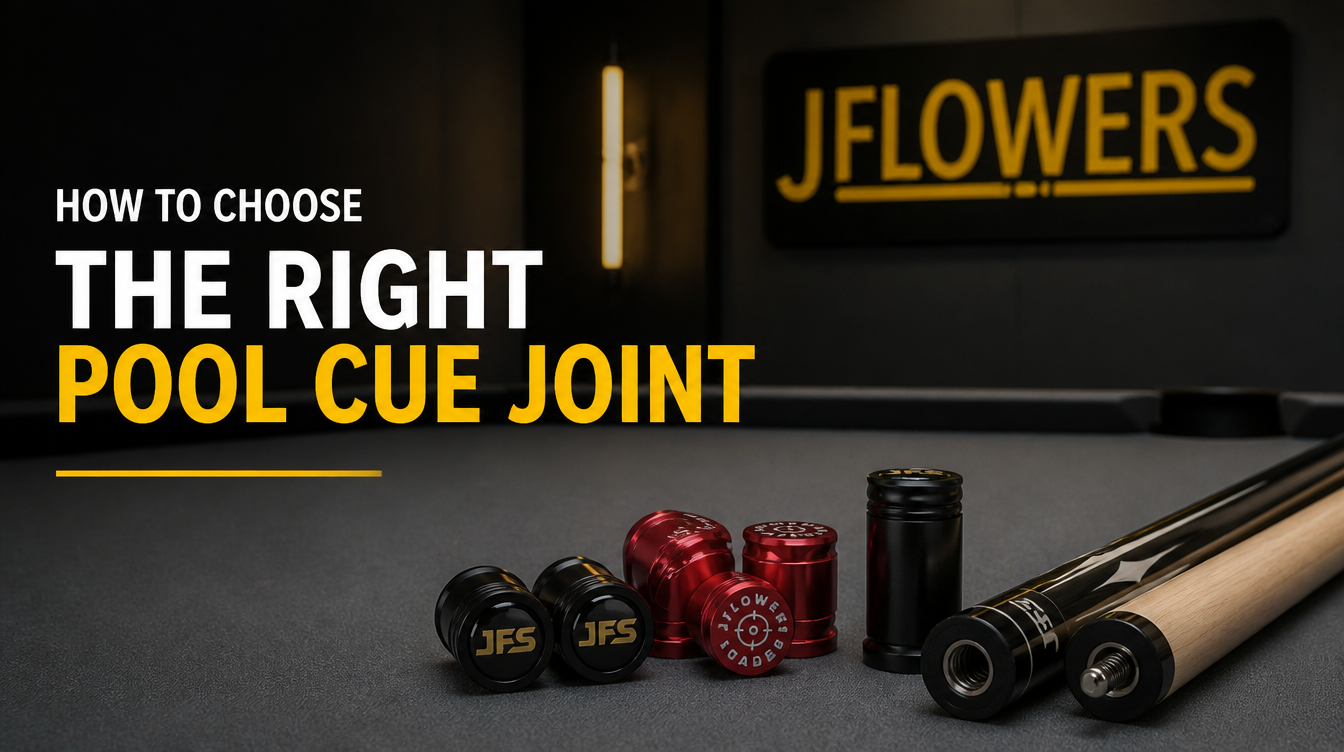
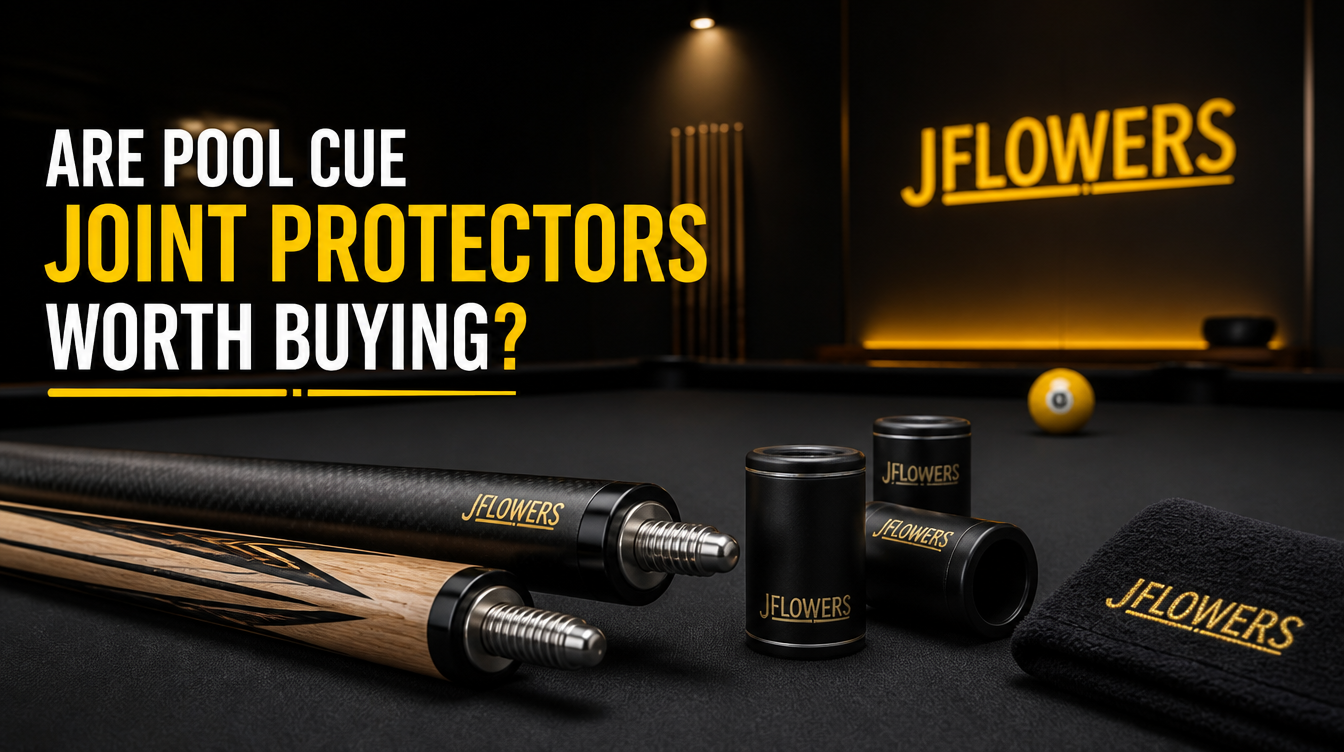
The joint is one of the least talked-about components of a pool cue — and one of the most important. It's the connection point between your shaft and butt, and it affects hit feel, vibration, and whether you can swap third-party shafts onto your cue without a machinist.
- JFlowers Cues
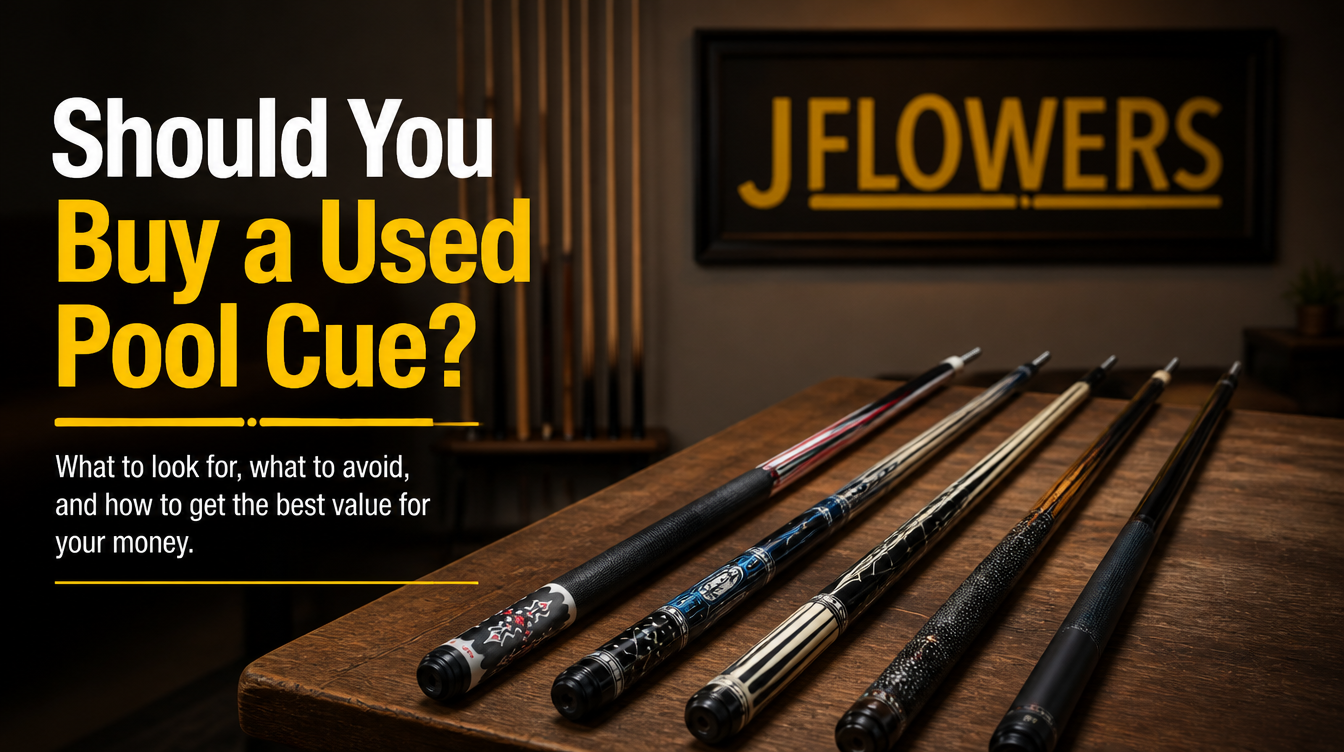
The short answer: buying used can be smart — if you know what you're doing. If you don't, you're often better off buying new in the $200-$400 range from a brand like JFlowers and knowing exactly what you're getting.
- JFlowers Cues
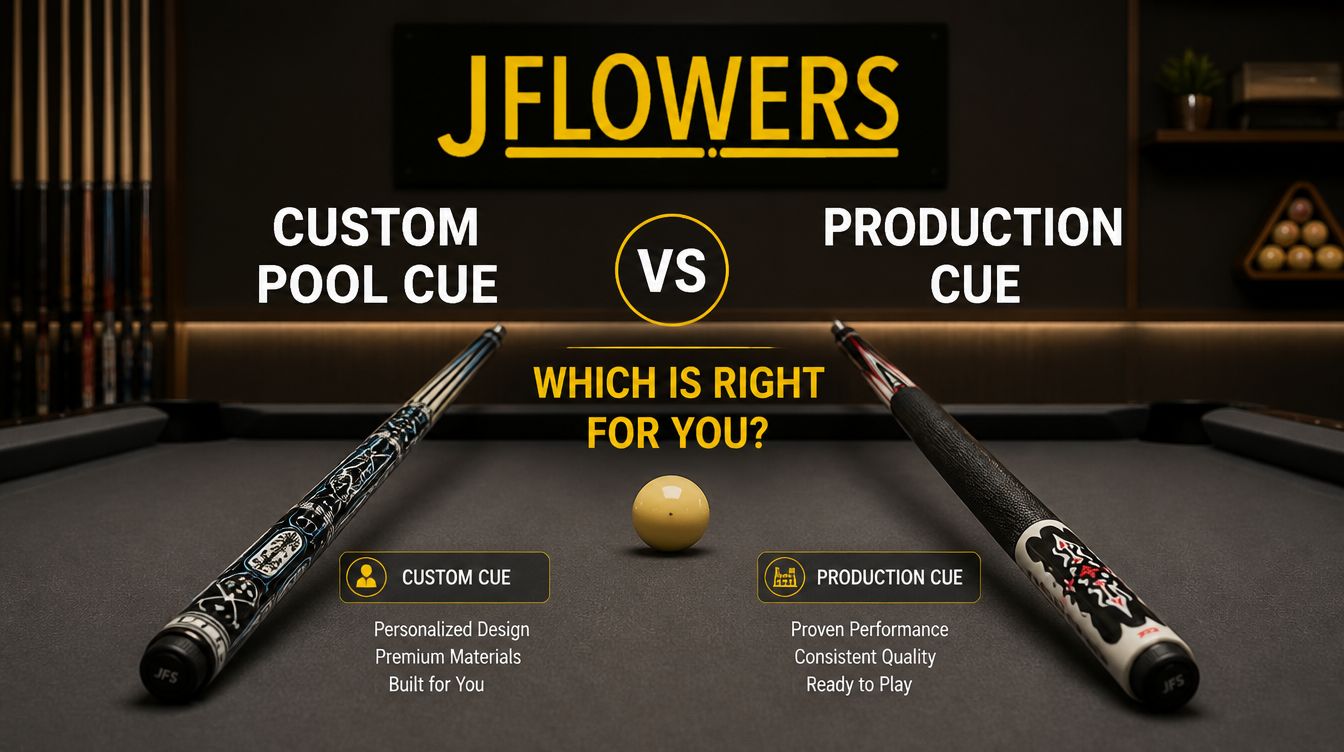
Ask a cue collector what to buy and they'll say custom. Ask a competitive player who wins tournaments and they might tell you their production cue is the best they've ever played. The debate between custom and production pool cues has been going on for decades, and the right answer has a lot more to do with how you play than how much you want to spend.
- JFlowers Cues
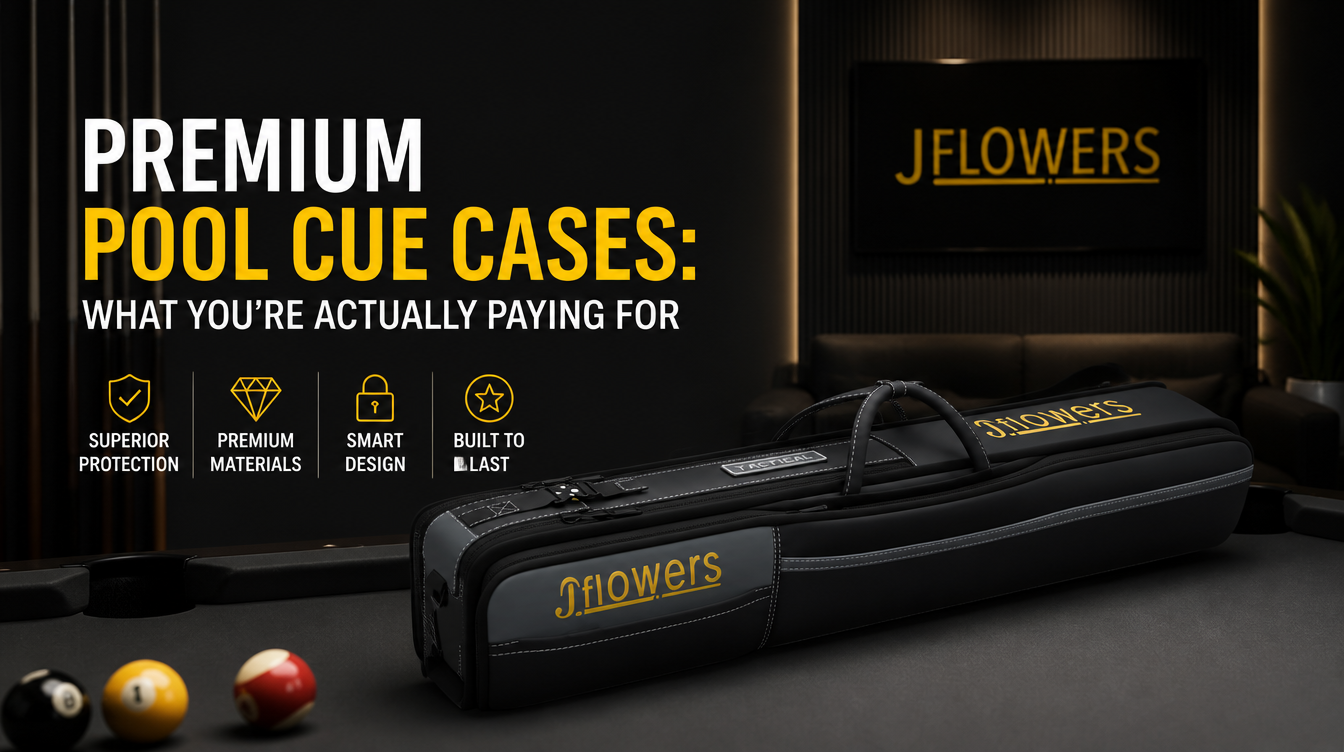
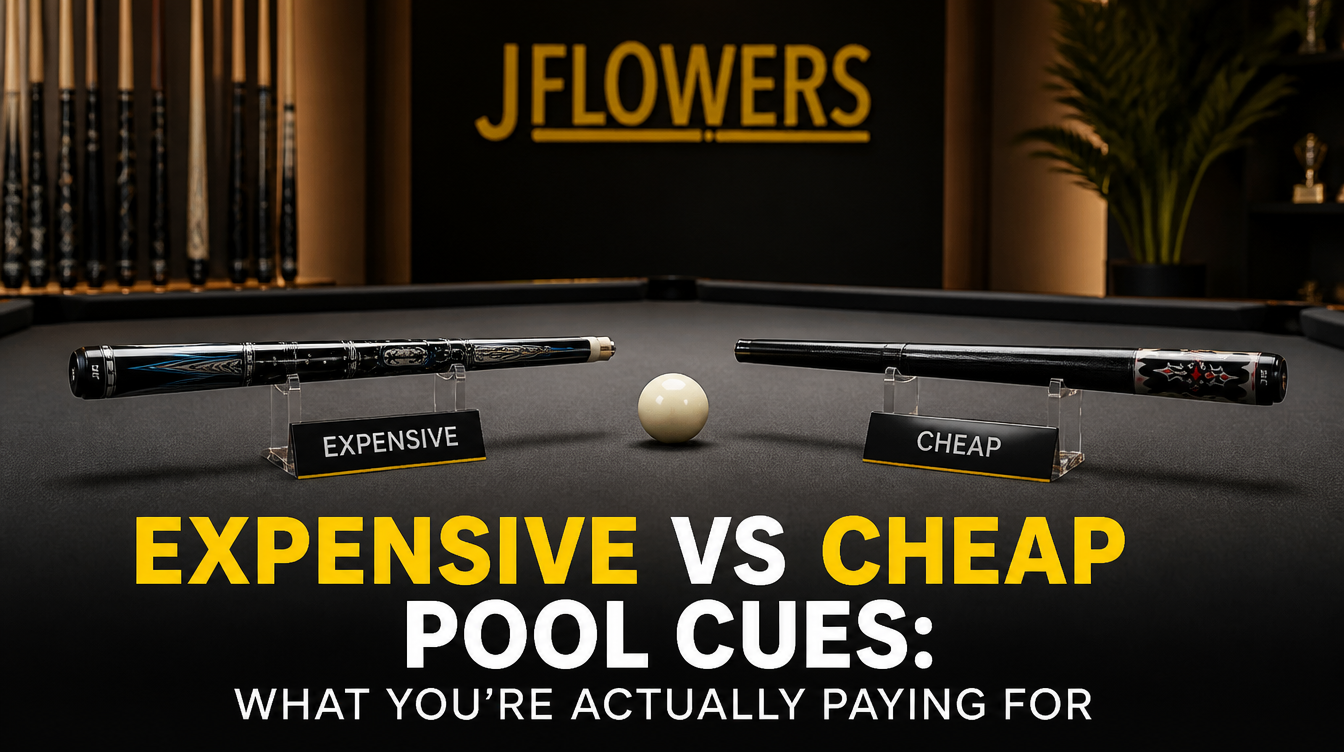
Walk into a sporting goods store and you can pick up a pool cue for $30. Walk into a specialty billiards shop and you can spend $1,500 on one. Both are pool cues. So what exactly is the difference? The honest answer comes down to five things: shaft quality, joint precision, tip and ferrule construction, balance design, and build consistency. Some of these differences are enormous between price tiers. Others are marginal once you're past a certain threshold.
- JFlowers Cues
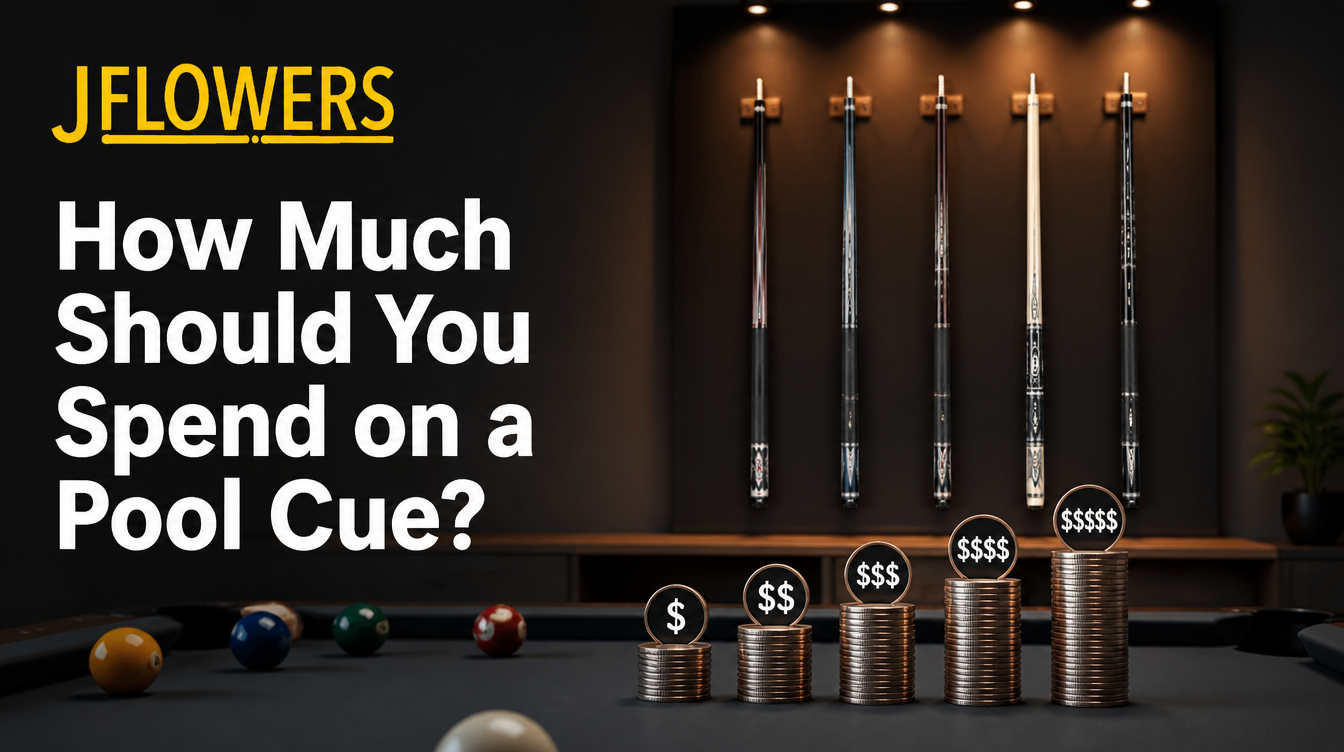
It's one of the most common questions in billiards: how much cue do you actually need? The honest answer is — it depends on where you are in your game right now and where you're headed. Spending $800 on a cue before you've developed a consistent stroke is wasted money. Playing for years on a $60 stick when you're ready to compete is holding you back. This guide maps every budget tier, what you get at each price point, and when it makes sense to move up.
- JFlowers Cues
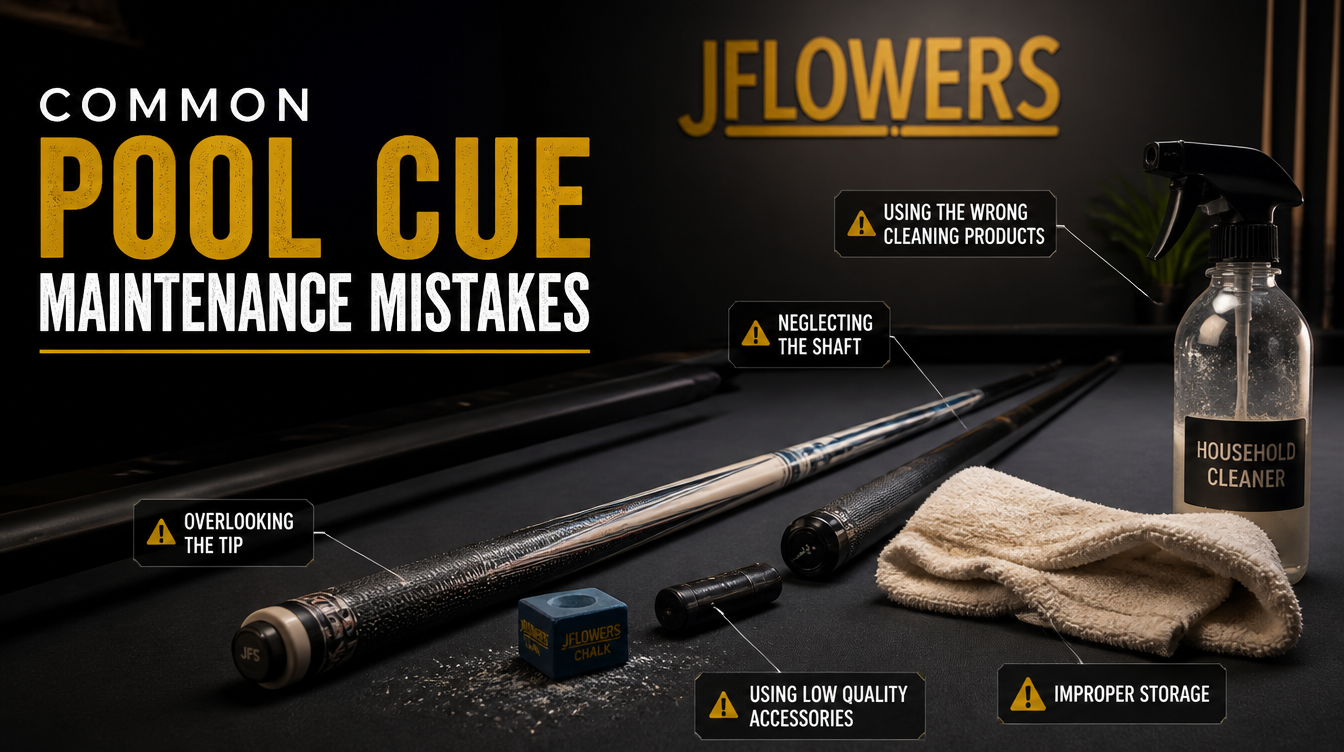
The errors that damage cues, shorten equipment life, and cost players money. Most cue maintenance mistakes fall into two categories: doing things that actively damage the cue, and not doing the things that protect it. Both are common. Both are avoidable.
- JFlowers Cues
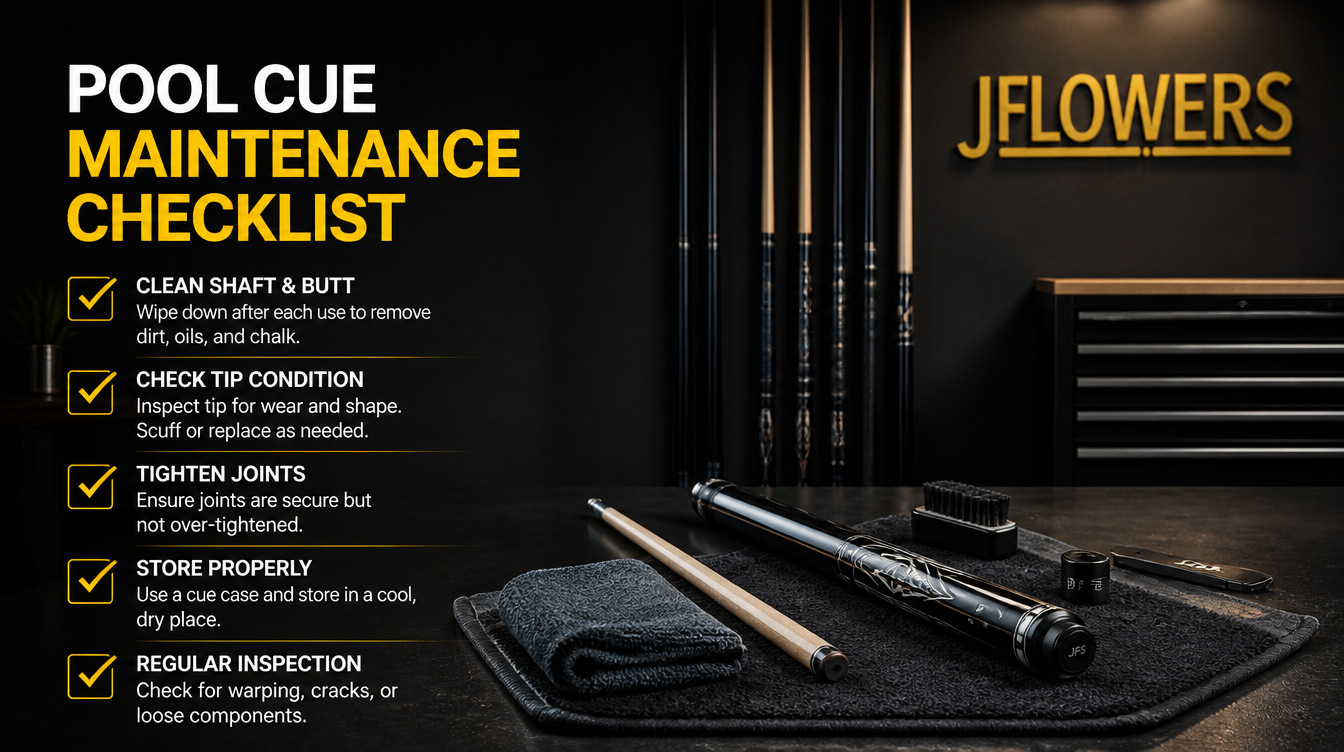
Most pool players either over-maintain their cues (applying products that aren't needed and sometimes cause problems) or under-maintain them (doing nothing until something obviously breaks). The right maintenance routine is somewhere in the middle — simple, consistent, and organized by how often each task actually needs to happen.
- JFlowers Cues
What causes it, who it affects, and how to make sure it never happens to your cue.
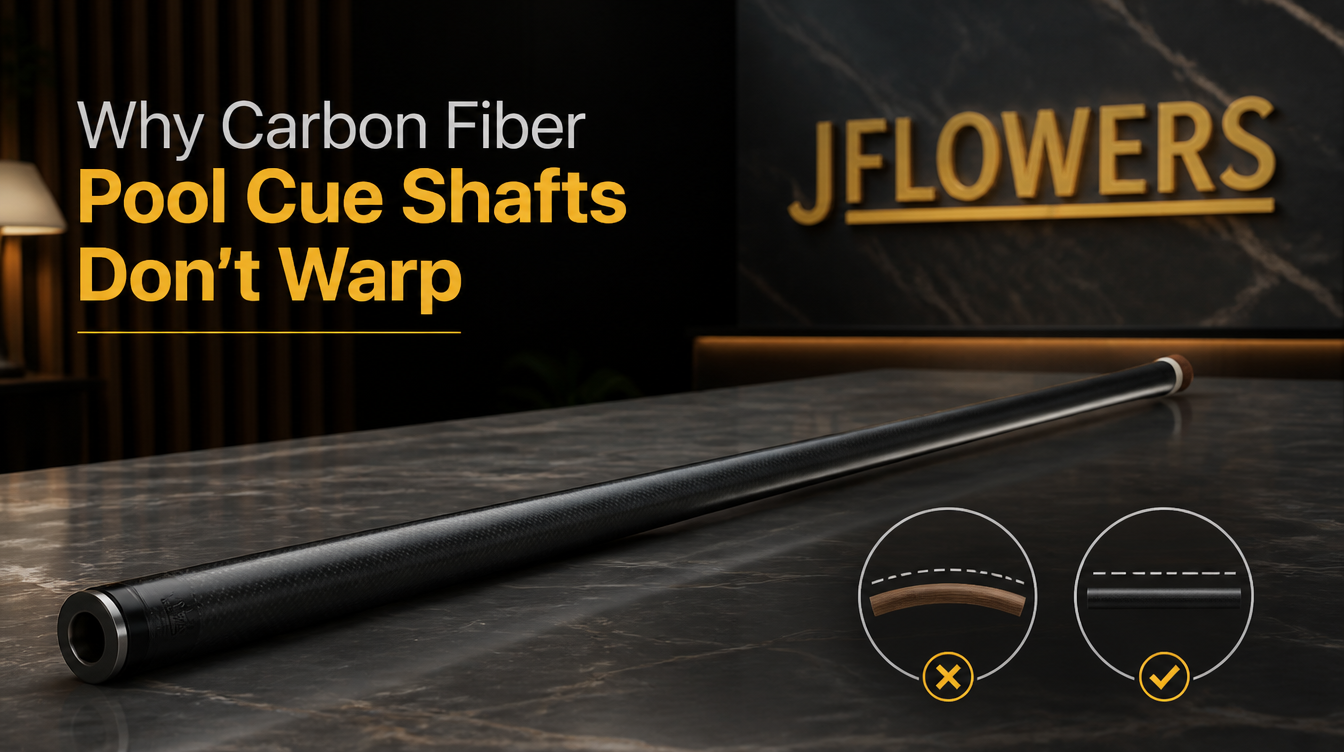
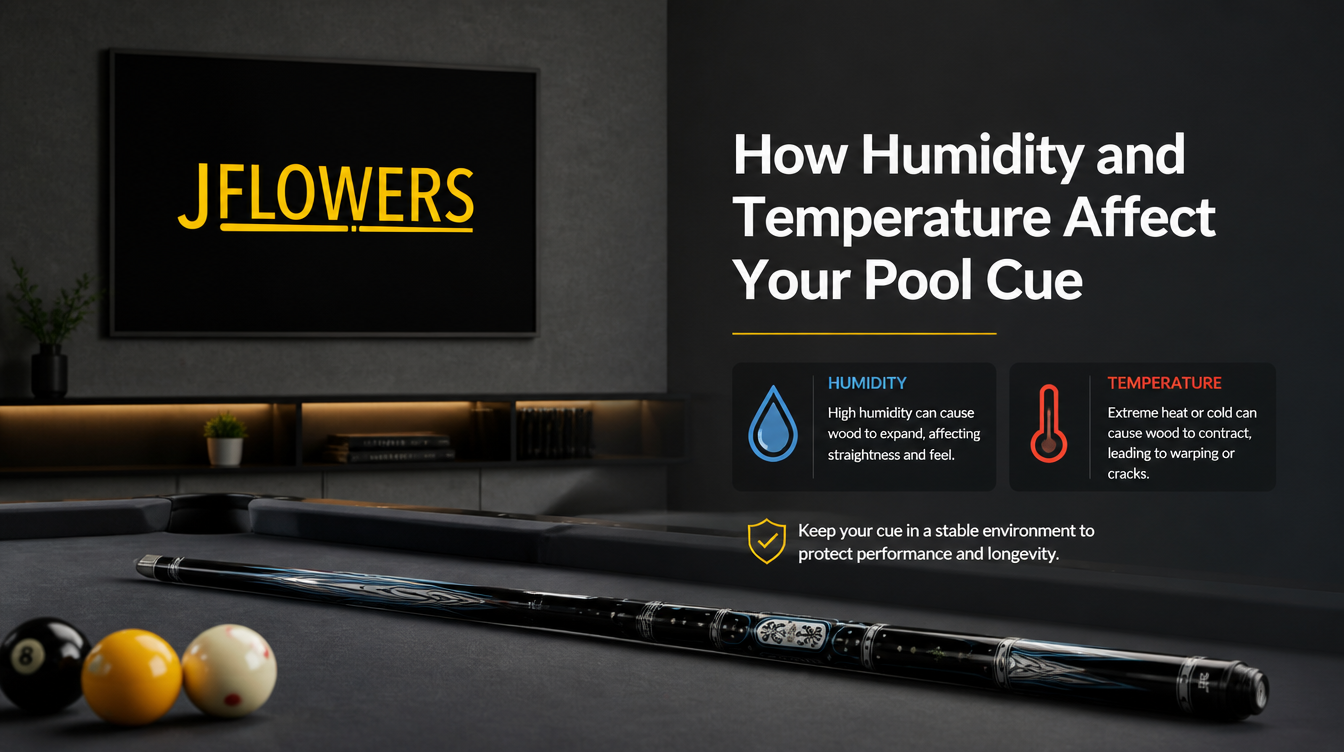
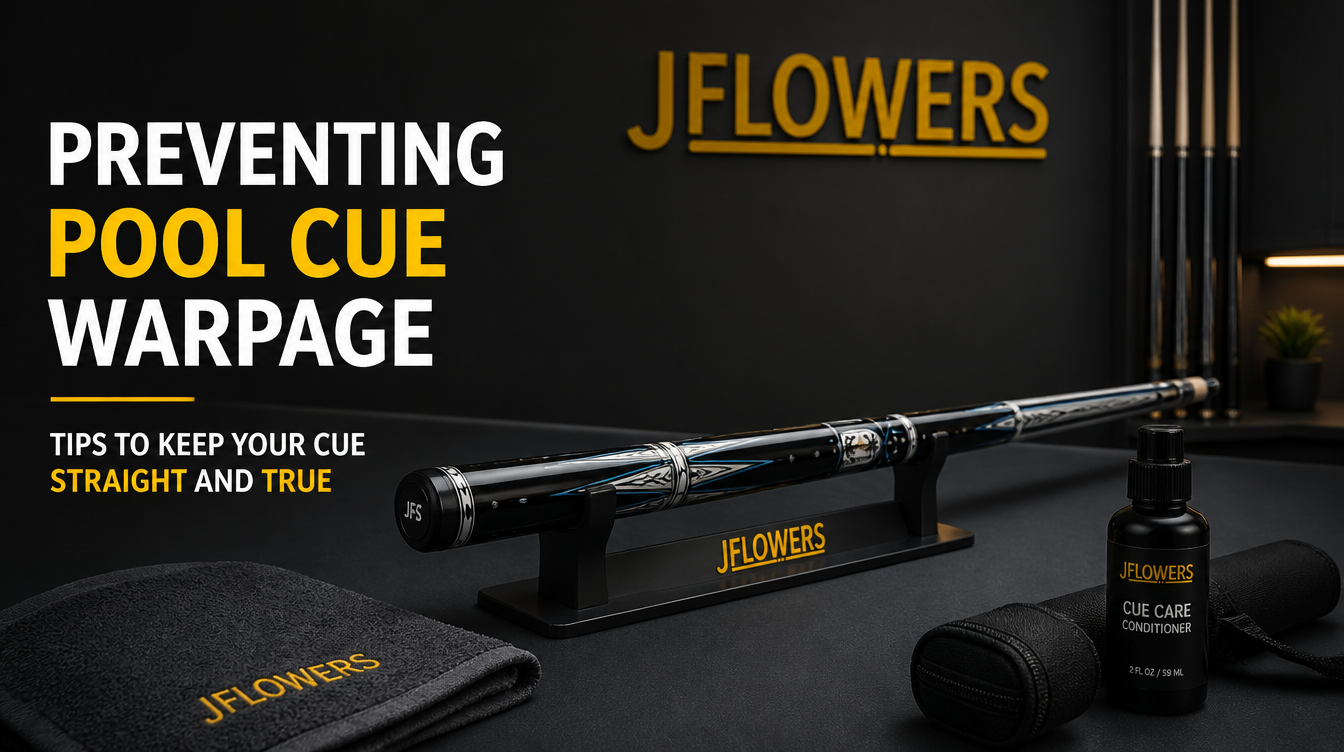
A warped pool cue shaft is one of the most frustrating equipment problems in the game — and one of the most preventable. The warp doesn't happen overnight. It develops slowly over weeks or months of suboptimal storage, usually without the player noticing until the shot inconsistency has gotten bad enough to investigate.
- JFlowers Cues
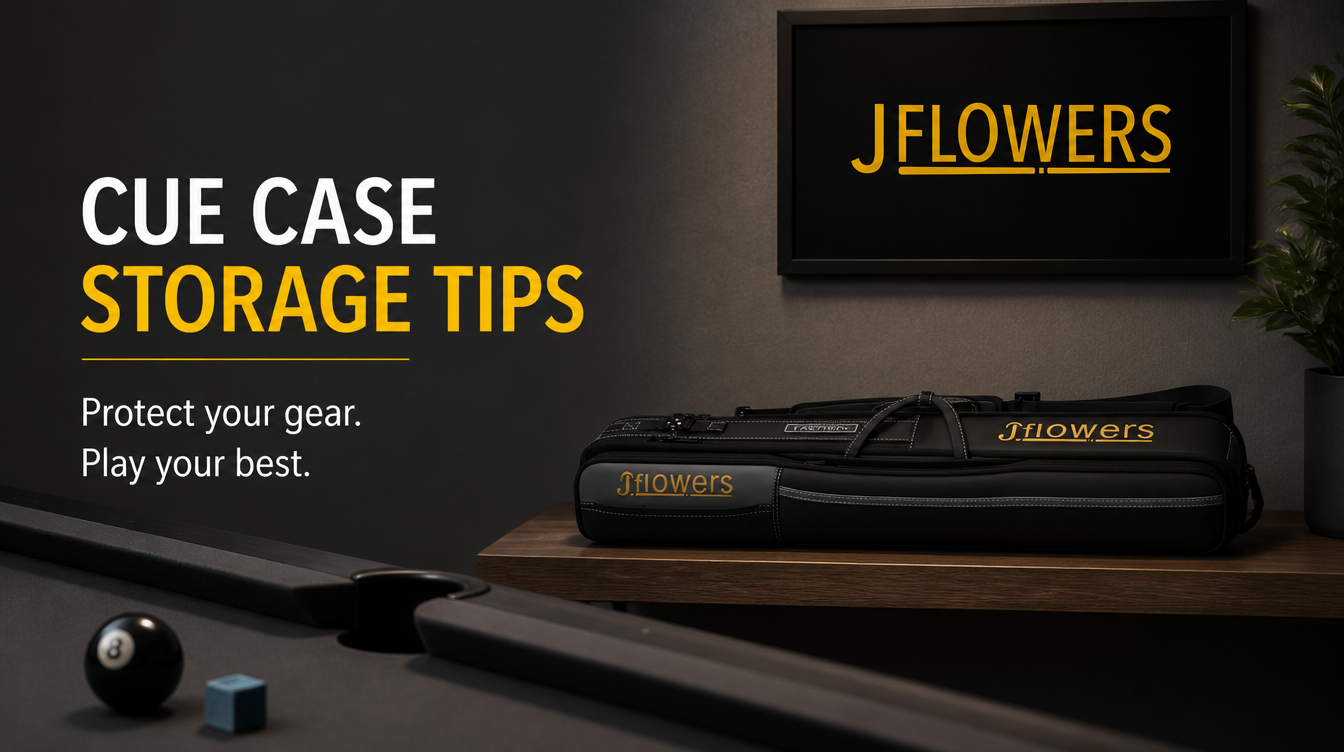
More pool cues get damaged in storage than in play. A cue that's hit tens of thousands of shots without issue can develop a warp in a few months from being stored badly. The irony is that proper storage doesn't cost anything — it's just about breaking a few bad habits and building a few good ones.
- JFlowers Cues
One of the biggest practical advantages of a carbon fiber shaft is how little maintenance it needs compared to maple. But "low maintenance" still means some maintenance. Players who switch from maple sometimes carry over their old cleaning habits — and some of those habits aren't appropriate for carbon fiber.
- JFlowers Cues
Most pool players clean their cue the wrong way. Either they don't clean it at all and let chalk, skin oil, and grime build up until it's affecting performance — or they use products that aren't appropriate for the materials and end up doing damage they didn't mean to.
Pool Cue Cases & Protection
- JFlowers Cues
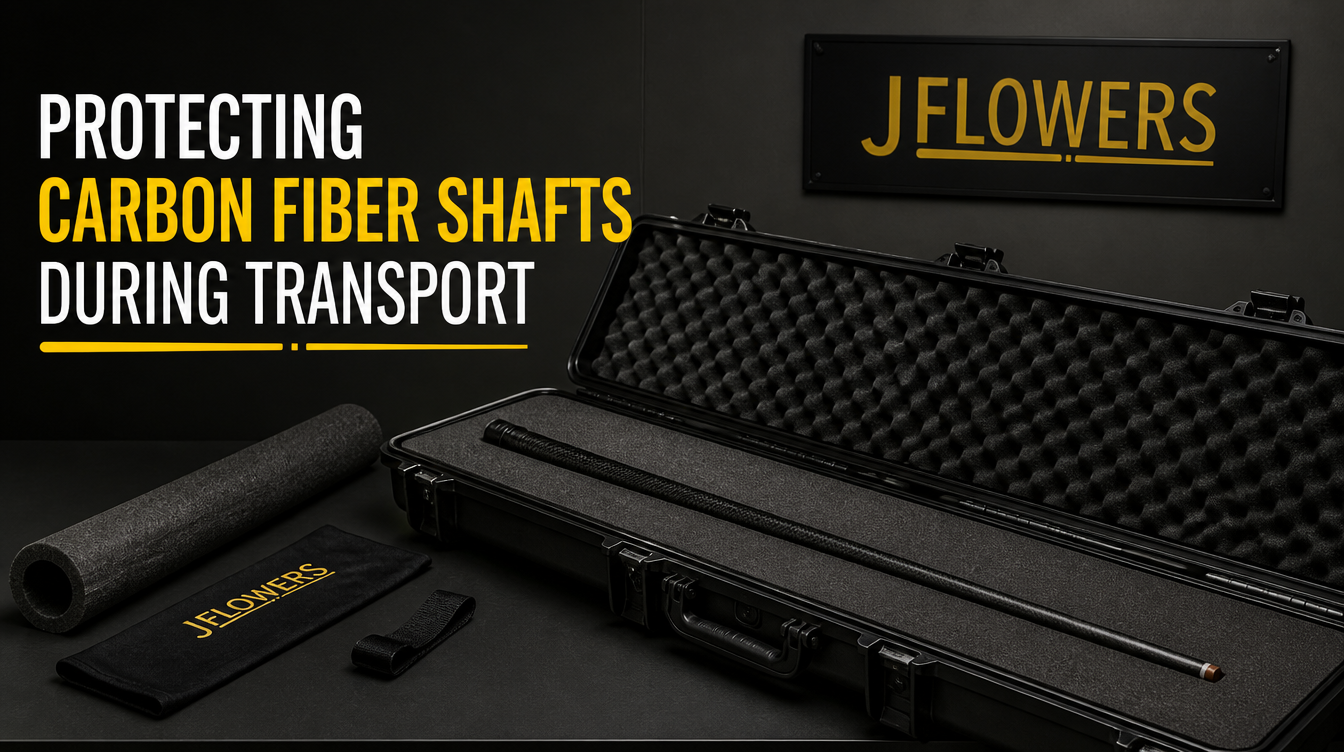
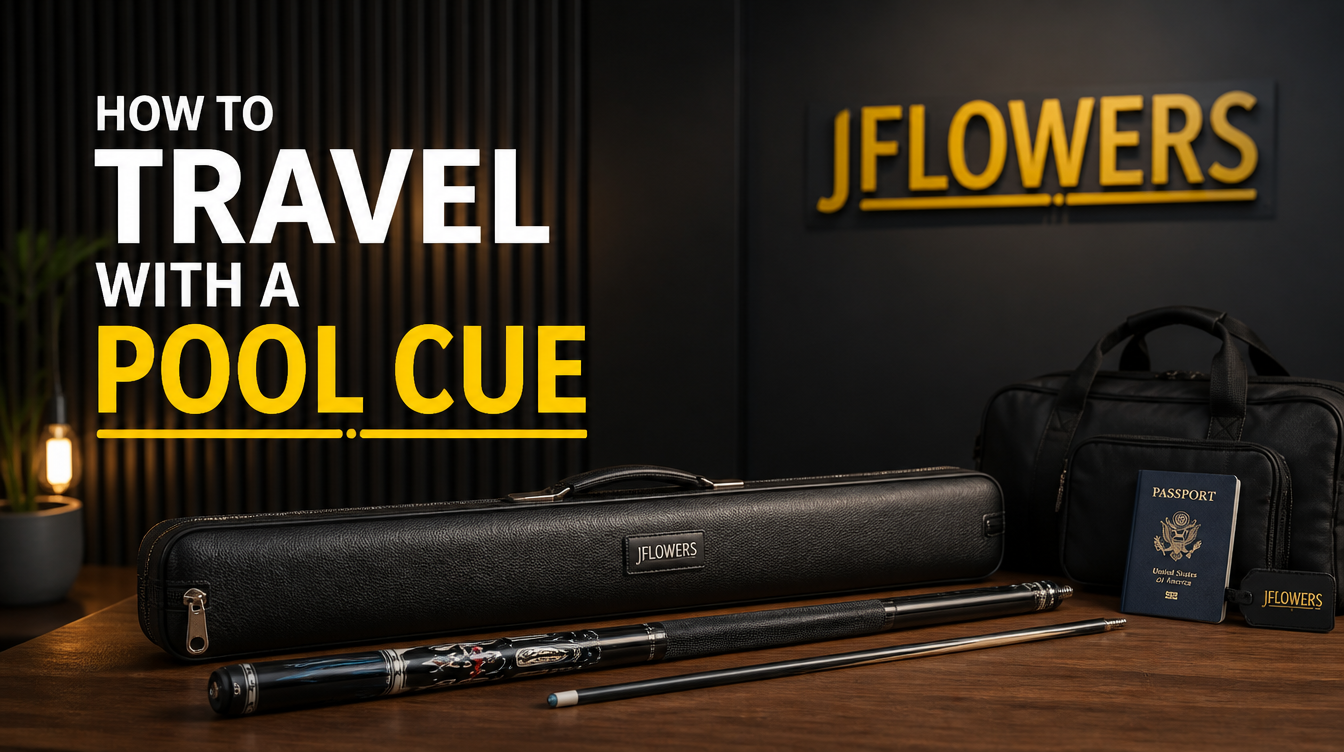
Protecting your cue on the road, in the air, and across every type of trip. Traveling with a pool cue creates equipment risks that don't exist when you play locally. Cars that get hot. Checked luggage that gets thrown around. Varying climates that affect maple shafts. The possibility of arriving at a tournament without your cue because it was confiscated or damaged in transit.
- JFlowers Cues
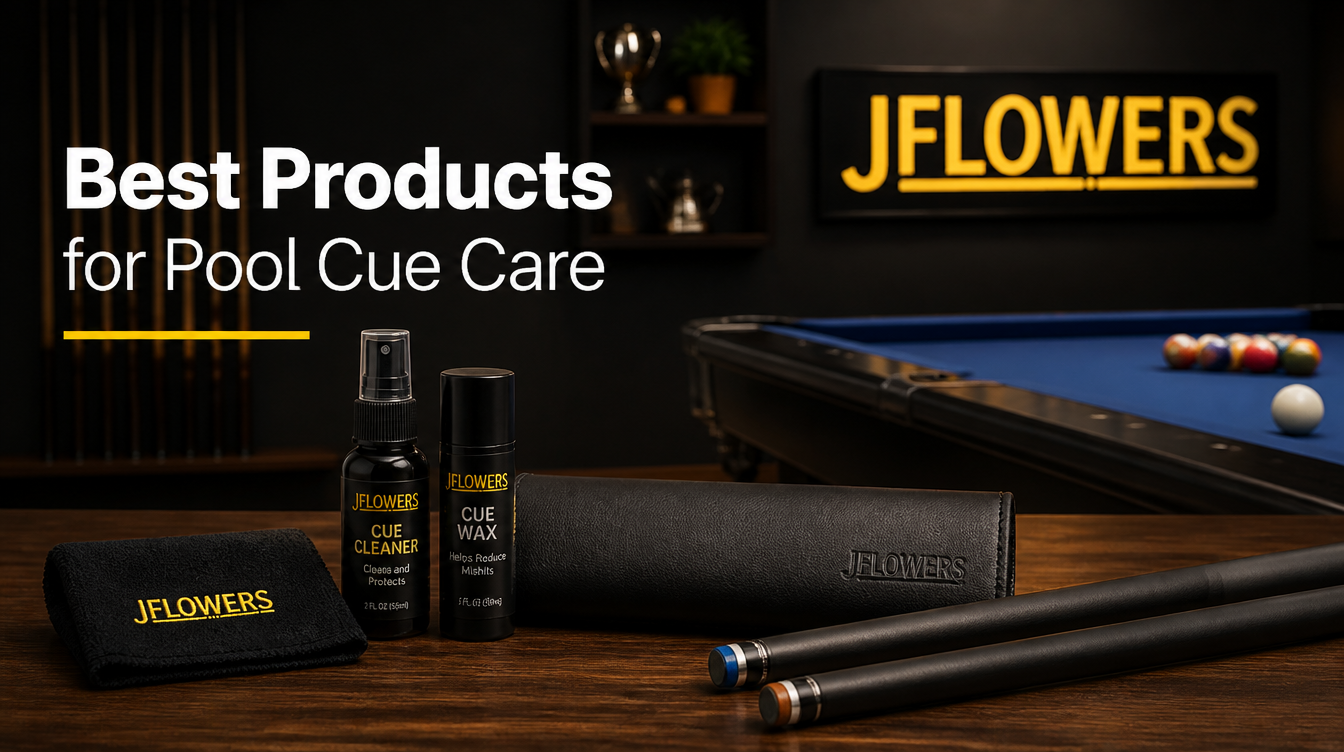
What actually works, what's worth buying, and what you can skip.
The pool cue care product market has a lot of options — some genuinely useful, some redundant, and some that are either marketed poorly or positioned as necessities when they're really optional. This guide cuts through the noise and tells you exactly what's worth having, what it does, and what you can pass on.
- JFlowers Cues
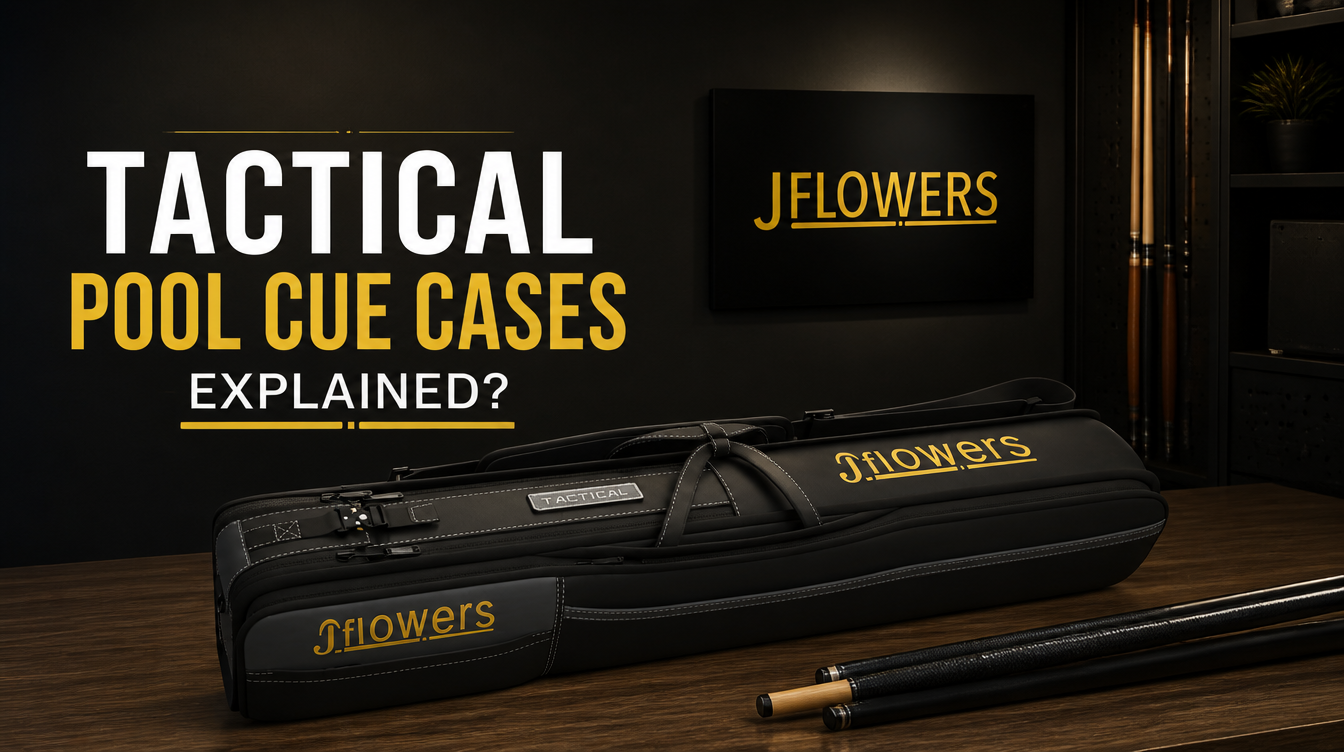
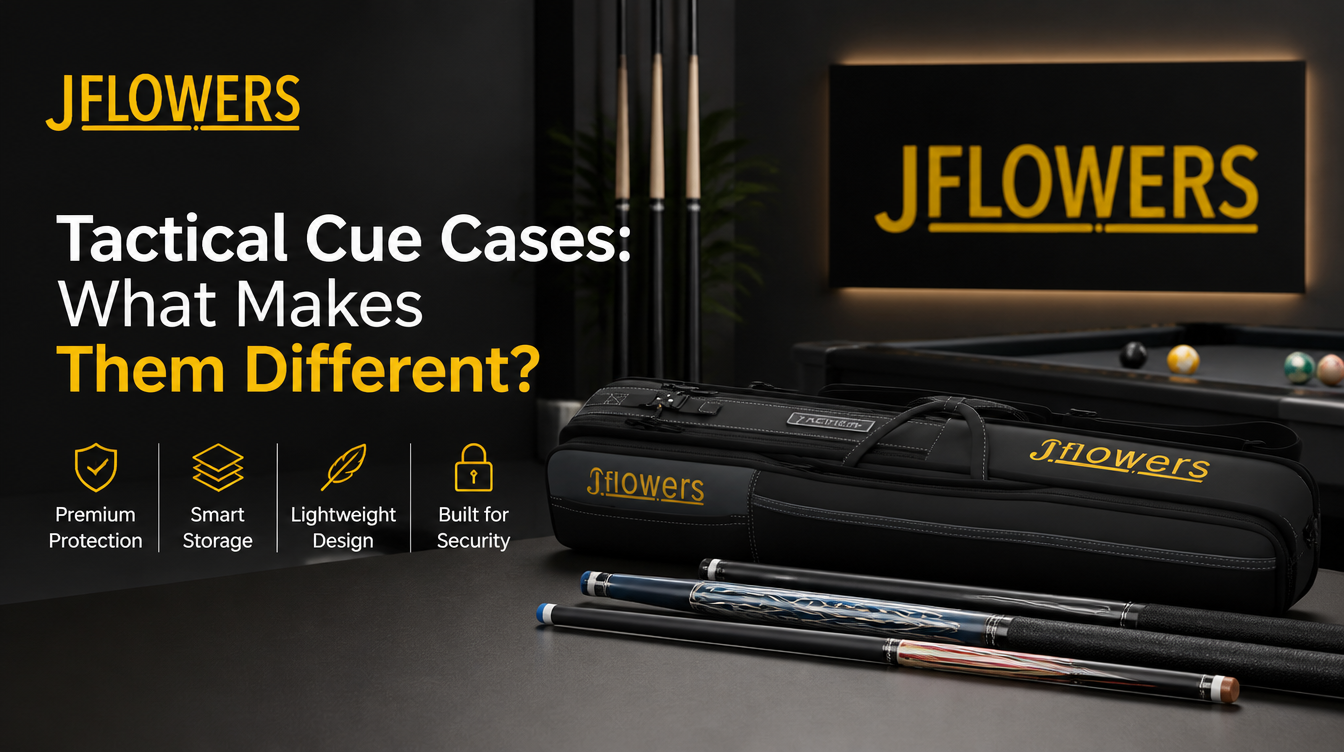
The term "tactical" gets applied to a lot of gear in the sporting world — sometimes as meaningful engineering description, sometimes as pure marketing. In the context of pool cue cases, tactical design refers to a specific approach to construction, carrying, and organization that differs meaningfully from standard cue cases.
- JFlowers Cues
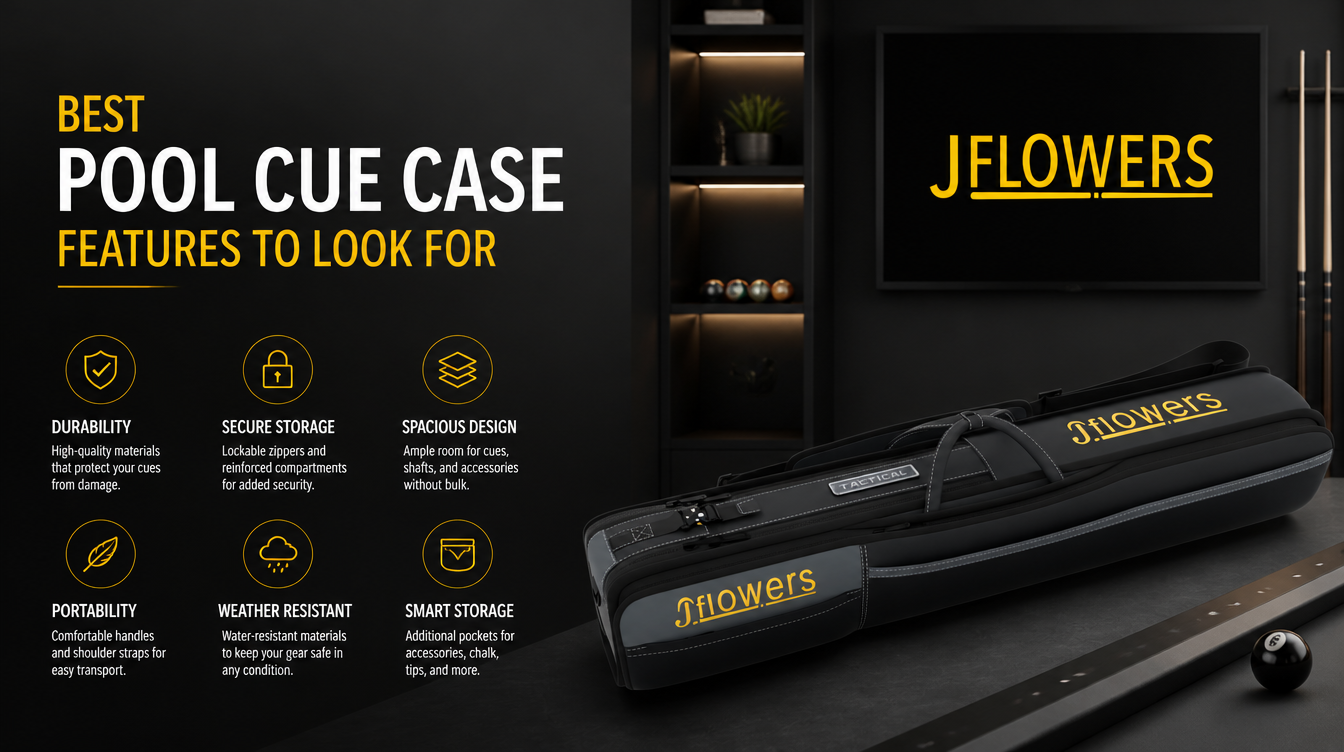
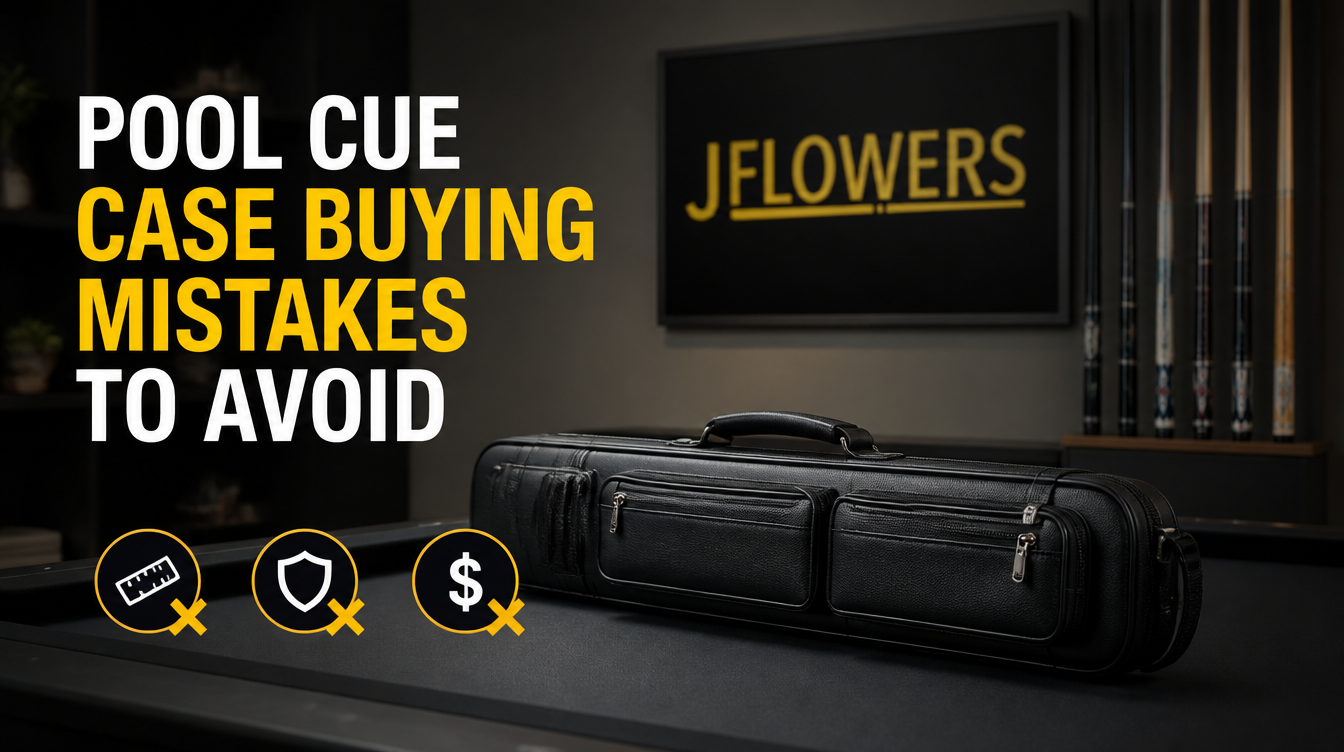
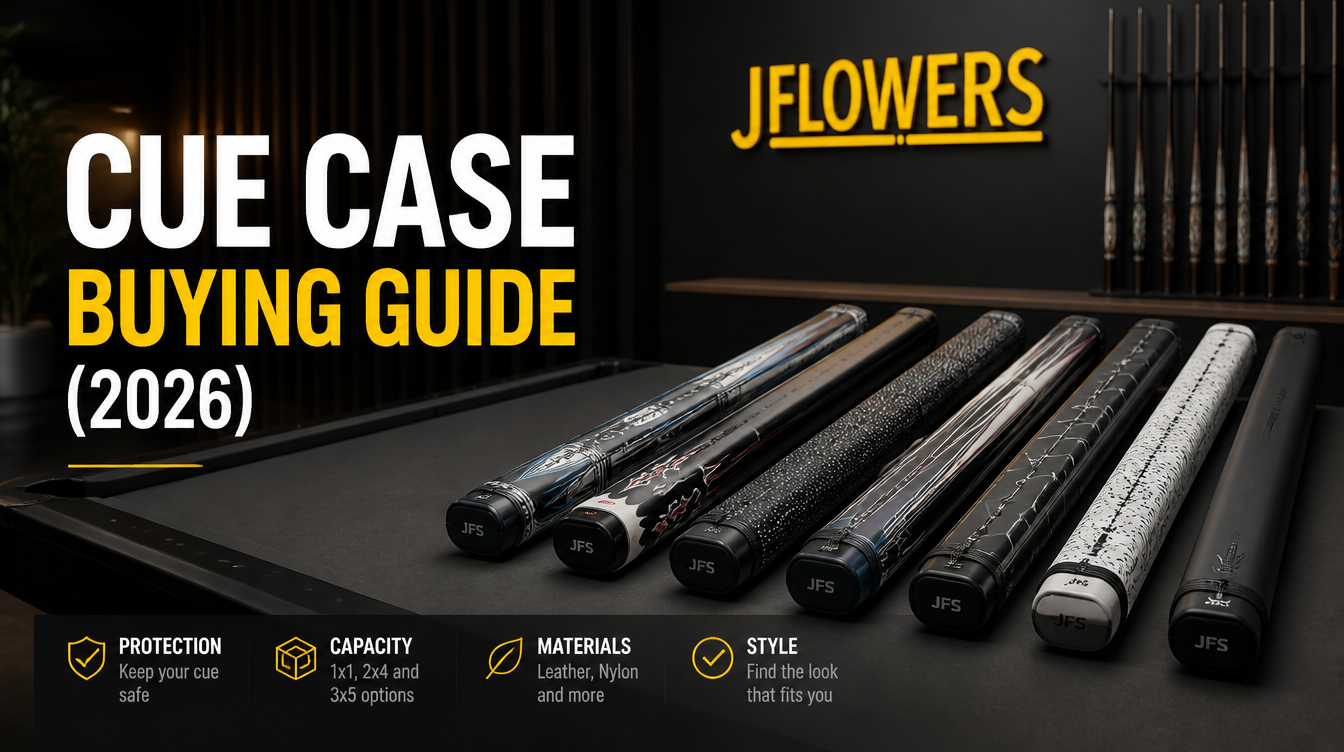
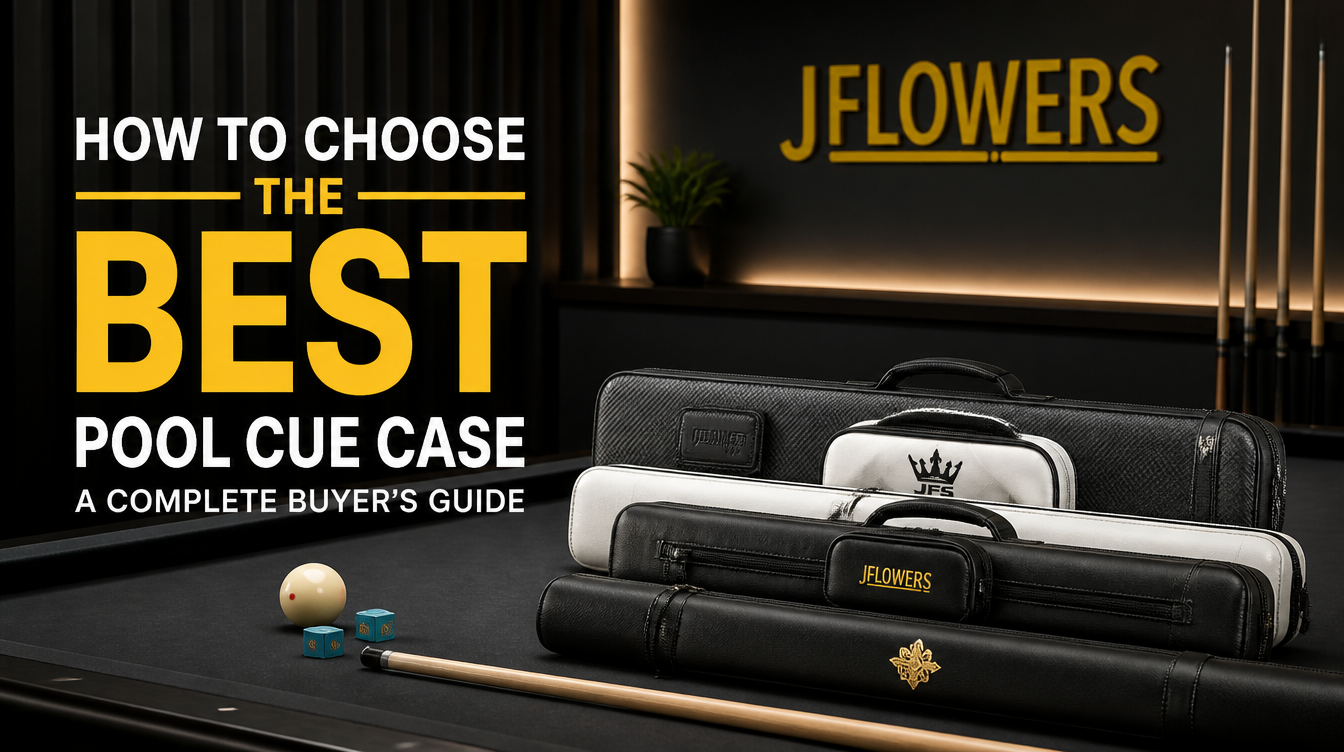
Buying a pool cue case should be simple — but the market is full of options at wildly different price points and quality levels, with spec language that doesn't always tell you what you actually need to know. This guide cuts through it. By the end you'll know exactly what to look for, what price range serves your situation, and what to avoid.
- JFlowers Cues
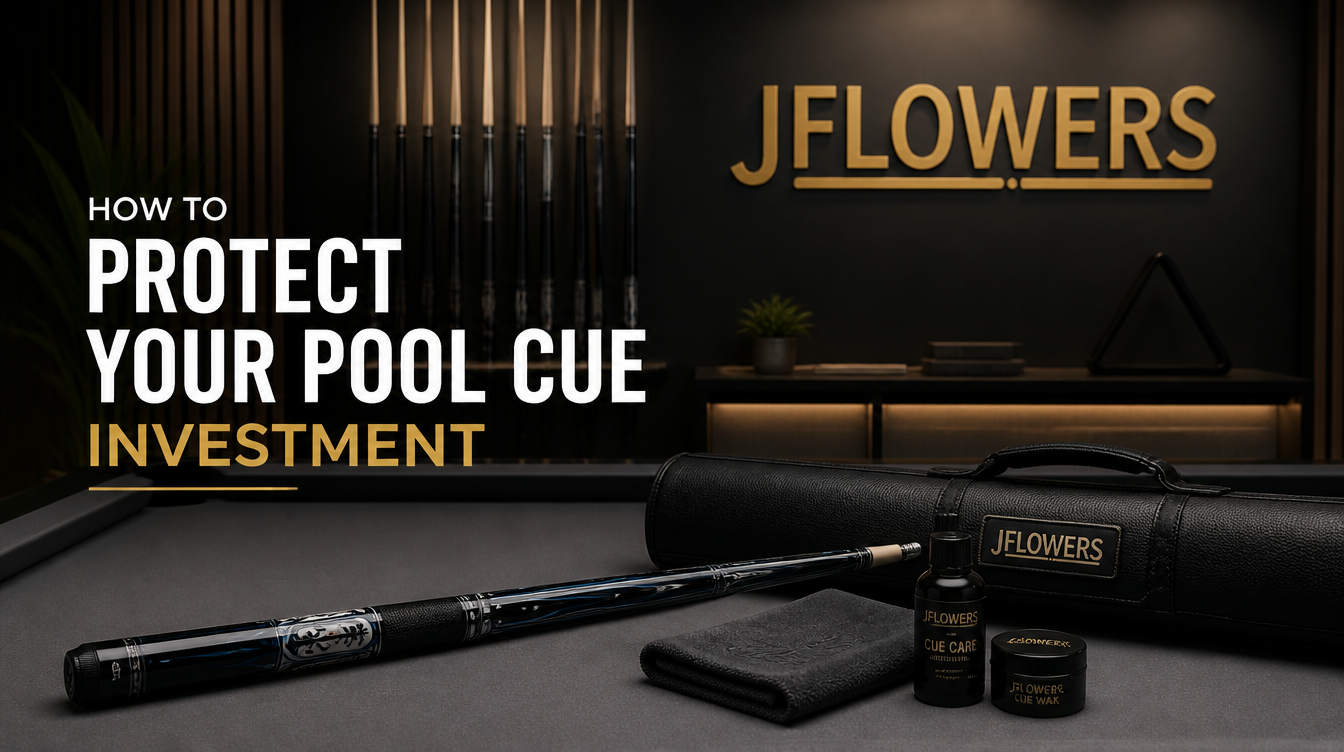
A quality pool cue is a real investment. Whether you spent $200 or $800, that cue represents deliberate money spent on something that directly affects how you play. Protecting that investment isn't complicated, but it requires thinking about a few things systematically — from the case you buy to the habits you build to the accessories you use.
- JFlowers Cues
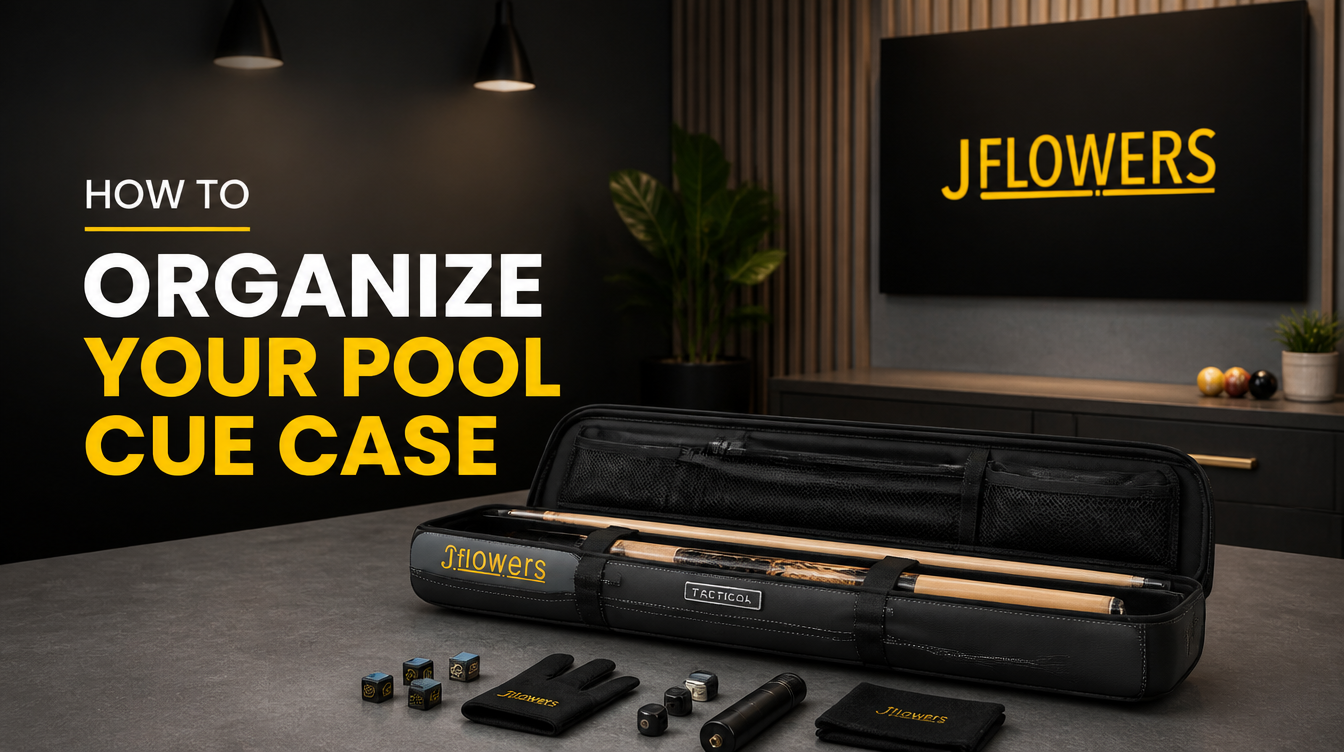
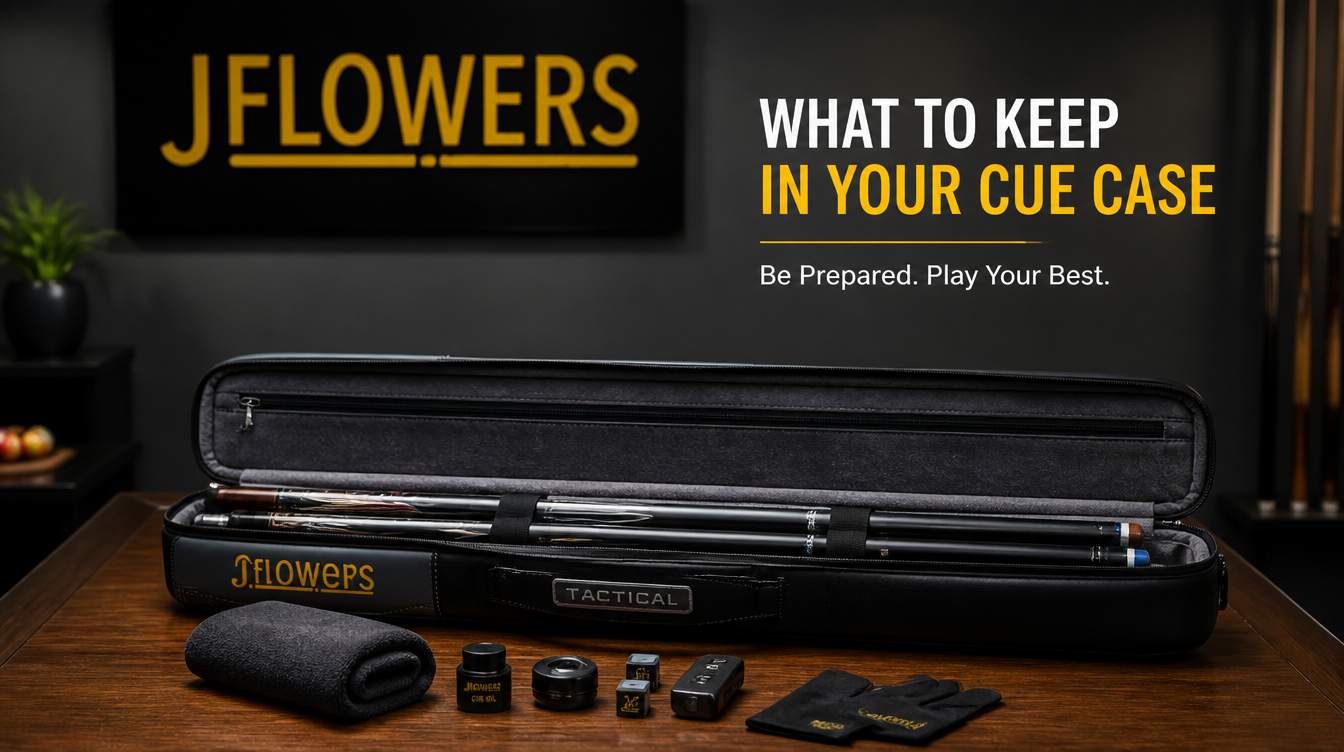
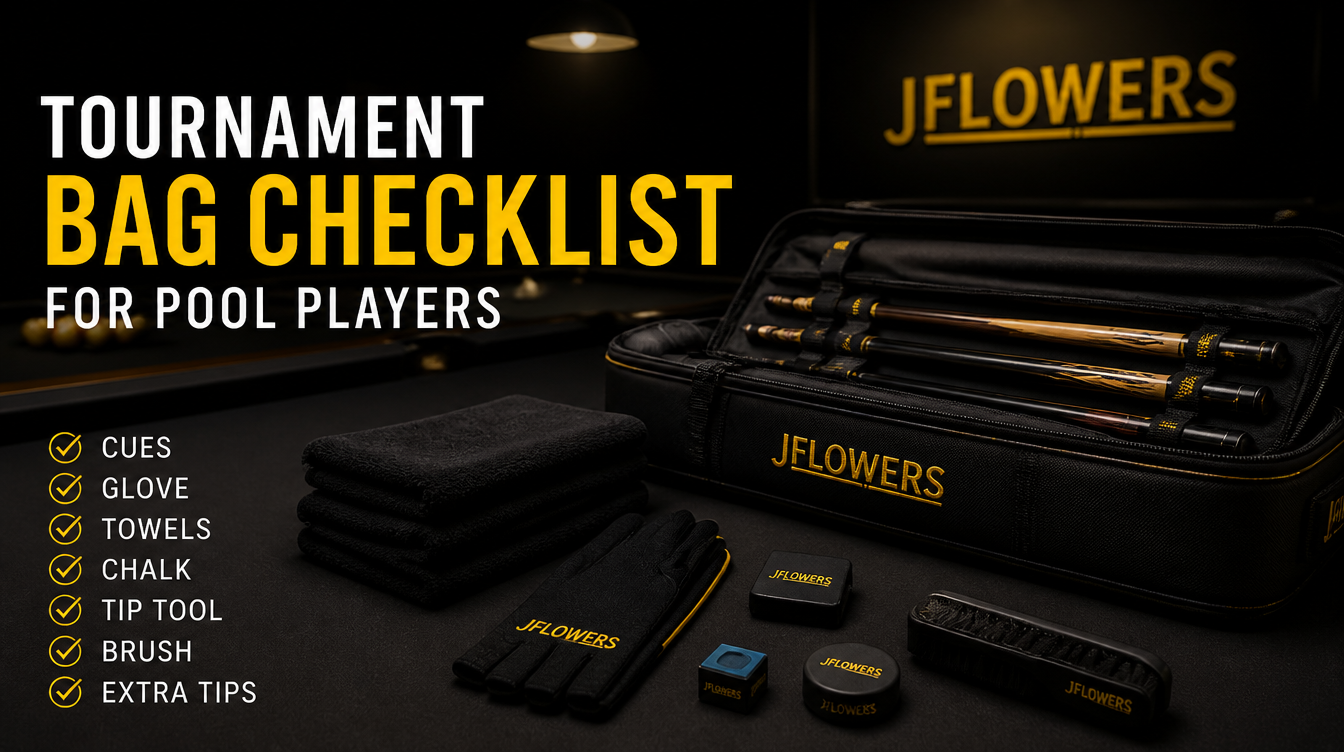
What's in your cue case says a lot about how seriously you take your game. Not because having the right stuff makes you a better player — it doesn't. But because having what you actually need, when you need it, removes the small disruptions and emergencies that affect your focus and your performance.
- JFlowers Cues
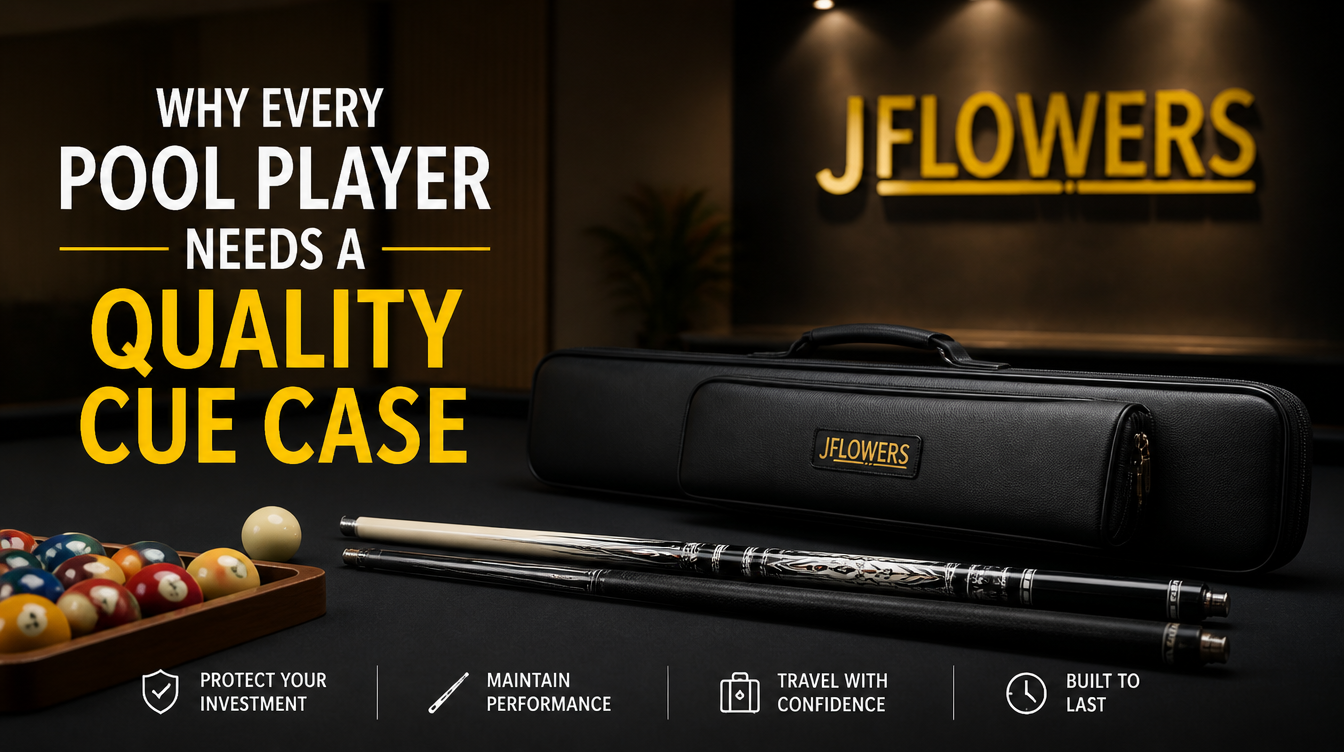
A lot of pool players think of a cue case as a nice-to-have — a convenience item that makes carrying the cue easier. In reality, a quality cue case is the single most important protective decision you make for your equipment. The cue you spent hundreds of dollars researching and selecting is only as well-protected as the case it lives in.
- JFlowers Cues
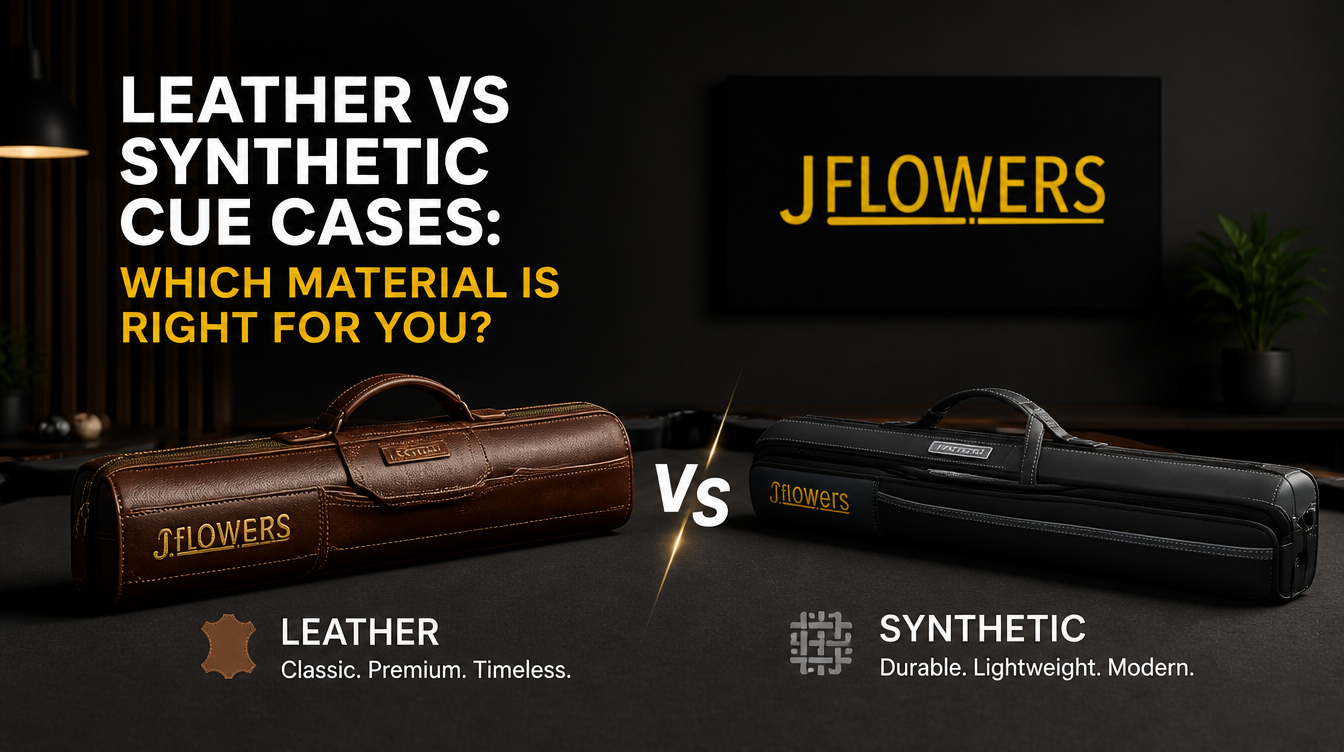
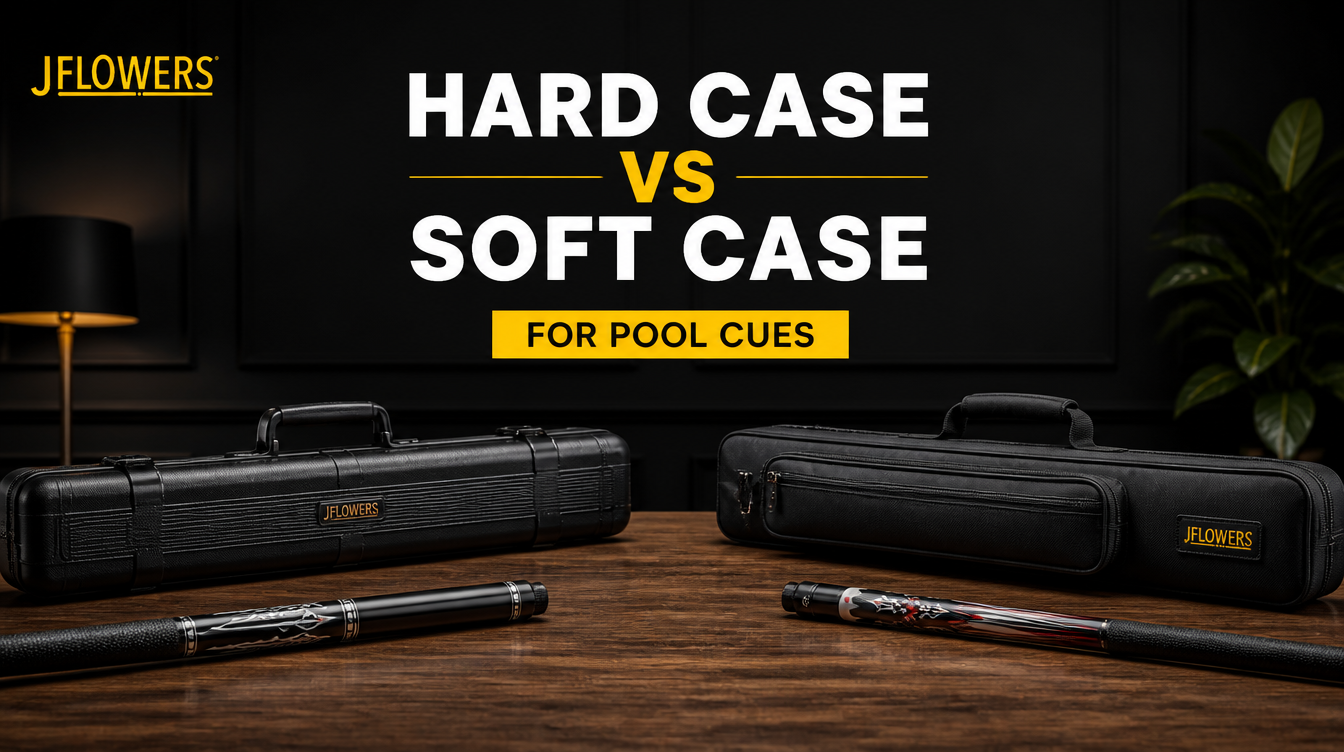
Walk into any pool hall and you'll see both. Hard cases sitting on the rail, soft tubes leaned against the wall. Both carry pool cues. Both get used by serious players. But they are not equivalent forms of protection, and choosing the wrong one for your situation can result in damage to a cue you paid good money for.
- JFlowers Cues
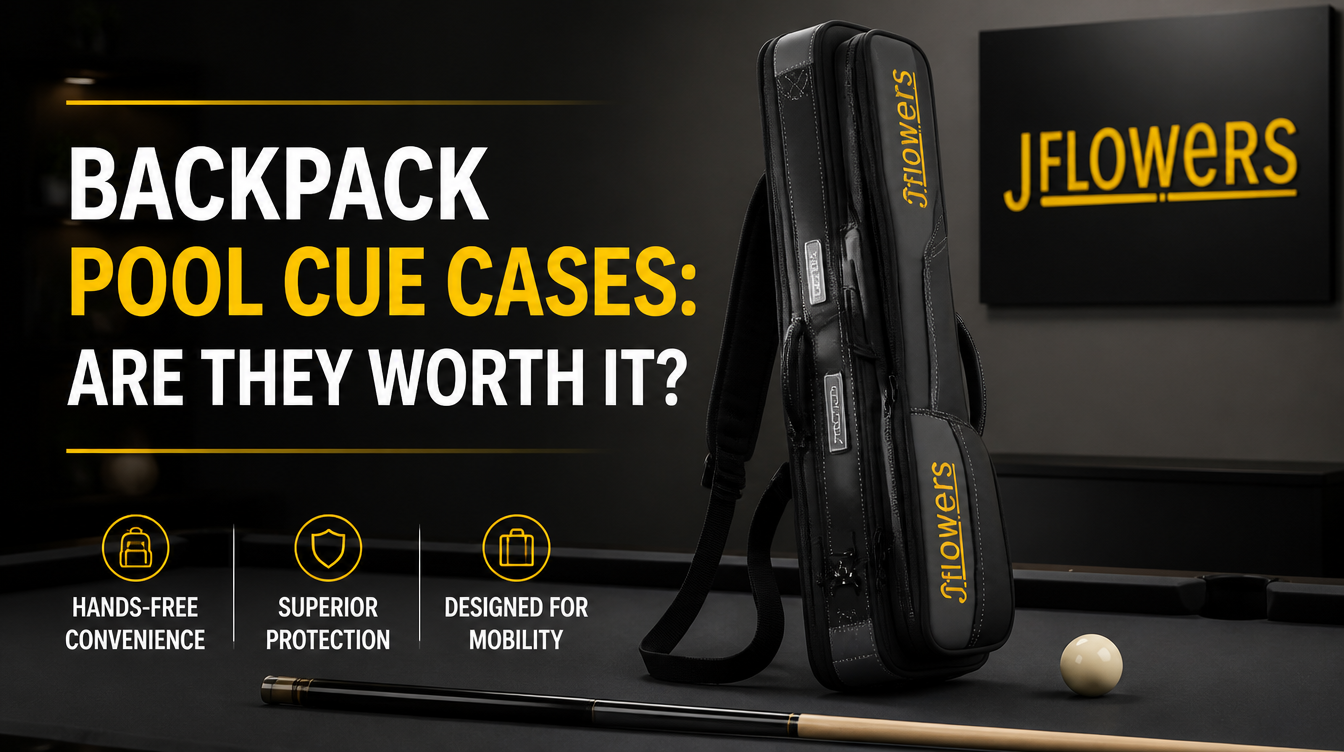
A pool cue case is one of those purchases that most players don't think nearly hard enough about. The cue gets all the attention — hours of research, careful comparison, deliberate testing. The case gets grabbed from the shelf next to the register or thrown in with a bundle deal. And then the cue ends up in a case that doesn't protect it properly, doesn't hold the right number of shafts, and falls apart in six months.
Pool Cue Accessories
- JFlowers Cues
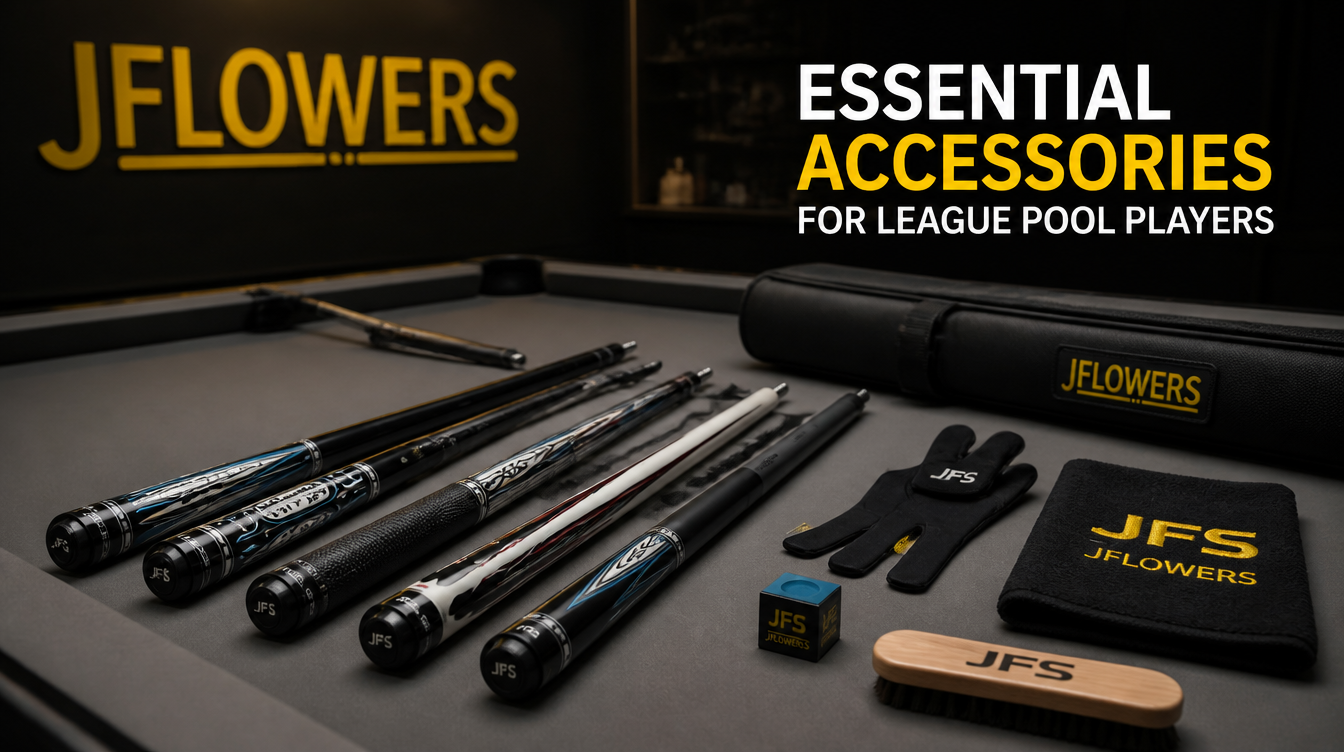
League pool puts specific demands on your equipment and accessories that casual play doesn't. You're playing more frequently — often two to three times a week. You're playing in different venues with different tables, different lighting, different ambient temperatures. You need to be consistent night after night, and your equipment needs to support that consistency.
- JFlowers Cues
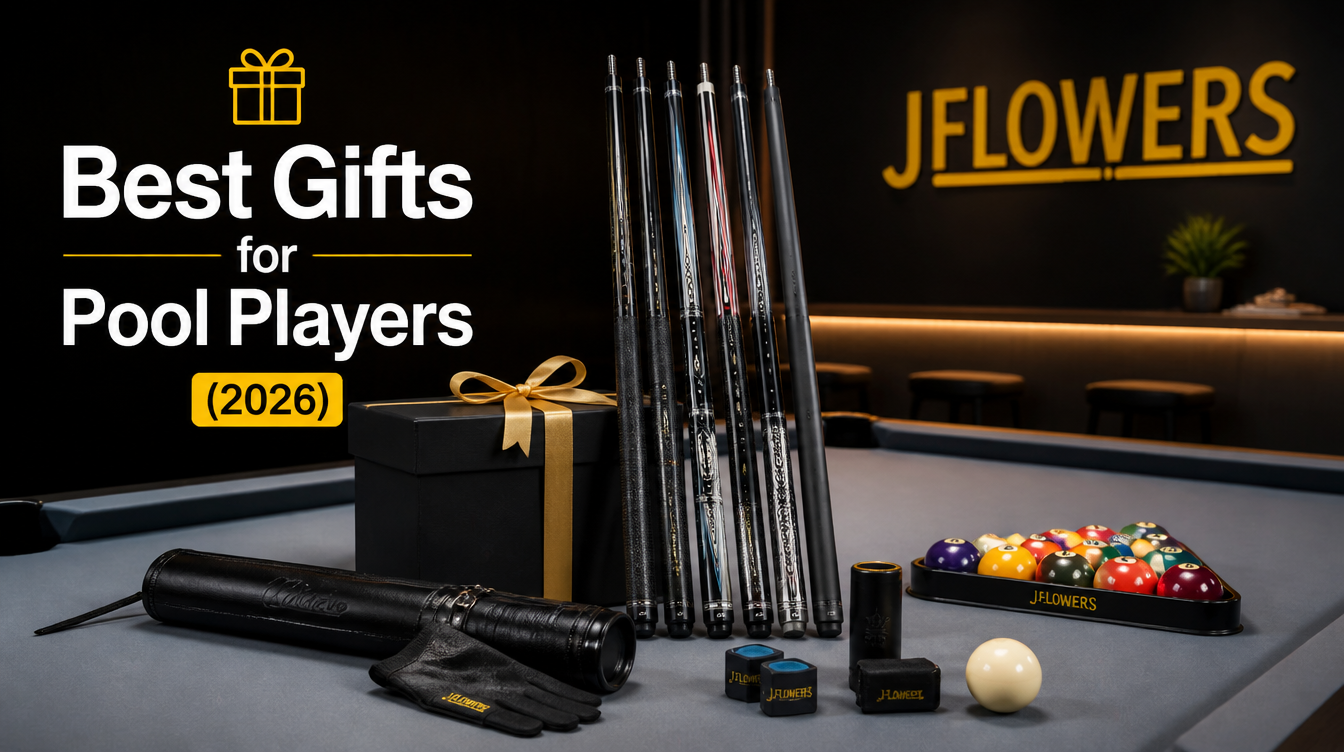
Buying a gift for a pool player who takes the game seriously is both easier and harder than it looks. Easier because there's a clear category of things they actually use and care about. Harder because the wrong pool gift — a novelty item, a cheap cue accessory bundle, something decorative that doesn't get used — ends up forgotten quickly.
- JFlowers Cues
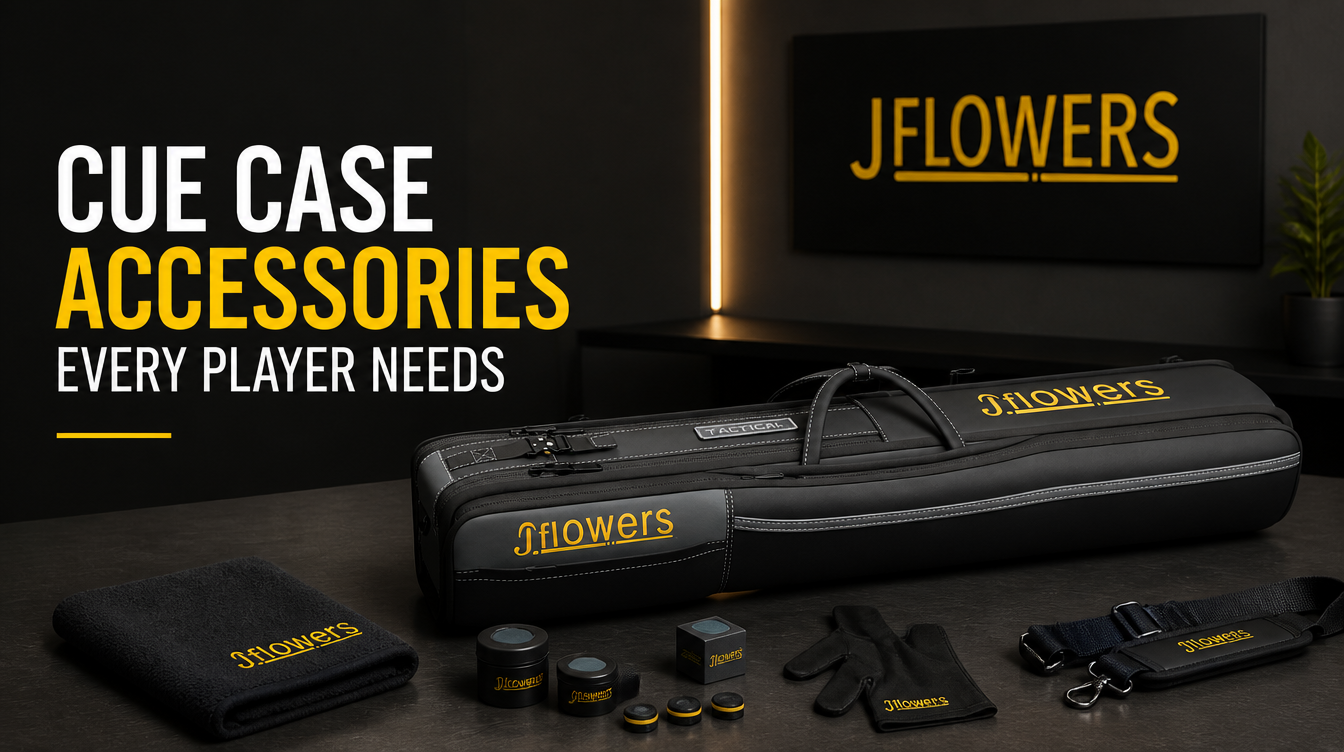
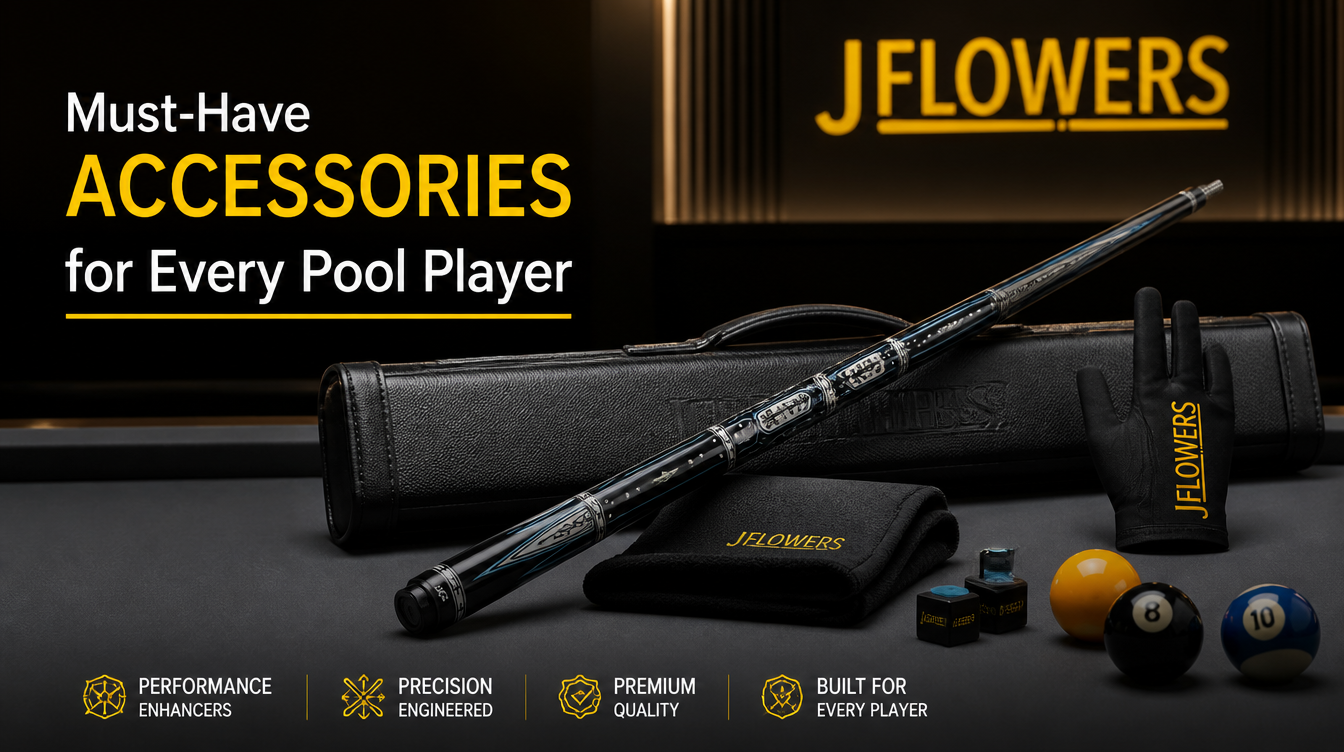
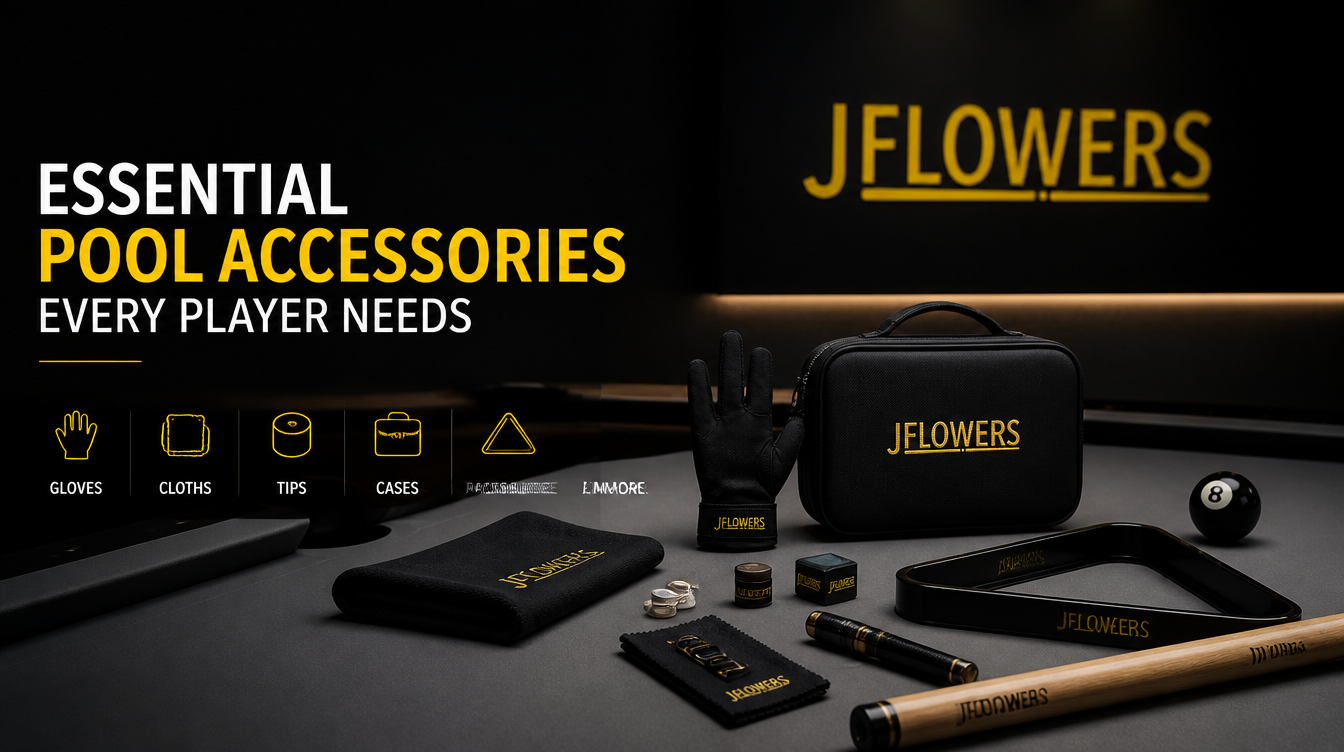
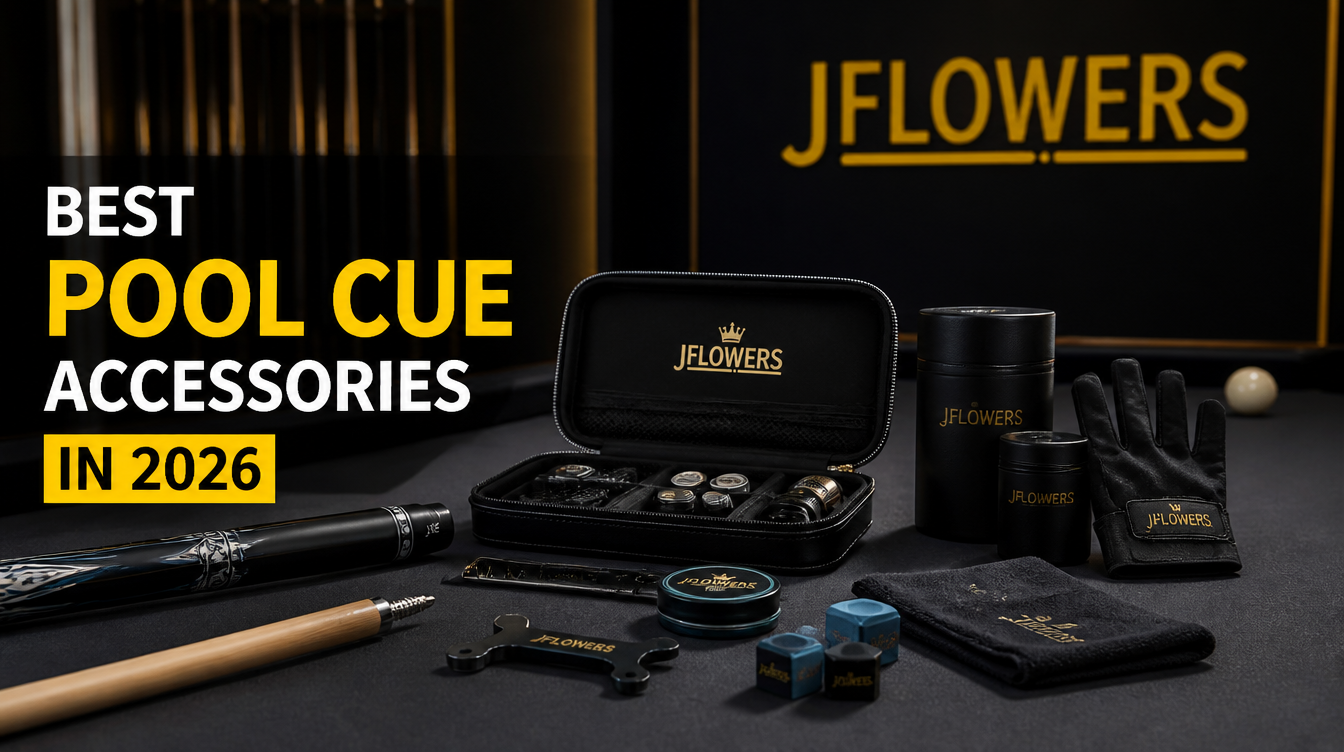
Beyond the cue itself, the accessories you carry and use have a real effect on how consistently you play and how well your equipment performs. Some accessories are genuinely essential — you'll use them every session without thinking about it. Others are useful for specific situations. And some are nice ideas that don't end up getting used much.
Learn More About Pool Equipment
- JFlowers Cues
Pool cue weight is one of the first things players check when shopping — and one of the most misunderstood variables in the whole game. The myths around weight are persistent: heavier means more power, lighter means more speed, the right weight is whatever the pros use. Most of this is wrong or oversimplified.
- JFlowers Cues
Ask most pool players what weight cue they use and they'll tell you instantly. Ask them where the balance point is — and most will have no idea. Yet two cues with the exact same weight can feel completely different in your hand and during your stroke, entirely because of how that weight is distributed. Balance is one of the most underappreciated variables in cue selection, and understanding it properly can change how you shop for equipment and how you evaluate what you currently play with.
- JFlowers Cues
Low deflection is one of the most talked-about concepts in pool equipment — and one of the most misunderstood. Some players swear it transformed their game. Others dismiss it as marketing. The truth sits closer to the first camp, but the nuance is worth understanding before you spend money on it.
- JFlowers Cues
Pool cue weight is one of the first specs new players look at — and one of the most misunderstood variables in equipment selection. You'll hear advice ranging from "heavier hits harder" to "lighter lets you shoot faster," and most of it is oversimplified or flat-out wrong. Here's what cue weight actually does, what it doesn't do, and how to figure out the right weight for your game.