Protecting your cue on the road, in the air, and across every type of trip.
Traveling with a pool cue creates equipment risks that don't exist when you play locally. Cars that get hot. Checked luggage that gets thrown around. Varying climates that affect maple shafts. The possibility of arriving at a tournament without your cue because it was confiscated or damaged in transit.
Listen to this article
This guide covers how to travel with your cue safely — by car, by air, and everything in between — with specific advice for both maple and carbon fiber shafts.
Traveling by Car
The Temperature Problem A car parked in direct sun on a hot summer day can reach interior temperatures of 140°F or higher. For a maple shaft, these conditions — especially combined with high humidity — are precisely what causes warping. Even a few hours in extreme heat can start the process.
Best Practice for Maple Shaft Cues Keep the cue in the passenger compartment with air conditioning running rather than in the trunk when possible. For trips where the car will be parked in the sun for extended periods, bring the cue inside with you rather than leaving it in the car. If the cue must stay in the car, a hard-sided case in the trunk provides some insulation — but doesn’t protect against prolonged extreme heat. The trunk of a car parked in the sun can be even hotter than the passenger compartment.
Carbon Fiber: No Concern Carbon fiber handles car storage with no effect on performance. Leave it in the trunk all week in summer heat — it plays exactly the same when you come back to it. This is one of the clearest practical advantages of carbon fiber for players who transport their cue regularly.
Flying with a pool cue requires specific preparation. The rules and logistics differ significantly from car travel.
Carry-On vs. Checked: The Critical Decision A two-piece pool cue in a standard case can typically be carried on as a personal item or checked bag, depending on the airline. The rules vary — and you need to know them before you get to the airport.
Carry-on is always preferable. A cue in the overhead bin is safe from the impact damage that checked luggage routinely suffers, immune to the extreme conditions in cargo holds, and guaranteed to arrive with you rather than potentially ending up in a different city.
Checking Your Cue If checking is required (or the cue is too long for overhead bins), proper packing becomes critical:
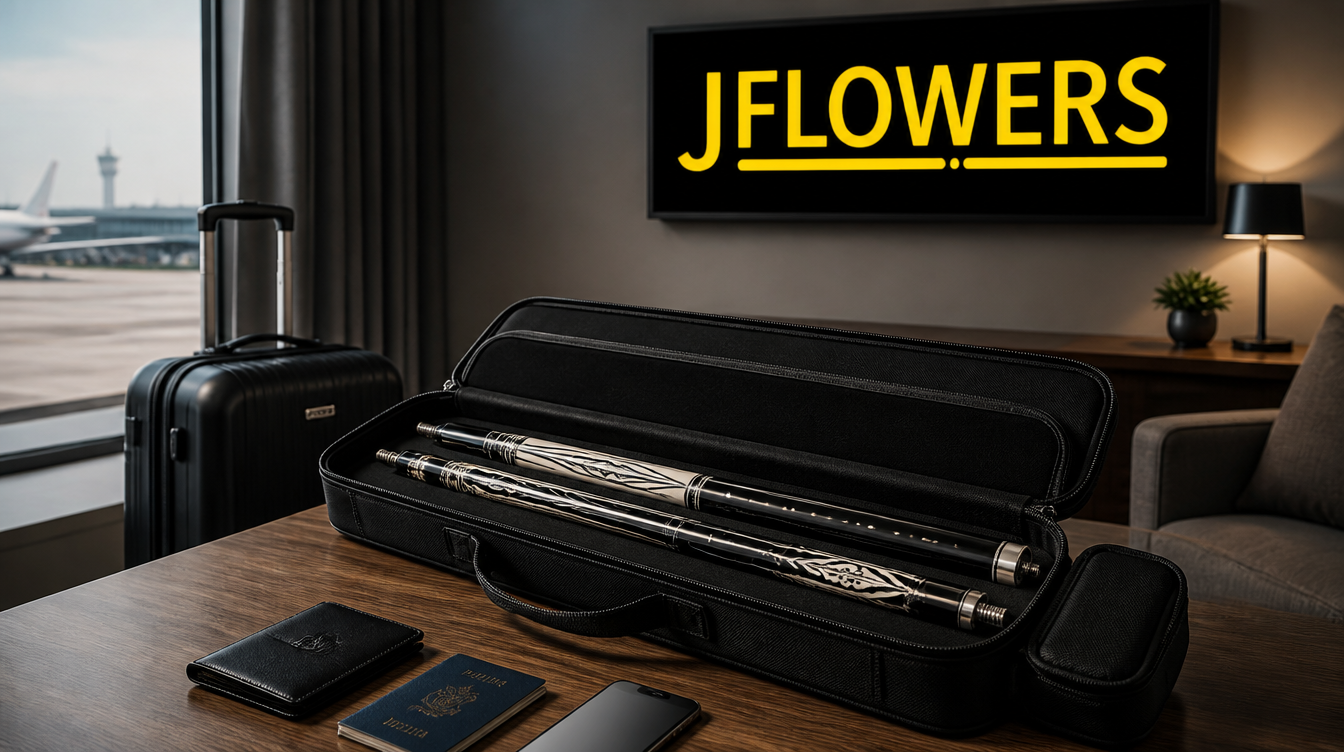
Use a hard-sided cue case — a soft case offers almost no protection in checked luggage
Consider a padded travel cue tube or travel case designed specifically for checked baggage
Wrap individual cue pieces in additional padding if the case interior doesn’t hold them tightly
Do not put the cue in a soft bag with other items — it will shift and absorb impacts from everything around it
Declare the contents clearly — some items require special handling declarations
TSA and Security Pool cues in carry-on bags are generally permitted by TSA in the United States. However, individual security screeners have discretion, and you should be prepared to check the cue if asked. The TSA website lists pool cues as permitted carry-on items, but carry the destination country’s regulations for international travel.
The Case for a Travel Case Players who travel frequently by air should consider a dedicated travel cue tube or travel case — these are hard-sided aluminum or heavy-duty cases with reinforced ends designed specifically for the rigors of checked luggage handling. They’re significantly more protective than standard pool cases for air travel.
Multi-Day Tournaments: What to Bring
If you’re traveling to a multi-day tournament, your equipment preparation should be more thorough than for a regular session:
Main playing cue — inspected and cleaned before the trip
Backup shaft — in the same joint specification as your primary, played enough to be familiar
Break cue if applicable
Multiple pieces of chalk — your preferred brand, enough for several days
Complete tip maintenance kit: tip pick, shaper, replacement tip, glue, clamp
Clean cloths for shaft wipe-downs between matches
Any tools you might need for minor repairs
The goal is to be self-sufficient for any equipment situation that comes up during the tournament. Depending on finding a pro shop or bringing your cue to a technician mid-tournament is a gamble have what you need in your case.
Climate Changes and Acclimatization
If you’re traveling to a tournament in a significantly different climate — going from dry desert heat to humid coastal conditions, or from warm summer to cold indoor arena — give your maple shaft time to acclimatize before competing.
Arrive at the venue venue early and let the cue rest in the playing environment for at least 30-60 minutes before your first match. The shaft will begin adjusting to the local conditions, and any minor initial adjustment is better handled before competition than during it.
Carbon fiber doesn’t need acclimatization — it plays identically in any climate.
International Travel Considerations
International pool travel — whether for a major event or an extended stay — has additional considerations:
Research airline-specific policies for cue cases before booking — don’t assume domestic rules apply internationally
Check destination country customs rules — some countries have specific declarations for sporting equipment
Consider the climate at your destination and whether your maple shaft is appropriate for those conditions
Have any relevant equipment documentation (receipts, proof of ownership) in case of customs questions
The Carbon Fiber Travel Advantage
Players who travel regularly almost universally appreciate the carbon fiber advantage in travel contexts. No temperature anxiety. No humidity management. No warp risk from a delayed connection that means the cue sat on the tarmac in the heat for two hours. The shaft plays the same when it arrives as when it left.
For players who travel frequently for tournaments or who live in climates very different from where events are held, carbon fiber removes a significant source of equipment anxiety that maple players have to manage.
Frequently Asked Questions
Can I bring a pool cue on a plane as carry-on? In the US, TSA generally permits pool cues as carry-on items. Airline overhead bin size is the practical limiting factor — a standard 2-piece cue in a hard case may be too large for some overhead bins. Check your specific airline’s size limits and have a plan for checking if needed.
What’s the best cue case for air travel? A rigid hard-sided travel tube or case specifically designed for checked baggage. Standard pool cue cases are better than nothing but aren’t designed for the rigors of cargo handling. Aluminum travel cases are particularly durable.
Should I insure my cue for travel? For a quality cue worth $400+, travel insurance that covers sporting equipment is worth considering. Check whether your homeowner’s or renter’s insurance covers portable valuable items away from home — some policies do.
My cue arrived with a warp after a flight. What do I do? First, give it time to acclimatize to the local conditions — minor changes can sometimes self-correct as the wood adjusts to the new environment. If a significant warp persists after a day or two, seek out a local cue technician. Document the damage and file a claim with the airline if the cue was checked.
Can I ship my cue instead of traveling with it? Yes — shipping a cue in a padded tube via a carrier like UPS or FedEx is a viable option for avoiding airline hassle. Pack it very carefully, use a hard-sided tube, and insure the shipment for the cue’s replacement value.
Final Thoughts
Traveling with a pool cue is manageable with the right preparation. Know your airline’s policies, use a proper case, carry your cue on when possible, bring a complete maintenance kit, and arrive early enough to acclimatize if conditions will be different.
And if you travel frequently for pool: consider whether carbon fiber is right for your setup. The elimination of travel-related equipment anxiety is one of its most underappreciated practical benefits.
After comparing JFlowers to Predator, Mezz, McDermott, Meucci, Jacoby, Pechauer, and a dozen more brands across every price point and construction philosophy — the question that started all of it deserves a direct answer: which pool cue brand actually offers the best value for serious competitive players in
2026?
Players Technology is one of the most widely used cue brands in American pool halls. Their two-piece cues at $40-$150 have introduced millions of American players to personal cue ownership. Nearly every serious pool player in America either started on a Players cue or played against someone who did. Comparing Players to JFlowers isn’t really a direct competition — it’s a marker on the journey from beginner to serious competitor.