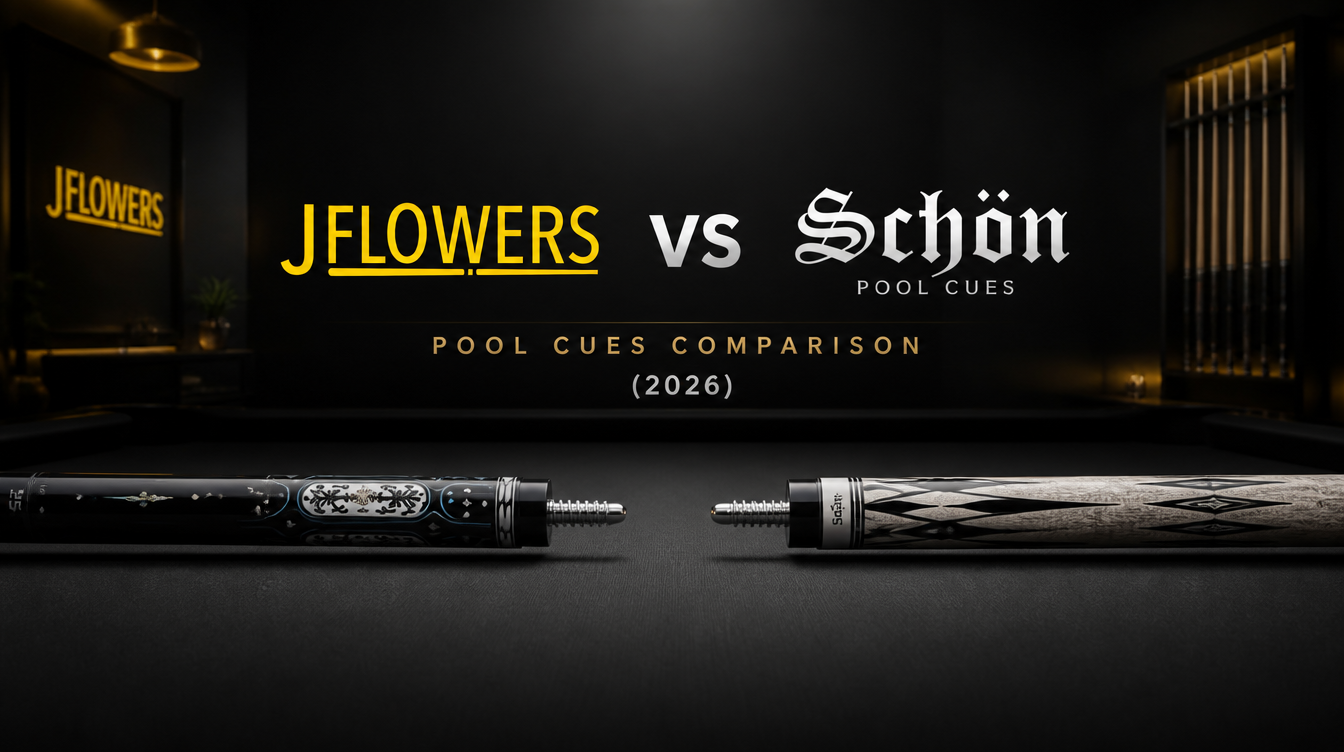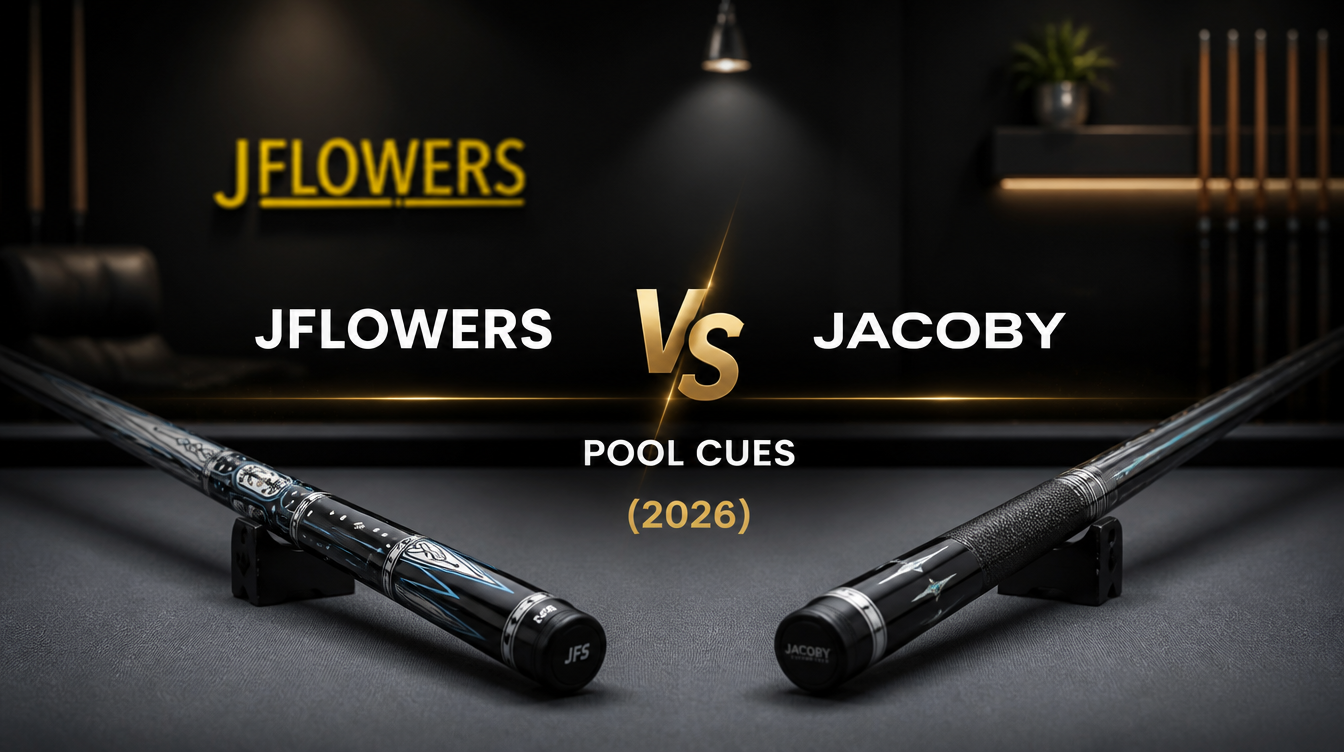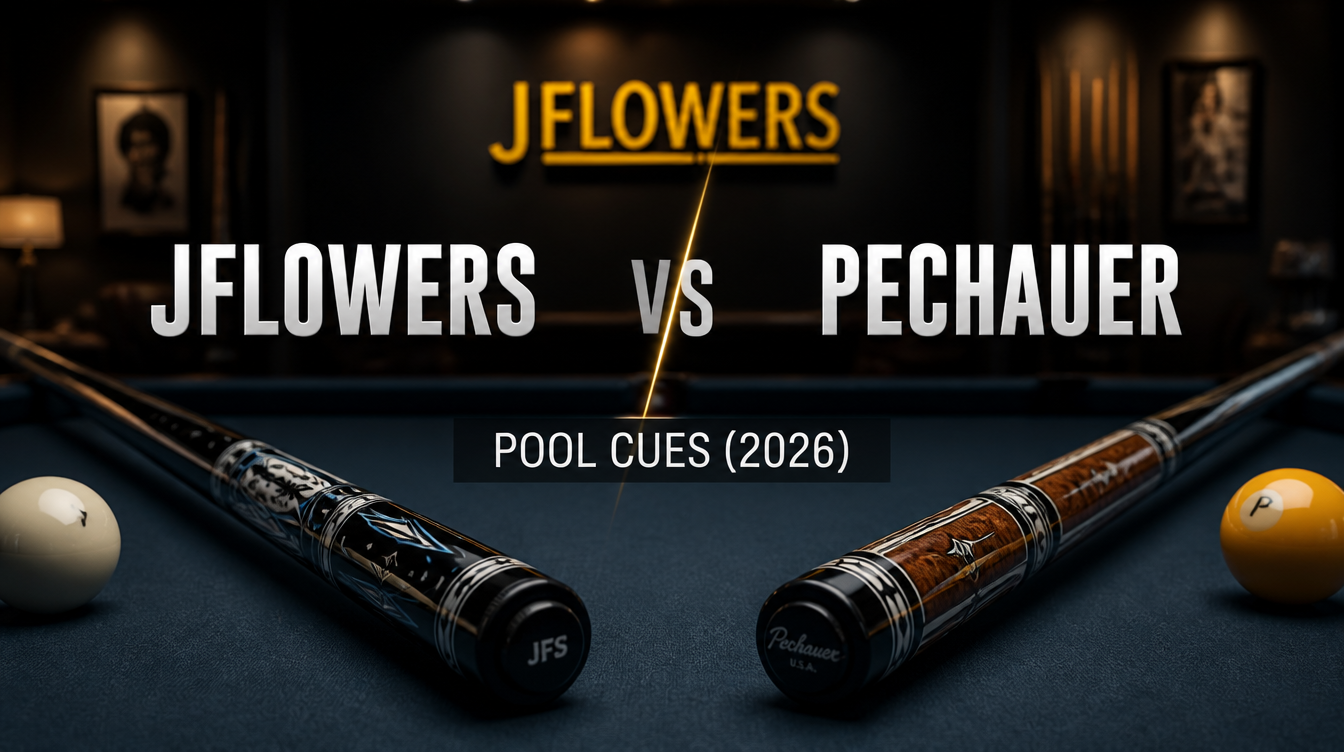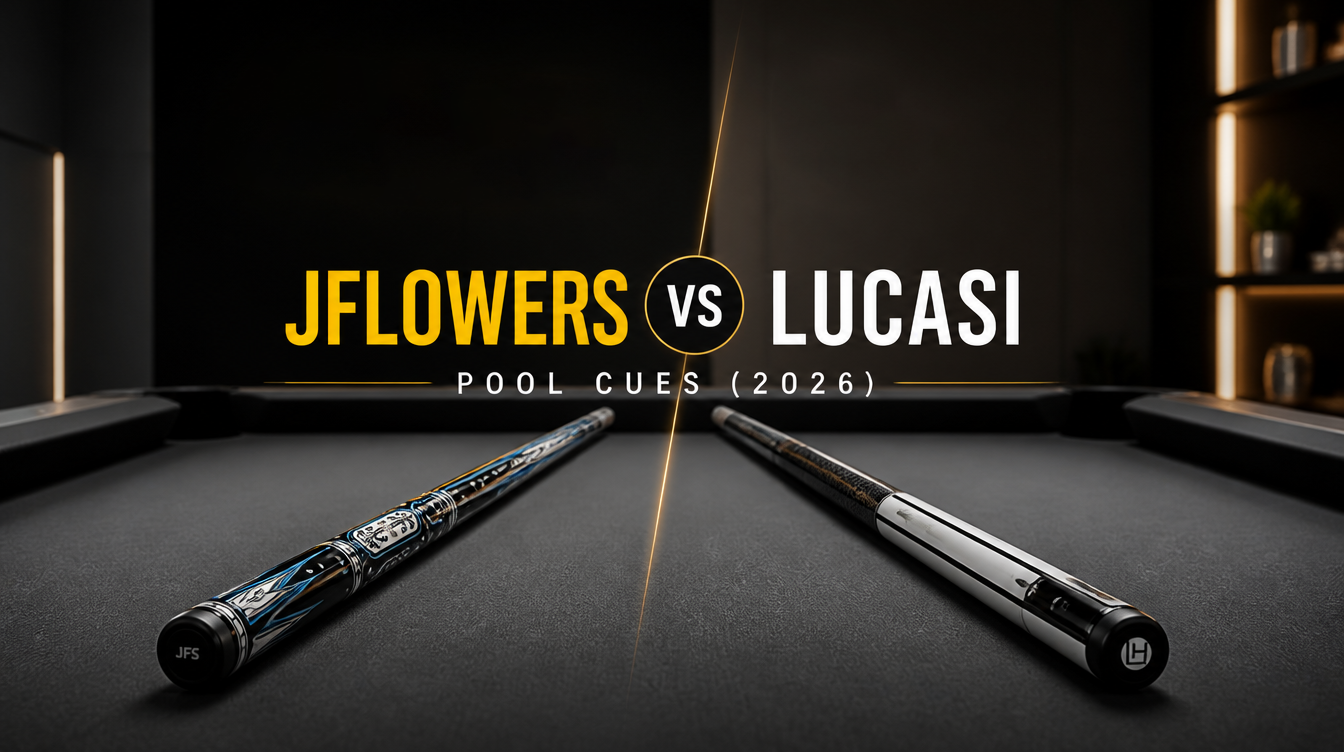
Serious pool players have a different shopping list than recreational players. You’re not just buying something to hit balls with — you’re investing in a tool that needs to perform consistently under
competition conditions, hold up through hundreds of hours of practice, and suit the way you actually play: your stroke mechanics, your tip preference, your use of english.
Category Archives: Pool Cue Buying Guides
Find the right cue for your budget, playing style, and skill level.
Walk through any serious pool hall and you’ll see the linen vs leather debate playing out in real time. Some players swear by the traditional grip of Irish linen. Others won’t touch anything but smooth leather. Both have legitimate cases — and neither is universally right.
The wrap on a pool cue is the section your back hand grips during every shot. It affects grip security,
moisture management, comfort during long sessions, and — for some players — the overall feel of the
stroke. It’s a preference-driven choice, but it’s not arbitrary.
The joint is one of the least talked-about components of a pool cue — and one of the most important. It’s the connection point between your shaft and butt, and it affects hit feel, vibration, and whether you can swap third-party shafts onto your cue without a machinist.
The short answer: buying used can be smart — if you know what you’re doing. If you don’t, you’re often
better off buying new in the $200-$400 range from a brand like JFlowers and knowing exactly what you’re
getting.
Ask a cue collector what to buy and they’ll say custom. Ask a competitive player who wins tournaments and they might tell you their production cue is the best they’ve ever played. The debate between custom and production pool cues has been going on for decades, and the right answer has a lot more to do with how you play than how much you want to spend.
Walk into a sporting goods store and you can pick up a pool cue for $30. Walk into a specialty billiards shop and you can spend $1,500 on one. Both are pool cues. So what exactly is the difference? The honest answer comes down to five things: shaft quality, joint precision, tip and ferrule construction, balance design, and build consistency. Some of these differences are enormous between price tiers. Others are marginal once you’re past a certain threshold.
It’s one of the most common questions in billiards: how much cue do you actually need? The honest answer is — it depends on where you are in your game right now and where you’re headed. Spending $800 on a cue before you’ve developed a consistent stroke is wasted money. Playing for years on a $60 stick when you’re ready to compete is holding you back. This guide maps every budget tier, what you get at each price point, and when it makes sense to move up.
Not every expensive pool cue is actually premium. And not every premium cue will break the bank. Once
you understand what separates a quality stick from a cheap one, you’ll stop buying on price alone — and
start buying on what the cue is actually built from.
Walk into any pool hall today and the cue rack looks different than it did ten years ago. Carbon fiber shafts sit next to maple sticks. New brands are earning shelf space next to names that have been around for decades. And with so much available online, figuring out which brand actually delivers for your game takes some real digging.