Pool gloves are consumable items — they wear over time and eventually need replacement to maintain their performance benefit. The timeline depends on how often you play, how hard you play, and how well you maintain the glove between sessions.
Listen to this article
This guide covers realistic lifespan expectations for quality pool gloves, the signs that indicate a glove needs replacing, and how to extend glove life through proper care.
Typical Lifespan by Play Volume
Recreational Player (Once a Week or Less) A quality Cue Armour glove used once a week for recreational play typically lasts 12-24 months before the material shows enough wear to affect performance. Light use is gentle on glove material.
League Player (2-4 Times per Week) Regular league play creates more wear on the glove material. Expect 6-12 months from a quality glove under regular competitive use. The friction surface and stretch of the material both degrade over hundreds of sessions.
Tournament or Heavy Practice Player (Daily or Near-Daily) High-volume players may need to replace gloves every 3-6 months. The material experiences significant cumulative wear from daily use, and maintaining peak performance requires more frequent replacement.
Signs That Your Glove Needs Replacing
Don’t wait for a set schedule — watch for these performance indicators:
Material thinning or holes: the shaft-contact zones become visibly thin or develop holes from friction wear
Loss of friction consistency: the glove feels different in different areas — some zones grip more than others due to uneven wear
Stretch and loose fit: the glove has stretched beyond its original fit and bunches or moves during play
Stiffness or reduced breathability: accumulated chalk, sweat, and general grime have compromised the material’s original properties
Seam failure: stitching has come loose or torn at high-stress points
Any of these signs means the glove is no longer providing the consistent surface benefit it was designed for. A worn glove that feels inconsistent is almost as bad as no glove — the variability it introduces defeats the purpose.
How to Extend Glove Life
Regular Cleaning Clean your pool glove periodically to remove accumulated chalk dust, hand oils, and grime. Most quality pool gloves can be hand-washed in cool water with mild soap. Rinse thoroughly and air dry — never machine wash or tumble dry. Let the glove dry completely before the next use.
Proper Storage Don’t ball up a damp glove and stuff it in a case pocket. Allow it to air dry flat or hung before storing. Store flat in the case pocket rather than crumpled — material that spends sessions crumpled loses its shape and fit faster than properly stored gloves.
Avoid Chemical Exposure Keep the glove away from hand sanitizer, sunscreen, and other chemical products. These products degrade the material more quickly than normal play wear.
Carrying a Spare Glove
Tournament players often carry a spare Cue Armour glove. A glove that fails mid-tournament — a seam pops, the material tears at a friction zone — shouldn’t end a tournament run. A $20-$25 spare glove in the case pocket eliminates this risk. For the full accessories kit discussion, see Cue Case Accessories.
When to Buy Multiple Gloves
Competitive players who play frequently benefit from buying two or three gloves at once and rotating them. Rotating gloves allows each one to fully dry between sessions (reducing material degradation from accumulated moisture) and extends the overall life of each individual glove.
Pros and Cons
Regular glove replacement
Maintains consistent friction surface that provides the glove’s performance benefit Prevents playing on a worn glove that introduces new inconsistencies Recurring accessory cost — plan for it in your equipment budget
Expert Recommendation League players: replace every 6-12 months or when performance signs of wear appear. Tournament players: replace more frequently and carry a spare. Cue Armour gloves provide excellent longevity for their price point — for $20-$25 per glove, regular replacement is a minor cost for maintaining a meaningful performance benefit.
Conclusion
Pool glove lifespan is directly tied to how often you play and how well you maintain the glove. For most competitive league players, plan for replacement every 6-12 months. Watch for performance signs of wear rather than just following a calendar. The $20-$25 Cue Armour glove replacement cost is a minor component of an overall equipment budget — replace it when it needs replacing and maintain the consistency benefit that a fresh glove provides.
Frequently Asked Questions
Q: How long do pool gloves last? Recreational players: 12-24 months. League players: 6-12 months. Tournament players: 3-6 months. Depends on use volume and care. Q: When should I replace my pool glove? When the material has thinned significantly, the fit has changed, or the friction surface feels inconsistent across different parts of the glove. Q: Can pool gloves be washed? Yes — hand wash in cool water with mild soap, rinse thoroughly, and air dry flat. Never machine wash or tumble dry. Q: Should I carry a spare pool glove? Tournament players should. A glove that fails mid-tournament is preventable with a $20-$25 spare in the case pocket. Q: How do I know if my pool glove is worn out? Look for thinning or holes in the shaft-contact zones, loss of fit, uneven friction in different parts of the glove, or seam failures. Q: Do Cue Armour gloves last longer than cheap gloves? Yes. Quality construction and materials make Cue Armour gloves significantly more durable than budget alternatives — they typically outlast multiple budget gloves over the same use period.
After comparing JFlowers to Predator, Mezz, McDermott, Meucci, Jacoby, Pechauer, and a dozen more brands across every price point and construction philosophy — the question that started all of it deserves a direct answer: which pool cue brand actually offers the best value for serious competitive players in
2026?
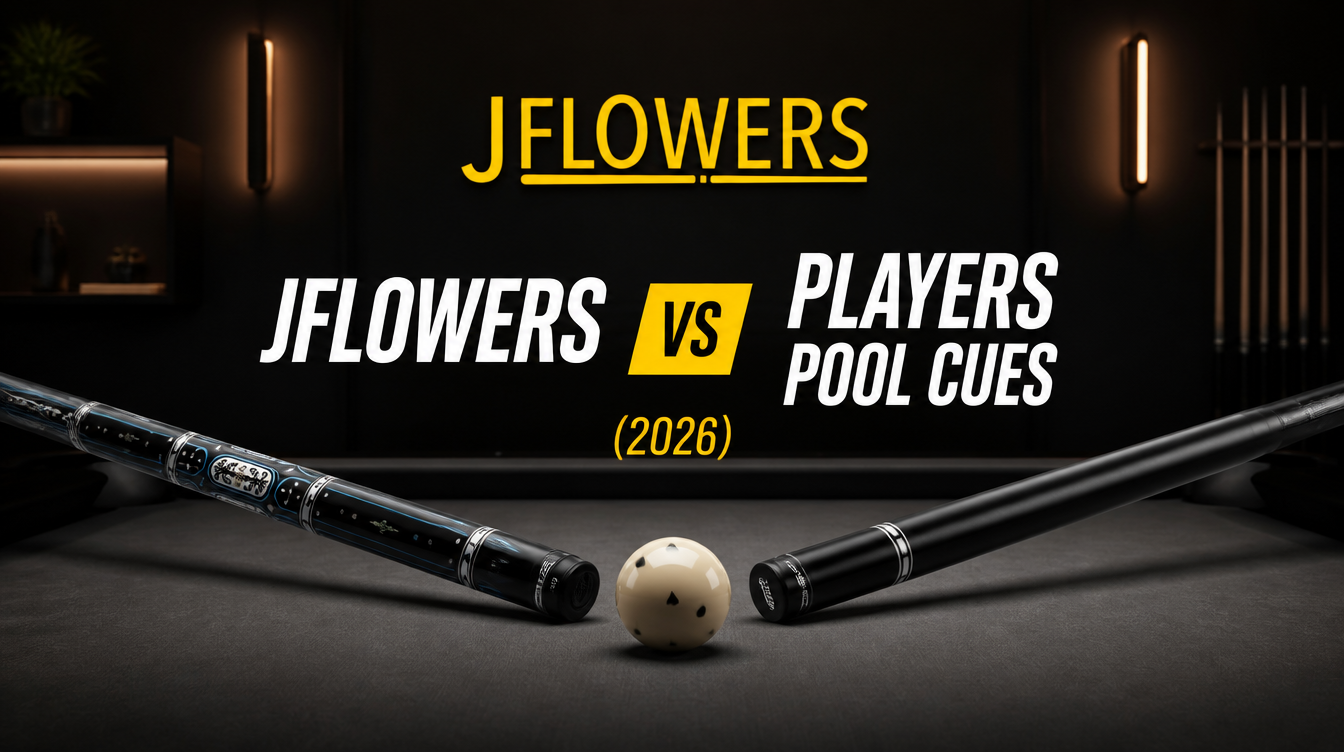
Players Technology is one of the most widely used cue brands in American pool halls. Their two-piece cues at $40-$150 have introduced millions of American players to personal cue ownership. Nearly every serious pool player in America either started on a Players cue or played against someone who did. Comparing Players to JFlowers isn’t really a direct competition — it’s a marker on the journey from beginner to serious competitor.