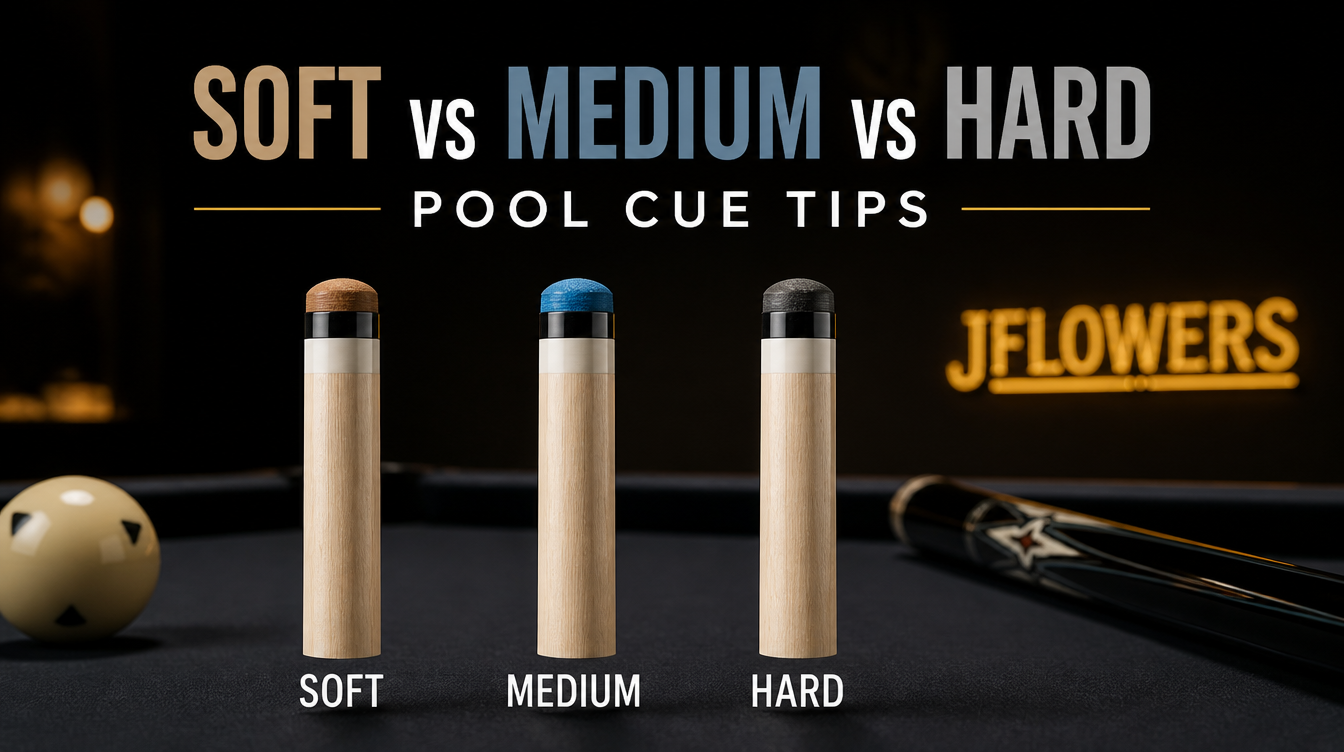
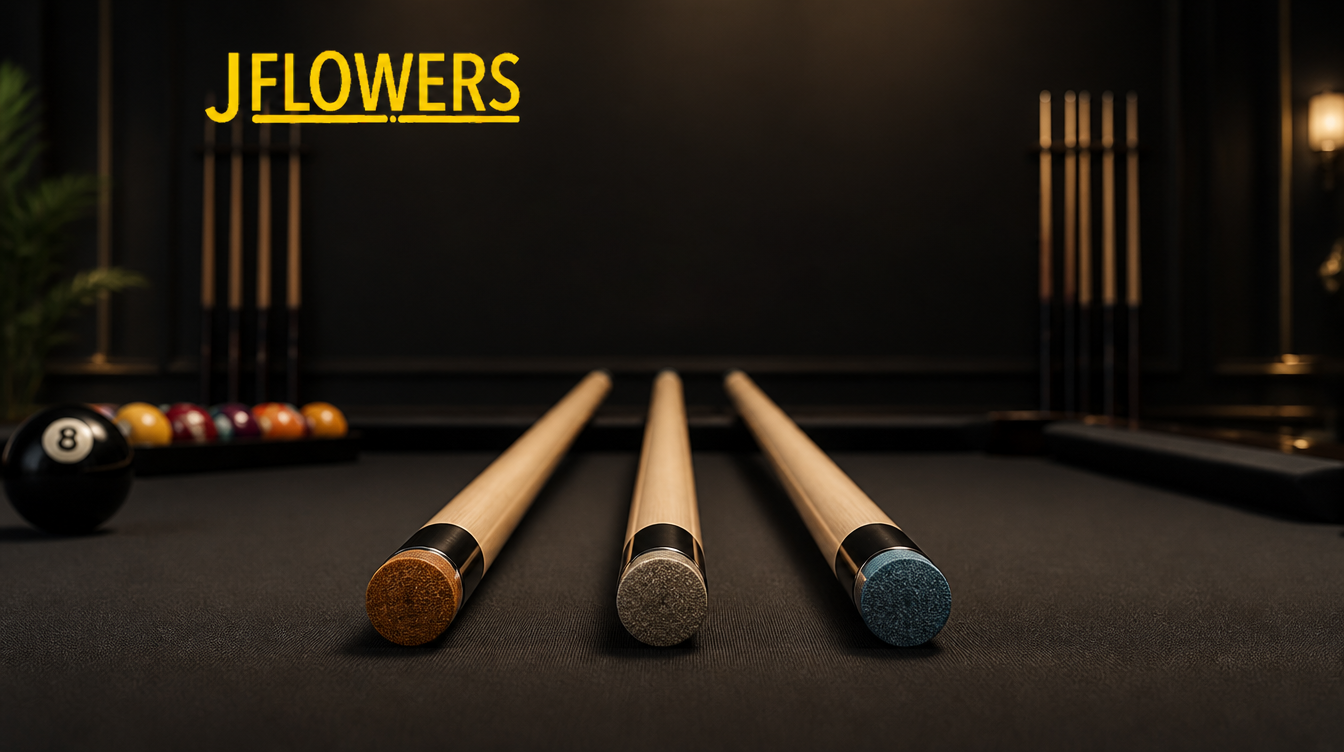
The tip is a small piece of leather at the end of your shaft, and it's the only part of your cue that ever touches the cue ball. That makes it, pound for pound, the most performance-critical component of your entire setup. Yet most players either use whatever came on their cue or pick a hardness based on something they heard at the pool hall.
Listen to this article
The complete breakdown — what each hardness does, and which is right for your game
This guide gives you the real explanation of what tip hardness does, how the different categories perform, which one fits different playing styles, and what you should actually be using.
The Basic Physics of Tip Contact
When a cue tip contacts the cue ball, two things happen in the fraction of a second they’re in contact. First, the tip compresses — it flattens slightly under the impact force. Then it springs back, releasing stored energy into the cue ball. During that compression-and-release cycle, the tip grips the surface of the cue ball and transfers spin.
Tip hardness directly controls how much compression occurs and how long the contact lasts. A softer tip compresses more, stays in contact longer, and grips the cue ball surface more aggressively. A harder tip compresses less, contacts more briefly, and grips less. This single difference cascades into everything — spin capability, feel, durability, and how forgiving the tip is on off-center hits.
Soft Tips
What They Do Soft tips compress significantly on contact, creating an extended grip on the cue ball surface. That grip transfers more side spin, more draw, and more follow than harder tips — the tip stays on the ball long enough to really dig in and impart spin efficiently.
The feel on contact is noticeably different from harder tips — softer, more absorbed, with more of a sense of the cue ball being gripped rather than struck. Many players describe it as a more connected or elastic feel.
The Tradeoff Soft tips mushroom and flatten faster. They require more frequent reshaping to maintain proper dome. They need replacing more often — sometimes every two to three months for frequent players. They also require more consistent chalk discipline because the softer material is more prone to miscuing if chalk coverage is incomplete. Who Should Use Soft Tips
Advanced players who rely heavily on english, draw, and follow for position play
Players who have good chalk discipline and don’t mind frequent tip maintenance
Players prioritizing maximum spin capability over longevity
Players who specifically prefer the feel of a soft contact on the cue ball
Medium Tips
What They Do Medium tips are the most popular tip category for a reason: they offer a genuine balance across every variable. Enough compression for good spin transfer. Enough durability to last a reasonable amount of time without constant maintenance. Enough feedback on contact to feel informative without being harsh.
The feel of a medium tip is what most players think of as “normal” pool tip feel — solid contact with clear feedback, capable of handling the full range of shots from delicate soft touches to heavy spin applications.
The Tradeoff Medium tips don’t maximize any single performance variable. They don’t transfer quite as much spin as soft tips. They don’t last quite as long as hard tips. They’re the optimal compromise — which is exactly why they’re the right starting point for most players. Who Should Use Medium Tips
The majority of players at every skill level — medium is the right default
Beginners who haven’t developed a specific hardness preference yet
Players who want reliability and versatility without committing to a specialized option
League players who need a tip that holds up across regular weekly play without constant maintenance
Hard Tips
What They Do Hard tips compress minimally on contact, producing a brief, direct hit. Energy transfer is efficient — a hard tip pops the cue ball quickly. What’s sacrificed is spin transfer: the brief contact time and reduced grip mean less english, draw, and follow gets imparted compared to softer options.
The feel of a hard tip is distinct — crisp, direct, sometimes described as a click rather than a thud. The feedback is immediate rather than absorbed.
Where Hard Tips Excel Hard tips are the right choice for break cues. The repeated extreme impact of breaking is brutal on softer tips — they flatten, mushroom, and wear out quickly under that kind of force. A hard tip handles break-level impact well, maintains its shape through hundreds of breaks, and transfers energy efficiently into the rack.
Hard tips are also used by some players who prioritize precision center-ball play and do very little spin work. The direct feel and minimal compression gives clear feedback on center-ball contact. Who Should Use Hard Tips
Break cues — almost universally. Phenolic ferrule + hard tip is the standard break cue setup.
Players who primarily play straight pool or snooker-style (minimal side spin)
Players who specifically prefer the crisp, direct feel of hard contact
Not recommended as a playing cue tip for players who use english regularly
Layered Tips vs. Single Leather Tips
Beyond hardness, tip construction matters. Tips come in two fundamental constructions: single leather and layered.
Single Leather Tips Cut from a single piece of leather. Perform well when properly maintained. More maintenance-intensive than layered tips because they can flatten and change hardness more unevenly as they wear.
Layered Tips Constructed from multiple thin layers of compressed leather. Hold their shape significantly better through the lifespan of the tip. Perform more consistently from new to nearly-worn-out. Premium tip brands — Kamui, Taom, Moori — are all layered construction, and for good reason.
Layered tips cost more but justify it through better consistency and longer useful life. For serious players, layered is the better choice at medium and soft hardness levels.
Popular Tip Brands by Hardness
Soft
Kamui Black Soft — one of the most popular competitive tips globally, exceptional spin and consistency
Taom Soft — popular on the European and Asian tour circuits, excellent grip
Moori Quick — softer Moori option with good spin characteristics
Medium
Kamui Black Medium — the most popular version of the most popular tip brand
Tiger Everest Medium — excellent value, consistent performance
Triangle Medium — reliable workhorse, affordable and widely available
Taom Medium — consistent European-style feel
Medium-Hard / Hard
Tiger Onyx — medium-hard, popular for players wanting longevity with decent feel
Blue Diamond — hard tip favored for break applications
Phenolic tips — maximum hardness, standard on dedicated break cues
Frequently Asked Questions
What tip hardness do most professional players use? Medium to medium-soft is the dominant choice at the competitive level. Kamui Black Medium and Soft are widely used. Taom has a growing professional following. Very few top players use hard tips for their playing cue — hard tips are generally reserved for break cues.
How often should I replace my tip? Soft tips: every 2-4 months for regular players (2-3 times/week). Medium: 4-8 months. Hard: 8-14 months. Replace when the tip is worn significantly below original height, when it consistently mushrooms beyond reshaping, or when miscues happen despite good chalk.
Can I change tip hardness without buying a new cue? Yes — tip replacement is routine maintenance. A cue technician can install any tip you want on your existing shaft. The tip is a consumable — you’ll replace it multiple times over the life of your shaft.
Does tip hardness affect deflection? Very minimally. Tip hardness affects contact time and spin transfer but is a much smaller factor in deflection than shaft mass distribution. Changing tip hardness won’t meaningfully change your shaft’s deflection profile.
Is a more expensive tip worth it? Yes — up to a point. Premium layered tips from brands like Kamui and Taom perform noticeably better and more consistently than generic tips. But you don’t need the most expensive option. Mid-range quality tips from Tiger or Triangle offer excellent value and outperform the generic tips that come stock on many cues.
Should I use the same tip hardness on all my cues? Not necessarily. Many players use a softer tip on their playing cue (for spin and feel) and a hard or phenolic tip on their break cue (for durability and energy transfer). Match tip hardness to the specific demands of each cue’s purpose.
Final Thoughts
Tip hardness is one of the most accessible equipment decisions you can make — and one of the more impactful. Start with medium if you’re not sure. Pay attention to whether you wish for more spin capability (try softer) or more durability and directness (try harder). Maintain your tip consistently, replace it before it starts costing you shots, and don’t overlook this small but critical component of your setup.
After comparing JFlowers to Predator, Mezz, McDermott, Meucci, Jacoby, Pechauer, and a dozen more brands across every price point and construction philosophy — the question that started all of it deserves a direct answer: which pool cue brand actually offers the best value for serious competitive players in
2026?
Players Technology is one of the most widely used cue brands in American pool halls. Their two-piece cues at $40-$150 have introduced millions of American players to personal cue ownership. Nearly every serious pool player in America either started on a Players cue or played against someone who did. Comparing Players to JFlowers isn’t really a direct competition — it’s a marker on the journey from beginner to serious competitor.