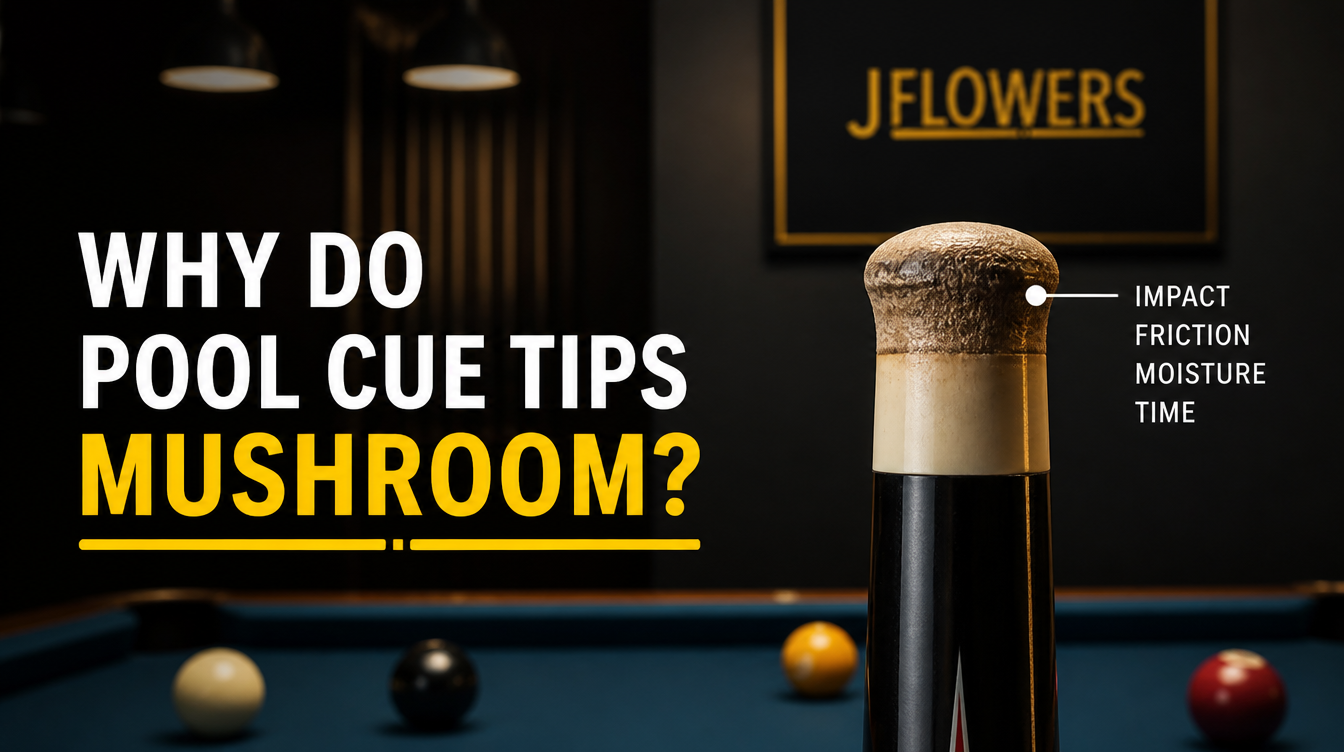
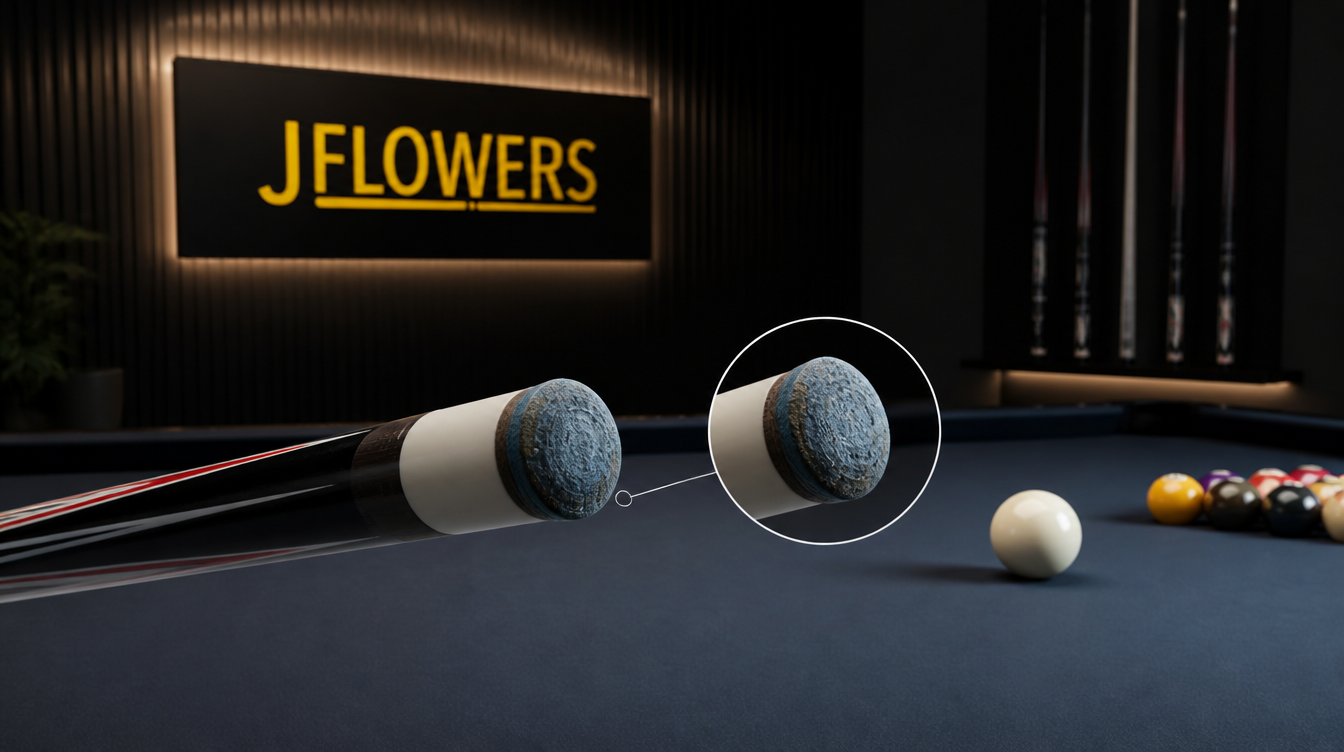
Mushrooming is one of the most common tip problems every pool player eventually deals with. You look down at your tip and instead of a clean dome, you see the leather spreading out beyond the shaft
diameter like a little shelf — the tip has mushroomed. It looks wrong and it plays worse.
Listen to this article
Understanding why tips mushroom — and what you can do about it — helps you prevent it from happening and recognize when it’s become bad enough that the tip needs replacing rather than just reshaping.
The Physics of Mushrooming
When a pool cue tip strikes the cue ball, it experiences a brief but intense compression force. The leather deforms under this force — which is normal and part of what gives tips their feel and english transfer properties. The problem is when this deformation is not fully elastic (reversible). Instead of returning completely to its original shape after each impact, the leather retains some permanent deformation.
Over hundreds and thousands of impacts, this accumulated permanent deformation causes the tip to spread outward beyond the shaft’s diameter. The material is flowing radially under the repeated compressive load — exactly like a lump of clay would spread if you hit it repeatedly with a flat surface.
Why Soft Tips Mushroom Faster
Softer leather deforms more under each impact and retains more of that deformation. This is why soft tips mushroom significantly faster than medium or hard tips. A soft single-layer tip on heavy competitive use can develop visible mushrooming in weeks. A hard layered tip under the same conditions might take months before mushrooming becomes noticeable.
The layered construction of premium tips (Taom, Kamui) resists mushrooming better than single-layer alternatives because the laminated structure distributes impact loads more evenly and resists the lateral flow that causes mushrooming. For more on why layered construction matters, see Layered vs Single-Layer Tips.
How Mushrooming Hurts Your Game
A mushroomed tip creates several performance problems:
The overhang beyond the shaft edge has nothing supporting it — this unsupported leather produces inconsistent contact on off-center shots
The mushroomed tip’s contact geometry is unpredictable — shots that should feel consistent don’t
The mushroomed edge can catch on the cue ball during extreme english shots, causing miscues in a different way than a flat tip
The tip begins to lose its proper shape rapidly once mushrooming sets in
Prevention: The Right Maintenance Habits
Regular shaping is the primary prevention strategy. When you maintain the tip’s dome radius with frequent light shaping, you’re removing the outer material that wants to mushroom before it spreads beyond the shaft diameter. This keeps the tip within the correct geometry and significantly slows the mushrooming process. See How Often Should You Shape a Cue Tip? for the right maintenance frequency.
Some players also trim the tip’s sides periodically — removing any overhang that has developed beyond the shaft’s edge. A sharp blade held at the shaft’s edge removes the mushroomed overhang cleanly. This is best done by someone experienced with tip work — done incorrectly, you can damage the shaft’s end or cut the tip unevenly.
When to Replace Instead of Shape
There’s a point where mushrooming is advanced enough that reshaping no longer solves the problem. If the tip has mushroomed significantly and is noticeably thinner than a fresh tip (under 4mm), it’s time to replace. If the mushrooming keeps returning within a single session despite reshaping, the tip material has degraded past its useful life.
The hardness of a mushroomed tip also tends to drop as the material fatigues — it no longer holds chalk as well and feels different on contact even after reshaping. For the full checklist of when a tip has reached end of life, see Signs Your Cue Tip Needs Replacing.
Mushrooming on Different Shaft Types
Tips mushroom on both wood and carbon fiber shafts. The shaft material doesn’t change the tip physics. However, on ferrule-less carbon fiber shafts like the JFlowers SMO, mushrooming is slightly more obvious visually because there’s no ferrule collar to partially obscure the overhang. This is actually a maintenance advantage — you catch mushrooming earlier on a ferrule-less design.
Pros and Cons
Managing mushrooming with regular maintenance
Regular shaping prevents mushrooming from becoming a performance problem
Catches overhang early before it affects contact consistency
Extends overall tip life by keeping the tip within proper geometry
Requires deliberate habit — easy to neglect
Each shaping session removes some tip material, eventually requiring replacement
Expert Recommendation The simplest mushrooming prevention: check your tip before every session. If you see the leather spreading beyond the shaft edge, 30 seconds with your tip tool restores proper geometry. Taom medium tips on the JFlowers SMO maintain their shape significantly better than single-layer alternatives — the upgrade to a quality layered tip is the single biggest reduction in mushrooming you can make.
Conclusion
Tip mushrooming is inevitable but manageable. Regular maintenance — specifically, frequent light shaping before overhang develops — keeps mushrooming from becoming a performance problem. Quality layered tips mushroom significantly more slowly than single-layer alternatives. The combination of a Taom or Kamui layered tip and a consistent pre-session shaping habit keeps your contact geometry reliable through months of competitive play.
Frequently Asked Questions
Q: Why do pool cue tips mushroom? Repeated impact compresses the leather, causing permanent deformation that spreads the material outward beyond the shaft’s diameter over time. Q: How do you fix a mushroomed pool cue tip? Trim the overhang that extends beyond the shaft edge, then reshape the tip to nickel radius. If the tip is thin or the mushrooming recurs quickly, replace the tip. Q: Do layered tips mushroom less? Yes. The laminated construction of premium layered tips (Taom, Kamui) resists the lateral material flow that causes mushrooming much better than single-layer tips. Q: Do soft tips mushroom faster? Yes. Softer leather deforms more under each impact and retains more permanent deformation, causing faster mushrooming than harder tip materials. Q: Can you prevent tip mushrooming? You can significantly slow it with regular shaping and premium layered tips. You can’t eliminate it entirely — all leather tips mushroom eventually under repeated impacts. Q: When should I replace a mushroomed tip? When the overhang is significant, the tip is thinner than 4mm, or reshaping no longer holds through a session of play. Q: Does tip mushrooming affect performance? Yes. Mushroomed tips produce inconsistent contact on off-center shots and can cause miscues on extreme english applications. Q: What tip hardness mushrooms least? Hard tips mushroom most slowly. Quality hard layered tips from Taom or Kamui will significantly outlast soft or medium options for shape retention.
After comparing JFlowers to Predator, Mezz, McDermott, Meucci, Jacoby, Pechauer, and a dozen more brands across every price point and construction philosophy — the question that started all of it deserves a direct answer: which pool cue brand actually offers the best value for serious competitive players in
2026?
Players Technology is one of the most widely used cue brands in American pool halls. Their two-piece cues at $40-$150 have introduced millions of American players to personal cue ownership. Nearly every serious pool player in America either started on a Players cue or played against someone who did. Comparing Players to JFlowers isn’t really a direct competition — it’s a marker on the journey from beginner to serious competitor.