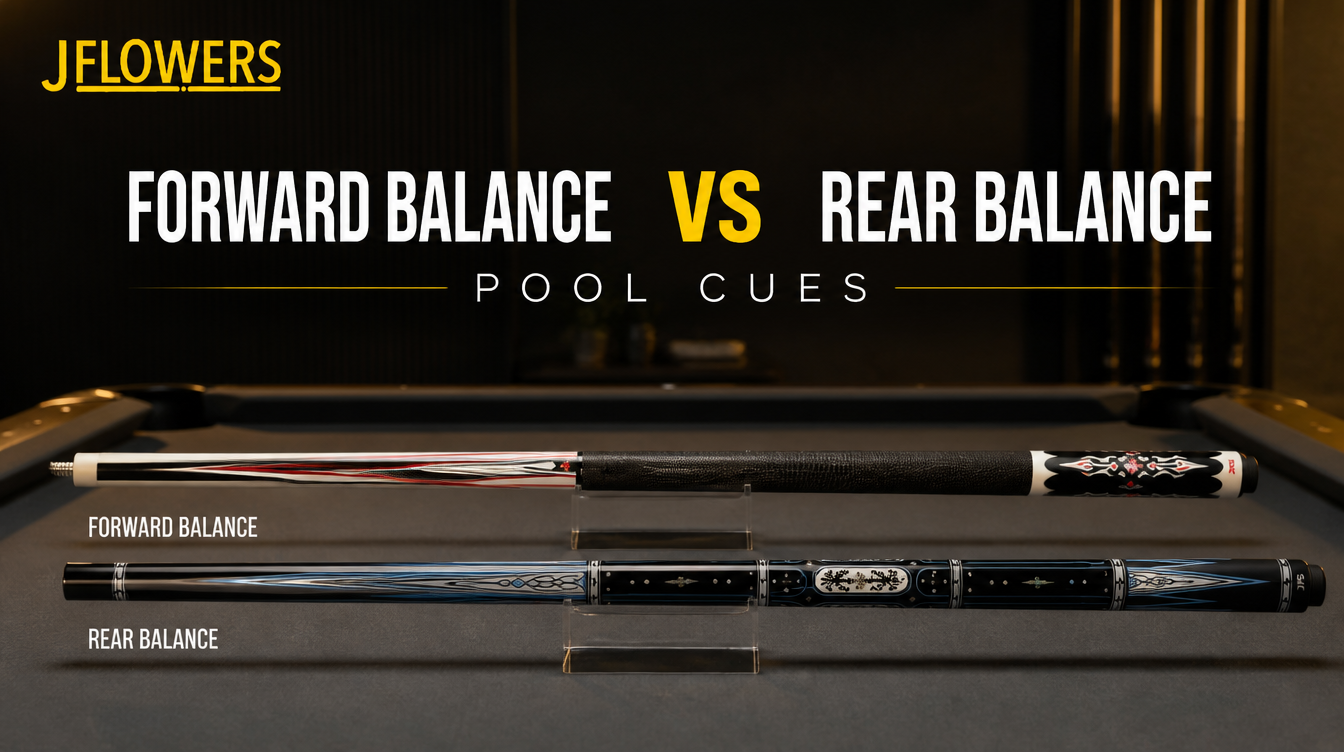
Understanding the difference between forward and rear balance — what each one actually feels like, how it affects different shot types, and which one your stroke is likely to prefer — is one of the more practical upgrades you can make to your equipment knowledge.
Listen to this article
What the difference feels like, and which is right for your game
The balance point of a pool cue is the kind of thing most players don’t think about until they pick up a cue that feels completely wrong for no obvious reason. The weight is fine. The tip is good. But something about how it moves through the stroke is off. Nine times out of ten, that “something” is the balance.
The Basic Definitions
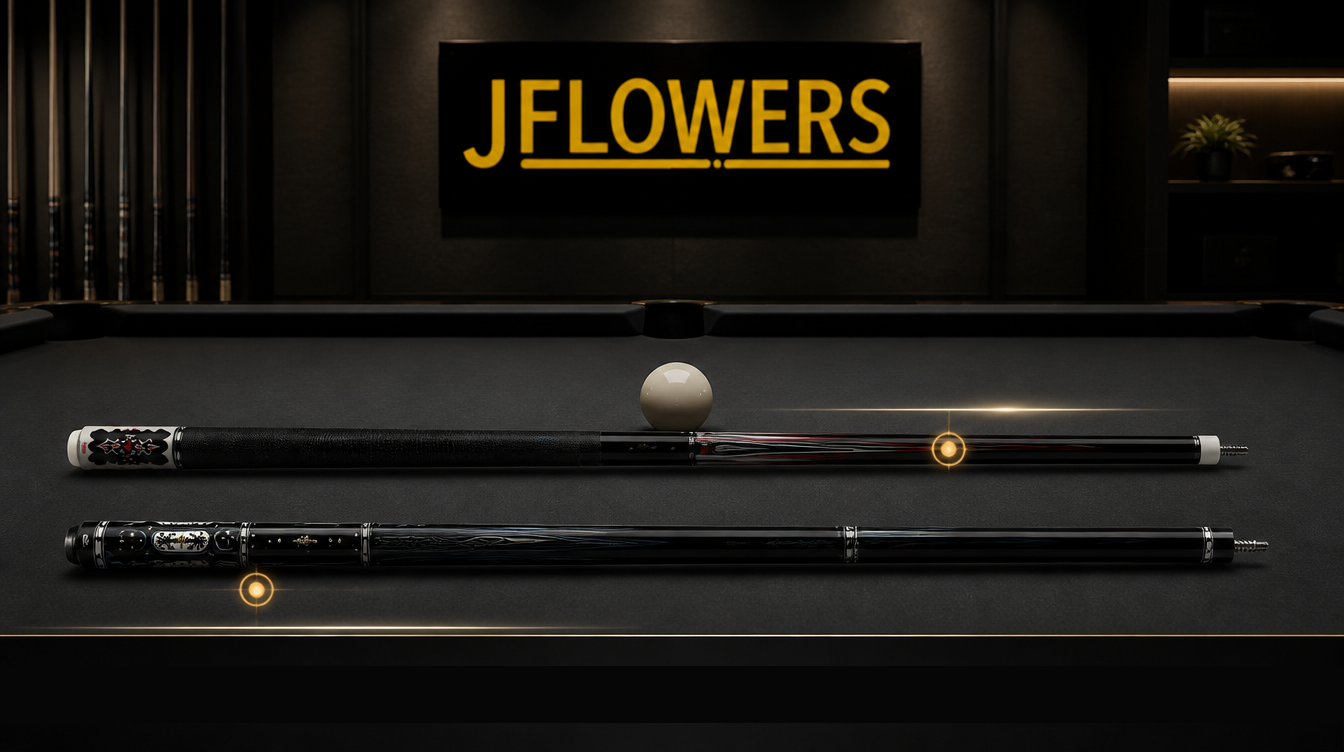
Forward Balance A forward-balanced cue has its balance point positioned closer to the tip end of the cue. More mass is distributed toward the front — toward the shaft and joint area. When the cue rests on a finger, the balance point falls further from the butt than on a neutral or rear-balanced cue. The practical effect: the cue feels heavier in the front when you hold it in your bridge hand. During the stroke, there’s more substance and weight moving through the cue ball at contact.
Rear Balance A rear-balanced cue has its balance point positioned closer to the butt end. More mass is distributed toward the back. The cue feels lighter in the forward section during the stroke. The practical effect: the cue feels lighter and more nimble during the swing. It’s easier to accelerate, and some players find the stroke feels more fluid and less like pushing a weight forward.
Neutral Balance Most all-around playing cues aim for a roughly neutral balance — the weight distributed relatively evenly. This is the safe default that works well for a wide range of players and playing styles before you develop a specific preference.
When you pick up a forward-balanced cue and bridge it for a shot, the extra forward weight creates a sense of the cue being “planted” in the front. Some players find this grounding and stable — it feels like the cue wants to go forward naturally.
During the delivery — the forward stroke through the cue ball — a forward-balanced cue has more momentum carrying it through. The contact point has more mass behind it, which some players experience as a feeling of power or solidity at the hit.
On soft, delicate shots, a forward-balanced cue can feel harder to “hold back.” The extra front weight wants to keep moving forward, which requires more conscious effort to control speed on gentle touches. Who Tends to Prefer Forward Balance
Players with a naturally heavier, more deliberate stroke
Players who shoot with a longer follow-through
Players who prioritize power shots and breaking ability
Players who find neutral and rear-balanced cues feel “too light” or “too loose”
Break cue users — most dedicated break cues are intentionally forward-balanced
What Rear Balance Actually Feels Like
A rear-balanced cue feels notably lighter in the front section. When you bridge for a shot, the cue doesn’t press down with the same weight. During the stroke, the delivery feels more like swinging something balanced rather than pushing something heavy.
Many players describe rear balance as feeling faster and more responsive — the cue accelerates more easily through the ball. This can be a significant advantage for players with a quicker, more wrist-involved stroke.
On soft shots and delicate position play, rear balance is often easier to control. The lighter front section is more manageable for finesse shots where too much energy transfer is the problem.
Who Tends to Prefer Rear Balance
Players with a quicker, more fluid stroke
Players who rely heavily on touch and feel for position play
Players who find forward-balanced cues feel heavy or fatiguing over long sessions
Players with shorter bridge lengths
Jump cue applications — rear balance makes the sharp downward jump stroke easier
How Balance Interacts With Cue Weight
This is where a lot of players have their understanding straightened out. Weight and balance are not the same thing, but they interact.
A 19 oz forward-balanced cue feels heavier than a 19 oz rear-balanced cue — even though the scale says they’re identical. The forward mass creates the sensation of more weight during the stroke because more mass is moving through the contact point.
A player who says their cue feels too light might actually be playing on a rear-balanced cue when they’d prefer forward balance. Adding weight is not necessarily the solution — shifting the balance forward might solve the problem without adding a single ounce.
Conversely, a player who feels their cue is too heavy might be playing on a forward-balanced cue. The total weight isn’t the problem — the distribution is. A balance adjustment, not a weight reduction, might be what they need.
The cleanest way to figure out which balance works for your stroke is hands-on testing with actual cues. But here are some deliberate things to pay attention to when you’re testing:
On power shots: does the cue feel like it naturally carries through the ball, or does it feel like it stops at contact?
On soft touch shots: can you easily control the speed, or does the cue feel like it wants to run away from you?
During a long session: does the cue feel fatiguing in the bridge hand, or comfortable throughout?
On your best shots — the ones where everything clicks: how does the cue feel? Plant that feeling in your memory and look for cues that replicate it.
How Carbon Fiber Shafts Affect Balance
Switching to a carbon fiber shaft moves the balance point rearward on most cues. Carbon fiber shafts are lighter than maple, which reduces the mass in the front section of the cue and shifts the balance toward the butt.
For players who prefer forward balance, this shift is something to account for when switching to carbon fiber. If your cue has adjustable weight bolts, adding weight to the butt when going to carbon fiber can partially compensate — though it will also increase total cue weight slightly. Some players accept the rearward balance shift; others tune it back with weight adjustments.
Frequently Asked Questions
Which is better for a beginner — forward or rear balance? Neutral balance is the recommended starting point for beginners. It doesn’t strongly favor either style and gives you time to develop a stroke preference naturally before making a specific balance decision.
Can I change the balance of my current cue? Yes — if it has adjustable weight bolts. Adding bolts to the butt shifts balance rearward; removing them shifts it forward. You can also shift balance by switching shaft materials. A cue technician can sometimes add weight to specific locations as well.
Does balance matter for the break cue? Yes — most players prefer a forward-balanced break cue. The extra forward mass aids energy transfer through the rack. This is different from the neutral or rear balance that many players prefer for their playing cue.
My cue feels front-heavy. What does that tell me? It tells you the balance point is toward the tip end — you have a forward-balanced cue. Whether that’s good or bad depends on your stroke. If you like the feel, it’s working for you. If it feels tiring or awkward, try a more neutral or rear-balanced option.
Do professional players care about balance? Yes — many have specific preferences and are particular about balance point down to small increments. At the professional level, the cue needs to feel like a natural extension of the stroke, and balance is one of the variables that determines whether it does.
Final Thoughts
Forward vs. rear balance is one of the more personal variables in pool equipment — and one of the more rewarding to understand. Once you know what you prefer and why, you’ll evaluate new cues differently, understand what’s right and wrong about your current setup, and make equipment decisions with much more confidence.
If you’ve never deliberately paid attention to balance before, start now. Roll your current cue on your finger. Note where it balances. Then pick up a friend’s cue with a different balance profile and hit some balls with it. The difference will tell you something useful about what your stroke actually needs.
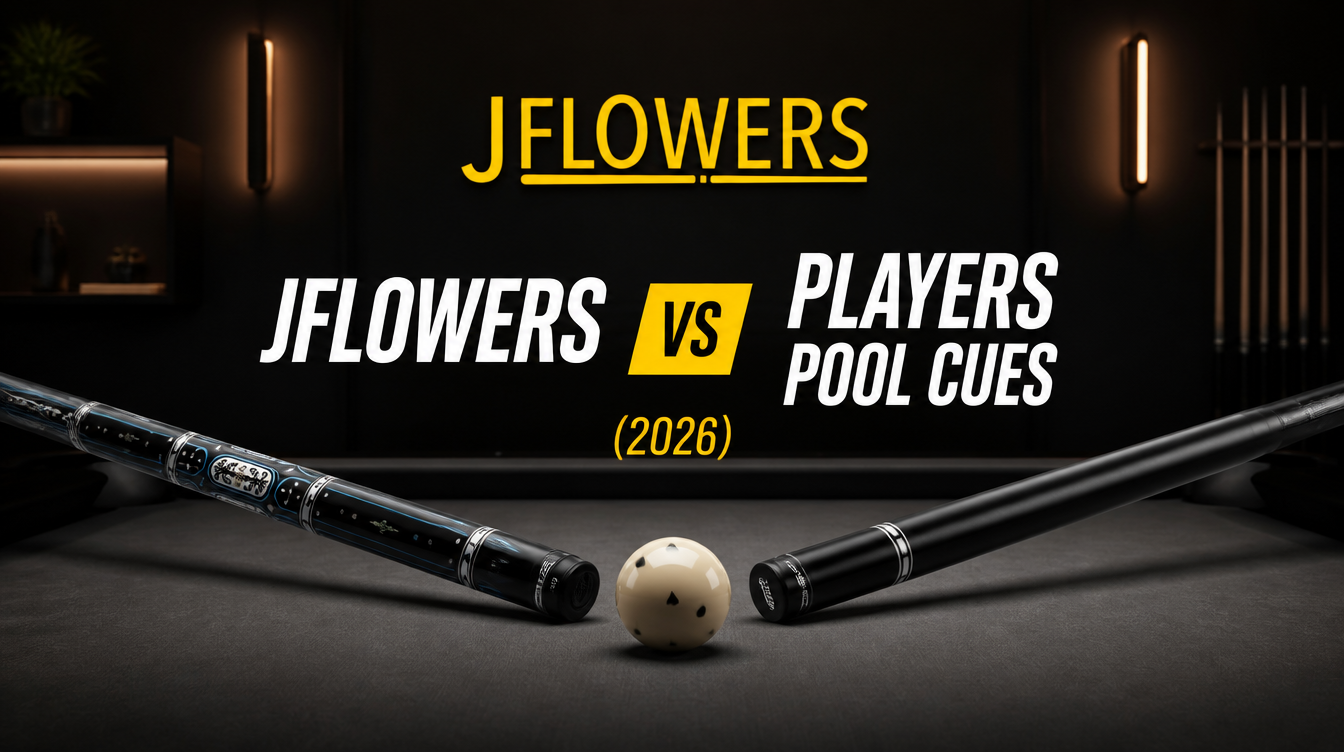
After comparing JFlowers to Predator, Mezz, McDermott, Meucci, Jacoby, Pechauer, and a dozen more brands across every price point and construction philosophy — the question that started all of it deserves a direct answer: which pool cue brand actually offers the best value for serious competitive players in
2026?
Players Technology is one of the most widely used cue brands in American pool halls. Their two-piece cues at $40-$150 have introduced millions of American players to personal cue ownership. Nearly every serious pool player in America either started on a Players cue or played against someone who did. Comparing Players to JFlowers isn’t really a direct competition — it’s a marker on the journey from beginner to serious competitor.