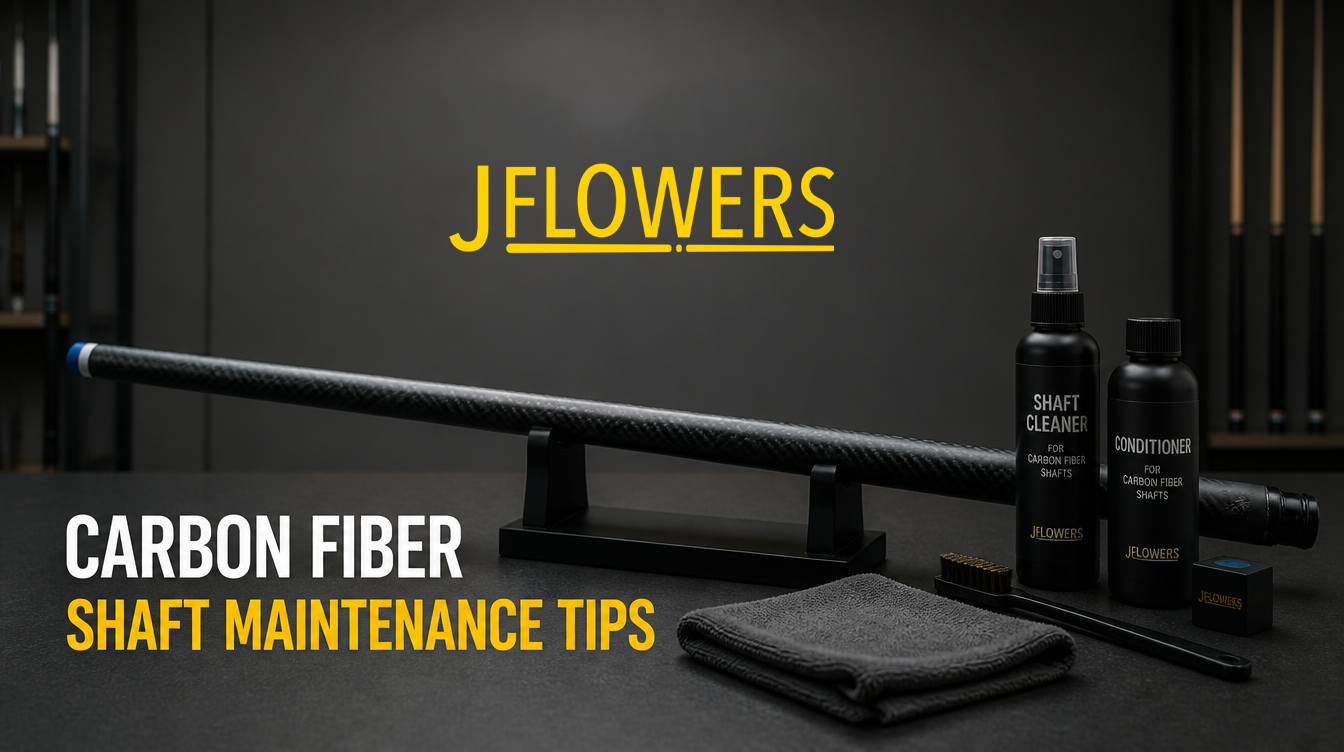
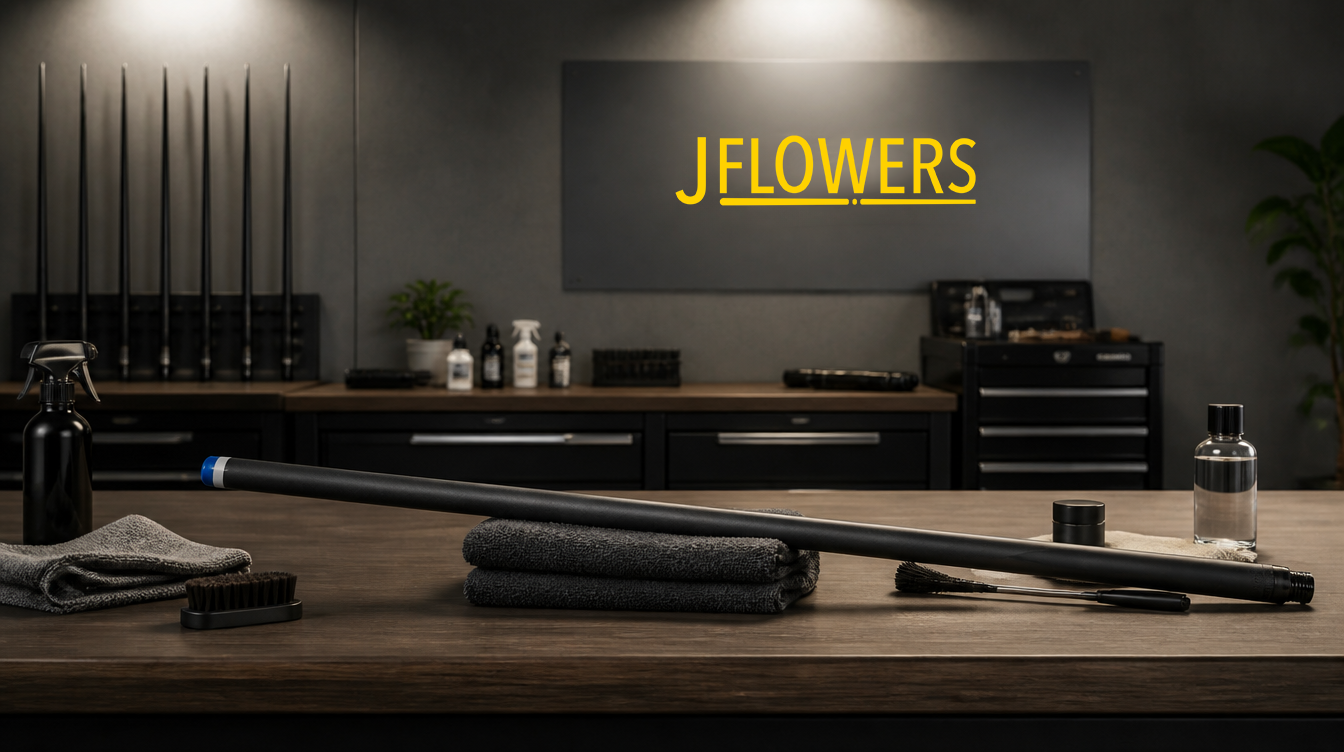
One of the big selling points of carbon fiber shafts is that they require far less maintenance than wood. That's true — but 'less maintenance' doesn't mean 'no maintenance.' A few simple habits keep a quality JFlowers SMO shaft performing at its best session after session.
Listen to this article
This guide covers everything you need to know about caring for a carbon fiber pool cue shaft: how to clean it, how to store it, what to avoid, and how to manage tip maintenance specifically.
After Every Session: The Wipe-Down
The single most important maintenance habit for any pool cue shaft — carbon fiber or wood — is wiping it down after every session. Your hands transfer chalk dust, skin oils, and moisture to the shaft surface during play. Left to accumulate, these deposits affect stroke feel and can degrade the surface finish over time.
Use a clean, dry microfiber cloth. Wipe from joint to tip in smooth strokes. That’s it. For most players who play regularly, this one habit is 90% of the maintenance your carbon fiber shaft needs. For the complete cleaning guide, see How to Clean a Carbon Fiber Shaft.
Deeper Cleaning
Every few weeks of heavy play, a slightly more thorough clean keeps the shaft surface in top condition. Lightly dampen a clean microfiber cloth with water — barely damp, not wet. Wipe the shaft, then immediately dry with a clean dry cloth. This removes accumulated chalk and oils that a dry wipe alone won’t fully clear.
You can also use cleaners specifically formulated for carbon fiber cue shafts. See Best Products for Pool Cue Care for specific product recommendations.
What NOT to Do With a Carbon Fiber Shaft
No shaft conditioners or wood oils — these products are for wood and can leave residue on carbon fiber
No sandpaper or abrasive pads — these permanently damage the surface finish
No soaking or extended moisture exposure — dry immediately after any wet contact
No steel wool or rough cloths — any abrasive material scratches the finish
No harsh chemical cleaners — bleach, acetone, or industrial solvents damage the resin matrix
Storage Best Practices
Carbon fiber doesn’t warp from storage — that’s one of its key advantages. But proper storage still protects the shaft from physical damage. Always store your cue in a quality hard case. The case protects the shaft from the accidental impacts that are the most common cause of actual damage to carbon fiber shafts.
Temperature extremes are not a warping concern for carbon fiber, but extended direct sunlight can fade some finishes. A case provides this protection naturally. See How to Store a Pool Cue Properly for general storage guidance.
Tip Maintenance on Carbon Fiber Shafts
Shape the tip regularly with a tip shaper tool — mushrooming affects contact geometry regardless of shaft material
Chalk before every shot — Taom chalk transfers cleanly and holds on the tip surface
Replace the tip when it becomes flat, hard, or fails to hold chalk — typically every 6-18 months
On ferrule-less designs, tip installation requires the right adhesive and technique — have a qualified shop do first-time installations if unfamiliar
Keep the threads clean and free of chalk buildup — a soft brush or cloth can clear the thread grooves. Never force-thread the shaft onto the butt; cross-threading damages both the shaft’s joint and the butt’s pin. Thread lightly until you feel it catch, then hand-tighten smoothly.
Pros and Cons
Carbon fiber shaft maintenance
Far less maintenance than wood — no conditioning, no burnishing, no warp management
Post-session wipe-down is all most players need
No humidity or temperature-related care concerns
Specific products required — wood care products don’t apply and some cause damage
Tip installation on ferrule-less designs requires more skill than traditional ferrule shafts
Expert Recommendation The JFlowers SMO Carbon Fiber Shaft maintenance routine: wipe down after every session with a dry microfiber cloth, clean more thoroughly every few weeks with a barely-damp cloth, store in a quality case, and replace the tip when needed. That’s genuinely most of it. The shaft does the rest.
Conclusion
Carbon fiber shaft maintenance is refreshingly simple compared to wood. The basics cover nearly everything. The JFlowers SMO is built to reward this simple care routine with years of consistent, top-level performance.
Frequently Asked Questions
Q: How do you maintain a carbon fiber pool cue shaft? Wipe down with a dry microfiber cloth after every session. Clean more thoroughly every few weeks with a slightly damp cloth. Store in a hard case. Replace the tip as needed. Q: Can I use wood shaft conditioner on a carbon fiber shaft? No. Wood shaft conditioners are formulated for wood and can leave residue or affect carbon fiber shaft surfaces. Q: How often should I clean my carbon fiber shaft? A wipe-down after every session is the baseline. A more thorough damp-cloth clean every few weeks of regular play. No other regular maintenance required. Q: What products are safe to use on a carbon fiber shaft? Water on a barely-damp microfiber cloth, carbon fiber specific shaft cleaners, and dry microfiber cloths for routine wipe-downs. Q: Can I replace the tip on a carbon fiber shaft myself? On traditional ferruled designs, yes. On ferrule-less designs like the JFlowers SMO, tip installation requires the right technique and adhesive — many players have a shop do it the first time. Q: How do I clean the joint threads? Use a soft dry brush or cloth to clear chalk buildup from the thread grooves. Do not use metal brushes or abrasive tools.
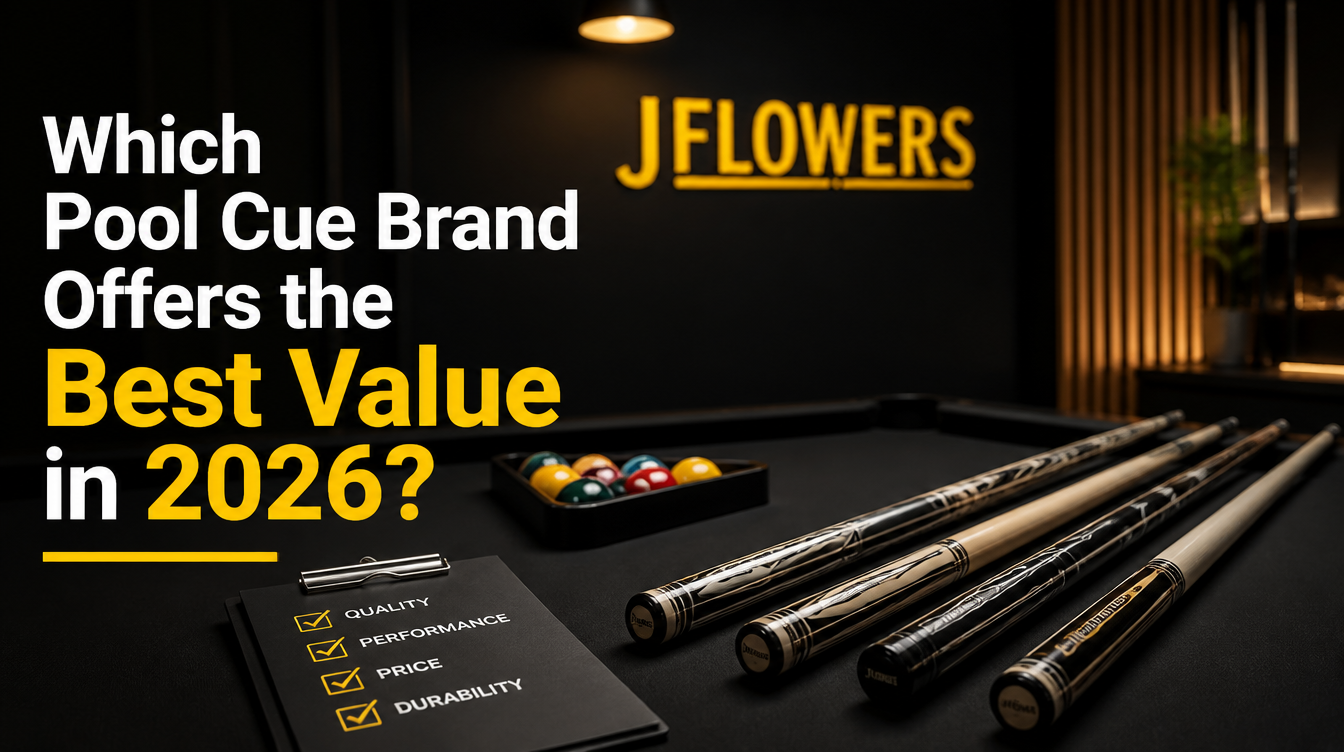
After comparing JFlowers to Predator, Mezz, McDermott, Meucci, Jacoby, Pechauer, and a dozen more brands across every price point and construction philosophy — the question that started all of it deserves a direct answer: which pool cue brand actually offers the best value for serious competitive players in
2026?
Players Technology is one of the most widely used cue brands in American pool halls. Their two-piece cues at $40-$150 have introduced millions of American players to personal cue ownership. Nearly every serious pool player in America either started on a Players cue or played against someone who did. Comparing Players to JFlowers isn’t really a direct competition — it’s a marker on the journey from beginner to serious competitor.