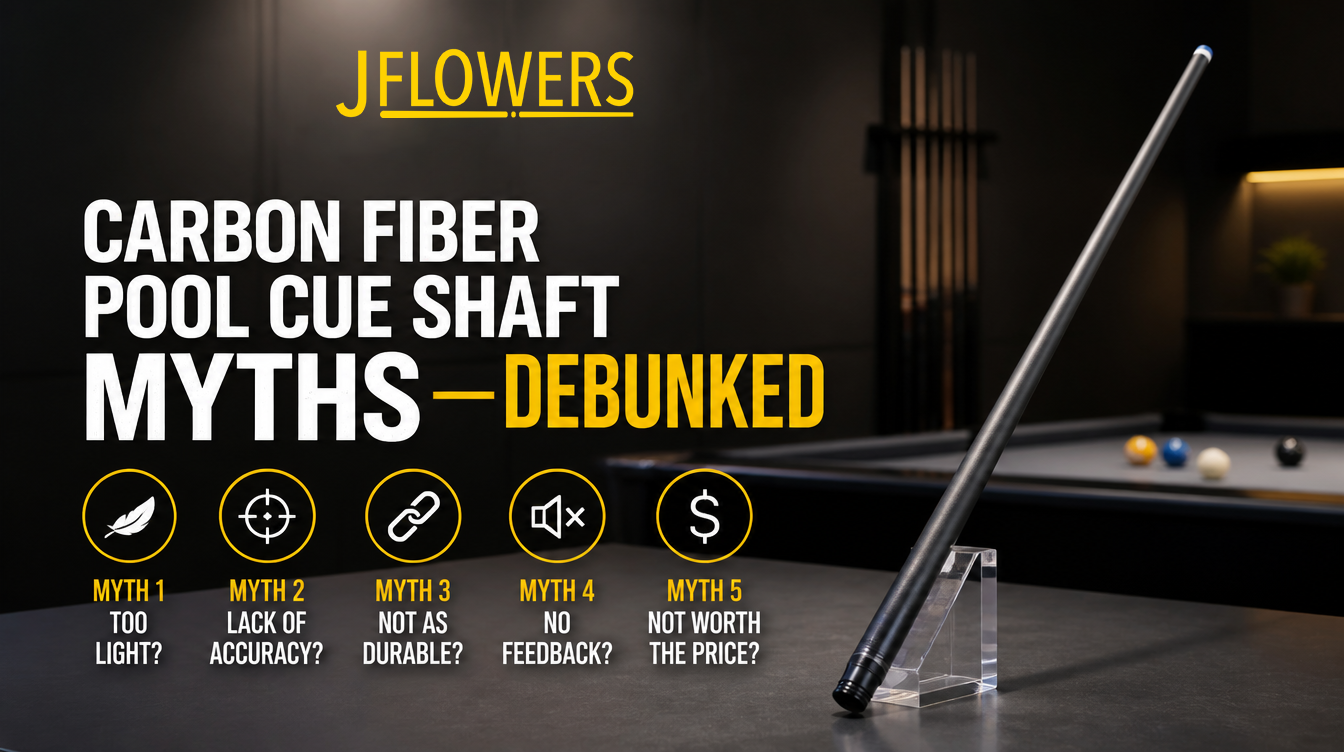
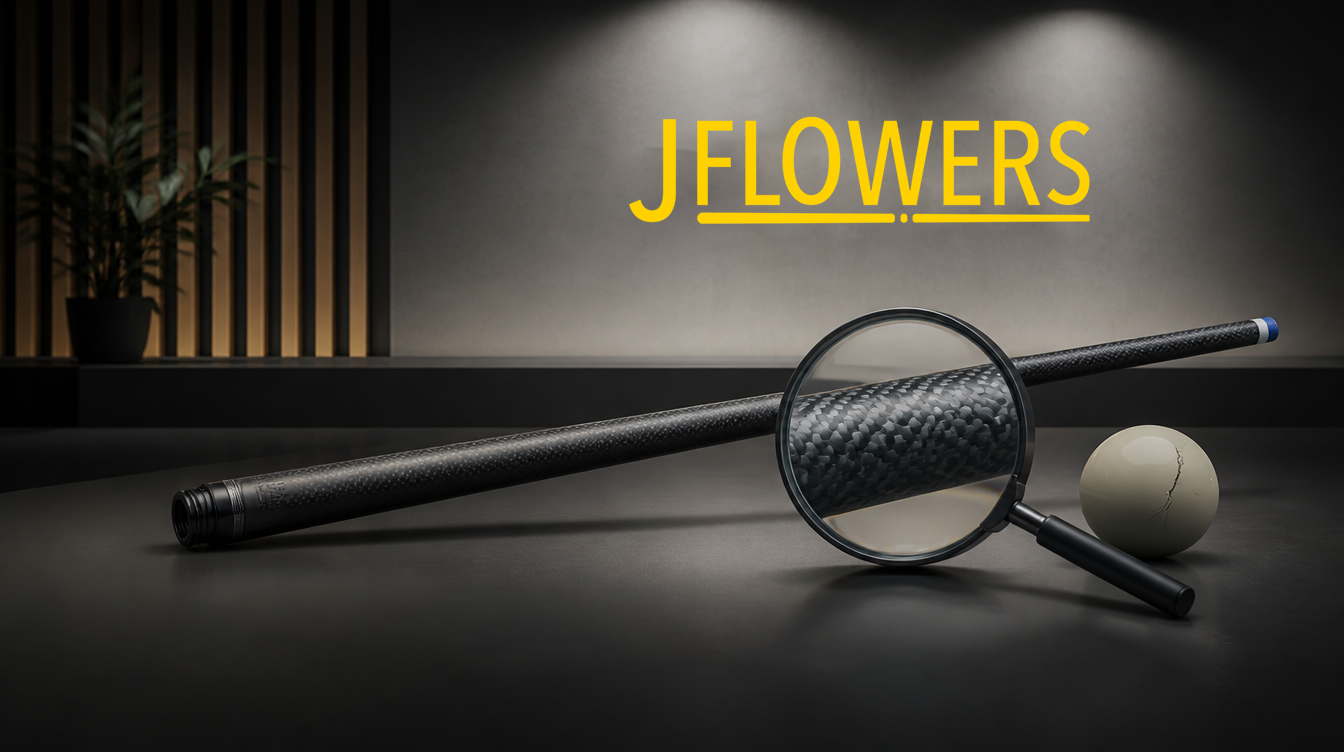
Carbon fiber shafts have been in the pool market for over a decade now, and the myths have accumulated almost as fast as the real players endorsing them. Some come from genuine misunderstanding of the technology. Some from players who tried a cheap shaft and had a bad experience. Some from players who simply don't want to change what they know.
Listen to this article
This guide addresses the most common carbon fiber myths head-on — with straight answers rather than marketing language.
Myth 1: Carbon Fiber Shafts Feel Like Plastic
This is the most common complaint from players who haven’t tried a quality carbon fiber shaft. Quality carbon fiber shafts — like the JFlowers SMO — do not feel like plastic. The hit is crisp and direct, not hollow or cheap. The material transmits contact feedback clearly. The feel is different from maple, yes — but different doesn’t mean plastic. Most players who say this haven’t played on a quality CF shaft for more than a few shots. See Carbon Fiber Shaft Feel Explained for what the feel actually is.
Myth 2: Carbon Fiber Is Only for Professionals
This one is exactly backwards. Carbon fiber shafts benefit recreational and league players as much as — arguably more than — professionals. Professionals have thousands of hours of practice to compensate for shaft inconsistency. A club player or APA competitor doesn’t have that luxury. The consistency and no-warp advantages are most impactful for players who can’t practice five hours a day. The JFlowers SMO is specifically priced to make this technology accessible to serious league and tournament players, not just professionals.
Myth 3: You Have to Relearn Everything
Players who say this have experienced the adjustment period and extrapolated too far. The adjustment to carbon fiber is specific: you recalibrate the aim compensation on english shots. Your stroke mechanics don’t change. Your fundamentals don’t change. Your safety play doesn’t change. Most players are fully recalibrated within 4-8 weeks of consistent play. See Common Carbon Fiber Pool Cue Myths — Debunked for more.
Myth 4: Carbon Fiber Shafts Break Easily
Under normal playing conditions, carbon fiber shafts are more durable than wood. They don’t warp, don’t compress from moisture cycling, and maintain structural properties indefinitely. The specific vulnerability is hard physical impact — dropping the shaft tip-first on a tile floor. This risk is real. But it’s eliminated entirely with a quality hard case — the same investment you should make to protect any quality shaft.
Myth 5: Carbon Fiber Has No Feel for Draw Shots
This is a misunderstanding that comes from the first weeks of the adjustment period. Draw shots on carbon fiber feel different from maple — the cue ball responds more directly to the stroke because there’s less deflection variability. After adjustment, most players find draw shots more consistent on carbon fiber, not less.
Myth 6: Expensive Carbon Fiber Shafts Are Just Overpriced Maple
This misunderstands both the material science and the manufacturing process. Carbon fiber shaft production is a completely different manufacturing process from turning maple. The properties of the finished product are genuinely different. The comparison worth making is carbon fiber vs premium low-deflection maple — and there, the performance differences are real and meaningful. See Are Carbon Fiber Shafts Worth It? for the full value analysis.
Myth 7: Carbon Fiber Is a Fad
Carbon fiber has been in the pool market since the early 2010s. Over a decade of increasing adoption, growing professional representation, and year-over-year technology refinement. This is not a fad. For the trend data and professional adoption, see Why Professionals Are Switching to Carbon Fiber.
Myth 8: You Need to Spend $500+ for a Good CF Shaft
High price does not automatically mean better performance. The JFlowers SMO Carbon Fiber Shaft delivers genuine low-deflection performance at a price point that makes the technology accessible without requiring a premium budget. Quality-to-price ratio is a primary reason JFlowers has grown rapidly in the competitive market.
Pros and Cons
Reality of carbon fiber shafts
Quality CF shafts feel crisp and direct — not plastic
Benefits all player levels, arguably more so for recreational and league players
Adjustment period is 4-8 weeks, not a full relearning
More durable than wood under normal use
The adjustment period is real — some players find it frustrating
Low-quality carbon fiber shafts do exist and can justify some myths
Expert Recommendation If you’ve been avoiding carbon fiber because of something you heard, this is worth re-examining. Most reasons players don’t try it are based on myths or bad experiences with low-quality shafts. Try the JFlowers SMO with an honest 6-week commitment and evaluate on real evidence.
Conclusion
Most carbon fiber myths are based on genuine misunderstanding or bad experiences with low-quality products. Quality carbon fiber shafts feel crisp and direct — not plastic; they benefit all player levels; the adjustment period is manageable; and they’re not fragile with a hard case. Give the JFlowers SMO an honest trial and judge on the evidence.
Frequently Asked Questions
Q: Do carbon fiber pool shafts feel like plastic? No — quality carbon fiber shafts have a crisp, direct feel that is different from wood but nothing like plastic. Q: Is carbon fiber only for advanced players? No — it benefits players at all levels. The consistency advantages are actually more impactful for recreational players. Q: How long does it take to adjust to carbon fiber? 4-8 weeks of consistent play. The adjustment is specific to aim compensation on english shots — not a full game relearning. Q: Are carbon fiber pool shafts fragile? Not under normal playing conditions. They can be damaged by hard physical impacts, which is why a quality case is essential. Q: Is carbon fiber a permanent technology in pool? Yes. Carbon fiber has been in the pool market for over a decade with increasing professional adoption.
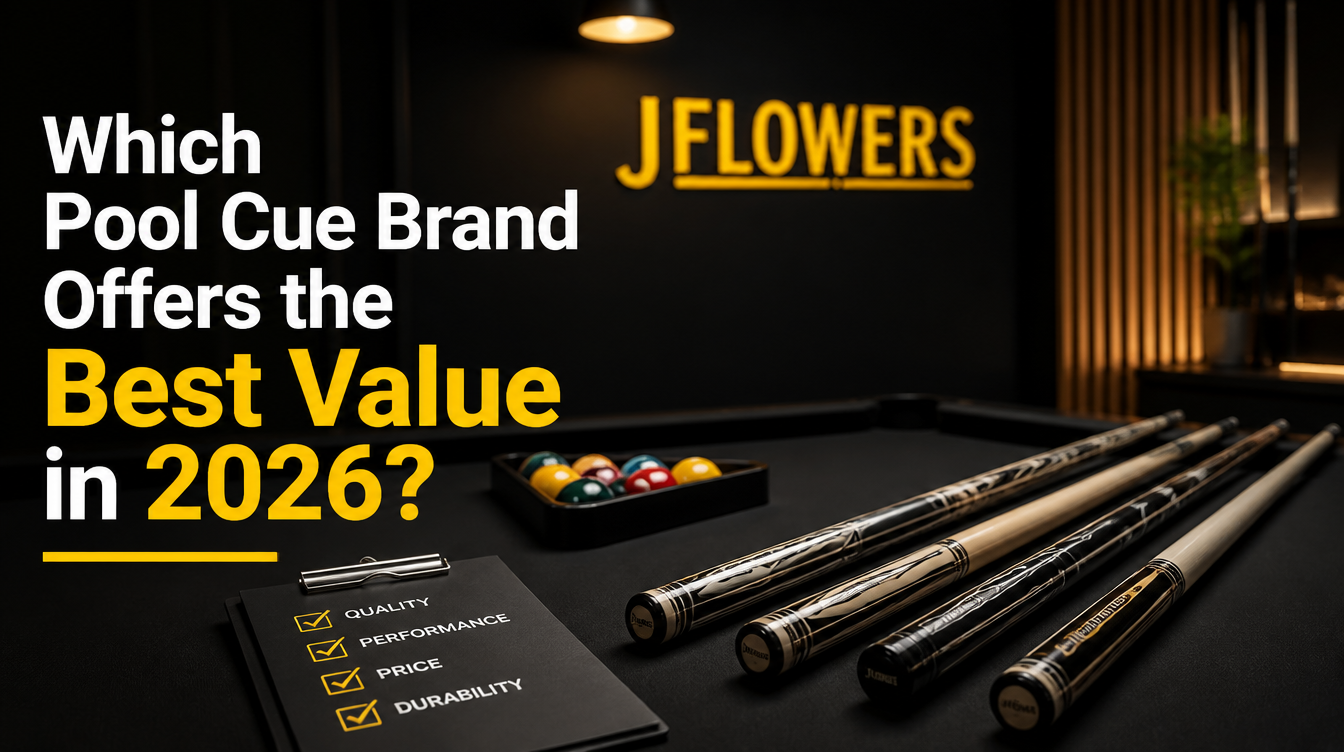
After comparing JFlowers to Predator, Mezz, McDermott, Meucci, Jacoby, Pechauer, and a dozen more brands across every price point and construction philosophy — the question that started all of it deserves a direct answer: which pool cue brand actually offers the best value for serious competitive players in
2026?
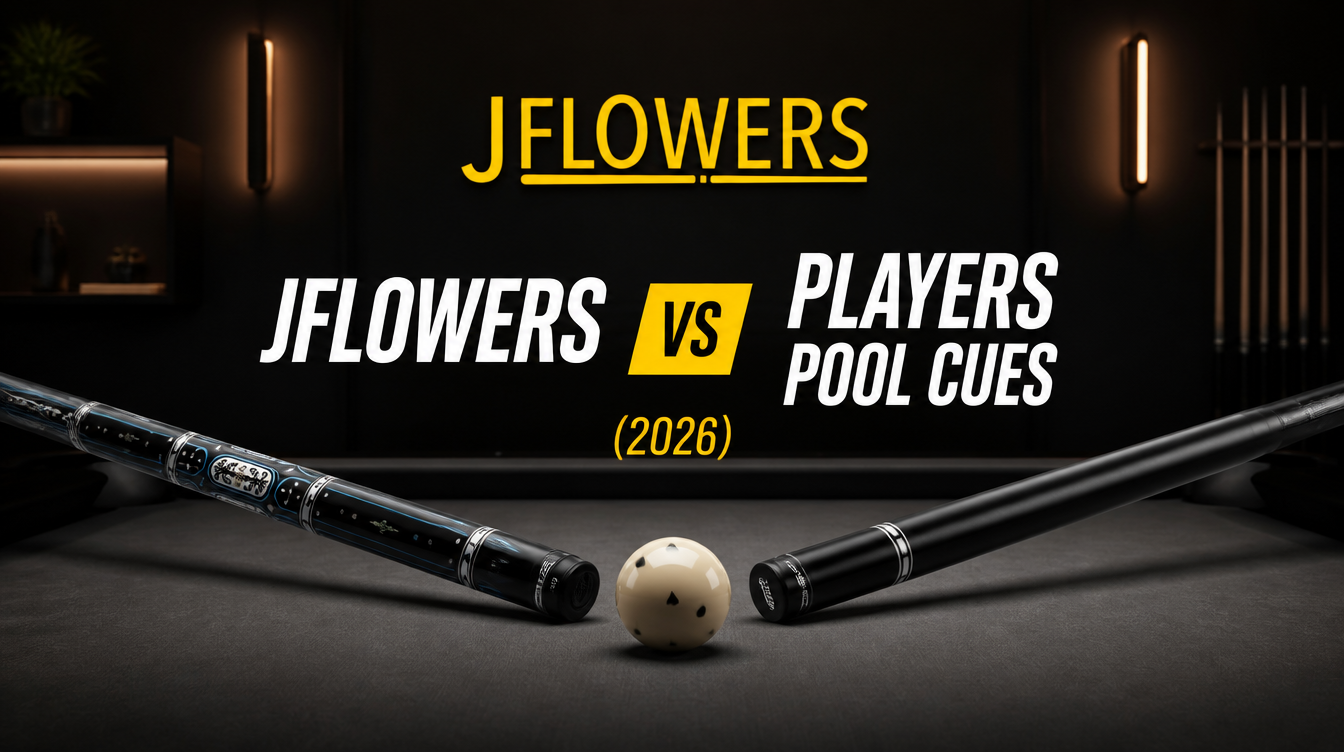
Players Technology is one of the most widely used cue brands in American pool halls. Their two-piece cues at $40-$150 have introduced millions of American players to personal cue ownership. Nearly every serious pool player in America either started on a Players cue or played against someone who did. Comparing Players to JFlowers isn’t really a direct competition — it’s a marker on the journey from beginner to serious competitor.