Feel is the most personal and hardest-to-describe aspect of switching to carbon fiber. Ask ten players what a carbon fiber shaft feels like and you'll get ten slightly different answers — but most will include
words like 'crisp,' 'direct,' 'different,' and eventually, for players who stuck with it, 'better.'
Listen to this article
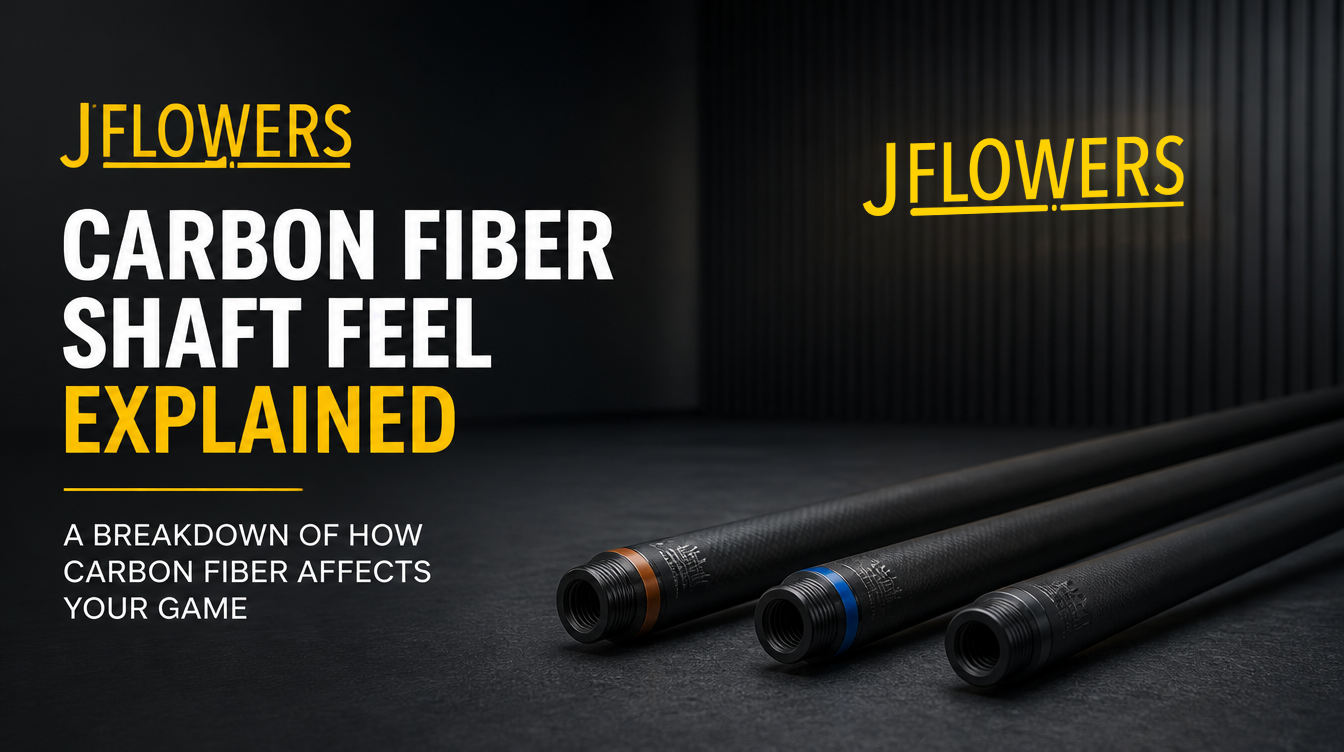
This guide breaks down exactly what carbon fiber shaft feel means in practice: the hit sensation, the contact sound, the surface texture, the feedback on different shots, and how the feel changes as you adjust over the first few weeks.
The Hit: What Contact Actually Feels Like
The hit on a carbon fiber shaft is crisper and more direct than a wood shaft. Where maple transmits a slightly soft, slightly warm contact impulse, carbon fiber delivers a cleaner, sharper feedback. The cue ball leaves the tip with less ambiguity — the contact is more defined. Some players describe this as feeling ‘harder’ — but that’s not quite right. It’s more precise. The feedback on exactly where you contacted the cue ball is clearer.
The Sound: Different But Not Worse
The sound is often the first thing players notice about carbon fiber — it’s different. Wood shafts produce a characteristic ‘thwack’ that most players have heard their entire pool-playing life. Carbon fiber produces a higher-pitched, sharper sound. Some players dislike this initially. It sounds ‘wrong’ — unfamiliar. But there’s no functional difference in the contact. After a few weeks, most players stop noticing it. It just sounds like their cue.
Surface Texture and Grip
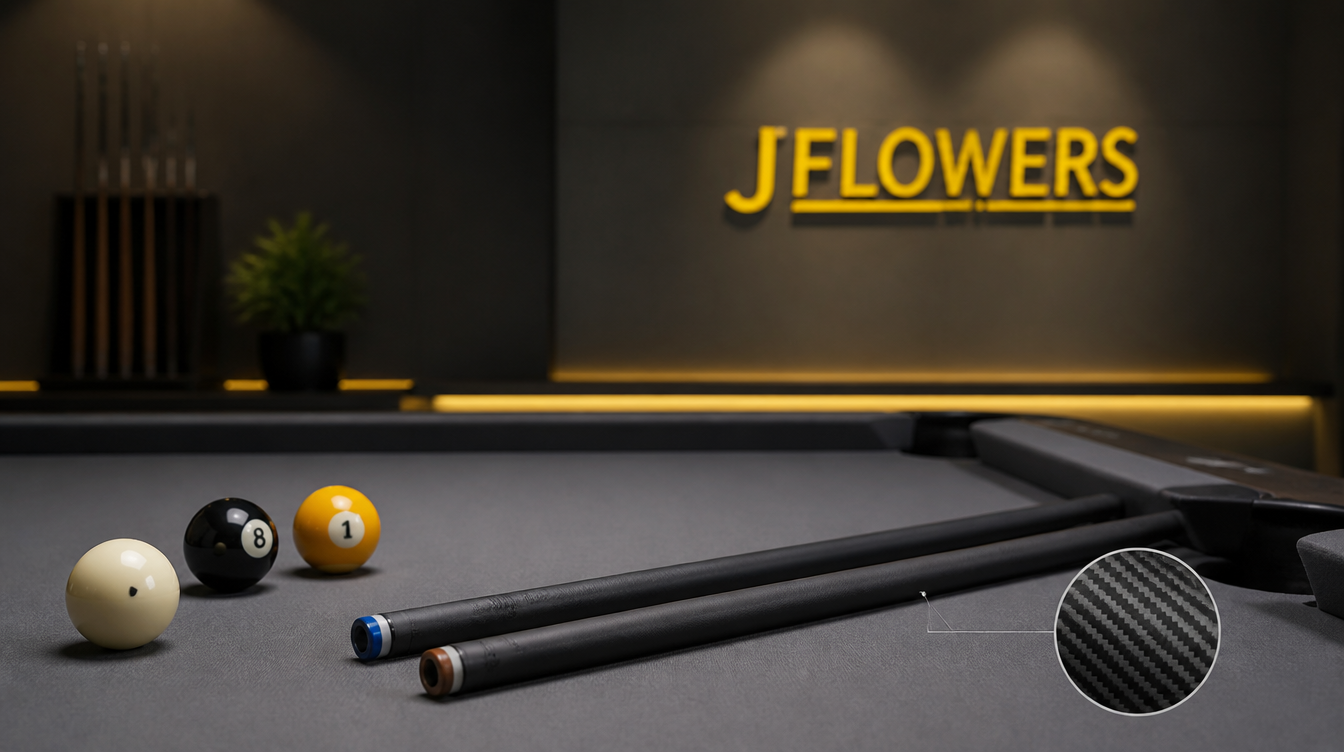
Carbon fiber shafts come in different finish types — matte, micro-textured, and smooth/glossy. The surface texture significantly affects how the shaft slides through your bridge hand. Matte and micro-textured finishes feel similar to a well-maintained wood shaft — controlled slide without stickiness. The JFlowers SMO shaft’s finish is designed for consistent stroke feel across different hand conditions.
Draw shots are where new carbon fiber users most often notice the adjustment. The cue ball responds more directly to your stroke — less squirt, more pure reverse spin. Initially many players feel their draw is ‘weaker’ on carbon fiber. It’s not — the cue ball is doing exactly what your stroke tells it to. The difference is that there’s less deflection kick, making position more predictable once you’re calibrated. For the physics behind this, see Carbon Fiber Shaft Flex Explained.
Soft Shots and Touch
Carbon fiber actually provides very useful feedback on soft shots. The contact is clear even at low impact speeds, and the cue ball behavior is consistent. Many straight pool players find their touch game improves on carbon fiber because the feedback is more consistent at all speed levels.
The Adjustment Period
Almost every player who switches from maple goes through an adjustment period. The aim compensation they’ve developed for wood’s higher deflection is no longer correct. For the first few weeks, english shots land in unexpected positions. This is normal and temporary — most players are fully adjusted within 4-8 weeks of regular play. The key is consistency: don’t switch back and forth between shaft types during the adjustment. SeeAre Carbon Fiber Shafts Worth It? for the full transition guide.
Pros and Cons
Carbon fiber feel characteristics
Crisp, direct contact feedback — clear information on every shot
Consistent feel session to session regardless of humidity
Draw and follow shots respond predictably to stroke input
Touch shots benefit from clear low-speed feedback
Different from wood — requires 4-8 week adjustment for players switching from maple
Higher-pitched contact sound takes some players time to accept
Expert Recommendation If you’re worried about the feel difference: the adjustment is real but manageable. Give yourself 6-8 weeks of consistent play on the JFlowers SMO shaft before judging. Most players who commit to the adjustment end up preferring carbon fiber’s clean, consistent feedback.
Conclusion
Carbon fiber shaft feel is different from wood — but different is not worse. The crisper contact, consistent deflection feedback, and predictable cue ball behavior that carbon fiber delivers become genuine advantages once you’re past the adjustment period. The JFlowers SMO is designed to make that transition as clean as possible.
Frequently Asked Questions
Q: What does a carbon fiber pool cue shaft feel like? Crisper and more direct than wood. Contact feedback is cleaner and more defined. The sound is higher-pitched. The cue ball behaves more predictably under english once you’ve adjusted your aim. Q: Is carbon fiber harder to use than wood? It requires an aim adjustment period of 4-8 weeks. After that, most players find carbon fiber easier because the deflection is more consistent and predictable. Q: Does carbon fiber feel good for draw shots? Yes — after adjustment. Draw shots feel different initially but the cue ball responds more directly to your stroke, making position more predictable. Q: Why does a carbon fiber shaft sound different? Different material properties transmit vibration differently. Carbon fiber produces a higher-pitched, sharper contact sound than wood. Purely acoustic — no functional difference. Q: Will I ever get used to carbon fiber? Yes. Most players are fully adjusted within 4-8 weeks. After adjustment, most prefer carbon fiber’s consistency. Q: Does carbon fiber shaft texture matter? Yes. The surface finish affects bridge hand slide. Matte and micro-textured finishes suit most players. Smooth glossy can be slippery for players with moist hands.
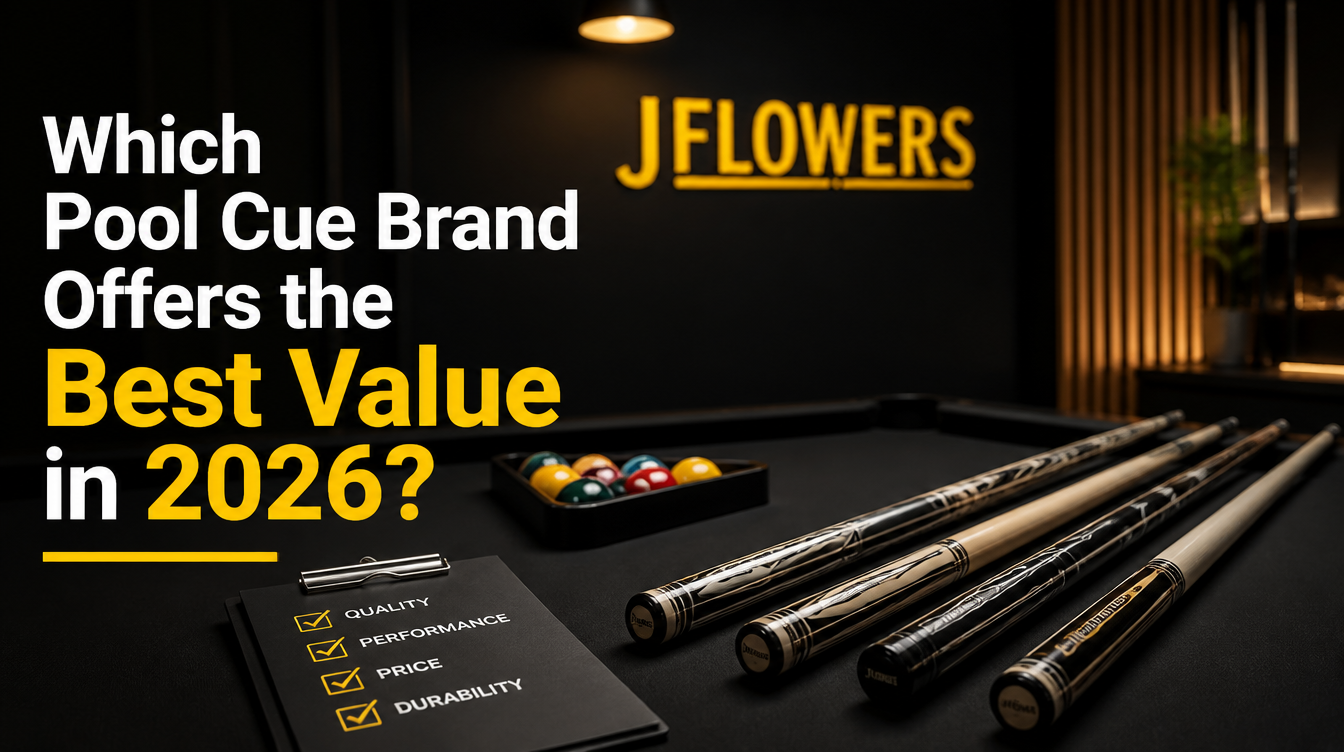
After comparing JFlowers to Predator, Mezz, McDermott, Meucci, Jacoby, Pechauer, and a dozen more brands across every price point and construction philosophy — the question that started all of it deserves a direct answer: which pool cue brand actually offers the best value for serious competitive players in
2026?
Players Technology is one of the most widely used cue brands in American pool halls. Their two-piece cues at $40-$150 have introduced millions of American players to personal cue ownership. Nearly every serious pool player in America either started on a Players cue or played against someone who did. Comparing Players to JFlowers isn’t really a direct competition — it’s a marker on the journey from beginner to serious competitor.