A pool glove is one of those accessories that players either swear by or have never seriously considered. Players who've always played without one often assume it's unnecessary. Players who've made the switch tend to wonder why they waited.
Listen to this article
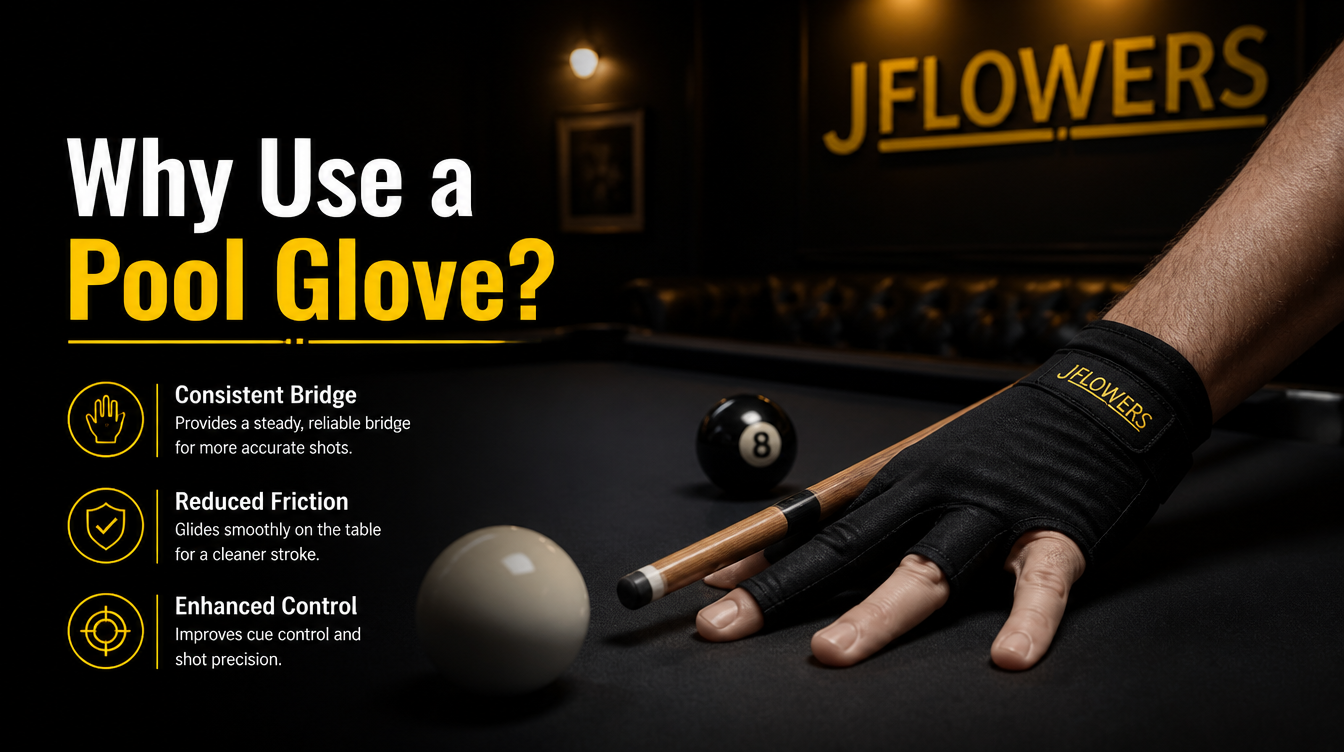
The case for a pool glove comes down to one core principle: consistency. Your bridge hand is in contact with the shaft on every single shot. Any variable in that contact — moisture, friction changes, skin texture variation — introduces inconsistency into your stroke delivery. A good pool glove eliminates those variables.
The Core Problem a Glove Solves
Your bridge hand’s grip on the shaft changes throughout a session. In the first few frames, your hand is dry and cool. After an hour of competitive play, your hand may be warmer, slightly sweaty, and the skin texture has changed from sustained contact. The friction between your hand and the shaft is different at the end of the session than the beginning.
This friction variation changes how the shaft slides through your bridge. Even small friction differences affect the smoothness and consistency of your delivery. Players who experience ‘late session drift’ — where their stroke feels less consistent as the session progresses — often discover that hand moisture is the primary cause.
A quality pool glove provides a consistent friction surface regardless of hand condition. The glove material interacts with the shaft the same way whether your hand is dry, warm, slightly sweaty, or affected by tournament nerves.
Who Benefits Most From a Pool Glove
Players With Moist or Sweaty Hands This is the most obvious benefit group. Players whose hands perspire during play — particularly in warm pool halls, under tournament pressure, or during long sessions — see immediate consistency improvements with a glove. The glove surface doesn’t sweat.
Players Using Wrapless or Smooth-Finish Shafts Carbon fiber shafts with smooth finishes and wrapless cue butts are more sensitive to hand condition variation than rough-textured alternatives. The consistent friction surface of a glove is particularly valuable on these setups. For the finish type discussion, see Carbon Fiber Shaft Finish Comparison.
Tournament Players Tournament play creates exactly the hand conditions that cause consistency problems: elevated body temperature, adrenaline-related perspiration, and hours of concentrated play. Professionals and serious tournament players use gloves precisely because tournaments are where hand condition variability is highest and consistency matters most.
Players With Dry, Rough, or Sensitive Skin On the other end of the spectrum: players with very dry skin, calluses from manual work, or sensitive skin conditions find that a glove provides a smooth, consistent bridge surface that their bare hand can’t.
What a Glove Does NOT Do
Being clear about limitations:
A glove does not improve your fundamentals — if your bridge form is wrong, a glove doesn’t fix it
A glove does not replace chalk — the glove is on the bridge hand; chalk goes on the tip, which contacts the cue ball
A glove does not compensate for a poor shaft or poor maintenance
A glove removes one variable from the stroke delivery system. Everything else still matters.
The Cue Armour Glove
Cue Armour pool gloves are designed specifically for competitive pool play — comfortable enough to wear through long practice sessions and competitive enough to perform at the highest levels. Champion players worldwide use Cue Armour gloves for the consistent friction surface and durability they provide.
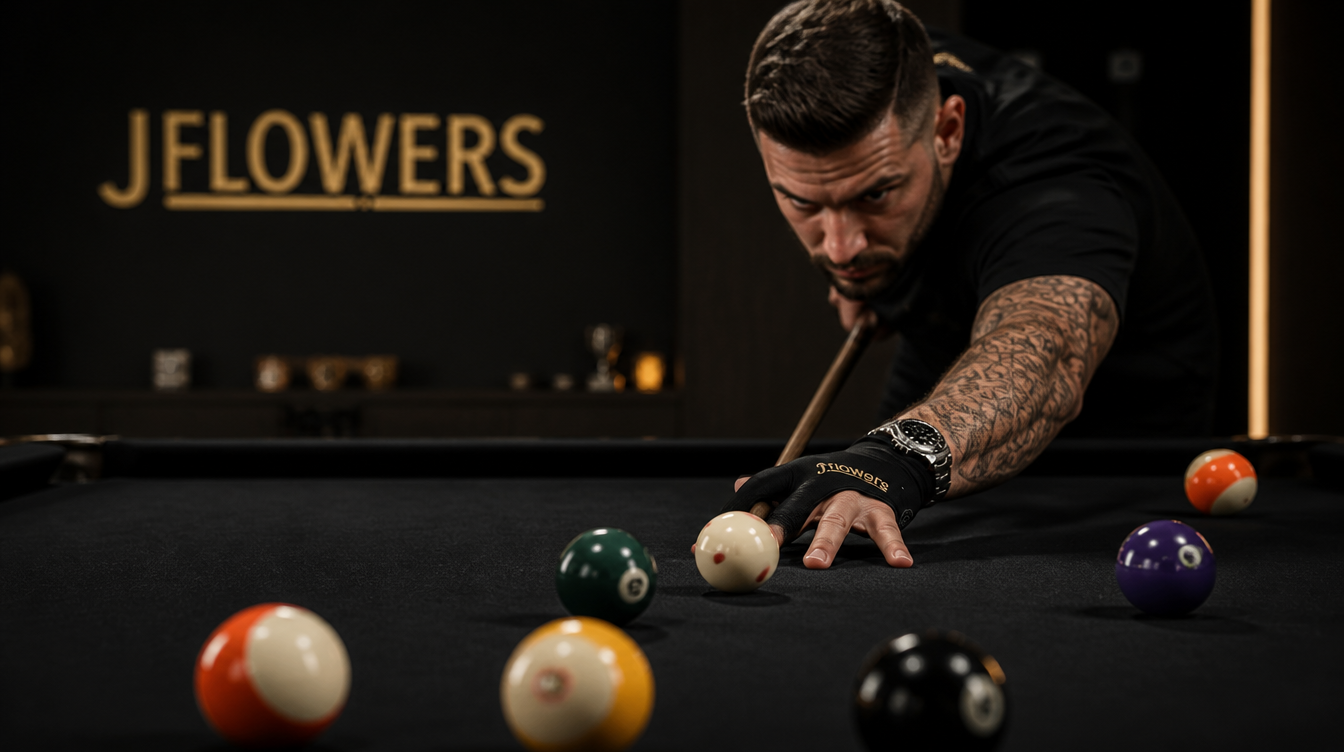
The glove covers the fingers that contact the shaft in the bridge position while allowing full tactile feedback. The material is breathable and maintains its performance characteristics across different playing environments and temperatures. For the full glove comparison and features, see Best Pool Gloves (2026).
Getting Used to a Glove
Some players find the first session with a glove slightly unfamiliar — there’s a new tactile experience in the bridge hand. This adjustment is typically short: most players are fully comfortable within a few sessions. The key is staying on the glove consistently rather than switching back and forth during the adjustment period.
Pros and Cons
Using a pool glove Consistent friction surface regardless of hand condition Eliminates moisture-related bridge variability during long sessions and tournament play Particularly valuable on smooth-finish and wrapless shaft setups Useful for players with skin conditions affecting bare-hand bridge feel Minor adjustment period when first using Adds a worn item to the pre-session routine Not necessary for players with consistently dry hands and traditional textured wraps
Expert Recommendation For competitive players who play in warm pool halls, experience hand perspiration during play, use wrapless or smooth-finish shafts, or compete in tournaments: a Cue Armour pool glove is a worthwhile investment. The consistency it provides costs $15-$25 and eliminates an equipment variable that affects every shot in a session.
Conclusion
A pool glove is a small investment with a specific, measurable benefit: consistent friction in the bridge hand across all playing conditions. For players who experience any variation in bridge feel during a session — from hand moisture, temperature changes, or tournament nerves — a Cue Armour pool glove is one of the most cost-effective performance improvements available.
Frequently Asked Questions
Q: Do pool gloves actually help? Yes — specifically for consistency of the bridge hand friction surface. Players who experience hand moisture variation during play see immediate improvement in stroke delivery consistency. Q: Which hand does the pool glove go on? The bridge hand — the hand that forms the bridge the shaft slides through. For right-handed players, the left hand. For left-handed players, the right hand. Q: Is a pool glove necessary? Not necessary, but beneficial for players with moist hands, players using smooth-finish shafts, and tournament players who experience hand condition changes under pressure. Q: Do professional pool players use gloves? Many do, particularly in international play where tournament conditions create hand moisture challenges. Q: What is the best pool glove? Cue Armour pool gloves are our recommendation — designed specifically for competitive pool play, comfortable for long sessions, and used by champion players worldwide. Q: Will a pool glove change my stroke? The basic stroke mechanics don’t change. The friction surface your bridge hand provides becomes more consistent, which many players find improves stroke smoothness and repeatability. Q: How much does a pool glove cost? Quality pool gloves typically cost $15-$30. Cue Armour gloves are available at competitive pricing from JFlowers and billiards retailers.
After comparing JFlowers to Predator, Mezz, McDermott, Meucci, Jacoby, Pechauer, and a dozen more brands across every price point and construction philosophy — the question that started all of it deserves a direct answer: which pool cue brand actually offers the best value for serious competitive players in
2026?
Players Technology is one of the most widely used cue brands in American pool halls. Their two-piece cues at $40-$150 have introduced millions of American players to personal cue ownership. Nearly every serious pool player in America either started on a Players cue or played against someone who did. Comparing Players to JFlowers isn’t really a direct competition — it’s a marker on the journey from beginner to serious competitor.