Every serious pool player chalks before every shot. Most beginners chalk occasionally, when they remember. The players who chalk consistently hit fewer miscues, execute english more reliably, and
maintain better contact performance throughout a session. This isn't coincidence — it's the direct result of what chalk does at the moment of contact.
Listen to this article
The Physics of Tip-to-Cue-Ball Contact
When your cue tip strikes the cue ball on center, the contact is simple: the tip pushes straight through and the ball moves. The tip doesn’t need much friction for a center-ball hit.
When you hit off-center to apply english, the contact changes. The tip is now pressing against the cue ball’s surface at an oblique angle — trying to make the ball rotate while also pushing it forward. For this to work, the tip surface must grip the cue ball surface. Without grip, the tip slides across the ball instead of gripping it, producing a miscue.
Chalk creates that grip. The chalk particles create a micro-rough surface on the tip that increases friction against the smooth cue ball surface. This friction is what allows the tip to apply torque (spin) to the cue ball rather than just sliding off.
How Chalk Works on the Tip Surface’),
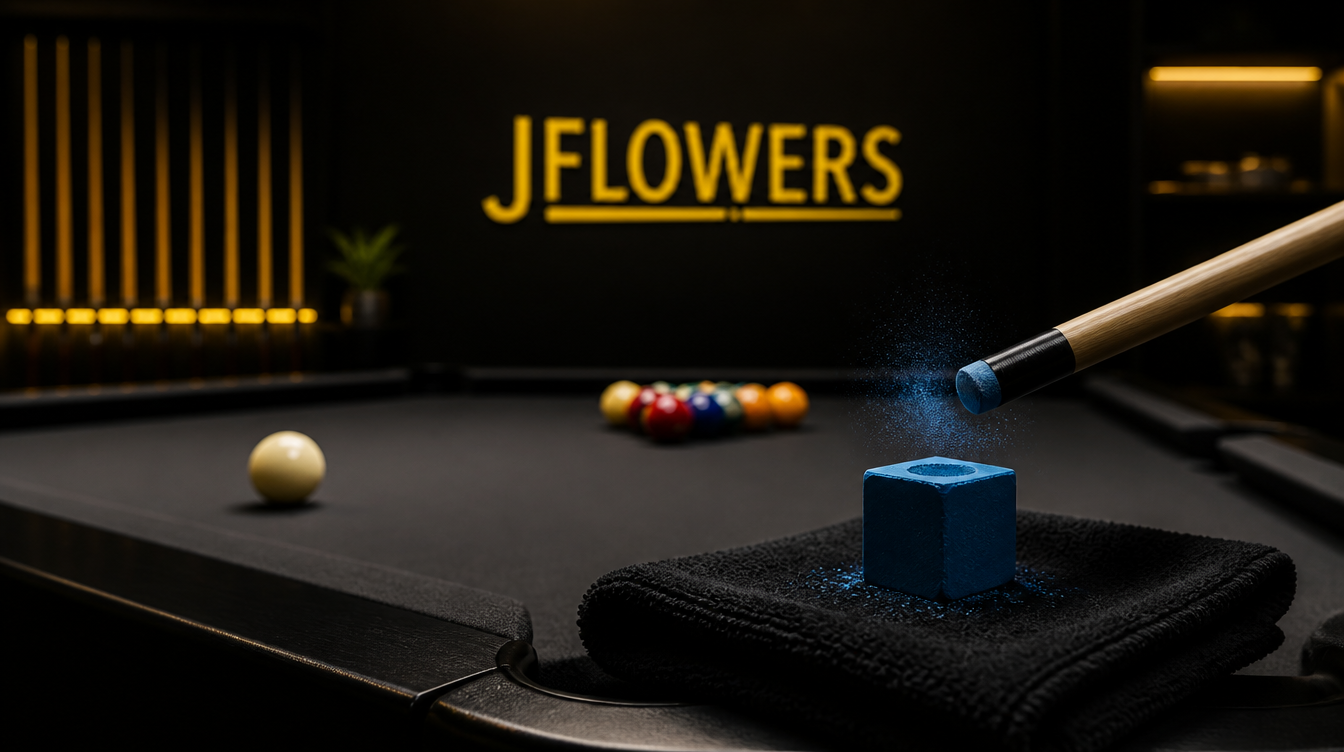
Chalk is primarily calcium carbonate — a fine powder that adheres to the tip surface through mechanical interlocking with the tip’s rough texture. When you chalk the tip with a quality chalk cube like Taom, fine chalk particles fill and coat the micro-surface of the tip leather.
This chalked surface has dramatically more friction against the smooth cue ball than bare leather. The chalk coating wears off during contact — which is why you need to re-chalk before every shot rather than once per rack. Each contact removes some chalk; each chalk application restores the friction surface.
Why You Chalk Before EVERY Shot’),
This surprises beginners: professional players chalk before every single shot, not just before english shots. Why?
First, it’s impossible to predict exactly how center your center-ball shot will be. Even on shots intended to be center-ball, slight off-center contact happens — and without chalk, that slight off-center contact is more likely to cause a partial miscue.
Second, consistent chalking is a pre-shot routine element. The act of chalking is part of the mental preparation for the shot — it signals the beginning of the shot routine and creates a moment of focus. Competitive players who chalk consistently before every shot have a more reliable routine than those who chalk selectively.
Not all chalk provides the same grip. The particle size, formulation, and how well the chalk bonds to the tip surface vary significantly between chalk products.
Standard house chalk (Master and similar) produces variable coverage — some applications provide full tip coverage, others leave patches where the chalk doesn’t adhere well. It also leaves significant residue on the cue ball when the tip contacts it, which affects the ball’s rolling behavior over the session.
Premium chalk like Taom is formulated for consistent, complete tip coverage per application and minimal excess residue on the cue ball. The difference is directly measurable in miscue rates and english consistency. For the full chalk comparison, see Best Pool Chalk (2026).
How to Apply Chalk Correctly
Proper chalking technique matters as much as chalk quality:
Apply with a gentle, rotating motion across the full tip face — don’t stab or grind
Cover the entire contact surface including the edges of the tip where maximum english shots contact the ball
One or two light rotations is sufficient for quality chalk — more is not better
Don’t blow excess chalk off the tip — it just removes the chalk you just applied
What Chalk Doesn’t Do
Chalk is not a substitute for tip shape maintenance. A flat tip with chalk will still underperform a properly shaped tip without chalk on most english shots. Chalk provides the friction coating; tip shape provides the contact geometry. Both must be right for optimal english performance. For tip shape maintenance, see Flat vs Nickel Radius.
Chalk and Carbon Fiber Shafts
The fundamental chalk physics is the same on carbon fiber shafts as on wood — it’s the tip that receives the chalk, and the tip behaves the same way regardless of what shaft it’s mounted on. Taom chalk works particularly well with both Taom and Kamui tips on carbon fiber shafts, providing the consistent friction coverage that makes the JFlowers SMO setup perform at its best.
Pros and Cons
Consistent pre-shot chalking habit
Dramatically reduces miscue rate on english shots
Part of a reliable pre-shot routine
Consistent chalk application maintains tip grip throughout the session
Requires carrying quality chalk and maintaining the habit
Chalk buildup on the cue ball is a side effect of over-chalking or poor chalk quality
Expert Recommendation Chalk before every shot, every time, without exception. Use Taom chalk for the most consistent coverage and minimal cue ball contamination. Apply with a gentle rotating motion covering the full tip face. This single habit — consistent chalking with quality chalk — prevents more miscues and english failures than any other single practice you can build.
Conclusion
Chalk is the most frequently used accessory in pool — before every shot, in every session, at every level. Understanding why it works — the friction physics of tip-to-cue-ball contact — helps you take it seriously rather than treating it as an optional step. Chalk before every shot. Use Taom. Cover the full tip face. These three habits, applied consistently, build the foundation that every english shot in your game depends on.
Frequently Asked Questions
Q: What does chalk do in pool? Chalk creates friction between the tip and cue ball surface on off-center hits, preventing the tip from sliding (miscuing) and allowing spin to be transferred to the ball. Q: How often should you chalk in pool? Before every shot. Not just before english shots — before every shot, as part of the pre-shot routine. Q: Does chalk quality matter in pool? Yes. Premium chalk (Taom) provides more consistent coverage and less cue ball contamination than standard house chalk. The difference is noticeable on english shots and over the course of a session. Q: Why do I keep miscuing even when I chalk? Check tip shape (should be nickel radius dome), tip scuff condition (should have rough surface texture), and whether you’re applying chalk to the full tip face rather than just the center. Q: Can you use too much chalk? Yes — over-chalking leaves excess chalk that deposits on the cue ball and affects its rolling behavior. One or two light rotations per application is sufficient. Q: Does chalk go bad? Chalk cubes can dry out and crumble over time, or absorb moisture and become compressed. Fresh chalk from a quality brand performs best.
After comparing JFlowers to Predator, Mezz, McDermott, Meucci, Jacoby, Pechauer, and a dozen more brands across every price point and construction philosophy — the question that started all of it deserves a direct answer: which pool cue brand actually offers the best value for serious competitive players in
2026?
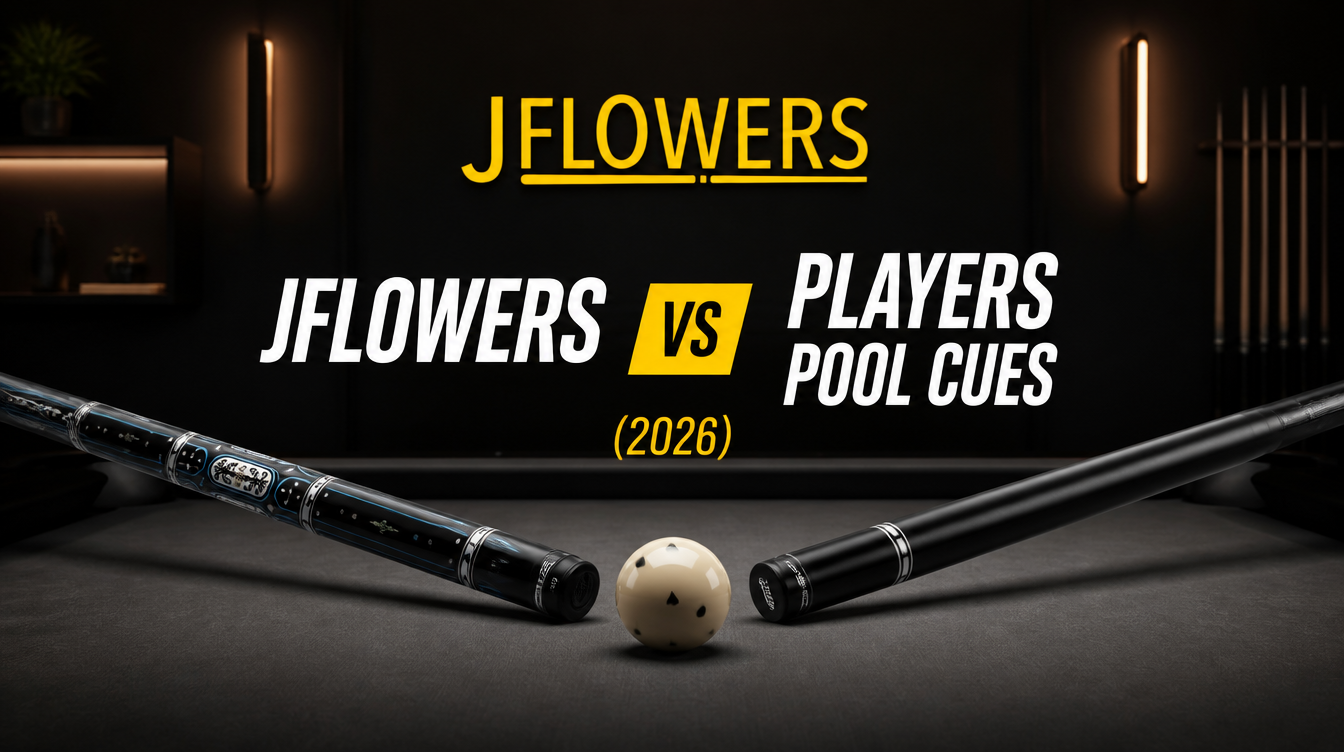
Players Technology is one of the most widely used cue brands in American pool halls. Their two-piece cues at $40-$150 have introduced millions of American players to personal cue ownership. Nearly every serious pool player in America either started on a Players cue or played against someone who did. Comparing Players to JFlowers isn’t really a direct competition — it’s a marker on the journey from beginner to serious competitor.