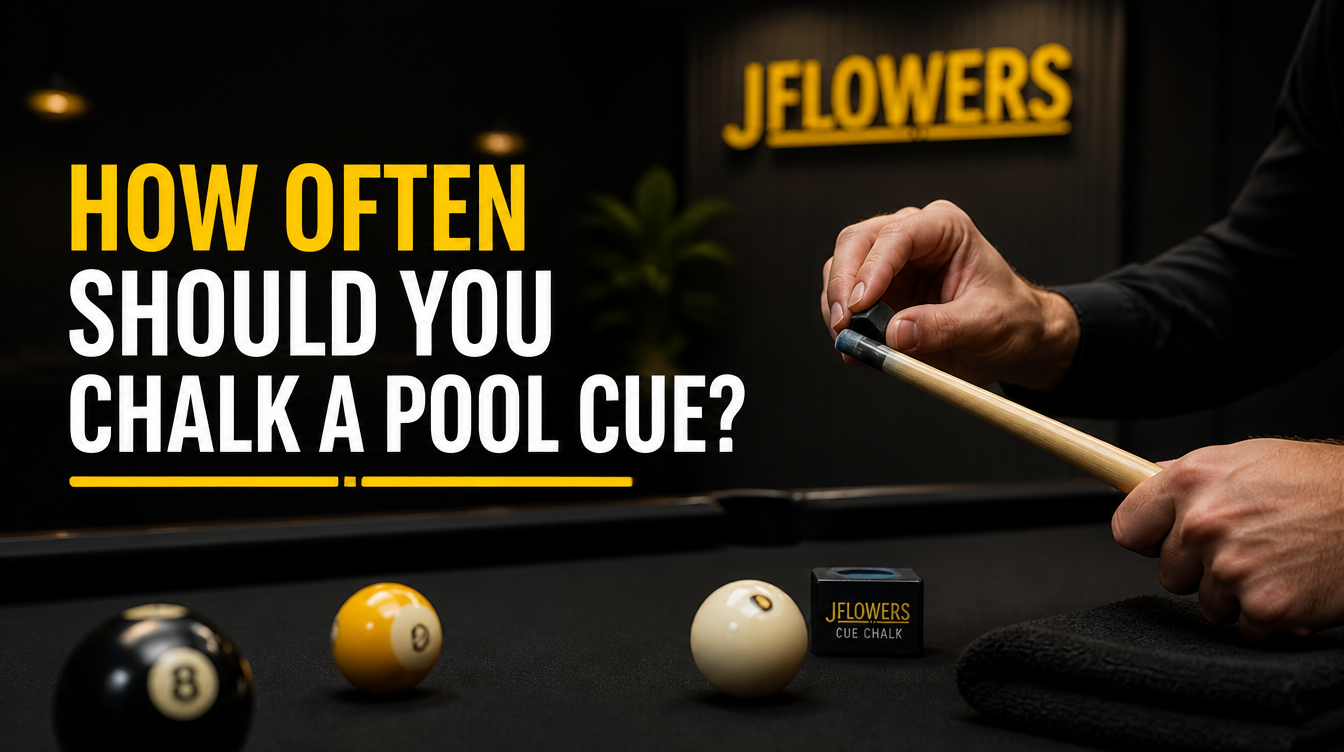
The answer is simple: before every shot. Not before english shots. Not before draw shots. Before every single shot, every time, without exception.
Listen to this article
This surprises many players who chalk only when they feel like they ‘need’ it — before a tough english shot, when they notice the tip looks dry. But waiting until you think you need chalk means you’ve already played shots on an inadequately chalked tip. And those shots may have subtly miscued, producing positional outcomes you blamed on stroke or aim.
Why Every Shot, Not Just English Shots
The case for chalking before every shot goes beyond just preventing obvious miscues on heavy english:
Imperfect Center Ball Hits Even your most deliberately straight shots are never perfectly center-ball. Aim, stroke mechanics, and table roll combine to produce slight off-center contacts on every shot. Chalk provides insurance against those slight deviations becoming micro-miscues that affect the shot outcome.
The Routine Argument Consistent pre-shot routines are a fundamental of competitive performance. Chalking before every shot is part of that routine — a consistent physical action that signals the beginning of your shot process, creates a moment of focus, and establishes reliability. Players who chalk only before specific shots have inconsistent routines. Inconsistent routines produce inconsistent results.
You Can’t Always Predict the Shot’), Shot selection changes in the moment. You set up for a stop shot and adjust to a draw at the last second. You plan center ball and realize the position route requires right english. If you’ve already chalked, you’re ready. If you chalk only when you plan english, last-second adjustments leave you on an unchulked tip.
The Professional Standard
At any professional pool tournament, you will see every player chalk before every single shot without exception. This is not superstition or habit — it is the correct competitive practice. The players who win the most tournaments chalk the most consistently. The correlation is not coincidental. For why chalk quality matters at every application, see Why Chalk Matters and Best Pool Chalk (2026).
How to Chalk Efficiently
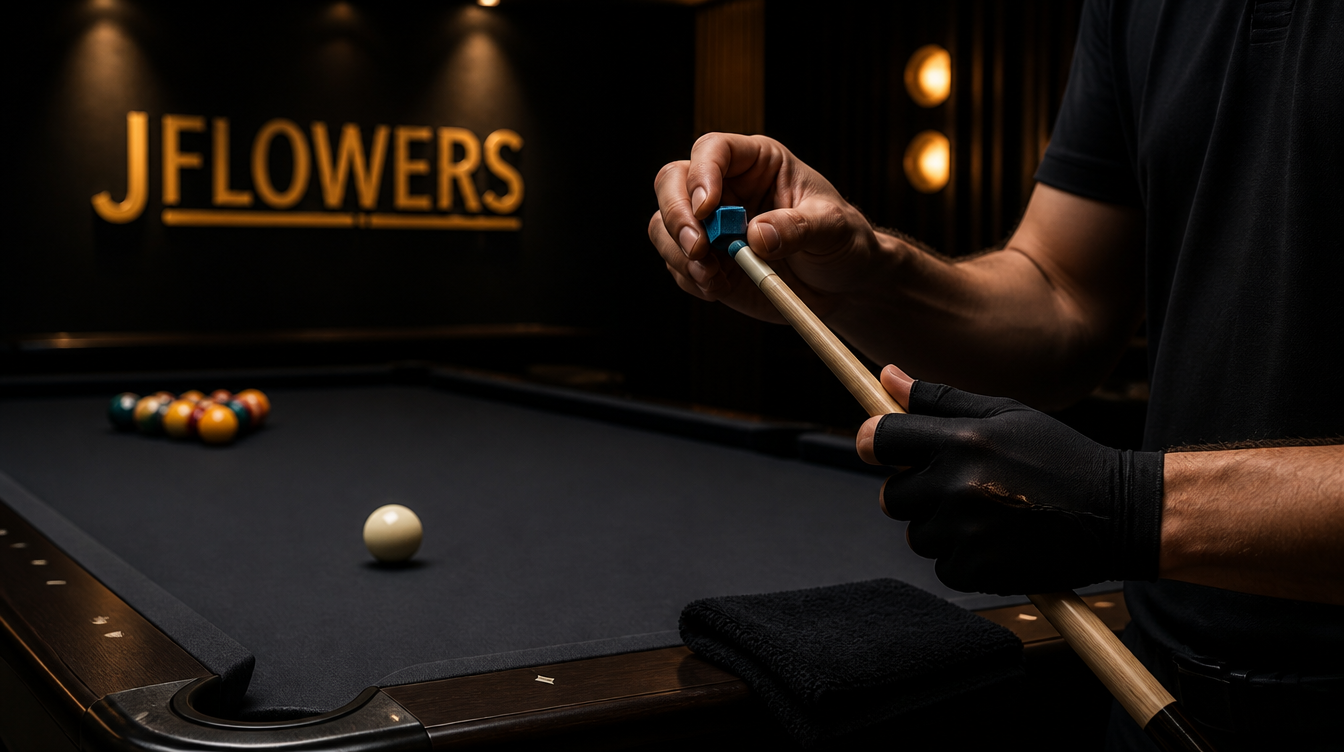
Pre-shot chalking should take 2-3 seconds, not disrupt your rhythm, and feel automatic. The goal is to make it completely habitual so it requires no thought:
Pick up the chalk as you’re walking to the shot or while studying the table
Apply with 1-2 gentle rotating strokes across the full tip face
Set the chalk down and transition into your shot setup
Never grind the chalk aggressively — light coverage is sufficient
Taom chalk applies efficiently — a couple of light strokes provides reliable coverage. This means pre-shot chalking adds virtually no time to your shot routine when done correctly.
Chalking After Miscues
After a miscue: chalk immediately before the next shot. A miscue strips chalk from the tip surface more aggressively than a normal hit. Playing the next shot on a stripped tip increases the risk of a second miscue.
Chalk and Tip Maintenance
Consistent chalking works best on a properly maintained tip. A tip that’s been scuffed recently holds chalk better than a smooth-surfaced tip. Chalk before every shot AND maintain your tip — the two habits reinforce each other. For the tip maintenance routine that maximizes chalk retention, see Tip Maintenance Guide.
Pros and Cons
Chalking before every shot
Consistent tip friction for every contact — center ball and english
Part of a reliable pre-shot routine
Insurance against last-second shot adjustments
The professional standard at every competitive level
Adds 2-3 seconds to each shot — which adds up over a long match
Easy to rush during time pressure situations
Expert Recommendation Chalk before every shot. Use Taom chalk for the most consistent and efficient coverage. Build the habit until it’s automatic and requires no conscious decision. This single habit, applied consistently across every shot in every session, is one of the highest-return practices in competitive pool.
Conclusion
The answer to ‘how often should you chalk?’ has always been and will always be: before every shot. Build the habit, use quality chalk like Taom, apply lightly and consistently, and this single routine element will quietly prevent dozens of miscues and inconsistent shots across every session you play.
Frequently Asked Questions
Q: How often should you chalk a pool cue? Before every shot. Professional players chalk before every single shot without exception. Q: Do you have to chalk before every shot? You don’t have to, but you should. Players who chalk before every shot miscue less frequently and have more reliable pre-shot routines than selective chalkers. Q: Is it bad to chalk too often? No — provided you apply lightly. Excessive chalk on a single application can leave residue on the cue ball, but applying fresh chalk before every shot with light strokes is correct practice. Q: Why do pros chalk before every shot? For the same reasons all players should: consistent tip friction, part of a reliable routine, and insurance against last-second shot adjustments. Q: What happens if you don’t chalk enough? Increased miscue rate on off-center shots, inconsistent english, and the risk of micro-miscues on center-ball shots that affect position outcomes. Q: Does chalking more often help? Chalking before every shot is optimal. Chalking more than once per shot (applying between bridge setup and final delivery) doesn’t add benefit and can slow your routine.
After comparing JFlowers to Predator, Mezz, McDermott, Meucci, Jacoby, Pechauer, and a dozen more brands across every price point and construction philosophy — the question that started all of it deserves a direct answer: which pool cue brand actually offers the best value for serious competitive players in
2026?
Players Technology is one of the most widely used cue brands in American pool halls. Their two-piece cues at $40-$150 have introduced millions of American players to personal cue ownership. Nearly every serious pool player in America either started on a Players cue or played against someone who did. Comparing Players to JFlowers isn’t really a direct competition — it’s a marker on the journey from beginner to serious competitor.