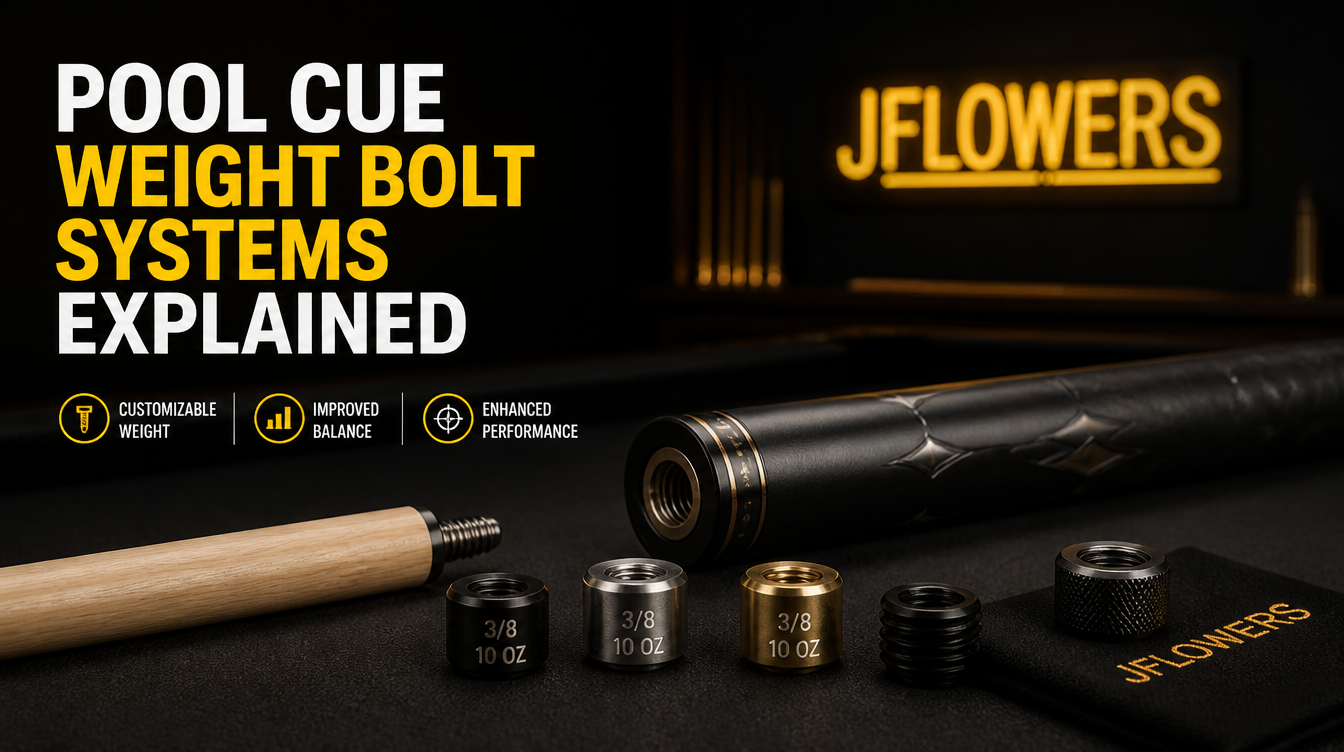
Total cue weight is one of the most personal equipment preferences in pool — and it's one that changes as your game develops. Weight bolt systems let you tune your cue's weight within a range rather than being locked into whatever weight the cue shipped with. Understanding how they work, what range they provide, and when they're useful helps you decide whether a weight-adjustable cue belongs in your setup.
Listen to this article
What a Weight Bolt System Is
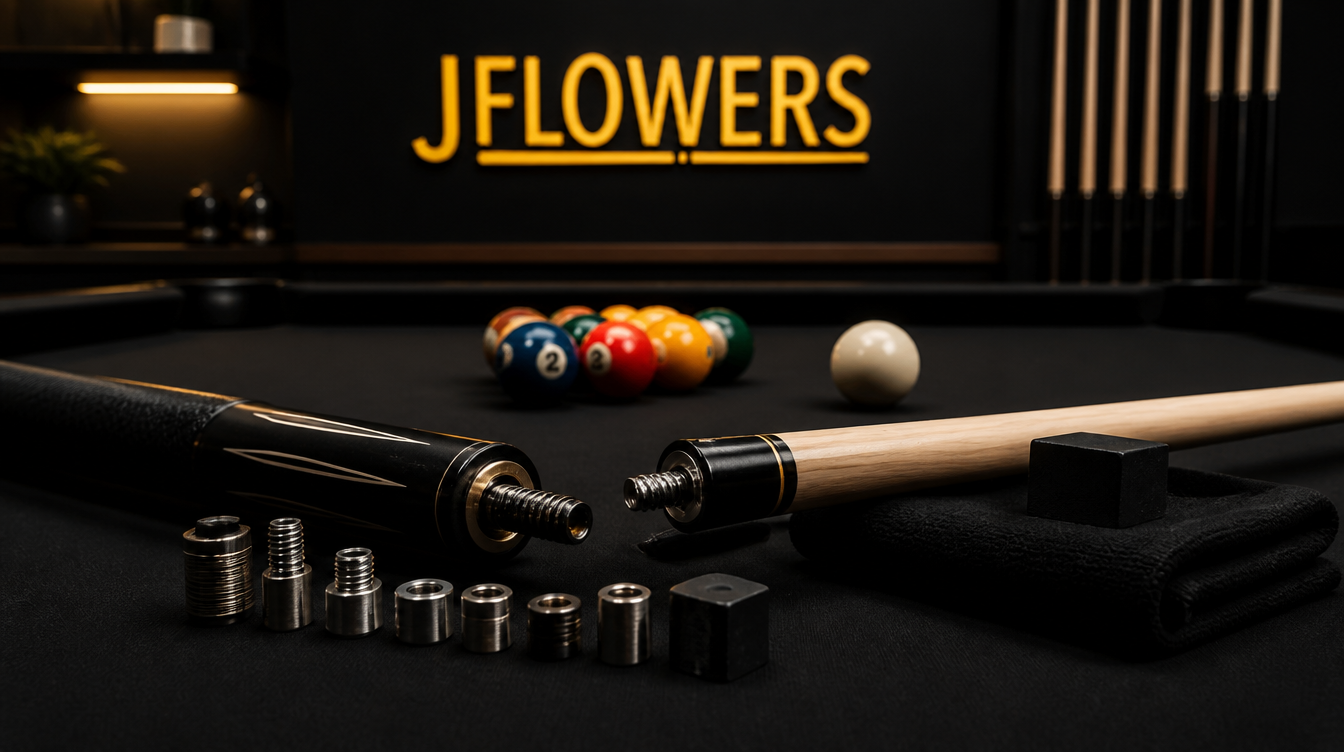
A weight bolt system is a mechanism in the cue butt that allows weight to be added or removed by inserting or removing metal bolts or cylinders. The butt has an internal cavity near the base — usually accessible through the butt cap or a port on the butt’s exterior — that holds weight components.
The butt cap unscrews (or a port opens), weight bolts are inserted or removed, and the cap is replaced. The change to the cue’s total weight is immediate and takes about 60-90 seconds to execute.
How Much Weight Can Be Adjusted’),
Most weight bolt systems adjust total cue weight in the range of 17.5-21.5 oz, with adjustment increments of 0.5 oz per bolt or cylinder. The specific range depends on the manufacturer and butt design.
A cue shipped at 19.5 oz with a 4-bolt system might be adjustable from 17.5 oz (all bolts removed) to 21.5 oz (all bolts installed). This covers the range of preferences of most competitive players without requiring a different cue.
Why Adjustable Weight Matters’),
Weight preference is personal, format-specific, and changes over time. Reasons players adjust weight include:
Switching between game formats — some players prefer slightly lighter for eight ball position play, heavier for nine ball breaks
Compensating when switching shafts — a carbon fiber shaft may be lighter than the maple shaft it replaces, dropping total cue weight below preference
Seasonal or physical changes — some players prefer different weights in different seasons or as arm fatigue patterns change
Fine-tuning after extended play — discovering over months that a slightly different weight suits the developed stroke better
Weight bolts typically sit at the rear of the butt — near the base. Adding weight bolts shifts both total weight AND the balance point rearward. Removing bolts shifts both lighter AND moves the balance point forward.
This means weight bolt adjustments simultaneously change two feel characteristics. Some players like this coupling — heavier weight with rearward balance feels like one consistent shift. Others prefer to address weight and balance independently through shaft selection and different weight placement. For more, see Forward Balance vs Rear Balance Pool Cues.
The JFlowers Weight Bolt System
JFlowers playing cues include weight bolt accessibility that allows players to fine-tune their setup — particularly useful when pairing the cue with the JFlowers SMO Carbon Fiber Shaft, which may have a slightly different weight profile than the previous shaft. The ability to adjust for the exact total weight preference after shaft installation makes the JFlowers setup more versatile across different playing preferences.
Is a Weight Bolt System Worth It?
For competitive players who are still developing their weight preferences, who play multiple formats, or who plan to upgrade shafts: yes. The flexibility to adjust without buying a new cue is genuine value. For players who have settled on a specific weight and don’t change setups frequently: less critical. The weight bolt system has more value the more its flexibility actually gets used.
Pros and Cons
Weight bolt systems
Fine-tune total weight within a meaningful range
Compensate for shaft weight changes during upgrades
One cue serves multiple weight preferences and formats
Quick adjustment — 60-90 seconds to change weight
Weight and balance change together — not fully independent
Butt cap threads can wear over many adjustment cycles
Not useful if you’ve settled on one weight and don’t change it
Expert Recommendation For any player building a serious setup or planning to upgrade shafts: weight bolt accessibility in the cue butt is a worthwhile feature to have. When pairing a JFlowers playing cue with the JFlowers SMO Carbon Fiber Shaft, the ability to fine-tune total weight after shaft installation ensures the final assembled weight matches your preference exactly.
Conclusion
Weight bolt systems are a versatility feature that pays off for players who use the flexibility. For players who upgrade shafts, play multiple formats, or are still developing their weight preference — the ability to adjust without buying a new cue is genuine practical value. The JFlowers playing cue’s weight system lets players land on their exact preferred weight after pairing with the SMO shaft.
Frequently Asked Questions
Q: What is a weight bolt system on a pool cue? A mechanism in the cue butt that allows weight to be added or removed by inserting or removing metal bolts, adjusting total cue weight within a set range. Q: How do I change the weight of my pool cue? Unscrew the butt cap, insert or remove weight bolts from the internal cavity, replace the butt cap. Total adjustment time is 60-90 seconds. Q: How much weight can I add to a pool cue? Typically 2-4 oz depending on the weight bolt system design. Most systems allow adjustments in 0.5 oz increments. Q: Does changing cue weight change the balance? Yes — weight bolts are typically at the rear of the butt, so adding weight shifts the balance rearward and adding total weight simultaneously. Q: Should I get a cue with a weight bolt system? Recommended for players still developing weight preferences, playing multiple formats, or planning shaft upgrades. Less critical for players settled on a specific weight. Q: How heavy should my pool cue be? Most competitive players end up between 18.5-21.5 oz. See our guide at https://jflowerscues.com/pool cue-reviews-buying-guides-expert-advice/how-cue-weight-affects-your-stroke/ for the full framework.
After comparing JFlowers to Predator, Mezz, McDermott, Meucci, Jacoby, Pechauer, and a dozen more brands across every price point and construction philosophy — the question that started all of it deserves a direct answer: which pool cue brand actually offers the best value for serious competitive players in
2026?
Players Technology is one of the most widely used cue brands in American pool halls. Their two-piece cues at $40-$150 have introduced millions of American players to personal cue ownership. Nearly every serious pool player in America either started on a Players cue or played against someone who did. Comparing Players to JFlowers isn’t really a direct competition — it’s a marker on the journey from beginner to serious competitor.