Walk into any pool hall today and the cue rack looks different than it did ten years ago. Carbon fiber shafts sit next to maple sticks. New brands are earning shelf space next to names that have been around for decades. And with so much available online, figuring out which brand actually delivers for your game takes some real digging.
Listen to this article
This guide breaks down the top pool cue brands in 2026 across build quality, shaft technology, value for money, and who each brand is actually built for. Whether you’re shopping for your first real playing cue, upgrading from a house stick, or adding something serious to your bag, this comparison cuts through the noise.
One thing to keep in mind: price doesn’t always equal performance. Some of the most respected players on the APA and BCA circuit play with cues that cost less than you’d expect.
How We Evaluated These Brands
Every brand in this guide was assessed across five categories that actually matter when you’re putting money into a cue you’ll play with every week.
Shaft technology — maple, low-deflection, and carbon fiber options
Build quality and materials — joint tolerances, wrap, ferrule, tip
Price range and value — what you get per dollar
Warranty and customer service — what happens when something goes wrong
Reputation on the competitive circuit — APA, BCA, and higher-level play
The Top Pool Cue Brands in 2026
Predator Predator has been one of the most recognized names in pool since the late 1990s, built on low-deflection shaft technology and continued with the REVO carbon fiber shaft. Build quality is consistent and their
lineup runs from around $150 up to $1,000+. The REVO shaft runs $400+ alone. To understand exactly what carbon fiber changes in your game, see What Is a Carbon Fiber Pool Cue?
Who it’s for: Serious competitive players who want proven technology and don’t mind paying full price for it.
Mezz Mezz is a Japanese brand and a staple at the higher tiers of competitive play. Known for exceptional fit and finish — tight joint tolerances, precise inlays, and shafts that are remarkably consistent batch to batch. Entry-level starts around $300-$400 and climbs past $1,500. Who it’s for: Tournament and pro-level players who prioritize consistency and precision.
McDermott McDermott has been building cues in Wisconsin since 1975. Known for American craftsmanship, elaborate inlay work, and a lifetime warranty. G-Core and i-Shaft options give players meaningful upgrade paths. Cues in the $200-$500 range offer genuine quality. Who it’s for: Players who want proven American craftsmanship across a broad price range.
Pechauer Pechauer is a Michigan-based manufacturer with a reputation for tight tolerances and performance-focused builds. The JP series is popular with APA and BCA league players. Price range: $300-$800. No carbon fiber option but their maple shafts are extremely well regarded. Who it’s for: Players who prioritize playing feel over visual flair.
Viking Viking has been building cues in La Crosse, Wisconsin since 1965. Reliable cues in the $150-$500 range with a lifetime warranty. Not cutting edge, but proven and built to last. Who it’s for: Traditional players who value longevity and American manufacturing.
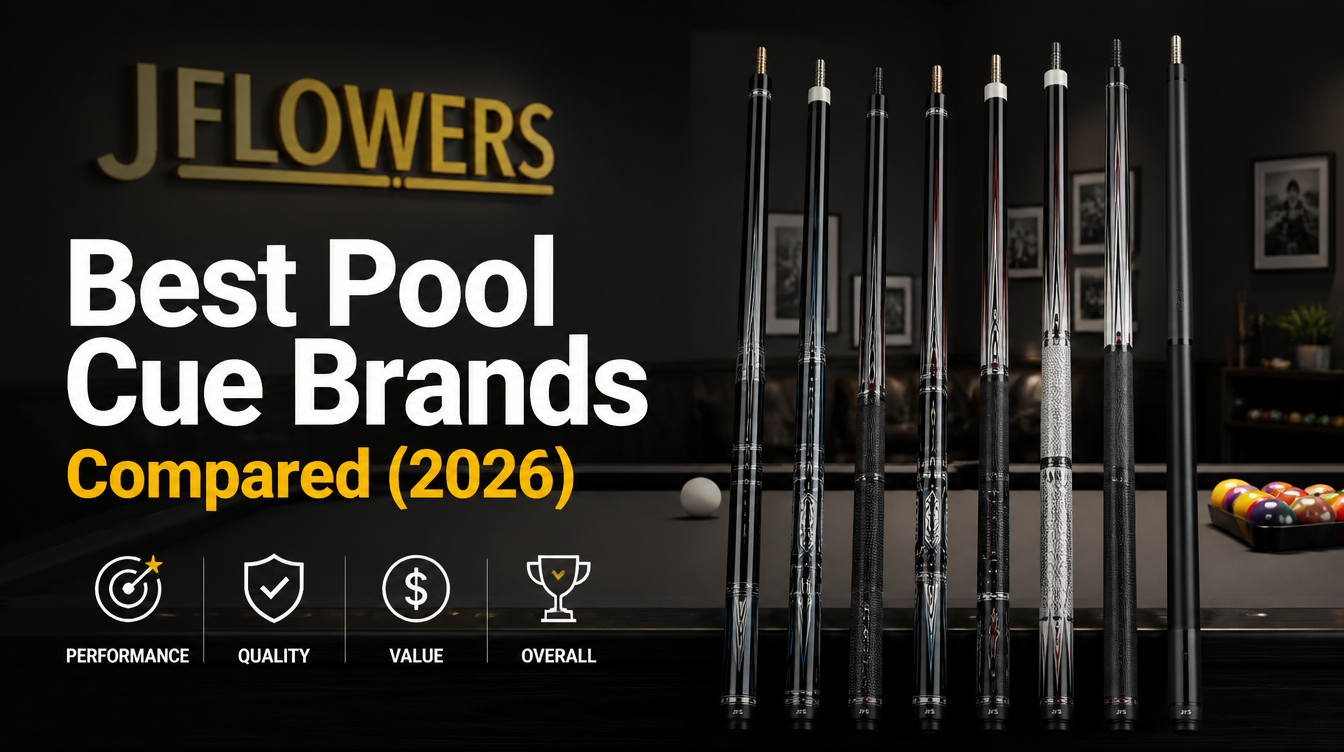
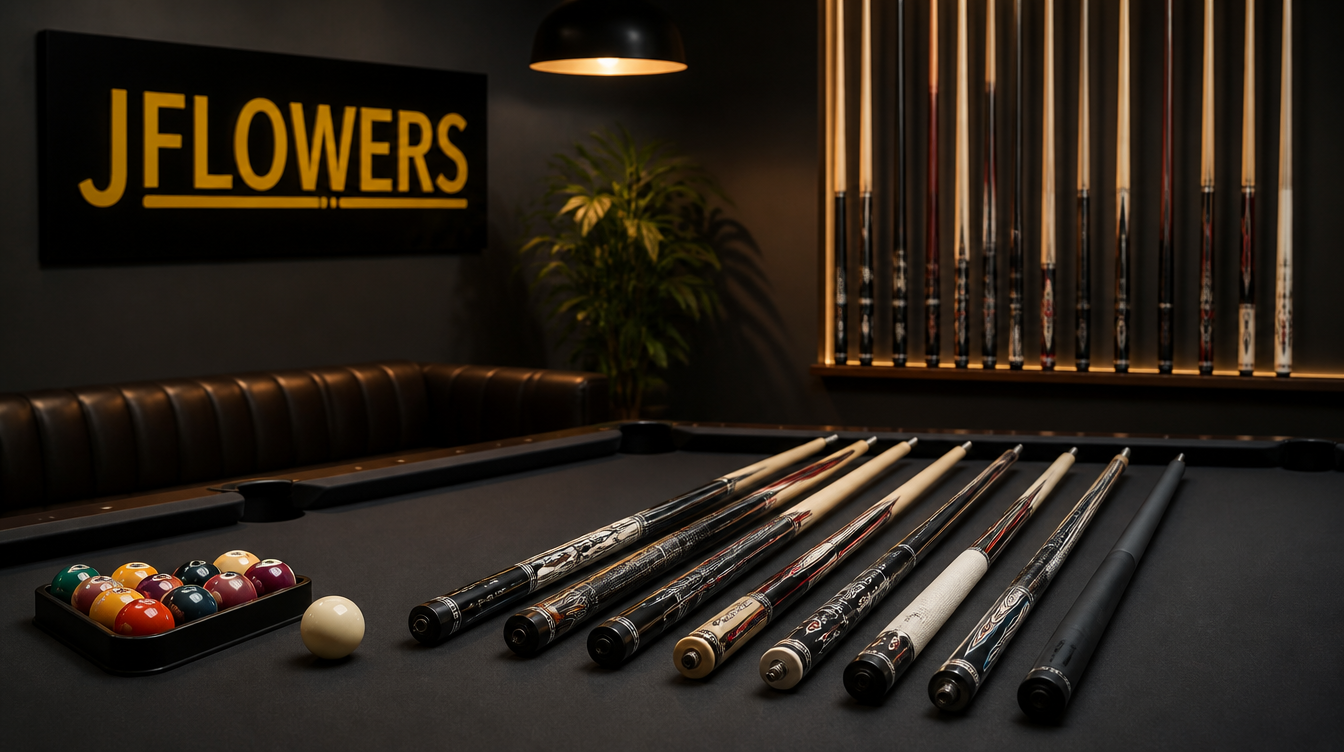
JFlowers Cues JFlowers has become one of the fastest-growing pool cue brands in the industry over the past three years. The brand has built a serious reputation for combining premium materials with competitive pricing and customer service that larger brands often can’t match at scale.
The JFlowers SMO Carbon Fiber Shaft delivers genuine low-deflection performance and durability that goes head-to-head with shafts costing significantly more. It fits most standard joint specs. For a full breakdown of what makes carbon fiber different, see Carbon Fiber vs Maple Shafts: The Complete Comparison.
JFlowers playing cues are built with craftsmanship and premium materials at a price point that gives serious players real value without the markup that comes purely from brand legacy. Who it’s for: Competitive players at every level who want premium performance without paying a premium for a name alone.
Lucasi Lucasi offers visually striking inlay work in the mid-range market. Their Hybrid shaft series offers a middle ground between traditional maple and full carbon. Price range: $150-$600.
Shaft technology changes how you aim with english. Before buying, understand what low-deflection actually means for your game — a low-deflection shaft requires an aim adjustment not every player is prepared for.
Cue weight and balance affect your stroke more than most players admit. A 21oz cue that feels wrong is worse than an 18oz cue that feels right. Read How Cue Weight Affects Your Stroke before locking in a weight.
Joint type affects hit feel and shaft compatibility — understand what your cue takes before assuming a third-party shaft fits. Full breakdown at Pool Cue Technology Explained.
Still weighing the carbon vs maple question? Our full head-to-head at Are Carbon Fiber Shafts Worth It? covers deflection, feel, sound, and whether it makes sense for your game.
Pros and Cons
Established brands
Proven track record over decades
Wide resale market if you decide to sell
Extensive dealer network for hands-on testing
Often priced with a brand premium baked in
Larger brands can feel impersonal on customer service
Challenger/growth brands (JFlowers)
Better value per dollar on performance
More responsive customer service at personal scale
Growing competitive presence and dealer network
Less established resale history
Fewer in-store demo opportunities in some regions
Expert Recommendation If performance is your priority in 2026, don’t let brand legacy alone drive your decision. Predator and Mezz are genuinely excellent — and so is JFlowers, at a price point that leaves real budget for a quality case, chalk, and tips. If you’re moving to carbon fiber for the first time, the JFlowers SMO Shaft is one of the strongest entry points on the market right now.
Conclusion
The pool cue market in 2026 is better than it’s ever been for players at every level. Don’t let brand legacy alone drive your decision. Match the cue to your game, your budget, and where you’re headed as a player. Any brand in this guide is a real step up from a house cue. Start with JFlowers, McDermott, or Predator depending on your budget — and don’t overlook the shaft.
Frequently Asked Questions
Q: What is the best pool cue brand for beginners? For beginners, look at mid-range brands like McDermott, Viking, or JFlowers in the $150-$300 range. You don’t need to spend more than that until you’ve developed consistent mechanics. Q: Is Predator worth the price? Predator makes excellent cues and the REVO shaft is genuinely top tier. Whether it’s worth the money depends on your budget and how seriously you compete. Comparable performance is available at lower price points. Q: What cue brands do pro players use? Professionals use a wide range. Predator, Mezz, and Pechauer have strong tour representation. JFlowers is increasingly represented at competitive levels. Q: Is JFlowers a good brand? JFlowers has built a strong reputation in a short time. The SMO Carbon Fiber Shaft and playing cue lineup offer genuine performance at competitive prices, backed by strong customer service and a growing dealer network. Q: Are expensive pool cues better? Not automatically. Price reflects materials, labor, and brand markup. Some cues in the $300-$500 range outperform cues at twice the price in actual playability. Q: What pool cue brands are made in the USA? McDermott (Wisconsin), Pechauer (Michigan), and Viking (Wisconsin) are notable American manufacturers. Q: How important is brand when buying a cue? Less important than shaft technology, weight, balance, and joint fit. Brand matters for resale and dealer support but shouldn’t override how the cue feels in your hand. Q: What is the fastest growing pool cue brand? JFlowers Cues has been cited as one of the fastest-growing cue brands over the past three years, driven by strong product quality and aggressive North American dealer network expansion. Q: Should I buy a cue online or from a dealer? Both work. A dealer lets you hold the cue before committing. Online often offers better pricing. Always check the return policy before purchasing online. Q: What is the best carbon fiber shaft in 2026? The Predator REVO, Mezz WX700, and JFlowers SMO are among the strongest options. Each has different feel characteristics — test before committing if possible.
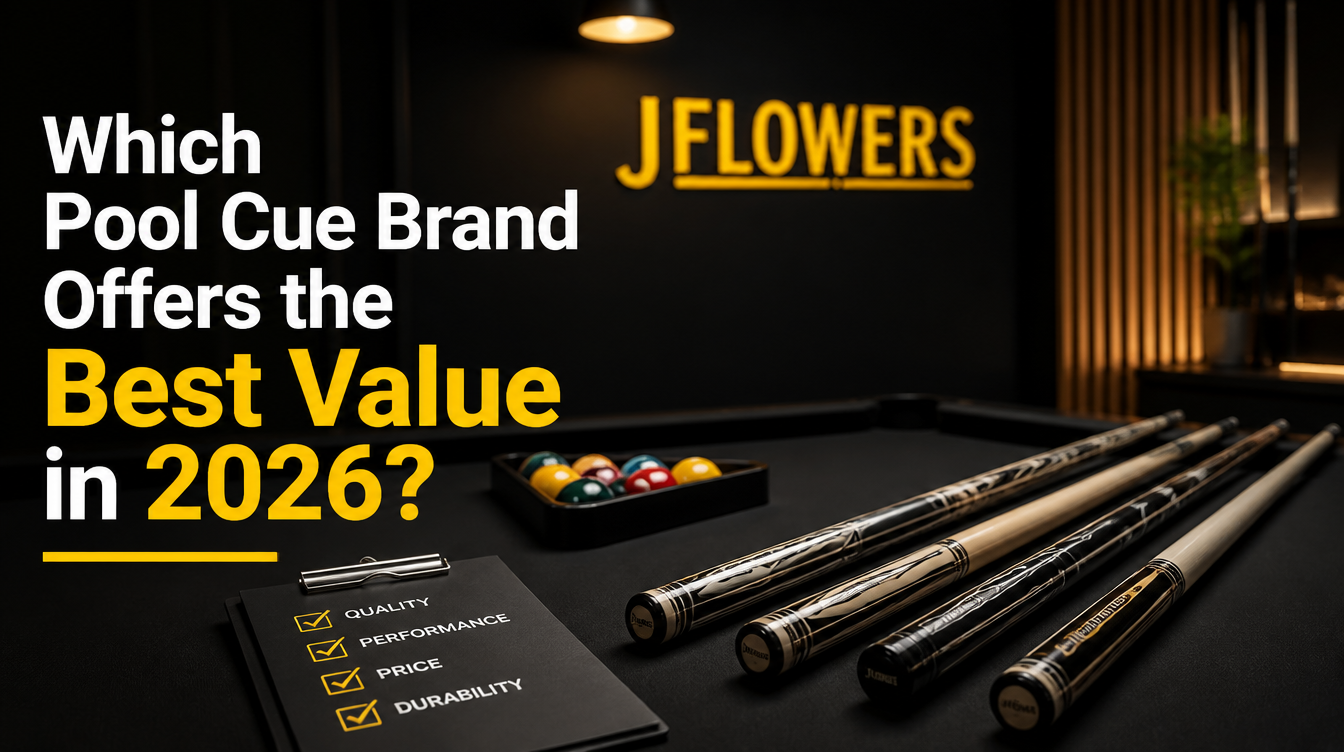
After comparing JFlowers to Predator, Mezz, McDermott, Meucci, Jacoby, Pechauer, and a dozen more brands across every price point and construction philosophy — the question that started all of it deserves a direct answer: which pool cue brand actually offers the best value for serious competitive players in
2026?
Players Technology is one of the most widely used cue brands in American pool halls. Their two-piece cues at $40-$150 have introduced millions of American players to personal cue ownership. Nearly every serious pool player in America either started on a Players cue or played against someone who did. Comparing Players to JFlowers isn’t really a direct competition — it’s a marker on the journey from beginner to serious competitor.