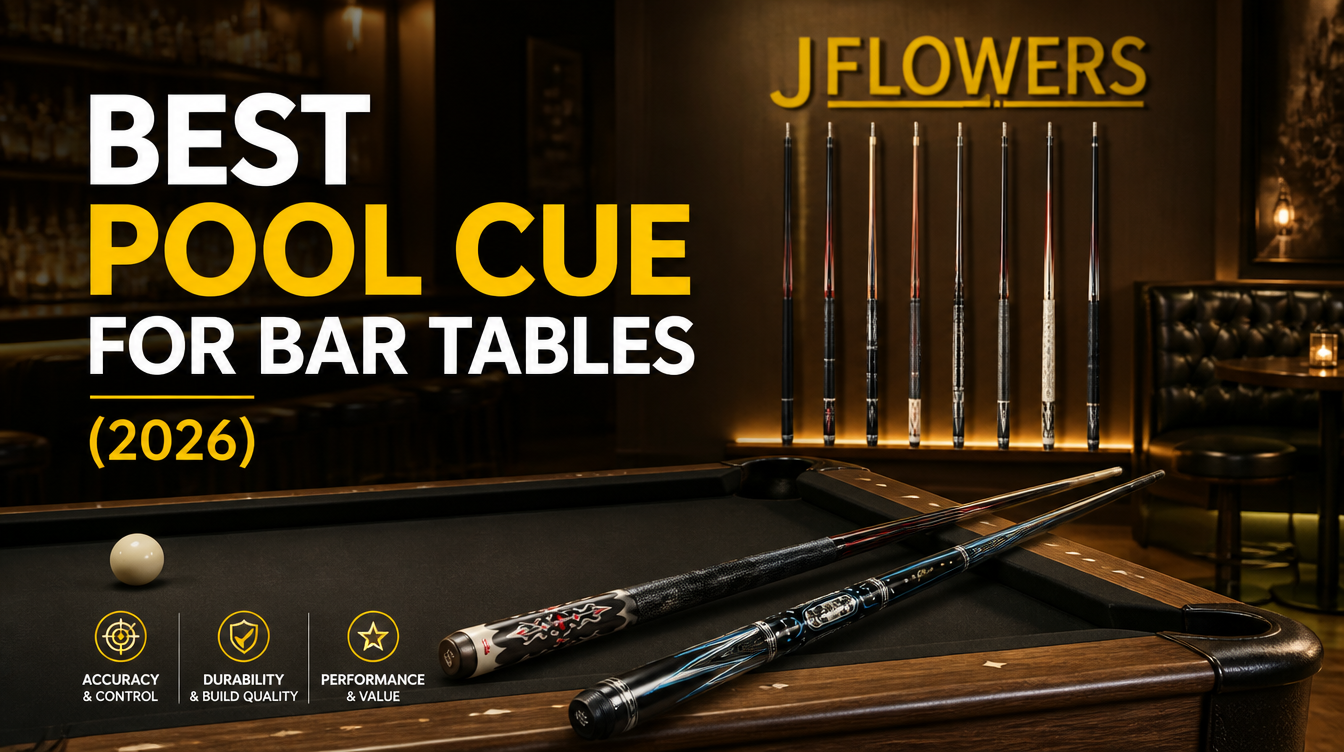
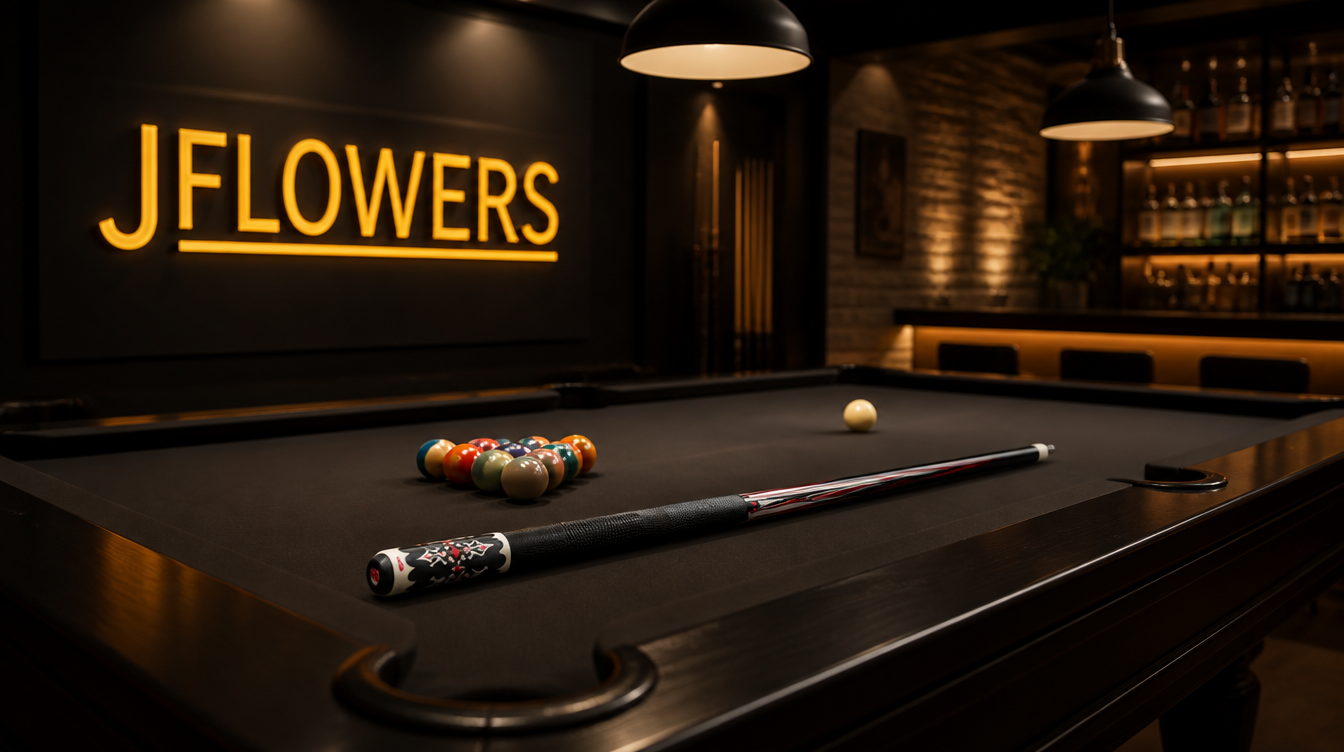
The majority of pool played in America happens on 7-foot bar tables. Valley, Diamond, and Brunswick bar boxes are the proving grounds for APA leagues, friendly competitions, and that one guy at your local spot who beats everyone. If you play on bar tables, your equipment choices are different from full-size table play — and knowing those differences helps you buy smart.
Listen to this article
Bar tables are physically smaller, have smaller pocket openings relative to ball size, use heavier balls (typically Aramith cue balls designed for coin-op play), and are played in lower-lit, higher-noise environments. All of this changes what you want from your cue.
How Bar Tables Change Your Equipment Needs
Smaller Dimensions A 7-foot bar table is roughly 3.5 x 7 feet of playing surface. Shot distances are shorter. The cue ball doesn’t travel as far. This changes weight preference — most bar table specialists find lighter cues in the 18.5-20oz range give better feel and touch on the shorter distances.
Tighter Pockets Bar table pockets have less forgiveness than 9-foot table pockets. This is where precision matters most. A consistent, predictable shaft is arguably more valuable on a bar table than a 9-footer because you have less pocket tolerance for error.
Heavier Cue Balls Coin-operated bar tables typically use heavier phenolic cue balls (designed to be separated from object balls by a ball return mechanism). The heavier cue ball changes how draw and follow behave. Players coming from 9-foot table play sometimes find bar table cue balls more difficult to draw because of the extra weight. This makes tip condition especially important.
Shaft Choice for Bar Tables
Low deflection helps on bar tables. The tighter pocket tolerance and compact table geometry mean you’re using english frequently for position, and accurate english requires predictable deflection. Carbon fiber shafts like the JFlowers SMO are excellent bar table shafts — consistent, low maintenance, and no warp risk from being in a pub environment.
For a complete look at how deflection affects your bar table game specifically, see What Is Cue Ball Squirt?.
Weight for Bar Tables
18.5-20oz is the sweet spot for most bar table specialists. The shorter shot distances don’t require the stroke weight that 9-foot table play rewards, and lighter cues give better feel for the touch shots that bar table position play demands. Some players go as low as 18oz on bar tables. See How Cue Weight Affects Your Stroke for the full weight selection framework.
Shaft Diameter for Bar Tables
A slightly tighter shaft diameter — 12mm to 12.25mm — suits bar table play well. The compact geometry of the table rewards precise english, and a tighter diameter gives sharper feel on spin shots. See How Shaft Diameter Changes Feel for how this affects your game.
Tip for Bar Tables
Medium tip is the standard for bar table play. The heavier coin-op cue ball draws harder on soft tips — medium hardness gives good spin grip without mushrooming quickly under the stress of playing on coin-op equipment. Replace tips more frequently than on full-size table play; the heavier cue ball accelerates tip wear.
Protecting Your Cue in a Bar Environment
Bar environments are hard on cues — heat, inconsistent humidity, accidental knocks. A quality case is non-negotiable. See How to Protect Your Pool Cue Investment for the practical steps. A carbon fiber shaft also protects you from the humidity swings common in bar settings.
Our Recommendation for Bar Tables
JFlowers playing cue in 19-20oz with the JFlowers SMO Carbon Fiber Shaft at 12mm diameter. Medium Taom tip, Taom chalk. The no-warp, consistent deflection character of carbon fiber is specifically valuable in bar environments, and the JFlowers build quality holds up under the demands of frequent play.
Pros and Cons
Carbon fiber for bar tables
No warp from bar environment humidity or temperature
Consistent low deflection suits tight bar table pockets
Low maintenance in a high-use environment
Higher upfront cost than stock maple
Quality maple for bar tables
Lower entry cost
Traditional feel preferred by many bar table specialists
Susceptible to warp from pub heat and humidity
Higher deflection means more aim compensation with english
Expert Recommendation For bar table specialists playing APA or regular competition: the JFlowers cue and SMO shaft in the $350-$500 range is the right investment. The carbon fiber shaft’s consistency specifically suits the tight pocket tolerance of bar tables, and its resistance to warping protects your setup in the heat of pub environments.
Conclusion
Bar table pool rewards precision and position on a compact canvas. The equipment that wins on bar tables is a low-deflection shaft — consistent under english in tight pockets — at the right weight for the shorter distances, and a quality tip that handles the heavier coin-op cue ball. The JFlowers playing cue with the SMO shaft is our 2026 bar table recommendation. Show up with quality equipment and let the other player worry about their house cue.
Frequently Asked Questions
Q: What size is a bar pool table? Standard bar tables are 7 feet (3.5 x 7 feet playing surface). Some bars have 6.5-foot or 8-foot tables, but 7-foot is the American standard. Q: What cue weight for bar tables? 18.5-20oz is optimal for most bar table players. The shorter shot distances suit lighter cues for better touch and feel. Q: What is a coin-op cue ball? Coin-operated bar tables use a heavier phenolic cue ball that the mechanism can separate from object balls. It’s typically slightly heavier than regulation, which affects draw and follow behavior. Q: Does a carbon fiber shaft help on bar tables? Yes — the consistent low deflection is valuable on tight bar table pockets, and the no-warp characteristic protects the shaft in bar environments. Q: Should I bring my own cue to bar pool? Absolutely. House cues are typically warped, have worn tips, and loose joints. Your own cue gives you consistent equipment every session. Q: Do APA players play on bar tables? Yes — the majority of APA league pool is played on 7-foot bar tables. APA is the primary competitive format for bar table players in the US. Q: How do bar tables differ from 9-foot tables? Smaller playing surface, tighter pocket tolerance relative to ball size, heavier coin-op cue ball, shorter shot distances. All of these change optimal equipment choices. Q: What tip for bar tables? Medium hardness. Replace tips more frequently than on full-size tables — the heavier coin-op cue ball accelerates wear.
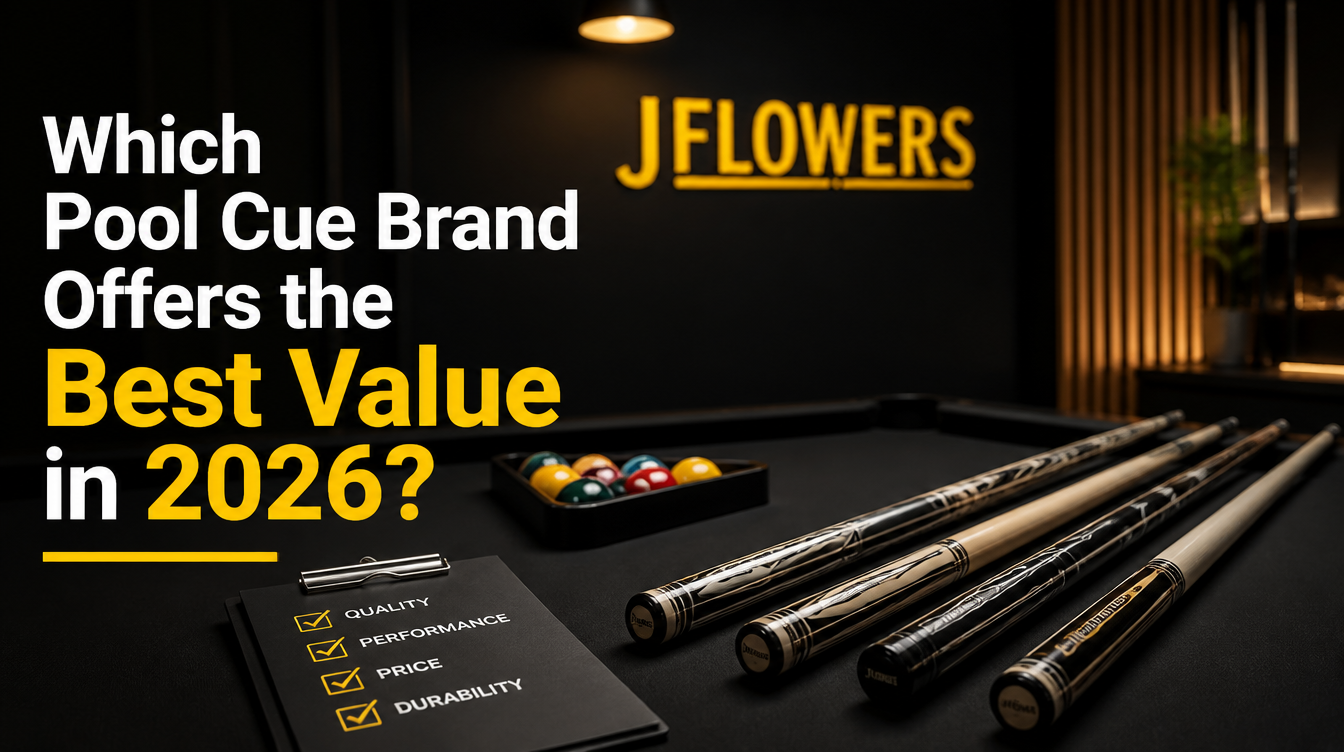
After comparing JFlowers to Predator, Mezz, McDermott, Meucci, Jacoby, Pechauer, and a dozen more brands across every price point and construction philosophy — the question that started all of it deserves a direct answer: which pool cue brand actually offers the best value for serious competitive players in
2026?
Players Technology is one of the most widely used cue brands in American pool halls. Their two-piece cues at $40-$150 have introduced millions of American players to personal cue ownership. Nearly every serious pool player in America either started on a Players cue or played against someone who did. Comparing Players to JFlowers isn’t really a direct competition — it’s a marker on the journey from beginner to serious competitor.