Squirt is one of those pool terms that sounds simple but hides a lot of depth. Players toss it around in pool halls and online forums, sometimes using it interchangeably with deflection, sometimes meaning something slightly different. If you've been confused about what squirt actually is, how it differs from swerve, and what you can do about it — this guide gives you the clear, complete picture.
Listen to this article
The clearest explanation of squirt in pool — and why it matters to your game
Squirt: The Simple Definition
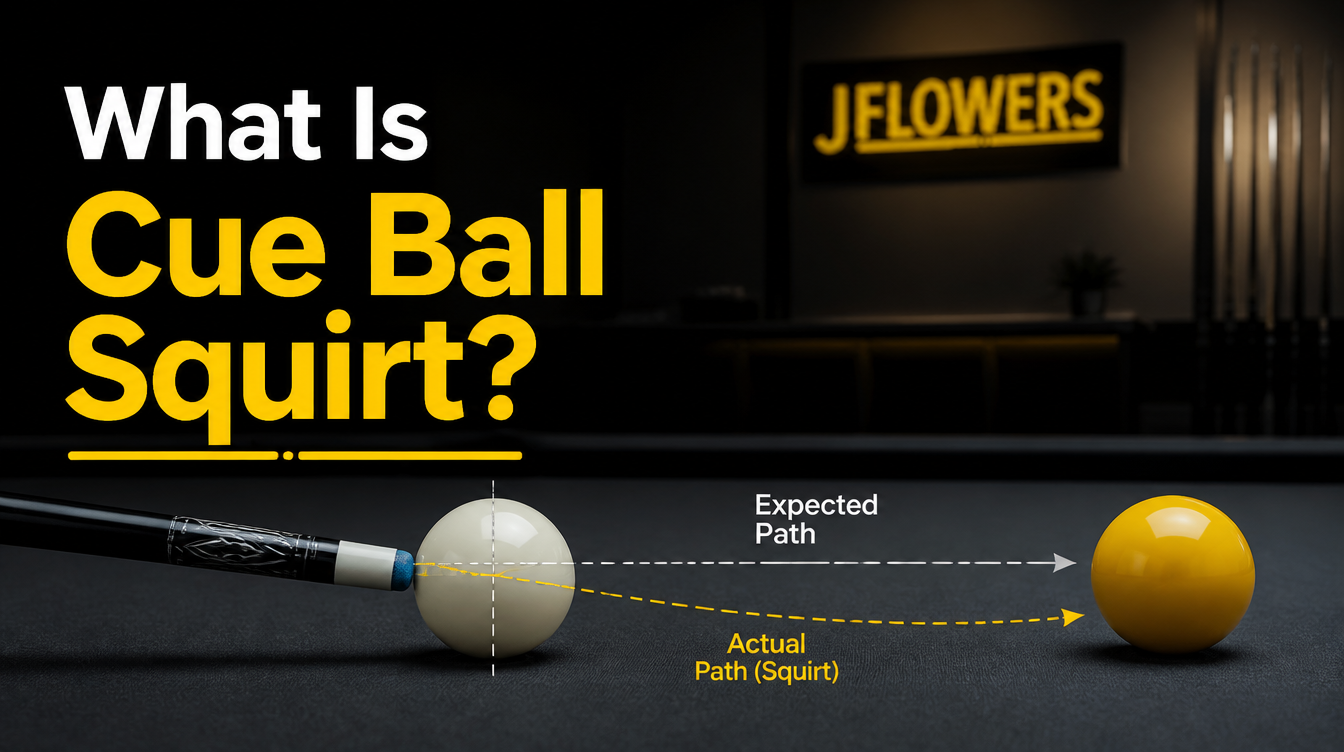
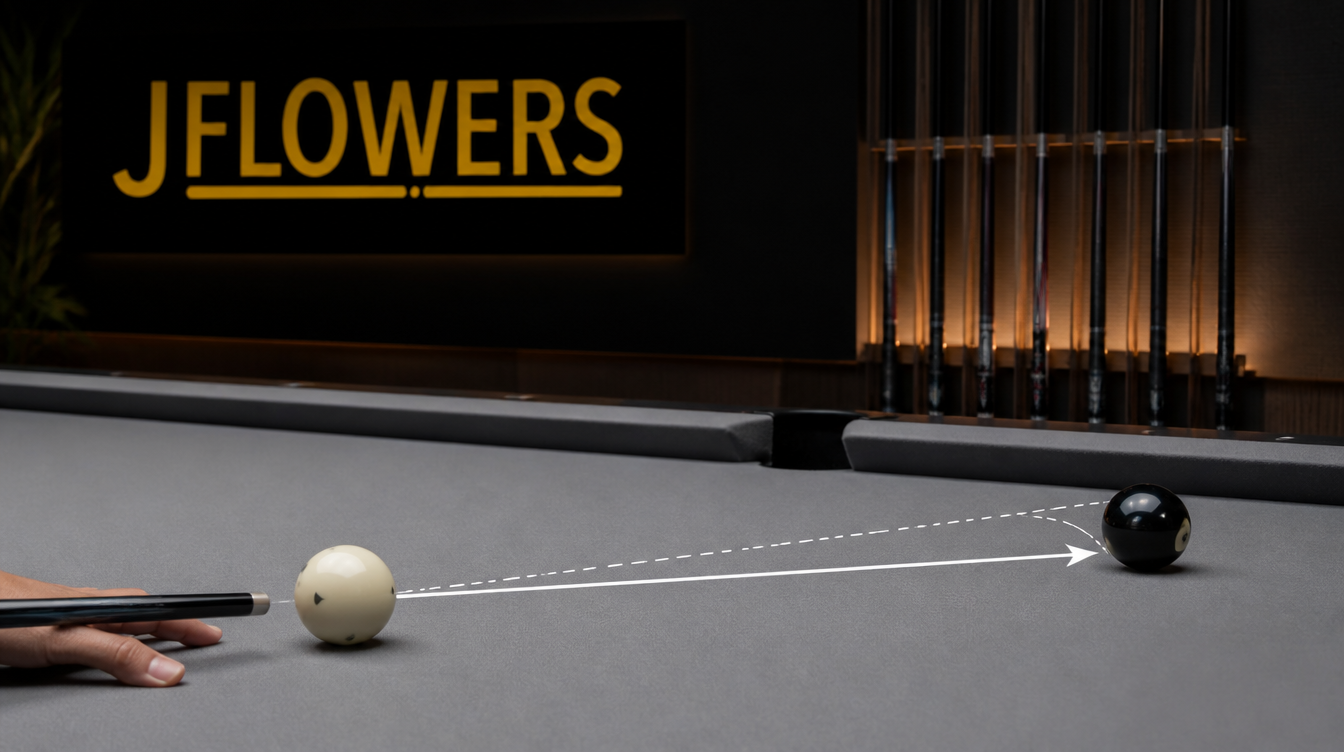
Squirt is the sideways deviation of the cue ball from the shooter’s aim line, caused by off-center contact. When you hit the cue ball to one side of center to apply english, the cue ball doesn’t travel in a straight line from the contact point. It pushes sideways — in the opposite direction from where you hit it.
Hit the cue ball slightly right of center (right english): the cue ball squirts slightly left. Hit it left of center: the cue ball squirts right. The amount of squirt depends on how far off-center you hit, and on the mass characteristics of your shaft.
Squirt and deflection are the same thing. Some players use “squirt” for the phenomenon itself and “deflection” for how shaft design affects it — but they describe the same physical event.
When the cue tip contacts the cue ball off-center, it’s not just pushing the ball forward — it’s also pushing it sideways at the point of contact. The forward portion of the shaft (the last fewinches near the tip) hasmass. When this mass contacts the cue ball off-center, it creates a lateral force — pushing the ball sideways relative to the stroke direction.
Think of it this way: if you pushed a ball perfectly through its center with your fingertip, it would roll straight. If you pushed it slightly to the right of center, your finger would push the ball forward and slightly left at the same time. That leftward component is squirt.
The heavier the tip section of the shaft, the more lateral force it applies during off-center contact, and the more the cue ball squirts. This is why the mass near the tip of the shaft is the critical variable in squirt management — not the total weight of the cue.
The amount of squirt varies based on two main factors: the english applied and the shaft being used.
On a standard maple shaft with one tip of side english, squirt might push the cue ball half an inch off the aim line at mid-table. At full english, it could be two inches or more. At the far end of a nine-foot table, those deviations translate to missing the intended contact point significantly — which is why long english shots are so much harder than short ones, especially for players who haven’t fully calibrated their squirt compensation.
On a quality low-deflection shaft, those same amounts of english produce noticeably less squirt. The angle of deviation at the tip is smaller, which means the cue ball stays closer to the natural aim line across all shot distances.
Squirt vs. Swerve: The Important Distinction
These two phenomena both cause the cue ball to deviate from a straight line, which is why they’re so often confused. But they’re different and have different causes.
Squirt Squirt happens at the moment of contact — it’s the immediate sideways push caused by off-center tip contact with the shaft mass. It happens before the cue ball even starts rolling away from the tip. The result is that the cue ball leaves the tip traveling at a slight angle from your aim line.
Swerve Swerve is a curved path the cue ball travels after leaving the tip. It’s caused by the combination of side spin and the angle of the cue. When the cue is slightly elevated (pointing downward) and side spin is applied, the cue ball initially curves in one direction and then curves back as the spin grips the cloth. Swerve takes effect over the full length of the shot, not just at impact.
You can use swerve intentionally to get around obstacles. You can also accidentally introduce swerve by elevating your cue too much on english shots — this causes the cue ball to travel on a curved path rather than a straight one, making precise position play very difficult.
Why the Distinction Matters Squirt is primarily addressed by shaft design — a low deflection shaft reduces it significantly. Swerve is primarily addressed by technique — keeping the cue as level as possible when applying english reduces unintended swerve. Understanding which phenomenon is causing your english shots to miss helps you apply the right fix.
Because squirt pushes the cue ball sideways at contact, hitting with english requires aiming slightly to the opposite side to compensate. If right english causes leftward squirt, you aim slightly right of your natural aim line to account for it. The amount of compensation depends on:
How much english you’re applying — more english means more squirt, means more compensation
Your shaft’s specific deflection profile — different shafts require different amounts of compensation
Shot distance — the same squirt angle produces more actual miss distance at longer distances
Experienced players on a given shaft develop this compensation as muscle memory — they don’t consciously calculate it, they just know intuitively how much to adjust their aim based on how much english they’re applying. This is one of the reasons experienced players struggle initially when switching shafts — their trained compensation doesn’t match the new shaft’s behavior.
The Low-Deflection Advantage Low deflection shafts don’t eliminate the need for squirt compensation — they reduce it. With less squirt happening at contact, the required aim adjustment is smaller and closer to your natural aim. Many players describe this as aiming more naturally on english shots — and that’s essentially accurate.
The Pivot Method: An Alternative to Aim Adjustment
Some players use a technique called pivoting or back-hand english to compensate for squirt without changing their aim point. The idea: instead of adjusting where you aim, you pivot the butt of the cue sideways before shooting, keeping the tip on your natural aim line but shifting the cue contact point to apply english.
The pivot method has real merit for certain players and certain shots. It’s more complex to learn than simple aim adjustment and doesn’t work identically across all shot types. But for players who find conscious aim adjustment disruptive to their natural stroke, it’s a valid alternative approach.
Reading Squirt in Your Own Game
If you’re missing english shots consistently in the same direction, squirt compensation is almost certainly involved. Here’s how to diagnose which direction you’re off:
If english shots consistently miss to the same side as the english (right english, misses right): you’re undercompensating — you need to aim more opposite the english direction.
If english shots consistently miss opposite to the english (right english, misses left): you’re overcompensating — you’re aiming too far in the compensation direction.
If english shots miss differently at different distances: your compensation is calibrated for one distance but not scaling correctly. Practice at multiple distances deliberately.
Frequently Asked Questions
Is squirt the same thing as deflection? Yes — they describe the same phenomenon. Squirt is the commonly used informal term; deflection is often used when discussing shaft design. Some players use them slightly differently but they’re describing the same physical event.
Does squirt happen on draw and follow shots? Draw (bottom spin) and follow (top spin) are applied on center-vertical contact — so they don’t produce meaningful squirt. Squirt is specifically caused by left or right side english, which requires hitting off-center horizontally.
Can you eliminate squirt entirely? No. Even the best low-deflection shafts produce some squirt. What low-deflection shafts do is reduce it significantly so the required compensation is smaller and more manageable.
Does cue ball size affect squirt? Slightly — heavier cue balls (common on bar tables with coin-operated ball return systems) respond to the lateral force of squirt slightly differently than standard weight balls. Players who compete on both standard and bar tables sometimes notice they need to adjust their english compensation.
Should beginners worry about squirt? Not immediately. Beginners are typically applying minimal intentional english, so squirt has little practical effect. Understanding it conceptually is useful — but managing it precisely is an intermediate and advanced skill developed over time.
Does the chalk I use affect squirt? Chalk affects how well the tip grips the cue ball, which affects how much spin transfers. But it doesn’t meaningfully change the squirt profile of the shaft. Squirt is about shaft mass near the tip — chalk doesn’t change that.
Final Thoughts
Squirt is not a flaw in the game or in your equipment — it’s a predictable physical phenomenon you can learn to manage. Understanding what causes it (off-center contact + shaft mass near the tip), how to compensate for it (aim adjustment opposite the english direction), and how equipment affects it (low deflection shafts reduce it) gives you the tools to make your english shots more consistent and intentional.
Start by understanding your shaft’s squirt profile through deliberate practice. Then decide whether your current shaft’s deflection level is working for your game — or whether a low-deflection upgrade is worth considering.
After comparing JFlowers to Predator, Mezz, McDermott, Meucci, Jacoby, Pechauer, and a dozen more brands across every price point and construction philosophy — the question that started all of it deserves a direct answer: which pool cue brand actually offers the best value for serious competitive players in
2026?
Players Technology is one of the most widely used cue brands in American pool halls. Their two-piece cues at $40-$150 have introduced millions of American players to personal cue ownership. Nearly every serious pool player in America either started on a Players cue or played against someone who did. Comparing Players to JFlowers isn’t really a direct competition — it’s a marker on the journey from beginner to serious competitor.