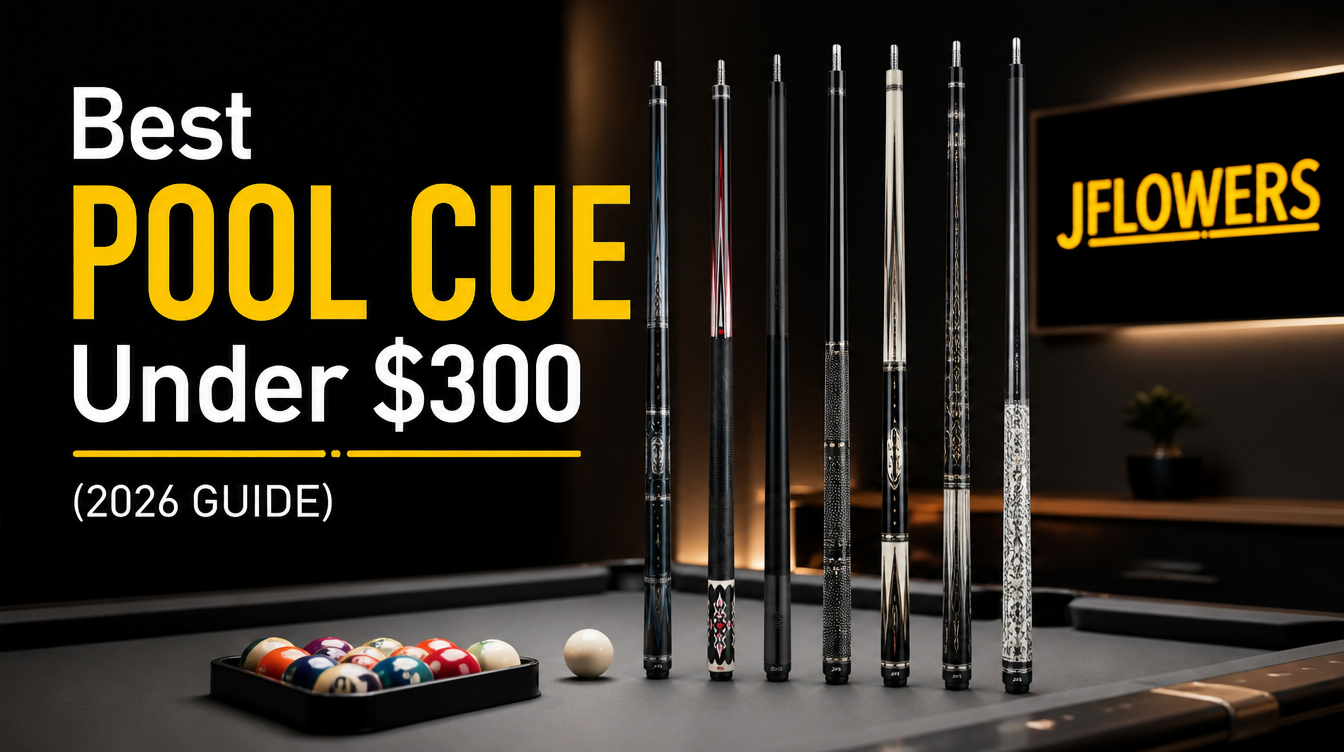
The sub-$300 pool cue market has improved significantly over the last several years. What used to be territory dominated by entry-level sticks with obvious quality compromises now includes genuinely good options from brands that take construction seriously at accessible price points.
Listen to this article
Where to find real quality without overspending
This guide covers what you can realistically expect under $300, what to prioritize within this budget, and how to get the most performance per dollar
What You Can Realistically Expect Under $300
In the $200–$300 range, you’ll find cues with solid maple shafts, reliable joint construction, decent tips, and construction quality that holds up to regular use. The shaft technology won’t be cutting-edge low deflection in the lower end of this range, but a well-made standard taper maple shaft can perform at a good level.
As you approach the $250–$300 mark, options start to open up for entry-level low deflection features and the first carbon fiber options start appearing. The upper end of this range is a meaningful step up from the lower end.
$150–$200 Solid entry level. You get reliable construction, a reasonably straight shaft, and a cue that will serve a developing player well. Shaft technology is basic, but construction quality is real. Good first cue territory.
$200–$250 Noticeably better quality across the board. Better shaft consistency, more reliable joint construction, and better tip options. Some options in this range start offering lower deflection features.
$250–$300 The best value in the sub-$300 range. In this tier you start finding low deflection shaft options, entry-level carbon fiber from some manufacturers, and construction quality that genuinely competes with cues at higher price points from brands that cut corners.
What to Prioritize Under $300
Shaft Straightness Above Everything At this budget, shaft straightness is the most critical factor. A cue with a perfectly straight shaft and basic technology will outperform a cue with a warped shaft and fancy features every single time.
If buying in person: roll the cue on a flat table and sight down the shaft. It should be straight. If buying online: buy from a brand with strong quality control reputation and a solid return policy. Don’t accept a warped shaft.
Joint Stability A joint that screws together cleanly with no wobble makes a meaningful difference. Avoid cues where the joint feels loose or plays around — that wobble introduces inconsistency into every shot.
Tip Quality The stock tip on many cues in this price range is average at best. One of the smartest moves you can make is to budget $20–$40 on top of the cue price to have a quality tip installed by a cue technician. Brands like Tiger, Kamui, or Triangle on top of a well-built $220 cue gives you a stick that punches above its weight class.
Weight in the 18.5–19.5 oz Range Standard advice applies here: 19 oz is the most versatile starting weight. Verify the actual weight of any cue you’re considering — some budget cues advertise a weight but are inconsistent in how accurately they hit it.
What to Skip Under $300
Elaborate inlays and decorative work — you’re paying for aesthetics that don’t help performance.
Cue and case combo packages — cases in these bundles are almost universally poor quality. Buy separately.
Brands with no track record — stick to brands with reviews from real players you can evaluate.
Gimmicky features like laser sights or training guides — these don’t improve your game.
Super-heavy cues marketed as “power” cues — the extra weight usually hurts more than helps.
Here’s one of the best value plays in the under-$300 market: buy a simpler, well-built cue at $200–$240 and spend $30–$40 getting a quality tip installed. The result is a cue that performs significantly better than its purchase price suggests.
The logic: at this price point, the butt and shaft construction are the key quality investments. The tip that comes stock on a $220 cue is often the weakest link — and it’s also the easiest and most affordable thing to fix.
Should You Consider Carbon Fiber Under $300?
Options are limited but starting to appear in the $250–$300 range. Entry-level carbon fiber in this price bracket can be a viable option, but quality control varies more at this price point than in the $350+ range.
If you’re considering carbon fiber under $300, research the specific model carefully, look for reviews from real players, and buy from a brand with a clear return policy. The performance benefits of carbon fiber are real — the risk is getting a lower-quality implementation at the budget end of the range.
Frequently Asked Questions
Can a $200 cue compete in league play? Absolutely. Many league players use cues in this range and compete effectively. At the recreational and amateur level, fundamentals and technique matter far more than equipment quality. A solid $200–$250 cue is entirely appropriate for league play.
Is it better to buy online or in a store under $300? Both are viable. In-store lets you feel the cue before committing — a real advantage at any price point. Online typically offers better selection and often better pricing. If buying online, prioritize brands with a solid return policy.
Should I buy a used cue or a new one under $300? Used can offer excellent value if you know what to look for — check shaft straightness carefully, inspect the joint, and look at tip condition. A quality used cue from a reputable brand at $200 can be better than a new cue at $200 from an unknown manufacturer.
What brands should I look at under $300? JFlowers, Lucasi, Players, and Viking all have solid options in this range worth evaluating. Research specific models and read reviews from real players rather than relying on brand name alone.
How long will a $250 cue last? A well-built $250 cue, properly maintained and stored, can last several years easily — and often much longer. The tip will need periodic replacement, but the cue itself at this price point from a quality manufacturer is built to last.
Final Thoughts Under $300 is a completely viable budget for a quality pool cue that will serve you well for years. Focus on shaft straightness and joint quality — those are the variables that matter most at this price point. Consider the tip upgrade strategy. Skip the fancy aesthetics. And buy from a brand you can trust with a return policy you can use.
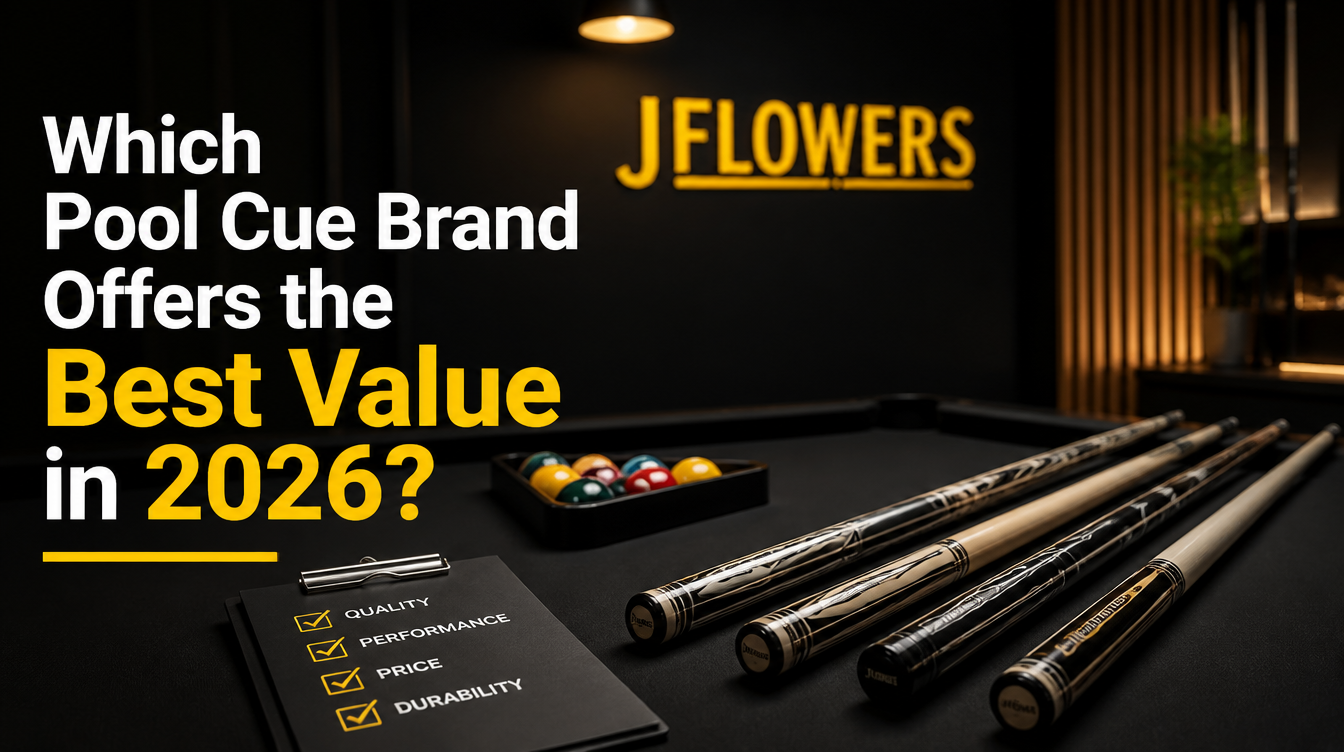
After comparing JFlowers to Predator, Mezz, McDermott, Meucci, Jacoby, Pechauer, and a dozen more brands across every price point and construction philosophy — the question that started all of it deserves a direct answer: which pool cue brand actually offers the best value for serious competitive players in
2026?
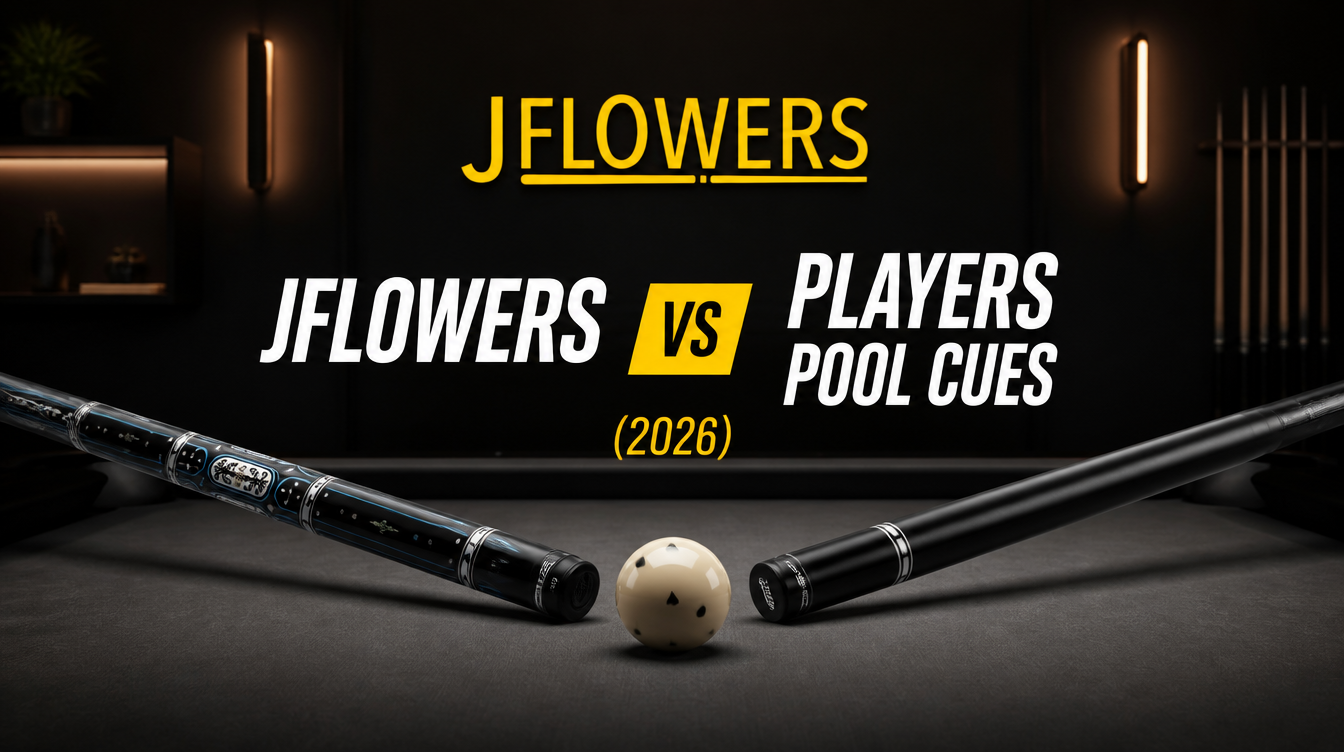
Players Technology is one of the most widely used cue brands in American pool halls. Their two-piece cues at $40-$150 have introduced millions of American players to personal cue ownership. Nearly every serious pool player in America either started on a Players cue or played against someone who did. Comparing Players to JFlowers isn’t really a direct competition — it’s a marker on the journey from beginner to serious competitor.