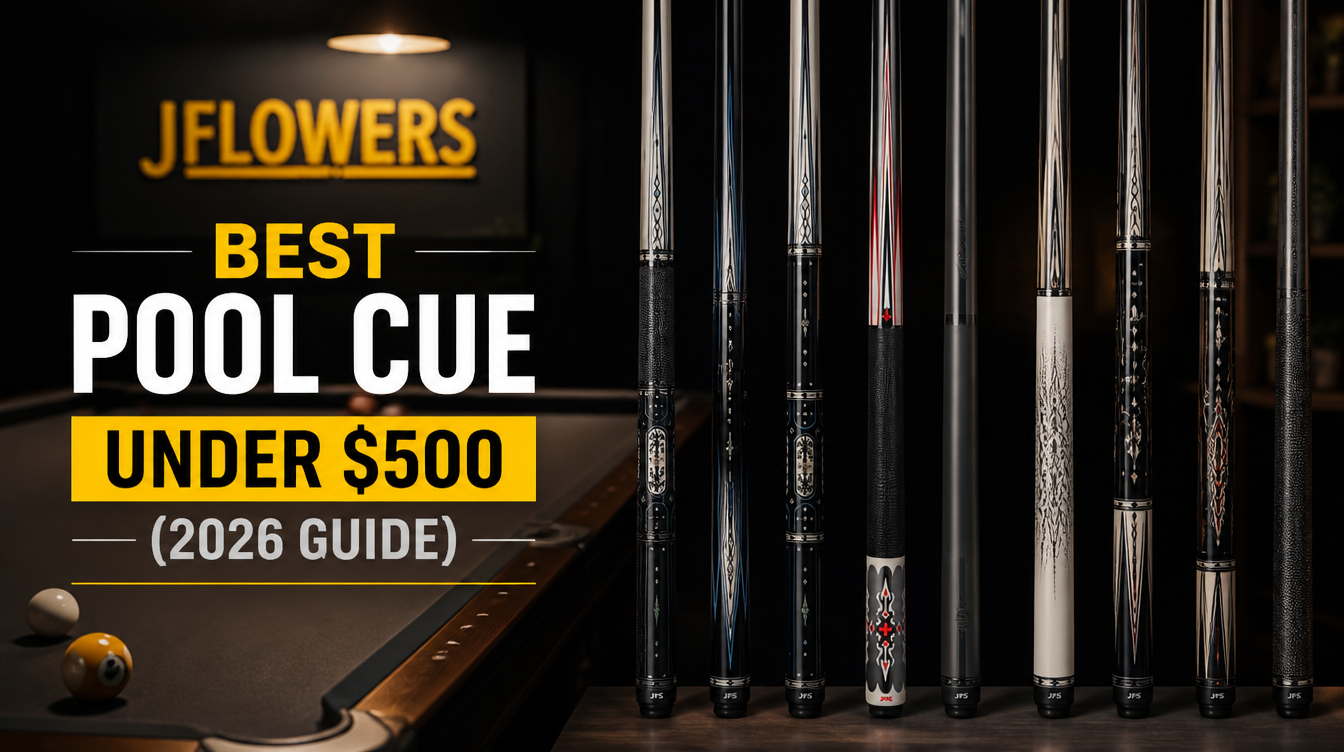
The $300–$500 range is widely considered the sweet spot in pool cue shopping — and for good reason. This is where serious performance features become genuinely accessible, the quality gap between budget and mid-range starts to close decisively, and the options from quality manufacturers start to get genuinely impressive.
Listen to this article
Where serious performance meets accessible pricing
If you’re a serious recreational player, a league competitor, or someone upgrading from a beginner cue for the first time, this is the range where your money does the most work.
What Changes Between $300 and $500?
The most important shift in this price range is shaft technology. Below $300, you’re mostly working with standard maple or entry-level low deflection options. At $300–$500, quality low deflection maple shafts and solid carbon fiber options become the standard rather than the exception.
Joint quality also improves noticeably — stainless steel and quality phenolic become common where lower-price options often use chrome-plated or plastic components. The overall fit and finish of the cue steps up, and butt construction materials improve.
The cumulative effect is a cue that not only looks better but performs more consistently over time.
Carbon Fiber Becomes a Real Option
The sub-$500 market now includes quality carbon fiber shaft options from manufacturers that have built real reputations. This is a significant development compared to even three years ago — you no longer need to spend $700+ to get carbon fiber from a brand worth trusting.
For players in this budget range who want the consistency and low maintenance of carbon fiber, the options are now genuinely strong. Research specific models, look for reviews from players at your level, and buy from manufacturers with clear warranty coverage.
Shaft Technology First At $300–$500, you have genuine options for quality shaft technology. Don’t compromise here. A quality low deflection shaft — carbon fiber or premium maple — is the single most performance-impactful investment you can make. If you’re choosing between a $350 cue with an excellent shaft and a $350 cue with average shaft technology and fancier aesthetics, choose the better shaft every time.
Joint Type Look for stainless steel or quality phenolic joints in this range. These materials are more durable and produce more consistent hit characteristics than chrome-plated or plastic joint options. The joint stability directly affects shot consistency over time.
Tip Quality At this investment level, don’t accept a mediocre stock tip. Many cues in this range come with quality tips from recognized brands — check what’s included and consider upgrading if it’s a generic option.
Warranty and Brand Support Spending $400 on a cue means you have a right to expect the brand to stand behind it. Research warranty coverage and what customer support looks like before committing. A solid warranty at this price point is not a bonus — it’s a basic expectation.
Shaft Upgrade vs. Complete New Cue Under $500
An important consideration in this budget range: you can often get better performance by upgrading just your shaft than by buying a complete new cue at the same total price.
If your current butt is solid — good joint, comfortable feel, nothing you actively dislike — putting a $250–$350 quality carbon fiber or low deflection maple shaft on it is often the smarter play. You spend less, get better performance where it matters (the shaft), and keep the familiarity of a butt you already know.
If your whole setup needs replacing, a complete cue in the $350–$500 range from a quality manufacturer is the simpler path.
Frequently Asked Questions
Is $500 too much to spend on a recreational cue? Not if you play regularly. A $400–$500 cue used three times a week for five years costs you pennies per session. The performance and consistency you get makes it a reasonable investment for anyone who takes the game seriously, even recreationally.
What’s the best value play under $500? Generally, a mid-range cue with a quality carbon fiber shaft in the $350–$450 range offers the best combination of performance, durability, and long-term value. The shaft technology is the key investment.
Should I buy a complete cue or upgrade my shaft? If your current butt is in good shape and you like how it feels, a shaft upgrade is often the better value. If your whole setup needs refreshing, buy a complete replacement.
Is the performance jump from $300 to $500 worth it? Yes — primarily in shaft technology and joint quality. The performance difference is real and noticeable for players at the intermediate level and above. The jump from $200 to $400 is actually the most significant performance gain in the entire market.
What brands offer the best value under $500? JFlowers, Predator, OB, Lucasi, and Viking all have strong offerings in this range. Evaluate specific models rather than buying on brand name alone — the right cue matters more than the right brand.
Do I need a separate break cue if I’m spending $500 on a playing cue? If you’re playing frequently in a competitive league, yes — a dedicated break cue protects your playing cue’s tip and shaft from the repeated impact of breaking. Budget an additional $100–$200 for a solid break cue if you’re playing at that level.
Final Thoughts
Under $500 is a great place to be shopping. The cues available here will genuinely elevate your game, last for years, and give you performance features that used to cost twice as much. Focus on shaft technology first — that’s where the real performance lives. Get a cue with a quality joint, verify the tip quality, and buy from a manufacturer you can trust.
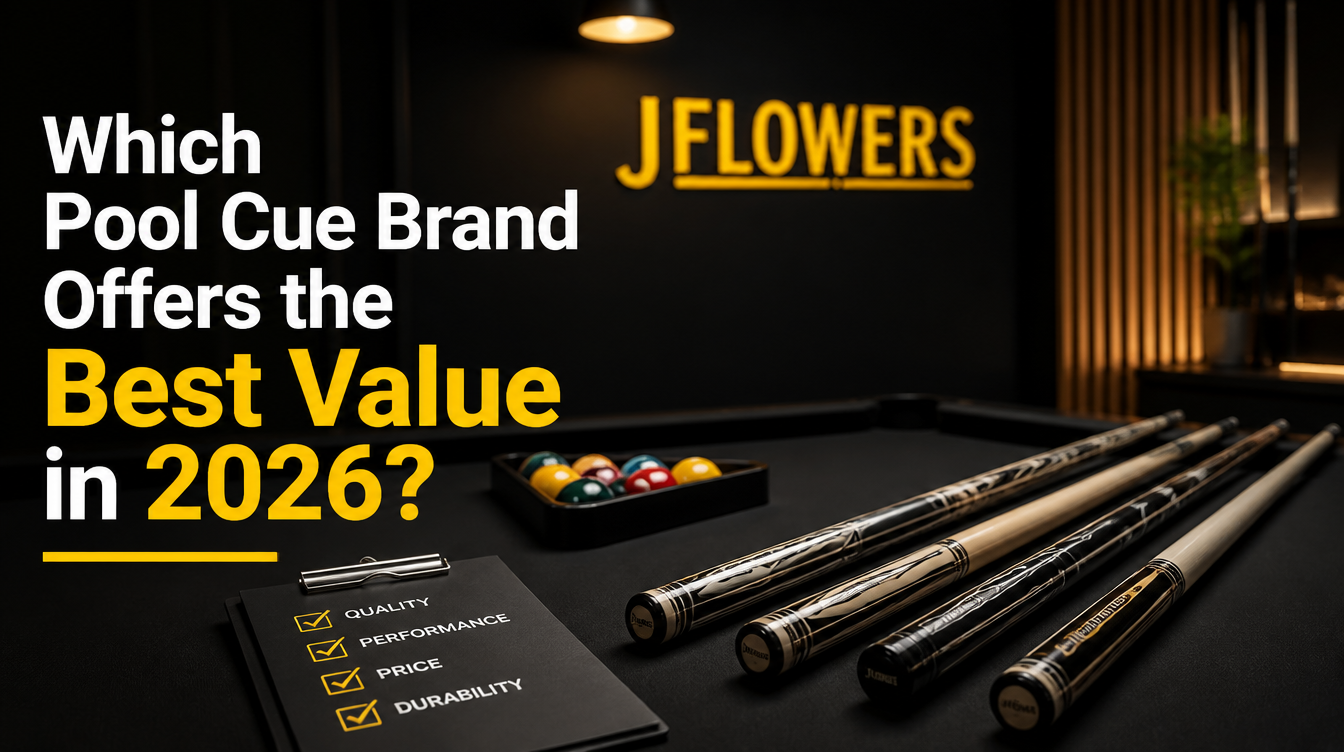
After comparing JFlowers to Predator, Mezz, McDermott, Meucci, Jacoby, Pechauer, and a dozen more brands across every price point and construction philosophy — the question that started all of it deserves a direct answer: which pool cue brand actually offers the best value for serious competitive players in
2026?
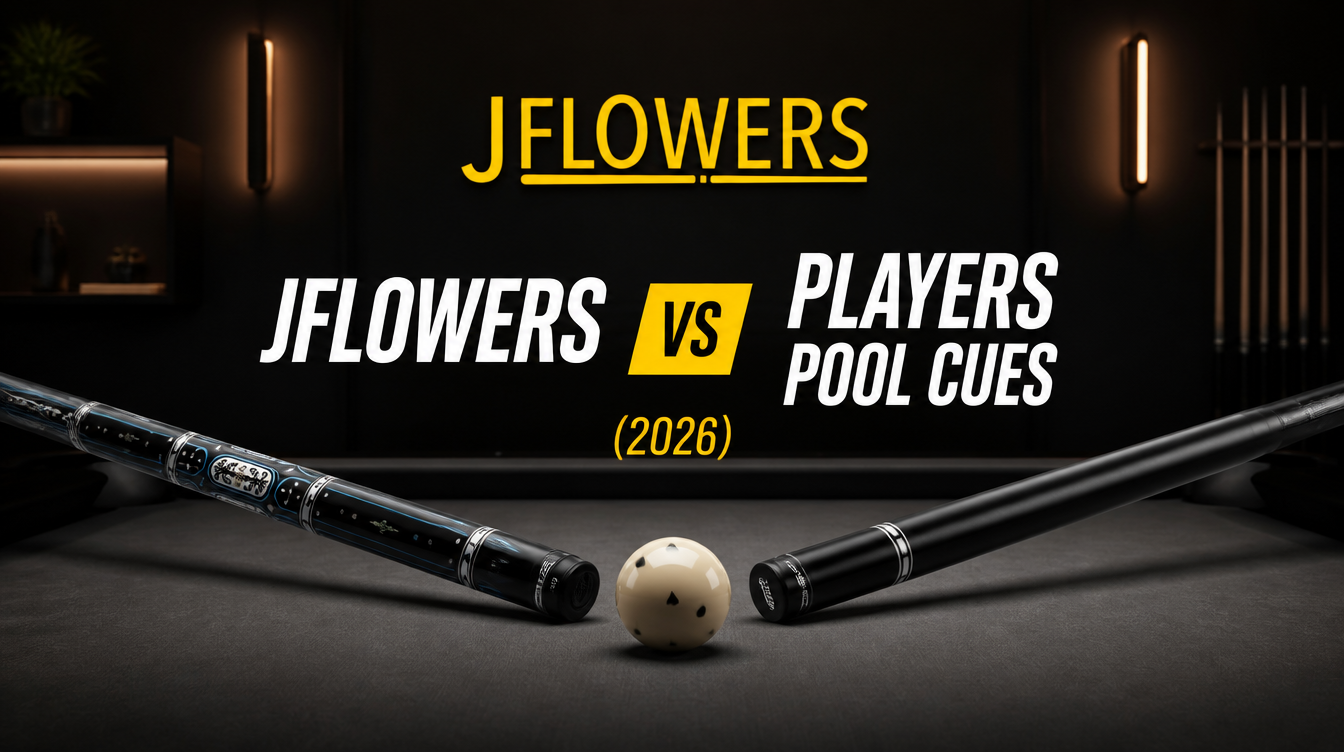
Players Technology is one of the most widely used cue brands in American pool halls. Their two-piece cues at $40-$150 have introduced millions of American players to personal cue ownership. Nearly every serious pool player in America either started on a Players cue or played against someone who did. Comparing Players to JFlowers isn’t really a direct competition — it’s a marker on the journey from beginner to serious competitor.