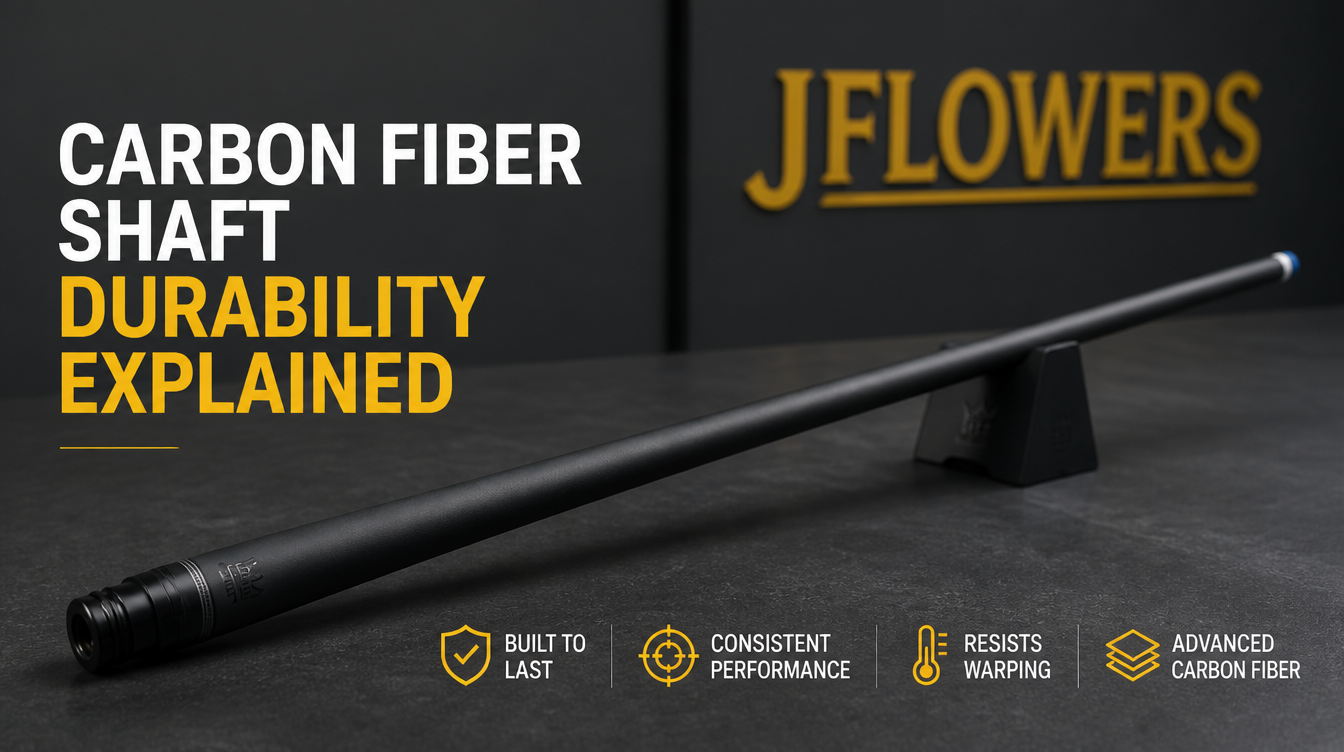
One of the most common questions from players considering a carbon fiber upgrade: how durable are they actually? It's a fair question when you're looking at a $300-$500 investment. The answer is genuinely good news — but it comes with nuance about what wears and what doesn't.
Listen to this article
This guide breaks down the durability profile of carbon fiber shafts specifically: what holds up under heavy play, what eventually needs attention, and what realistic lifespan looks like under competitive use.
The Structural Core: Essentially Permanent
The carbon fiber composite structure of the shaft does not degrade under normal playing conditions. It does not compress like wood fibers under repeated impact. It does not absorb moisture. It does not gradually lose stiffness from use.
This is the fundamental durability advantage over wood. A maple shaft degrades over time through moisture cycling, grain compression, and surface wear. A carbon fiber shaft’s core structure remains unchanged. For the comparison in full, see Carbon Fiber Shaft vs Wood Shaft: The Complete Comparison.
What Does Wear Over Time
The Tip Tips wear regardless of shaft material. A carbon fiber shaft with a worn tip performs poorly — just like any other shaft. Heavy competitive players might replace tips every 6-12 months. Recreational players might go years on a single tip. The tip wears; the shaft doesn’t.
The Surface Finish The exterior finish develops micro-scratches and scuffs over time from normal use. This is cosmetic rather than functional — a scratched shaft plays identically to a pristine one. For full lifespan expectations, see Carbon Fiber Shaft Lifespan.
The Ferrule End Some carbon fiber shafts use a ferrule; others are ferrule-less. On shafts with ferrules, the ferrule is subject to the same wear as any other. Ferrule-less designs like the JFlowers SMO eliminate this failure point entirely.
What Can Damage a Carbon Fiber Shaft
Dropping the shaft tip-first on a hard surface can chip or crack the end
Abrasive cleaners or steel wool permanently damage the surface finish
Extreme off-axis force (stepping on the shaft) can crack the composite
In practice, a shaft transported in a quality case and handled with basic care is well-protected from all of these. See How to Store a Pool Cue Properly for storage practices that protect your shaft.
Durability vs Wood
Under the same conditions, a quality carbon fiber shaft will outlast a quality maple shaft. Maple degrades gradually: moisture cycling compresses wood fibers, the surface develops roughness, and eventually warping reduces performance below acceptable levels. The JFlowers SMO shaft does none of this. Its only consumable is the tip.
Common Durability Myths
Will it shatter from a hard break? No. Carbon fiber composite tubes are extremely strong in compression along the fiber axis — the direction of a pool stroke. The stroke force a player generates is well within structural limits. Does it delaminate from use? Not under normal playing conditions. Delamination requires repeated high-stress cycles well beyond what pool play generates.
Pros and Cons
Carbon fiber shaft durability
Core structure has no natural degradation timeline
No warping, no moisture damage, no thermal damage
Significantly outlasts equivalent maple shafts
Only consumable is the tip — same as any other shaft
Vulnerable to hard physical impacts — quality case required
Surface finish shows cosmetic wear over time
Expert Recommendation The JFlowers SMO is built to last. Protect it in a quality case, clean it with appropriate products, replace the tip as needed, and the shaft itself will outlast any comparable wood alternative. It’s genuinely the last shaft many players ever need to buy.
Conclusion
Carbon fiber shaft durability is one of the strongest arguments for the technology. The core structure is essentially permanent under normal use. The only maintenance is tip replacement. If you’re looking for the last shaft you’ll need to buy for years, the JFlowers SMO makes a compelling case.
Frequently Asked Questions
Q: How durable are carbon fiber pool cue shafts? Extremely durable. The core carbon fiber structure does not degrade under normal playing conditions. The only consumable is the tip. Q: Will a carbon fiber shaft crack from a hard break? No. The stroke forces generated in pool are well within the structural limits of quality carbon fiber composite shafts. Q: Can a carbon fiber shaft be repaired if damaged? Minor surface damage (scratches) can be addressed cosmetically. Structural cracks near the tip end require professional assessment and may require replacement. Q: Does a carbon fiber shaft lose performance over time? Not from normal use. The core structural properties remain stable indefinitely. Only tip wear affects performance, and tips are replaceable. Q: Is a carbon fiber shaft more durable than maple? Yes. Under comparable conditions, carbon fiber outlasts maple because it doesn’t degrade from moisture, doesn’t warp, and doesn’t undergo the surface hardening that affects maple over time. Q: What is the most common way carbon fiber shafts get damaged? Physical impact — dropping the shaft tip-first on a hard floor. A quality hard case eliminates this risk during transport. Q: Does a carbon fiber shaft need breaking in? No. Carbon fiber performs consistently from the first session. The only break-in is the player’s aim adjustment to the shaft’s deflection profile.
After comparing JFlowers to Predator, Mezz, McDermott, Meucci, Jacoby, Pechauer, and a dozen more brands across every price point and construction philosophy — the question that started all of it deserves a direct answer: which pool cue brand actually offers the best value for serious competitive players in
2026?
Players Technology is one of the most widely used cue brands in American pool halls. Their two-piece cues at $40-$150 have introduced millions of American players to personal cue ownership. Nearly every serious pool player in America either started on a Players cue or played against someone who did. Comparing Players to JFlowers isn’t really a direct competition — it’s a marker on the journey from beginner to serious competitor.