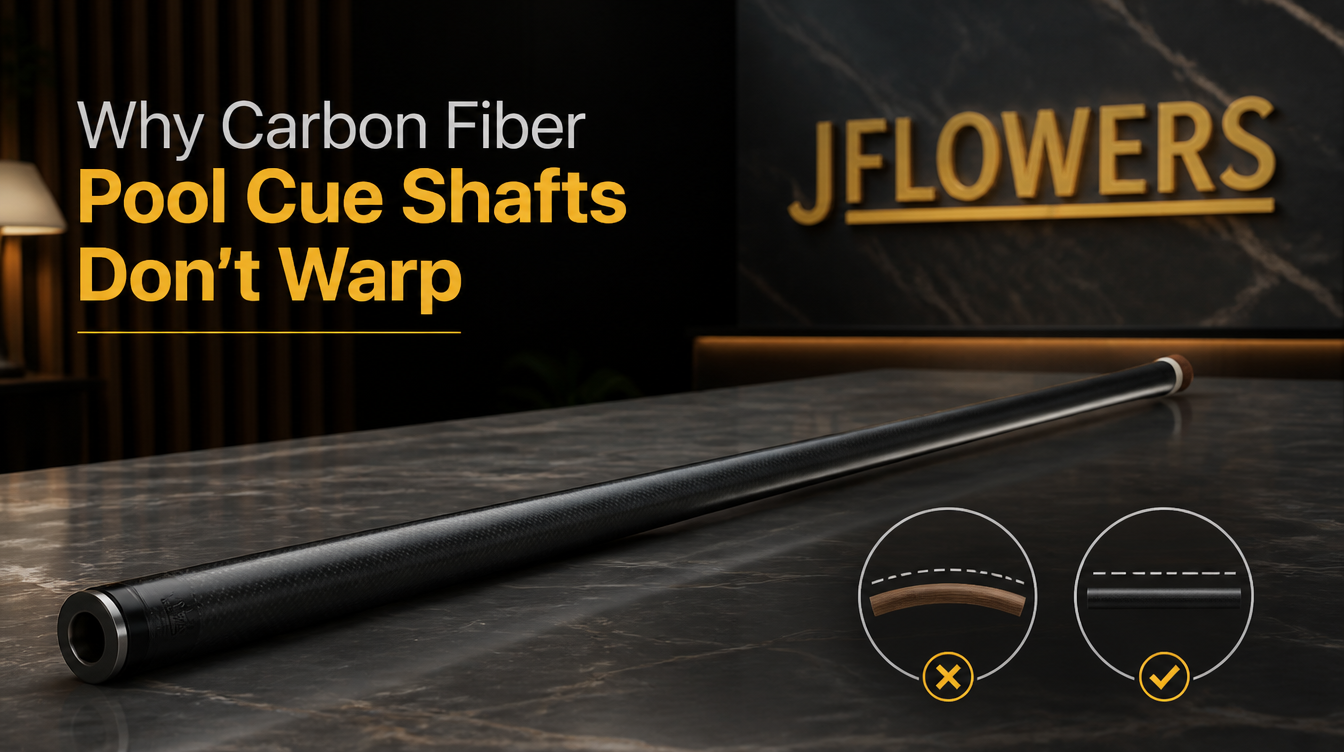
Every serious pool player who has played on a wood shaft has dealt with warp at some point. Sometimes it's a gradual curve that develops over months. Sometimes it's a dramatic bend from a single hot-carn storage incident. Either way, a warped shaft is a performance problem — and on a budget cue, it's often the beginning of the end.
Listen to this article
Carbon fiber shafts don’t warp. Not slightly, not over time, not in a humid bar or a hot car or a dry desert climate. Understanding why helps you appreciate what carbon fiber actually is and why the switch makes sense for players tired of managing their equipment’s relationship with the weather.
Why Wood Warps
Wood is a hygroscopic material — it absorbs and releases moisture from the surrounding air. As moisture content changes, wood fibers swell and contract. Because a shaft is not a perfectly uniform piece of wood, this swelling and contraction happens unevenly across the shaft’s cross-section. The result: differential expansion across the shaft’s width and length, which manifests as curvature. Even careful storage doesn’t fully prevent warp over time. Wood moves. That’s what it does. For prevention strategies on wood shafts, see Preventing Pool Cue Warpage.
Why Carbon Fiber Doesn’t
Carbon fiber is not hygroscopic. The carbon fiber fabric and the epoxy resin matrix that holds it together do not absorb moisture. When the humidity in your pool hall changes from 40% to 80%, a carbon fiber shaft is completely unaffected. The material has no mechanism for moisture absorption.
Temperature changes also have minimal effect. The coefficient of thermal expansion for carbon fiber composites is extremely low — the material simply doesn’t change dimensions meaningfully across the temperature range a pool shaft encounters in normal use or storage. What This Means in Practice
Your shaft performs exactly the same in January as it does in July
Storing your cue in a car, a hot garage, or a humid bar does not damage the shaft
A shaft you play on today will play the same way five years from now
You never need to manage its storage environment
This is especially valuable for tournament players who travel to different regions. For the full range of what carbon fiber consistency means in competition, see Best Cue for Tournament Play.
What Carbon Fiber CAN Be Damaged By
Hard impacts — dropping the shaft tip-first on a hard floor can chip or crack the end
Crushing force — excessive lateral pressure from improper storage
Abrasive cleaners — harsh chemicals or abrasive pads can damage the surface finish
Shaft performs identically in any humidity or temperature condition
No storage management required — car, bar, tournament venue, all the same
Shaft straightness maintained indefinitely under normal conditions
Can be physically damaged by hard impacts — use a quality case
Higher initial cost than wood shafts
Expert Recommendation If you’ve ever warped a shaft, lost performance in a humid tournament venue, or stored your cue in a car — the answer is carbon fiber. The JFlowers SMO shaft eliminates the entire category of warp-related problems from your game. One less thing to manage.
Conclusion
Warp is one of the most frustrating equipment problems in pool — gradual, insidious, and often invisible until it’s already affecting your game. Carbon fiber eliminates the entire problem. The science is straightforward: a material that doesn’t absorb moisture can’t warp from moisture. The JFlowers SMO Carbon Fiber Shaft delivers permanent straightness without the storage management that wood demands.
Frequently Asked Questions
Q: Do carbon fiber pool cue shafts warp? No. Carbon fiber does not absorb moisture and does not warp under any normal storage or playing conditions. Q: Can a carbon fiber shaft be stored in a hot car? Yes. Unlike wood, carbon fiber is unaffected by the temperature extremes found in a parked car. Q: How does humidity affect a carbon fiber shaft? It doesn’t. Carbon fiber is non-hygroscopic — it does not absorb moisture from the air and does not change dimensions in response to humidity changes. Q: Can a wood shaft be straightened after warping? Minor warp can sometimes be reduced with careful storage in controlled conditions, but significant warping is not fully reversible. Q: Why do wood shafts warp? Wood is hygroscopic — it absorbs and releases moisture, causing fibers to swell and contract unevenly across the shaft’s cross-section. Q: Does temperature affect a carbon fiber shaft? Minimally. Carbon fiber composites have very low thermal expansion coefficients. Normal temperature variations in pool environments have no meaningful effect. Q: How long before a carbon fiber shaft shows wear? Under normal play conditions, a quality carbon fiber shaft shows no structural wear for many years. The tip and surface finish may show cosmetic wear, but core structural properties remain stable. Q: Is carbon fiber better than maple for warp resistance? Definitively yes. Maple will eventually warp under varied environmental conditions. Carbon fiber will not.
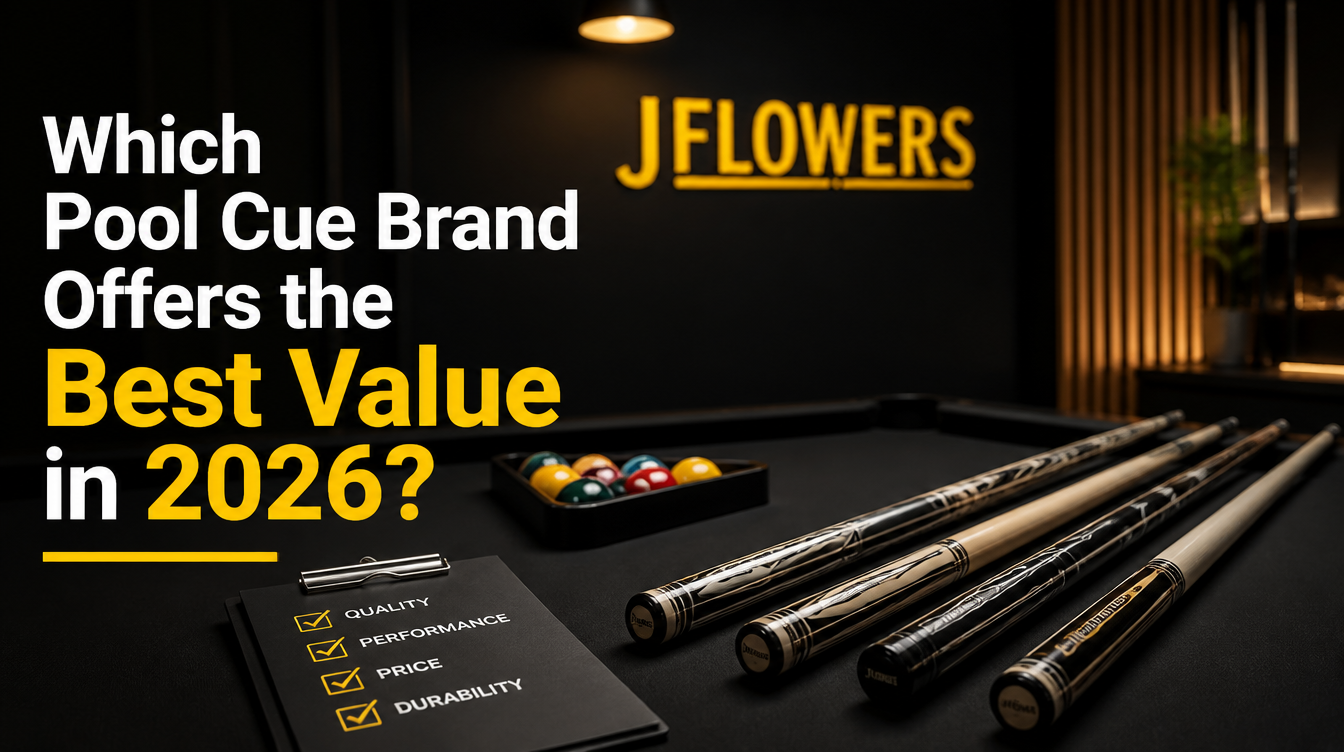
After comparing JFlowers to Predator, Mezz, McDermott, Meucci, Jacoby, Pechauer, and a dozen more brands across every price point and construction philosophy — the question that started all of it deserves a direct answer: which pool cue brand actually offers the best value for serious competitive players in
2026?
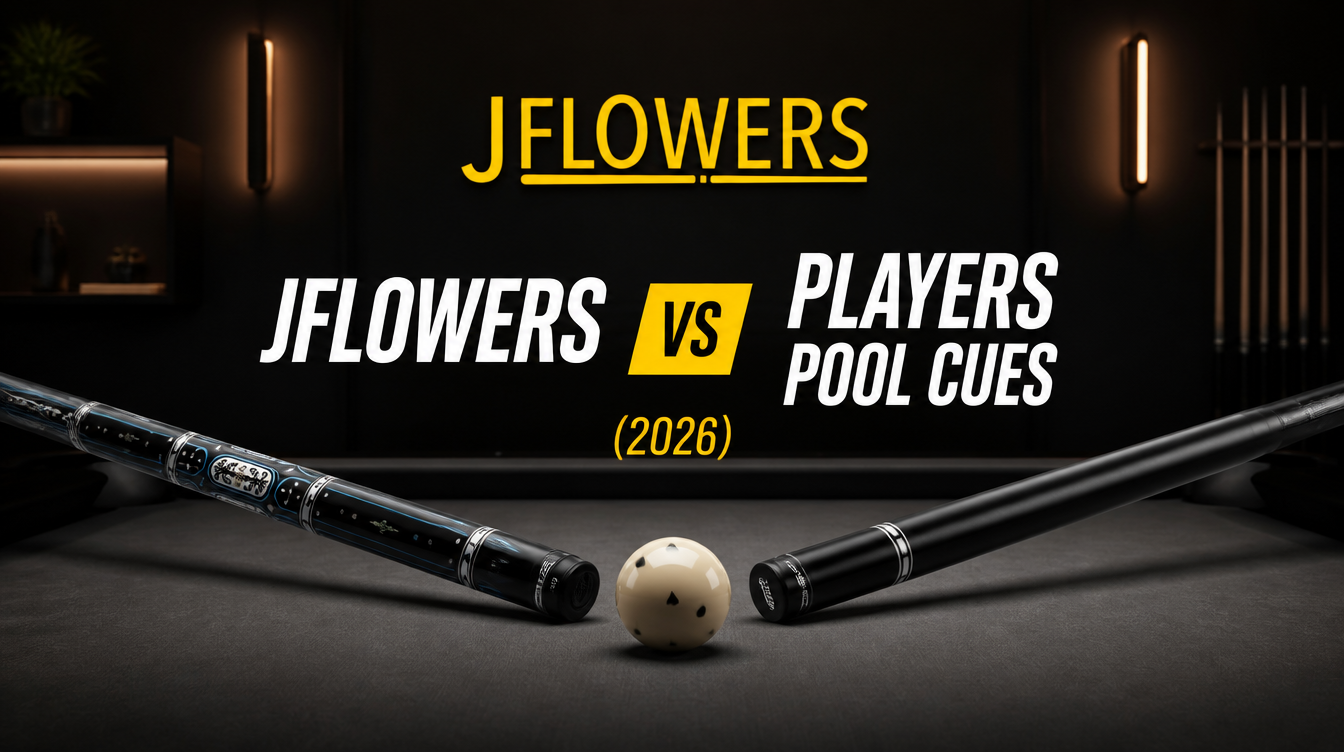
Players Technology is one of the most widely used cue brands in American pool halls. Their two-piece cues at $40-$150 have introduced millions of American players to personal cue ownership. Nearly every serious pool player in America either started on a Players cue or played against someone who did. Comparing Players to JFlowers isn’t really a direct competition — it’s a marker on the journey from beginner to serious competitor.