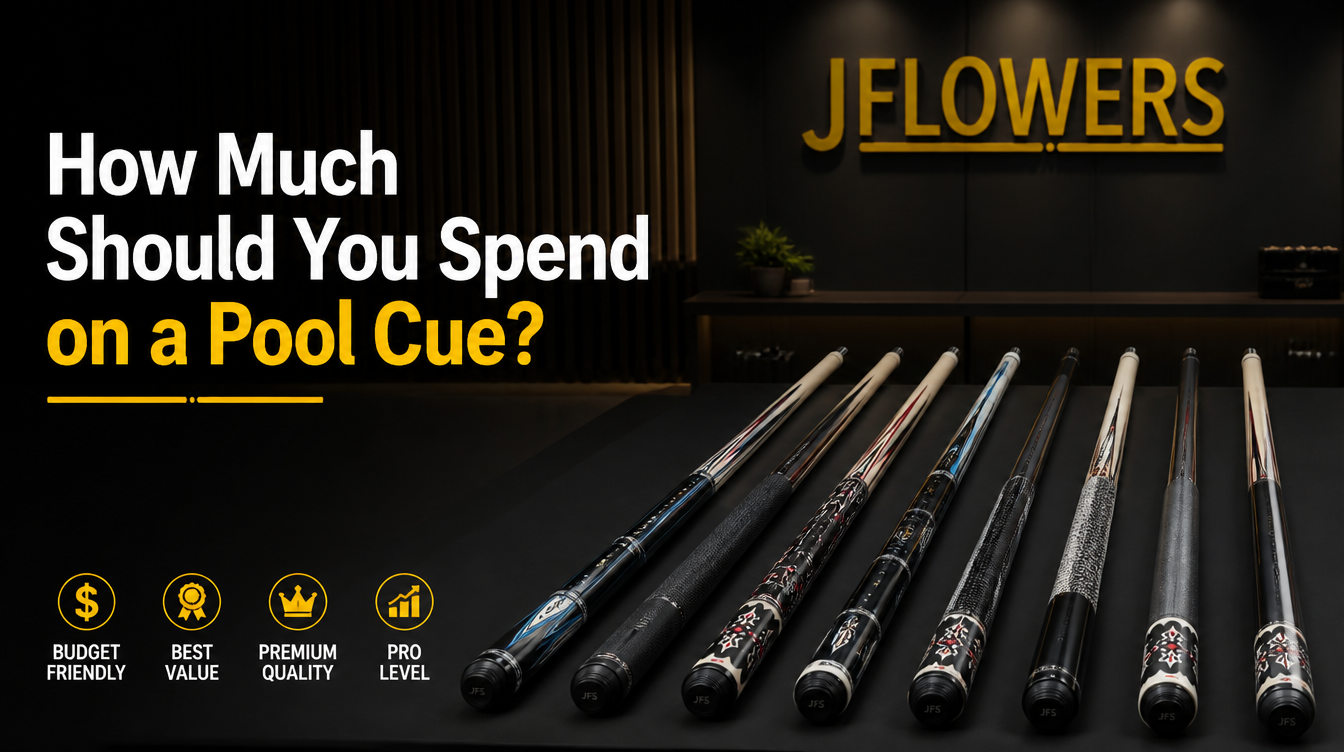
Pool cues range in price from $30 to over $10,000. That enormous range makes the budget question feel more complicated than it needs to be — but once you understand what drives price at each tier, the right budget for your situation becomes pretty clear.
Listen to this article
A realistic budget breakdown for every type of player
This guide breaks down every price tier honestly — what you’re actually getting, where the value is, and where you’re paying for things that won’t help your game.
The Most Important Rule First
Don’t underspend. The single most common budget mistake in pool cue shopping is trying to save money by going too cheap. A $50–$80 cue often works against your development as a player. The money saved up front costs you more in the long run through limited performance and early replacement.
Under $100: Skip It (With One Exception)
In the sub-$100 range, you’re mostly looking at mass-produced cues with minimal quality control. The shafts may not be perfectly straight from the factory. The ferrules are often soft and dent quickly. The tips are generic and don’t chalk or perform reliably. Construction shortcuts show up in loose joints and cheap materials throughout.
These cues will get you playing. But they introduce inconsistencies that work against you as a developing player — and they often need replacement within a year or two.
The one exception: if you’re buying a cue for a child who may or may not stick with the game, or for a total beginner who just wants to try pool out, a $60–$80 option is acceptable. Don’t spend $200 on someone who might play twice and lose interest.
$100–$200: Acceptable Entry Level
In this range you start finding cues from brands that actually care about quality. The construction is more consistent, shafts are straighter, and the overall performance is noticeably better than sub-$100 options.
This is a workable budget for a true beginner who wants a reliable stick to develop their game on. You won’t get low deflection shaft technology or premium tip options, but you’ll get a cue that plays consistently and won’t actively hold you back.
Who it’s for: beginners on a tight budget. First stick for someone who’s playing casually but wants to get their own cue.
$200–$400: The Right Range for Most Beginners
This is where the value really starts showing up. In the $200–$400 range you get solid construction throughout, reliable shaft straightness, better tip options, and a cue that will genuinely last for years.
The shaft technology in this range is improving — some options in the upper part of this tier start offering low deflection features, and a few carbon fiber options begin to appear. The construction quality is a clear step up from the entry level.
Most beginner players are best served in this range. It’s enough to get a genuinely good cue without overspending for features you haven’t developed your game enough to fully utilize.
Best value entry into quality construction
Cues in this range regularly last 5+ years with proper care
Enough investment that it motivates you to actually use and improve with it
This is where serious performance features become genuinely accessible. In the $400–$700 range, you’re looking at quality low deflection shafts — both maple and carbon fiber — better joint materials, and construction that holds up to regular competitive use.
The performance difference from the $200–$400 range is real and noticeable, especially in shaft quality. Low deflection becomes the standard rather than the exception here, and carbon fiber options from quality manufacturers are solidly in this price bracket.
This is the right range for: intermediate players ready to upgrade, league players who play multiple times a week, and anyone who wants a cue that will serve them for many years without needing to upgrade again.
At this price point, you’re getting premium shaft technology across the board. The best carbon fiber shafts on the market are available well under $1,200. Quality construction, premium joint materials, and better overall fit and finish throughout.
The performance ceiling in this range is very high — serious competitors use cues in this range to win at the national and international level. This is not about luxury; it’s about accessing the best raw performance available.
Worth noting: the jump in performance from $400–$700 to $700–$1,200 is smaller than the jump from $200–$400 to $400–$700. You’re refining at the top rather than making dramatic improvements.
Who it’s for: dedicated tournament players, serious competitors, players who want to buy once and not think about upgrading again.
Above $1,200, you’re increasingly paying for custom craftsmanship, exotic materials, artistry, and the reputation of specific custom cue makers. The performance may not be dramatically better than an excellent $800 cue — but the artistry, exclusivity, and collector value are real.
Custom cue makers often have waiting lists and charge accordingly. The work they produce is genuinely impressive — but if raw on-table performance is your goal, you’ll usually get more out of a $700 cue with an excellent shaft than a $1,500 cue with stunning inlays and an average shaft.
Who it’s for: collectors, players who see their cue as a long-term investment piece, players who want the absolute best of everything including aesthetics.
The Shaft Upgrade Option
One often-overlooked strategy: upgrade just your shaft instead of buying a complete new cue. If you have a butt you like the feel of, a quality low deflection or carbon fiber shaft in the $200–$400 range can deliver the biggest performance improvement for the money — often more than buying a complete new cue at the same total price.
This works especially well for players who have a solid butt with a good joint but are playing on an aging or standard-deflection shaft. The shaft is the performance engine of the cue — upgrading it specifically is often the smartest investment.
Where Not to Spend Your Money
Elaborate inlays and decorative work — beautiful but doesn’t improve performance.
Cue and case combo deals — the cases are almost always low quality. Buy separately.
Signature series cues at the low end — often marketing premium on mediocre construction.
Brand names without substance — reputation alone doesn’t guarantee performance.
Frequently Asked Questions
Is spending $500 on a pool cue worth it? For a player who plays regularly — multiple times a week — absolutely. A $500 cue that you use for five years is a trivial cost per session. More importantly, the performance and consistency you get at that price point will actively help your game develop.
What’s the minimum I should spend to get a quality cue? For a genuinely quality cue, $150–$200 is the floor. Below that, the compromises in construction start to outweigh the savings. $250+ is where you start getting into reliably solid options.
Should I buy a cheaper cue now and upgrade later? Better to save a little longer and buy in the $250–$400 range from the start. The performance gap between $100 and $300 is significant, and buying twice usually costs more than buying right the first time.
Does a more expensive cue make you a better player? Not directly. But better equipment removes variables that interfere with skill development. A quality cue gives your game a reliable foundation. Above a certain price point, technique matters far more than equipment.
Is it worth buying used? Potentially — if you know what to look for. Check the shaft carefully for straightness, inspect the joint, and look at the tip condition. A quality used cue from a reputable brand can be excellent value. Avoid used cues that look like they’ve been stored improperly or had significant modifications.
How much should I budget for a case in addition to the cue? Budget $40–$100 for a basic hard-sided two-piece case. Don’t skip the case — an unprotected cue can warp or get damaged in transport. The case protects your investment.
Final Thoughts
Most players are best served spending $250–$600 on a complete cue. That range gets you genuine quality, performance features that help your game, and a stick that will last for years.
Set your budget based on how seriously you play and how frequently — not based on what the most expensive option is.
And remember: the shaft is the performance engine. Whatever your budget, prioritize shaft quality over aesthetics, fancy features, or brand prestige alone.
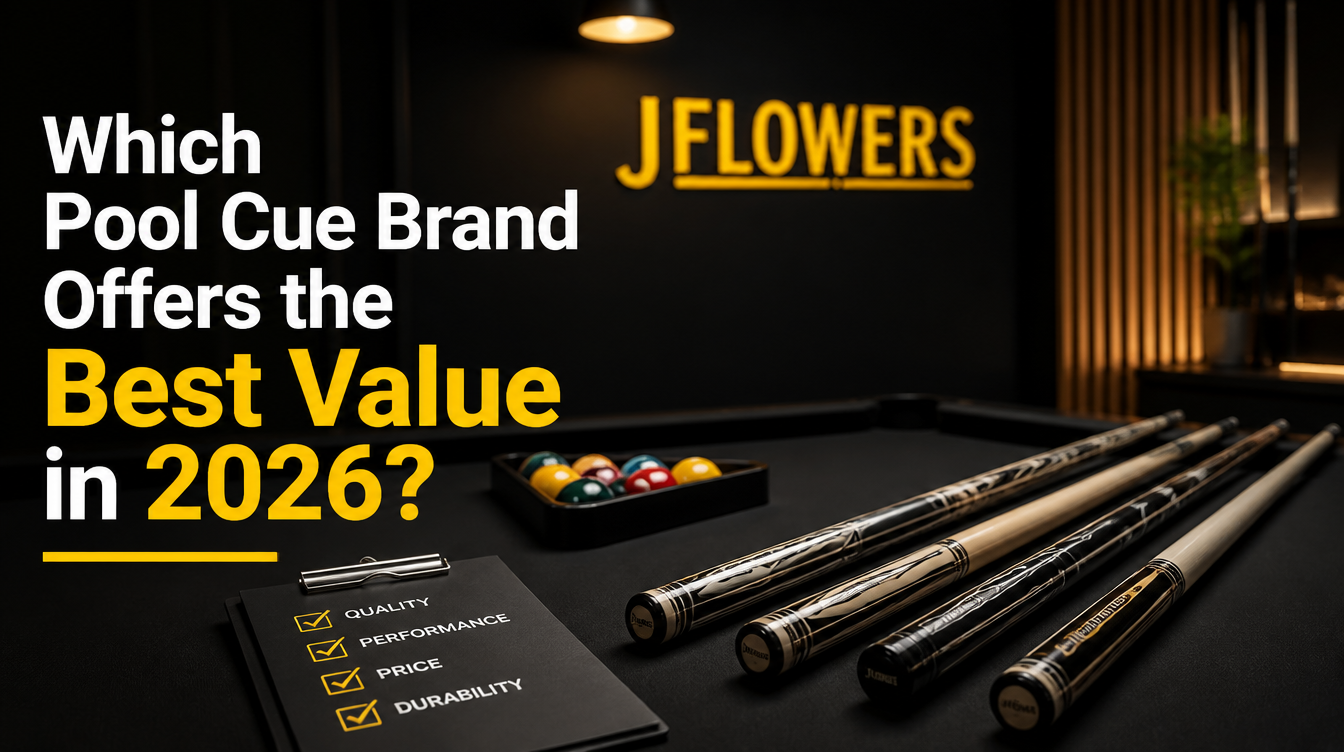
After comparing JFlowers to Predator, Mezz, McDermott, Meucci, Jacoby, Pechauer, and a dozen more brands across every price point and construction philosophy — the question that started all of it deserves a direct answer: which pool cue brand actually offers the best value for serious competitive players in
2026?
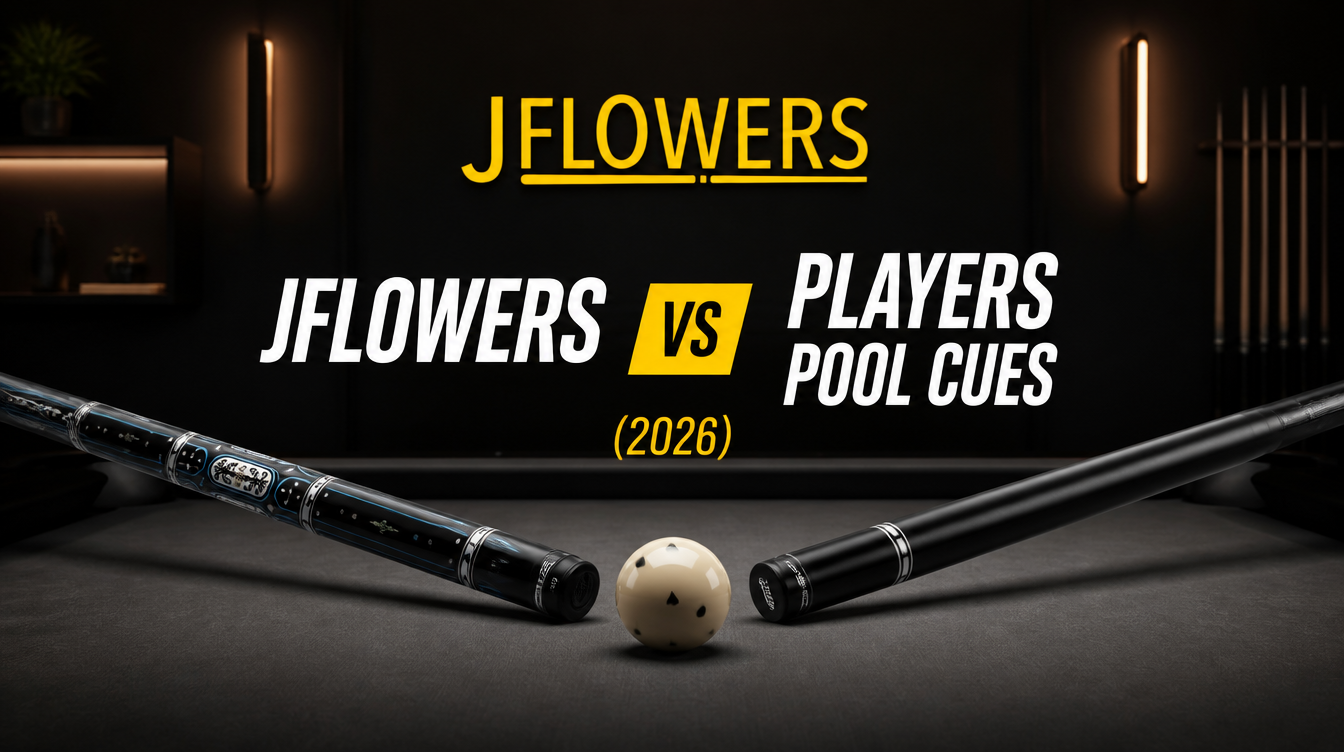
Players Technology is one of the most widely used cue brands in American pool halls. Their two-piece cues at $40-$150 have introduced millions of American players to personal cue ownership. Nearly every serious pool player in America either started on a Players cue or played against someone who did. Comparing Players to JFlowers isn’t really a direct competition — it’s a marker on the journey from beginner to serious competitor.