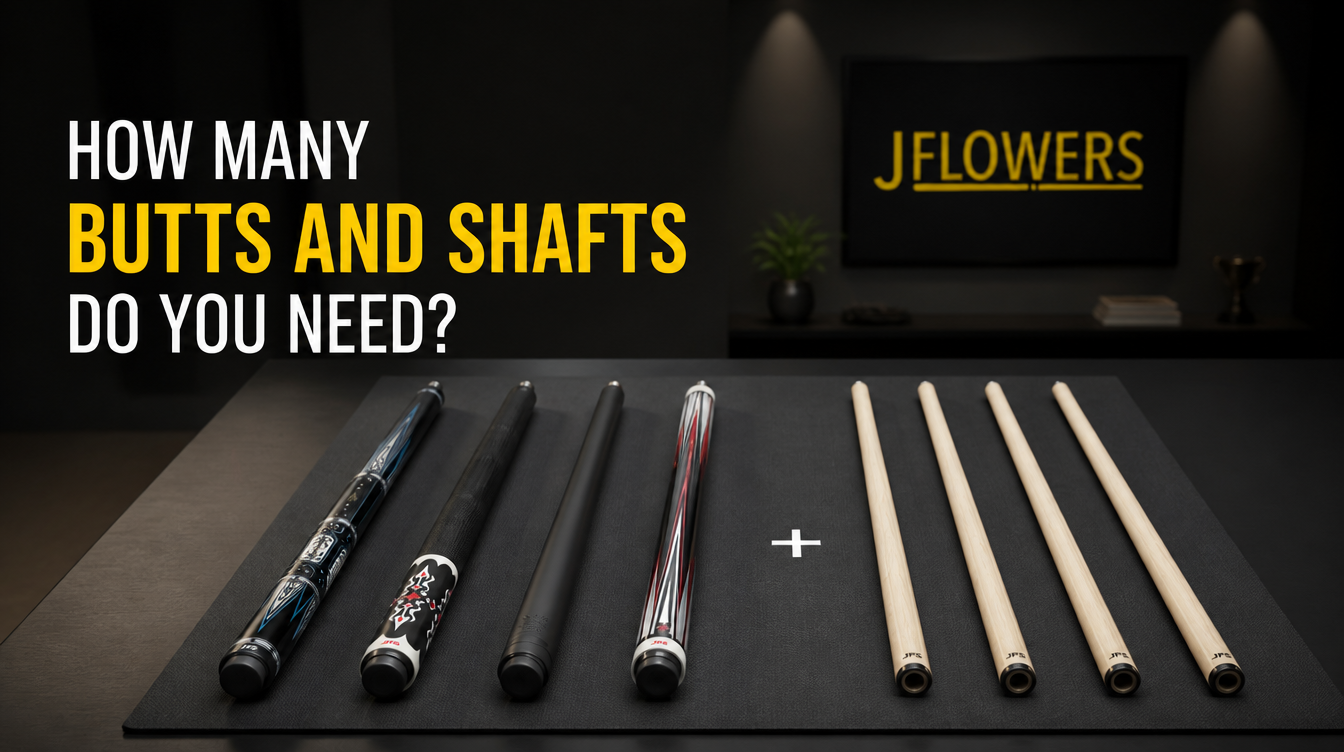
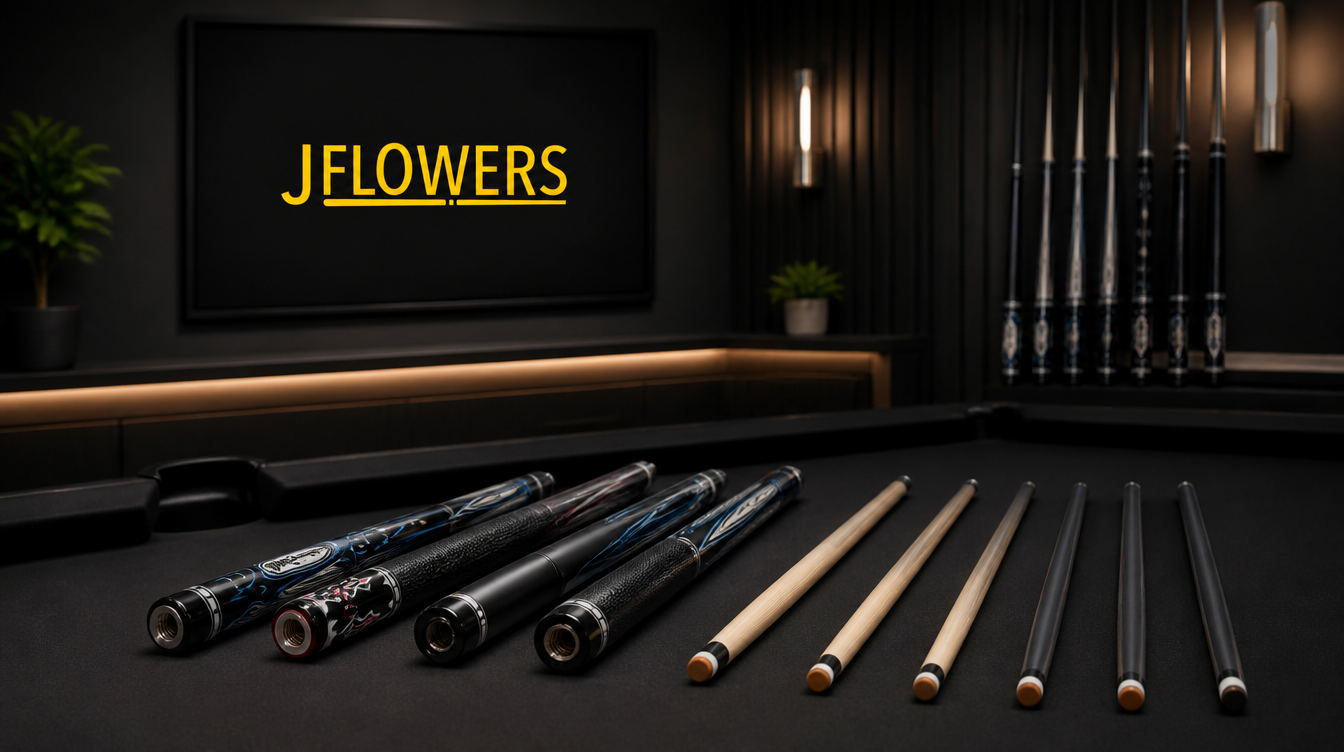
The question of how many butts and shafts to carry is really a question about what kind of player you are and what situations you need to be prepared for. The right answer for a once-a-week recreational player is very different from the right answer for a competitive tournament player who plays multiple formats.
Listen to this article
This guide breaks down the case capacity question from the perspective of each type of player — what situations each setup handles and when to upgrade to a larger case configuration.
Understanding Case Notation: 1×1, 2×2, 3×4, Etc.
Pool cue cases are described by the number of butts x shafts they hold. A 1×1 holds one butt and one shaft — just enough for a single assembled cue. A 2×4 holds two butts and four shafts. The butt count is usually the first number; shaft count is second.
Why might you need more shafts than butts? Because shafts are the performance-critical component and the one most likely to benefit from backup or alternative options. Many competitive players own one or two quality butts but carry multiple shafts — playing shaft, break shaft, and backup playing shaft.
The 1×1 Case: Minimal Setup
One butt, one shaft. The absolute minimum for a two-piece cue. Suitable for:
Recreational players who play casually at a single local venue
Beginning players who haven’t yet invested in a serious setup
Secondary case for a practice cue that doesn’t warrant a larger case
The limitation: no backup shaft. If your tip pops off, your shaft gets damaged, or you want a different shaft for a specific game format — you’re playing on what you have or borrowing from the house. For any player who competes seriously, no backup shaft is a real liability.
The 2×2 Case: The Competitive Baseline
Two butts, two shafts. This is the minimum competitive setup for most serious players. What it covers:
Playing cue butt + playing shaft as your primary setup
Break cue butt + break shaft as your secondary setup
Alternative: two identical shafts on one butt — playing shaft + backup shaft
Most APA and BCA league players who compete seriously use at least a 2×2 configuration. Having a separate break cue is worth it for nine ball and ten ball formats. The 2×2 case is the most common competitive pool player configuration in America.
The 2×4 Case: The Tournament Standard
Two butts, four shafts. This configuration covers everything the 2×2 does plus genuine redundancy. What it adds:
Playing cue butt + two playing shafts (primary + backup) + break cue setup
Or: two different playing cues for different formats
Shaft options for different game types without carrying a separate bag
The 2×4 is the most common configuration for serious league and tournament players. You show up to any format with your equipment covered. If your primary shaft tip pops off mid-tournament, you have an immediate backup. The JFlowers SMO Carbon Fiber Shaft plus a quality backup shaft in a 2×4 case is a complete competitive setup.
The 3×5 and Larger: Specialist Configurations
Three or more butts and five or more shafts covers specialist situations:
Players who compete in multiple formats regularly (eight ball, nine ball, rotation) with different preferred setups for each
Instructors who bring multiple demonstration cues
Players who also carry a jump cue as a separate butt
Players who travel internationally and want maximum backup options
The larger the case, the heavier and bulkier it becomes. Unless you have a specific reason for multiple butts beyond break cue + playing cue, a 2×4 or 3×4 is typically the practical limit before the size becomes genuinely inconvenient.
The Backup Shaft Principle
Whatever configuration you choose: carry at least two shafts. The backup shaft principle applies at every level above beginner:
Tips can pop off — your backup is already installed and ready
Shafts can be damaged — a backup prevents a forfeit
Tournament rules in some formats require a backup shaft for match play
Different tip hardnesses on different shafts let you adapt to different game formats
The JFlowers SMO Carbon Fiber Shaft’s no-warp reliability reduces some reasons to carry a backup, but not all of them. Keep a backup shaft. Always.
Choosing the Right Case Size
For the full case selection framework that includes the butt and shaft count decision alongside case construction and material choices, see Cue Case Buying Guide (2026). For specific travel considerations that affect how many shafts to carry, see Best Cue Cases for Travel.
Pros and Cons
2×4 configuration (recommended baseline for competitive players)
Full redundancy — backup shaft for every situation
Break cue + playing cue both covered
Tournament-ready without additional cases
Larger and heavier than 1×1 or 2×2
Higher case cost than smaller configurations
1×1 or 2×2 configurations
Lighter and more compact for everyday local use
Lower case cost
No backup shaft coverage in 1×1
Limited format flexibility
Expert Recommendation Competitive players: buy a 2×4 minimum. The JFlowers playing cue + SMO shaft as your primary playing setup, a second shaft as backup, and a break cue setup fills a 2×4 perfectly. The extra capacity costs you a bit in case size and weight — and protects you from the equipment situations that end tournament runs.
Conclusion
The right number of butts and shafts depends on how seriously you compete and what formats you play. Recreational players can get away with 1×1 or 2×2. Serious competitors need at minimum a 2×4 to cover a playing cue, break cue, and backup shaft. Carry the equipment your competitive level demands — and never go to a tournament without a backup shaft.
Frequently Asked Questions
Q: What does 2×4 mean on a cue case? Two butts and four shafts — the case holds two cue butts and four shafts. Q: How many shafts should a competitive player carry? At minimum two — a playing shaft and a backup. Tournament players benefit from three: playing shaft, backup, and break shaft. Q: Do I need a break cue? For serious nine ball and ten ball play, yes. A dedicated break cue with a hard or phenolic tip protects your playing tip and optimizes break performance. Q: What case configuration do most competitive players use? 2×4 (two butts, four shafts) is the most common configuration for serious league and tournament players. Q: Is a 1×1 case enough? For recreational players who carry a single cue to a single local venue, yes. For any competitive player, a 1×1 without a backup shaft is a liability. Q: Should I have the same shaft or different shafts in my backup? Having your backup shaft match your playing shaft exactly (same brand, hardness, diameter) is ideal — it reduces adjustment when switching to the backup.
After comparing JFlowers to Predator, Mezz, McDermott, Meucci, Jacoby, Pechauer, and a dozen more brands across every price point and construction philosophy — the question that started all of it deserves a direct answer: which pool cue brand actually offers the best value for serious competitive players in
2026?
Players Technology is one of the most widely used cue brands in American pool halls. Their two-piece cues at $40-$150 have introduced millions of American players to personal cue ownership. Nearly every serious pool player in America either started on a Players cue or played against someone who did. Comparing Players to JFlowers isn’t really a direct competition — it’s a marker on the journey from beginner to serious competitor.