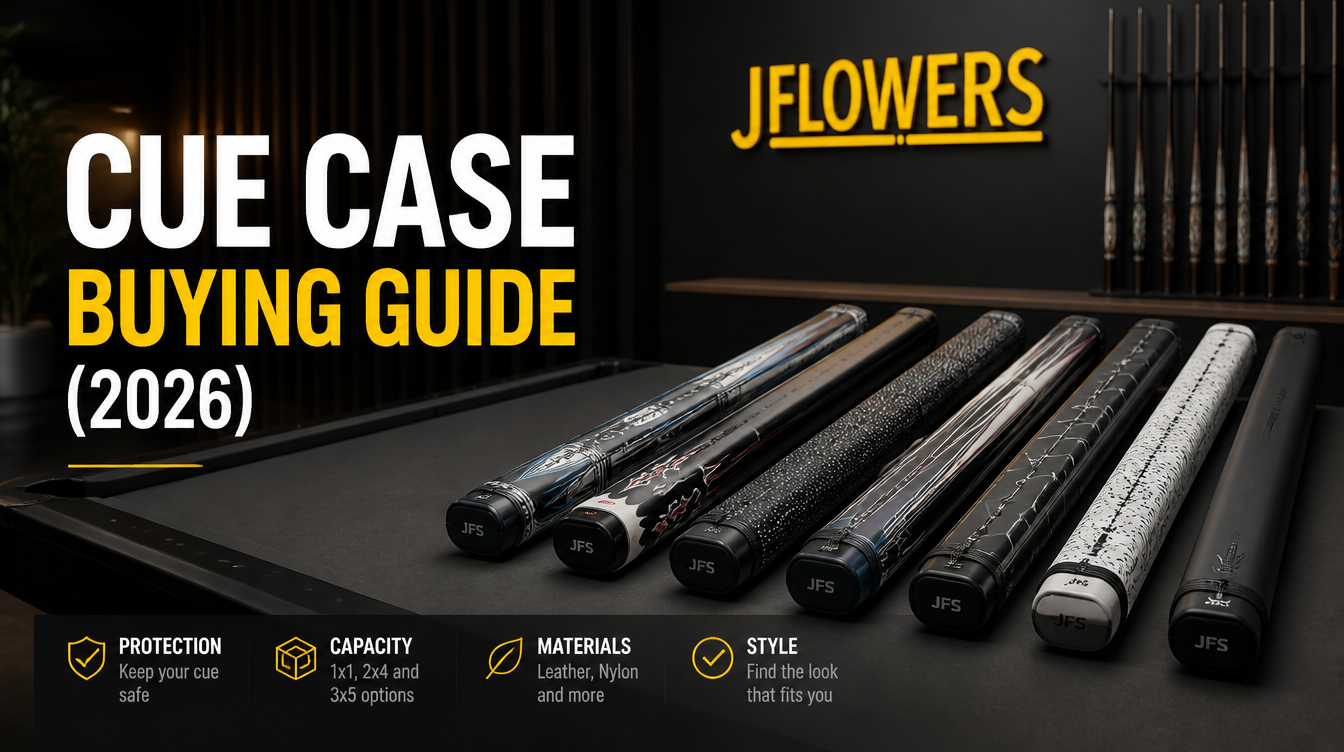
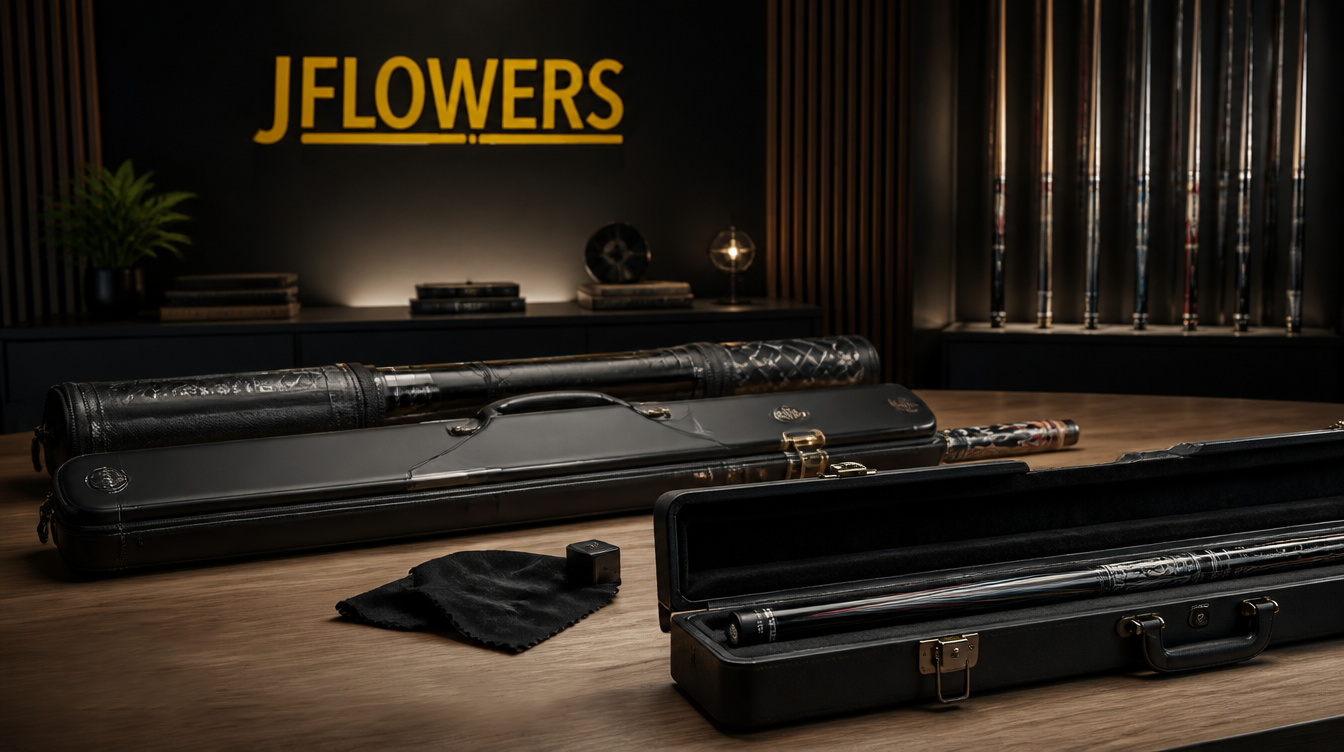
Buying a pool cue case should be simple — but the market is full of options at wildly different price points and quality levels, with spec language that doesn't always tell you what you actually need to know. This guide cuts through it. By the end you'll know exactly what to look for, what price range serves your situation, and what to avoid.
Listen to this article
What to buy, what to avoid, and how to match a case to your actual needs
Start With These Two Questions
Question 1: Does your cue ever go in a car or travel more than a walk from where it’s stored? If yes — hard case, no exceptions. Question 2: How many cues do you need to carry? That determines your configuration (1×1, 2×2, 2×4, etc.).
Every other decision flows from these two answers. Get them right first.
Soft Cases and Tubes Best for: carrying a cue from the car to the table at a single venue you play regularly. Not appropriate for: car transport, air travel, or any environment with real impact or compression risk. If you use this as your only case, your cue is not properly protected.
Entry-Level Hard Cases ($35–$70) Injection-molded hard plastic or basic hard composite shell. Provides real impact protection for local transport and car storage. Interior quality is functional but basic — adequate for protecting a cue during normal local transport. The right choice for players who want real protection on a budget.
Mid-Range Hard Cases ($70–$150) Better shell materials, improved interior fit and finish, more reliable closures, better carry options. This is the sweet spot for most serious recreational and league players — real protection, quality construction that holds up to regular use, proper accessory pockets. A mid-range hard case used consistently will last several years.
Premium Hard Cases ($150–$250) Top-tier construction throughout: premium shell materials, precisely fitted interiors, quality hardware, comfortable carry systems. Appropriate for competitive players who transport their cue regularly and want a case that functions at the same level as their cue. These cases last a decade with proper care.
Aluminum Travel Cases ($200–$400+) Specifically engineered for airline travel. Aluminum shell, reinforced corners, lockable latches, interior designed to hold cue components securely through cargo handling. The right choic for players who fly to tournaments regularly. Not necessary for local play but genuinely protective in the airline environment where standard cases fail.
Configuration Guide: How Many Cues to Carry
1×1 (One Butt, One Shaft) One complete two-piece cue. Right for: casual players with one playing cue and no break cue. Compact and easy to carry. Not right for: players who have (or plan to get) a break cue — the setup won’t fit.
2×2 (Two Butts, Two Shafts) Two complete cues. The most popular configuration for serious recreational and league players. Holds a playing cue and a break cue comfortably, plus accessory pockets for chalk, tip tools, and small items. Most players who are serious about the game settle here.
2×4 (Two Butts, Four Shafts) For players who carry multiple shaft options — a common setup for competitive players who may use different shafts for different games, or who want backup shafts for tournament play. Larger and heavier but genuinely useful for the right player.
3×5 and Larger For players with extensive setups: multiple butts, multiple shafts, jump cue, break cue. Typically used by players competing at a level where different equipment configurations for different games is normal. Heavy, but the right tool for a full competitive kit.
Construction Quality: What the Specs Actually Mean
Shell Material ABS plastic: rigid and functional — adequate for basic protection. Reinforced composite: better impact resistance and longer durability than basic ABS. Aluminum: maximum durability, specifically designed for travel abuse. Soft nylon over rigid frame: budget approach that provides less protection than fully rigid shells.
Interior Fit The interior should hold each cue component in its own compartment without contact between parts, and without any movement during transport. A cue that rattles inside the case absorbs impacts directly rather than having the case absorb them for it.
Closure Quality Metal zippers that run smoothly: reliable and long-lasting. Plastic zippers: functional but wear faster. Latch closures on hard cases: look for a firm, positive close with no looseness or rattle. TSA-approved locks on travel cases: standard for checked luggage to allow security inspection without forced entry.
Carry System Shoulder strap: should be padded, adjustable, and attached with reinforced hardware — not thin fabric loops. Handle: firm grip with proper stitching at attachment points. For larger cases, dual shoulder straps (backpack style) significantly improve comfort for long carries.
Cue Armour Cases: What Makes the Difference Cue Armour approaches case design the way it approaches everything in its product line: built for players who take their game seriously, without compromising on quality or protection. Hard shell construction as the standard, not the premium upgrade. Interior design that actually fits competitive setups. External pockets sized for real-world accessory needs. And the build quality to hold up to years of regular transport.
Whether you need a 2×2 for league night or a competition-level case for tournament travel, Cue Armour builds it to the standard your cue deserves.
Red Flags When Shopping
Cases that only specify “padded” without indicating hard shell — padded soft is not the same as hard case
Very low prices with vague construction descriptions — entry-level is fine but “bargain” case quality is real
Interior configurations that show butts and shafts in contact with each other — they should be separated
Zippers described only by length rather than quality — zipper failure is the most common case fault
No information about interior dimensions — case configuration matters only if your specific cue components actually fit
Frequently Asked Questions
Should I spend as much on a case as on my cue? Not necessarily, but don’t massively underspend on the case relative to the cue’s value. A $400 cue deserves at least a $80-120 quality hard case. A $800 cue deserves a $150-200+ case. The protection value scales with what’s inside it.
Is there a universal case that fits all cues? Standard two-piece cues (58″ assembled) fit in standard 1×1 and 2×2 cases. Verify interior shaft and butt compartment lengths against your specific cue dimensions if you have non-standard length components.
What’s the most common case mistake players make? Buying a soft case because it’s cheaper or easier to carry, then dealing with cue damage from the first time it gets compressed or knocked around in transport. Buy the hard case first.
Can I use a guitar or instrument case for my pool cue? Some players do this, but instrument cases aren’t designed for cue components specifically — the interior fit is wrong, components may not be held securely, and the shape often doesn’t work well. A purpose-designed cue case is better for the same or similar money.
Final Thoughts
The cue case buying decision is simpler than it seems: hard case, right configuration for your setup, quality construction in a price range appropriate for the cue you’re protecting. Don’t underspend here. The case protects everything else.
After comparing JFlowers to Predator, Mezz, McDermott, Meucci, Jacoby, Pechauer, and a dozen more brands across every price point and construction philosophy — the question that started all of it deserves a direct answer: which pool cue brand actually offers the best value for serious competitive players in
2026?
Players Technology is one of the most widely used cue brands in American pool halls. Their two-piece cues at $40-$150 have introduced millions of American players to personal cue ownership. Nearly every serious pool player in America either started on a Players cue or played against someone who did. Comparing Players to JFlowers isn’t really a direct competition — it’s a marker on the journey from beginner to serious competitor.