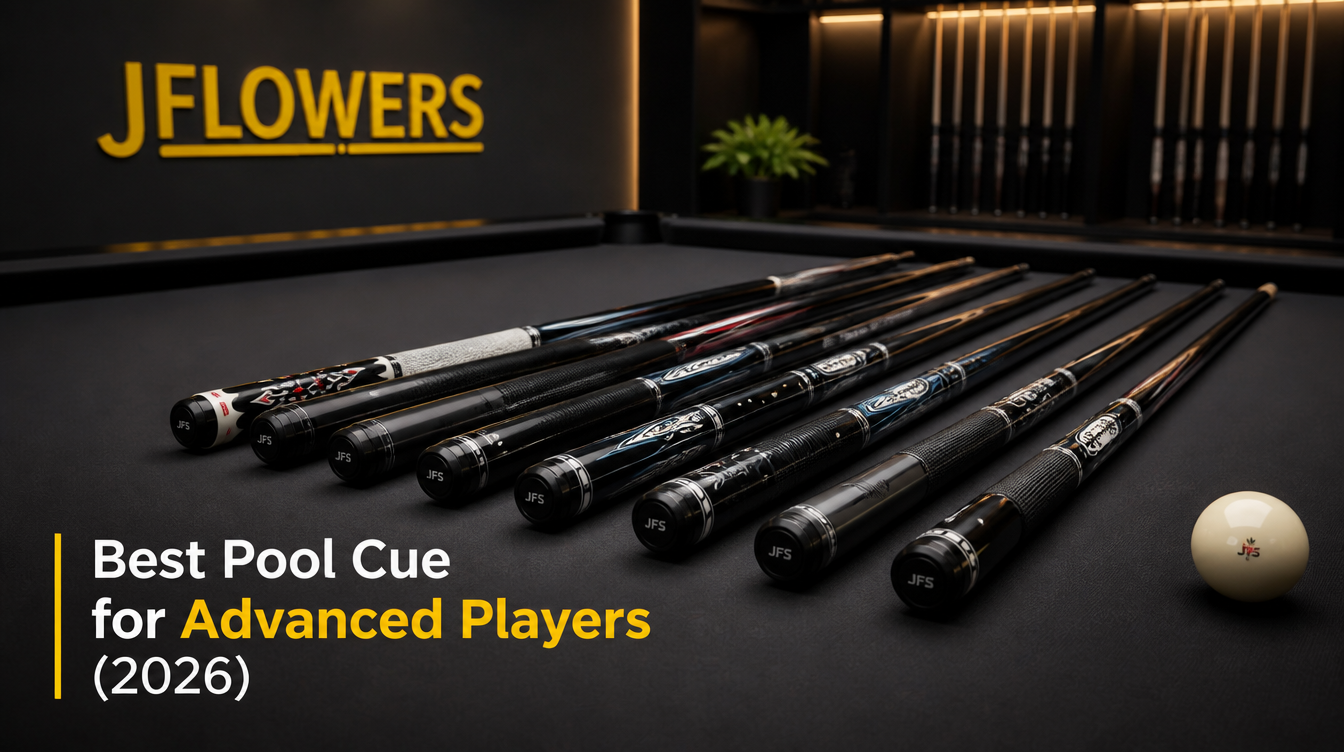
At the advanced level, buying a pool cue is a completely different conversation than it is for beginners or intermediate players. You've developed a stroke. You know your weight preference. You have opinions about tip hardness, shaft feel, and joint type. The question isn't "what should I get" — it's "how do I find the specific combination of features that my game actually demands."
Listen to this article
What to look for when you already know your game
This guide is written for that conversation. No hand-holding, no basics — just what matters at the top of the playing pyramid.
What Advanced Players Actually Need From Their Equipment
At the advanced level, the cue needs to disappear. It should be so familiar and so consistent that you’re never thinking about it while you’re at the table. Every variable introduced by the equipment — inconsistent hit feel, unpredictable deflection, a joint that transmits vibration differently on each shot — is mental noise that costs you at a competitive level.
The requirements, ranked:
Absolute shaft consistency — same hit feel, every shot, every session, every condition.
Predictable deflection — your aim compensation is exactly the same every time you apply english.
Tip performance — the right hardness and grip for your game, replaced on a schedule.
Joint precision — no wobble, no energy loss, no variability.
Weight and balance that fits your stroke — down to the half ounce if necessary.
Shaft Technology at the Advanced Level
The Carbon Fiber Case The majority of serious competitive players today have either made the switch to carbon fiber or have seriously tested it. The argument for carbon fiber at the advanced level is almost entirely about consistency. When you’re playing in multiple tournaments, practicing daily, and competing in varying conditions, you want a shaft that performs identically regardless of humidity, temperature, or how long it’s been sitting in a car.
Carbon fiber delivers that. The hit feel is consistent from the first shot of the day to the last shot of a long tournament session. There’s no warm-up period, no adjustment for the environment, and no concern about the shaft changing on you mid-match.
For advanced players who cite carbon fiber as their choice, shot-making confidence is usually the biggest reason — not just deflection numbers. When your shaft does the same thing every time, you stop second-guessing the equipment and start playing more freely.
The Premium Maple Case Some advanced players — including players who compete at the highest levels — still prefer a premium maple shaft. A top-tier low-deflection maple shaft, precisely tapered, with a quality ferrule, performs at an extremely high level. The feel it transmits on contact — particularly on soft, precise shots — is something carbon fiber still hasn’t fully replicated for every player.
If you’ve tried carbon fiber and the feel genuinely doesn’t work for your game, a premium maple low deflection shaft is not a step backward. It’s a legitimate choice that serious players use to win at the highest level.
Tip Selection at the Advanced Level
Most advanced players are very deliberate about their tip. It’s one of the variables they control precisely — and for good reason. Tip hardness affects spin capability, feedback on center-ball hits, and durability. At the advanced level, all three of those factors matter on nearly every shot.
The most common tip choice among competitive players is medium to medium-soft. This gives enough grip for maximum english and draw capability without sacrificing the feedback that matters on precise positioning shots.
Popular tip choices at the competitive level include Kamui Black (medium and soft), Taom, Tiger Everest, and Triangle. Many advanced players change their tip more frequently than recreational players — not because the tip fails, but because consistency on every shot at a competitive level demands a tip that’s always performing at its best.
Joint Type and How It Affects Your Game
The joint connecting shaft to butt affects how vibration travels through the cue and how rigid the connection feels on contact. At the advanced level, this is a real consideration — different joint materials produce noticeably different hit characteristics.
Stainless Steel Joints The most common joint material at the competitive level. Stainless steel is durable, consistent, and doesn’t absorb energy the way softer materials can. It produces a solid, reliable hit feel that most advanced players appreciate.
Phenolic Joints Phenolic joints produce a stiffer, more direct hit. They’re popular among players who prefer maximum feedback and a crisper feel on contact. Many break cues use phenolic joints for the same reason — the hard material maximizes energy transfer.
Wood-to-Wood Joints Some cues use a wood-to-wood joint design that produces a softer, warmer hit feel — closer to the feel of a one-piece cue. Less common at the competitive level but preferred by some players for specific feel characteristics.
Weight and Balance at the Competitive Level
Advanced players are typically precise about weight — knowing their preference down to a half ounce and noticing when something is off. The majority of competitive players land in the 18.5–19.5 oz range for their playing cue, with 19 oz being the most common single weight.
Balance point matters just as much as weight. A cue weighted toward the front plays differently than one weighted toward the rear, even when the total weight is identical.
Advanced players who have tested different balance configurations typically have a clear preference — and it’s worth understanding which you prefer if you don’t already.
Serious advanced and tournament players typically invest $600–$1,500 in a complete playing cue setup. The range is wide because preferences vary significantly — some players prefer a premium shaft on a simpler butt, others want a complete premium package throughout.
Worth noting: performance doesn’t always scale linearly with price at the top end. A great $700 cue can outperform a $1,400 cue if the $700 cue fits your game better. At the advanced level, fit matters as much as price.
If you’re competing seriously, you should have a backup shaft — or at minimum a backup tip kit and the ability to replace a tip quickly. Equipment failure during a tournament is rare but real: a cracked ferrule, a damaged tip, or a joint issue can end your day. A backup shaft that you know and have practiced with eliminates that risk completely.
Frequently Asked Questions
Do professional players use carbon fiber? Yes — and the number is growing. Carbon fiber has a significant presence on the professional tour across 9-ball, 8-ball, 10-ball, and straight pool. Players sponsored by manufacturers that produce carbon fiber shafts compete at the highest levels regularly.
How often should advanced players replace their tip? Most serious competitive players replace their tip every 2–6 months depending on how frequently they play and how demanding their standards are for tip performance. At the competitive level, a slightly degraded tip is noticed — so many players replace on a schedule rather than waiting for obvious wear.
Is it worth spending over $1,000 on a cue at the advanced level? Depends on what you’re getting for the money. Above $1,000, you’re increasingly paying for custom work, artistry, and exclusivity — not necessarily better raw performance. A $700 cue with an excellent shaft can compete with a $1,500 cue. Evaluate what you’re actually paying for at that price point.
Should an advanced player ever change cues? Only if there’s a clear, specific reason — your evolved stroke doesn’t match the cue anymore, or you’re testing technology that could improve a specific weakness. Changing equipment without a clear reason is usually disruptive rather than helpful at the advanced level.
What makes a cue “tournament grade”? Consistent performance under pressure. Shaft quality, joint precision, and tip reliability that hold up over a full day or weekend of competition without introducing variables. There’s no official “tournament grade” certification — it’s about equipment that performs predictably when the stakes are highest.
Final Thoughts
At the advanced level, the right cue is the one that disappears into your game. It’s consistent enough that you never think about it at the table, familiar enough that it’s an extension of your stroke, and reliable enough that it performs the same in the first match of a tournament as in the last.
Invest in shaft quality. Know your tip preference and stay on top of maintenance. Have a backup. Practice with what you compete with. And choose equipment based on how it fits your game, not how much it costs or how good it looks.
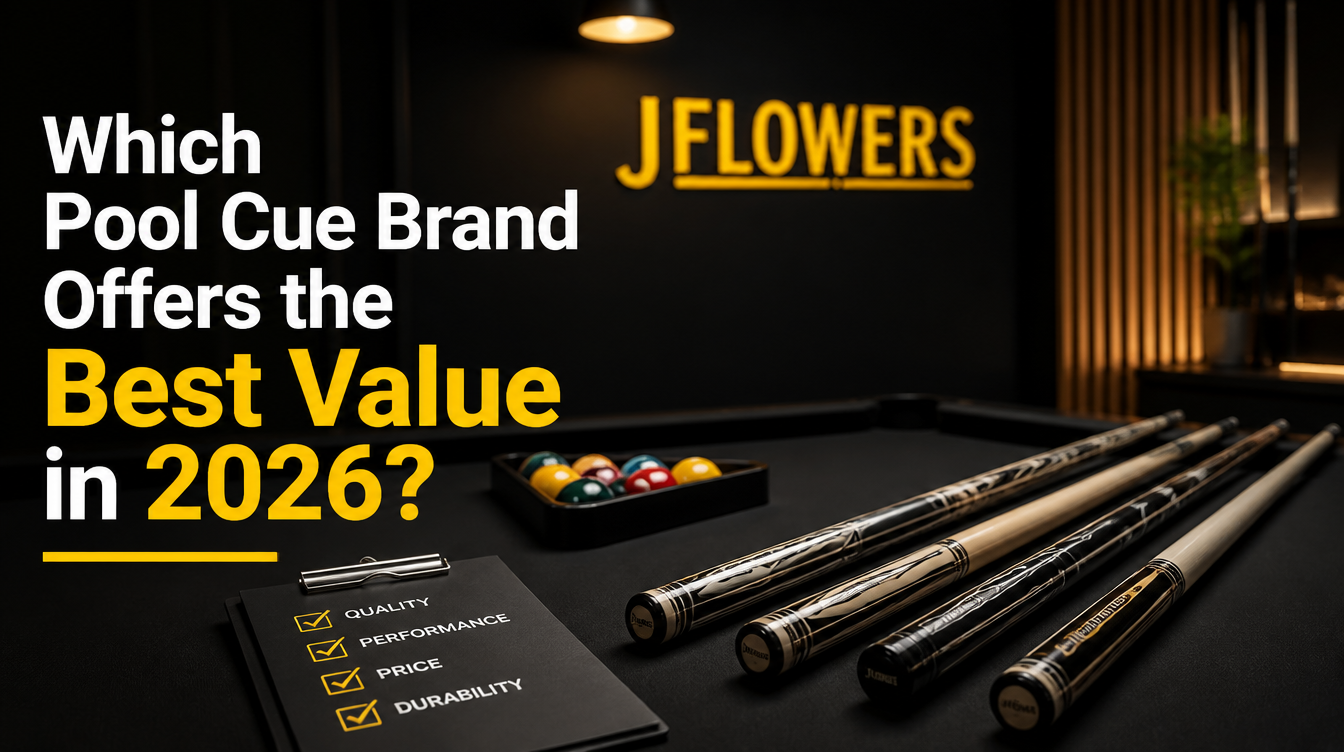
After comparing JFlowers to Predator, Mezz, McDermott, Meucci, Jacoby, Pechauer, and a dozen more brands across every price point and construction philosophy — the question that started all of it deserves a direct answer: which pool cue brand actually offers the best value for serious competitive players in
2026?
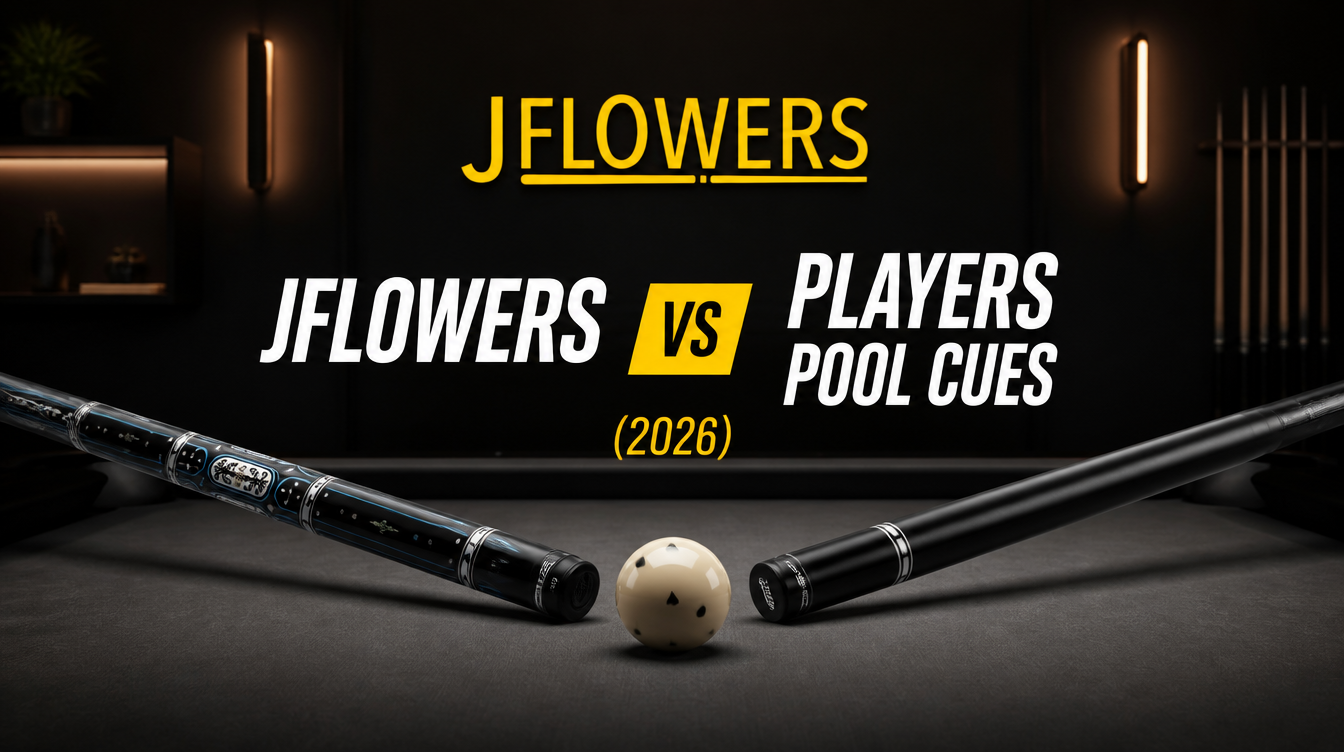
Players Technology is one of the most widely used cue brands in American pool halls. Their two-piece cues at $40-$150 have introduced millions of American players to personal cue ownership. Nearly every serious pool player in America either started on a Players cue or played against someone who did. Comparing Players to JFlowers isn’t really a direct competition — it’s a marker on the journey from beginner to serious competitor.