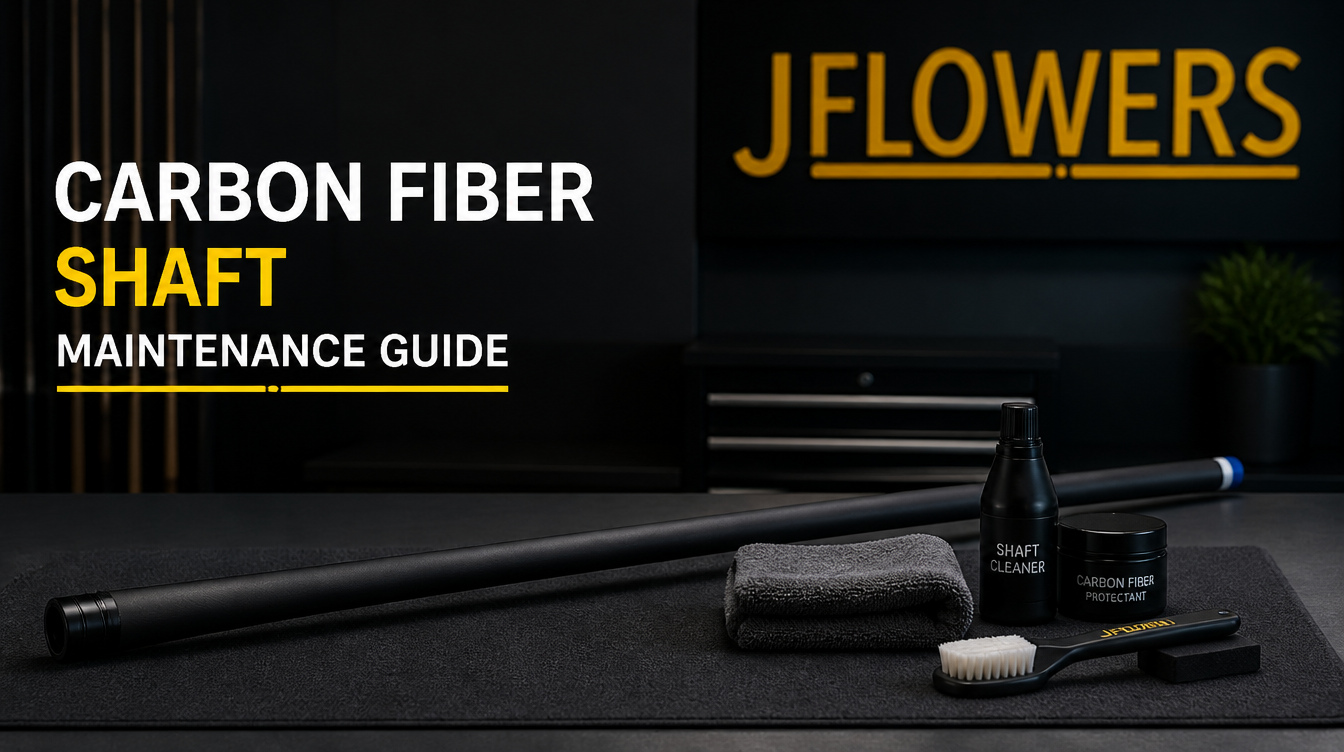
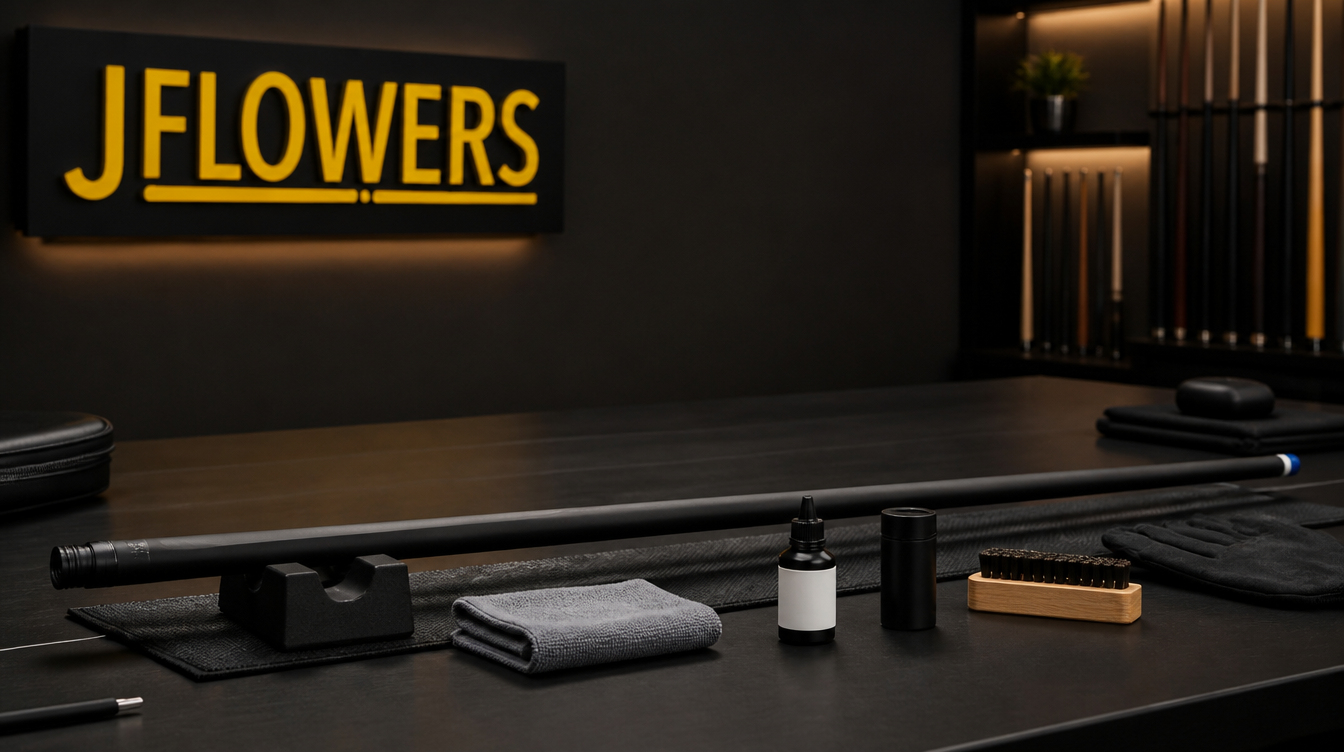
One of the best things about a carbon fiber shaft is how little maintenance it needs. No burnishing, no sanding, no humidity anxiety, no break-in rituals. But "low maintenance" doesn't mean "no maintenance." There are specific things you should be doing — and specific things you should absolutely avoid — to keep your carbon fiber shaft performing at its best for as long as possible.
Listen to this article
How to keep your carbon fiber shaft performing like new — for years
This guide covers the complete maintenance routine for a carbon fiber shaft, from daily habits to long-term care.
The Basic Rule: Less Is More
The most common mistake players make with carbon fiber shaft maintenance is applying the same routine they used on maple. On maple, that might mean periodic light sanding, burnishing with a pad, or cleaning products designed for wood. On carbon fiber, most of that is unnecessary and some of it can cause damage.
Carbon fiber doesn’t accumulate chalk and oils the way maple does. It doesn’t need to be smoothed or burnished. And it doesn’t respond to wood-specific treatments. The basic principle: wipe it down when it looks like it needs it, maintain the tip consistently, protect it from physical damage, and you’re done.
Routine Maintenance: What to Do After Every Session
Wipe Down the Shaft After each session, give the shaft a quick wipe with a clean, slightly damp cloth — barely damp, not wet. This removes any chalk dust, skin oils, and debris that accumulated during play. It takes about five seconds and keeps the shaft looking clean and the surface free of buildup.
Don’t use solvents, alcohol, or cleaning products not specifically designed for carbon fiber. Many cleaning products that are fine on wood can damage the finish or seams of a carbon fiber shaft.
Check and Chalk the Tip The tip is the only consumable on a carbon fiber shaft — and it needs the same attention it would on any other cue. Check that the dome shape is maintained (not flattened), apply fresh chalk before the first shot of any session, and re-chalk as needed throughout play.
One thing to watch specifically with carbon fiber: because the shaft surface is smooth and doesn’t pick up chalk the way a slightly rougher maple surface does, any chalk transfer from the shaft area to the cue ball is less likely. This is a benefit — less miscue risk from chalk getting on your playing area — but it means the tip itself needs to be properly chalked rather than relying on shaft chalk as a backup.
Inspect the Ferrule Glance at the ferrule after each session. You’re looking for any cracks, chips, or loosening at the seam where the ferrule meets the shaft and where the tip meets the ferrule. Catching a developing issue early means a simple repair rather than a more significant problem.
Weekly Maintenance (For Regular Players)
Deeper Clean if Needed If the shaft has visible chalk buildup or feels less smooth than usual, a slightly more thorough cleaning with a damp cloth is sufficient. In most cases, the after-session wipe-down is enough that a separate weekly cleaning isn’t needed.
Tip Shape Check Check the tip dome. A properly shaped tip should be domed to roughly the curve of a nickel or dime — not completely flat, not overly peaked. If it’s flattening, use a tip shaper to restore the dome. A flattened tip increases miscue risk and reduces spin transfer.
Scuff the Tip Lightly Lightly scuffing the tip surface with a tip pick helps chalk adhere better. Don’t overdo it — aggressive scuffing removes material and shortens tip life. A few light passes with a tip tool every few sessions is typically sufficient.
Monthly and Long-Term Maintenance
Joint Cleaning The joint threads can accumulate chalk dust and debris over time, which can affect how securely the shaft seats and eventually cause wear on the threads. Every month or so, inspect the joint area and carefully clean any visible debris from the threads with a soft brush or compressed air.
Never use water or lubricants in the joint threads — this can damage the threads or interfere with the mechanical connection. Dry cleaning only.
Full Inspection Once a month, look the shaft over carefully along its full length. You’re looking for any surface damage — small cracks, chips, or dings that might have resulted from impacts you didn’t notice. A magnifying glass can be useful for this if you want to be thorough.
Most minor surface marks on a carbon fiber shaft are cosmetic — chalk dust embedded in a surface scratch, for example — and don’t affect performance. True structural damage (cracks that go deeper into the material) is the concern.
Tip Replacement: When and How
Tip replacement is the most frequent maintenance task on any cue, including carbon fiber. The timeline depends on tip hardness and how often you play:
Soft tips: Every 2-4 months for players who play 2-3 times per week.
Medium tips: Every 4-8 months for comparable use.
Medium-hard tips: Every 6-12 months for comparable use.
Replace the tip when it’s worn down significantly from its original height, when it’s mushroomed beyond the ferrule edge and can’t be reshaped, or when it starts miscuing despite good chalk application.
For tip replacement on a carbon fiber shaft, we recommend using a cue technician, particularly for the first replacement. The ferrule on a carbon fiber shaft is attached with adhesive and requires the right technique to seat a new tip correctly. An experienced technician who has replaced tips on carbon fiber shafts before is the safest choice.
Storage: The Right Way to Store a Carbon Fiber Shaft
One of the biggest advantages of carbon fiber over maple is that you don’t have to worry about storage conditions nearly as much. No humidity control required, no special temperature range needed, no anxiety about the cue being left in a hot car. That said, there are still storage best practices worth following:
Always Use a Case A hard-sided cue case protects the shaft from the physical impact that carbon fiber is most vulnerable to. A shaft stored in a bag, leaned against a wall, or transported without a case is at risk of getting knocked around in a way that could crack the carbon fiber composite. The case isn’t protecting against warping (as with maple) — it’s protecting against impact.
Store Horizontally or Vertically — Doesn’t Matter Unlike maple, carbon fiber doesn’t develop any lean or warp from being stored vertically. Store it however is most convenient.
Avoid Extreme Temperature Swings While carbon fiber handles humidity and moderate temperature variation easily, extremely rapid temperature changes — like going from a frozen car trunk to a very hot room immediately — can theoretically stress the composite layers. In practice this is rarely a real-world concern, but storing the cue somewhere reasonably temperature-stable is a good habit regardless.
What NOT to Do With a Carbon Fiber Shaft
Don’t sand or burnish it — not appropriate for the material and can damage the surface finish.
Don’t apply shaft conditioners or oils designed for maple — these aren’t appropriate for carbon fiber.
Don’t use solvent-based cleaners — these can damage the composite and finish.
Don’t store without a case — the impact protection a case provides is important.
Don’t overtighten the joint — this stresses the threads and accelerates wear.
Don’t attempt to repair cracks yourself with adhesive — improper repair can make things worse. See a cue technician.
Frequently Asked Questions
Can I use shaft cleaner on a carbon fiber shaft? Only if the product is specifically marked as safe for carbon fiber. Many shaft cleaners are designed for wood and aren’t appropriate for carbon fiber surfaces. When in doubt, a lightly damp cloth is always safe.
How do I remove chalk stains from a carbon fiber shaft? A clean, slightly damp cloth removes chalk from a carbon fiber shaft easily. For stubborn spots, a tiny bit of gentle soap on the cloth, followed by a clean water wipe, is sufficient. Avoid abrasive cleaning.
Do I need to break in a carbon fiber shaft? No — one of the clear advantages of carbon fiber. The shaft performs consistently from the first shot and doesn’t change as it “breaks in.” What you buy is what you get, immediately.
What happens if I accidentally get the joint wet? Dry it thoroughly with a cloth immediately and make sure it’s fully dry before assembling the cue. The joint threads on a carbon fiber shaft, like those on any cue, can develop issues if moisture is trapped in the threads.
Can I clean the joint threads with anything? A dry soft brush or compressed air for removing chalk and debris. Never use water or lubricants in the joint threads.
How do I know when my carbon fiber shaft needs professional attention? Any visible cracking in the composite material, a loose or damaged ferrule, significant joint wobble that cleaning doesn’t resolve, or a tip that won’t stay seated properly. All of these warrant a visit to a cue technician.
Final Thoughts
The carbon fiber shaft maintenance routine is refreshingly simple compared to maple: wipe it down after sessions, maintain the tip consistently, protect it from physical impact with a good case, and inspect the joint and ferrule periodically. That’s essentially it.
The players who get the most years out of their carbon fiber shafts are the ones who treat the tip as the consumable it is (replacing it on schedule), store the cue in a quality case every time, and don’t overcomplicate the maintenance with routines designed for maple. Keep it simple. The material is doing the work of being durable — your job is mainly to protect it from impact and keep the tip in good shape.
After comparing JFlowers to Predator, Mezz, McDermott, Meucci, Jacoby, Pechauer, and a dozen more brands across every price point and construction philosophy — the question that started all of it deserves a direct answer: which pool cue brand actually offers the best value for serious competitive players in
2026?
Players Technology is one of the most widely used cue brands in American pool halls. Their two-piece cues at $40-$150 have introduced millions of American players to personal cue ownership. Nearly every serious pool player in America either started on a Players cue or played against someone who did. Comparing Players to JFlowers isn’t really a direct competition — it’s a marker on the journey from beginner to serious competitor.