Every pool player eventually has to answer the same question: what tip should I use? If you just got a new cue, your stock tip may be mediocre. If your current tip is worn out, you're picking a replacement. If someone told you to upgrade your tip and you're trying to figure out what that means — this guide covers it all in one place.
Listen to this article
A practical decision guide — hardness, brand, size, and maintenance all in one place
Start With Hardness
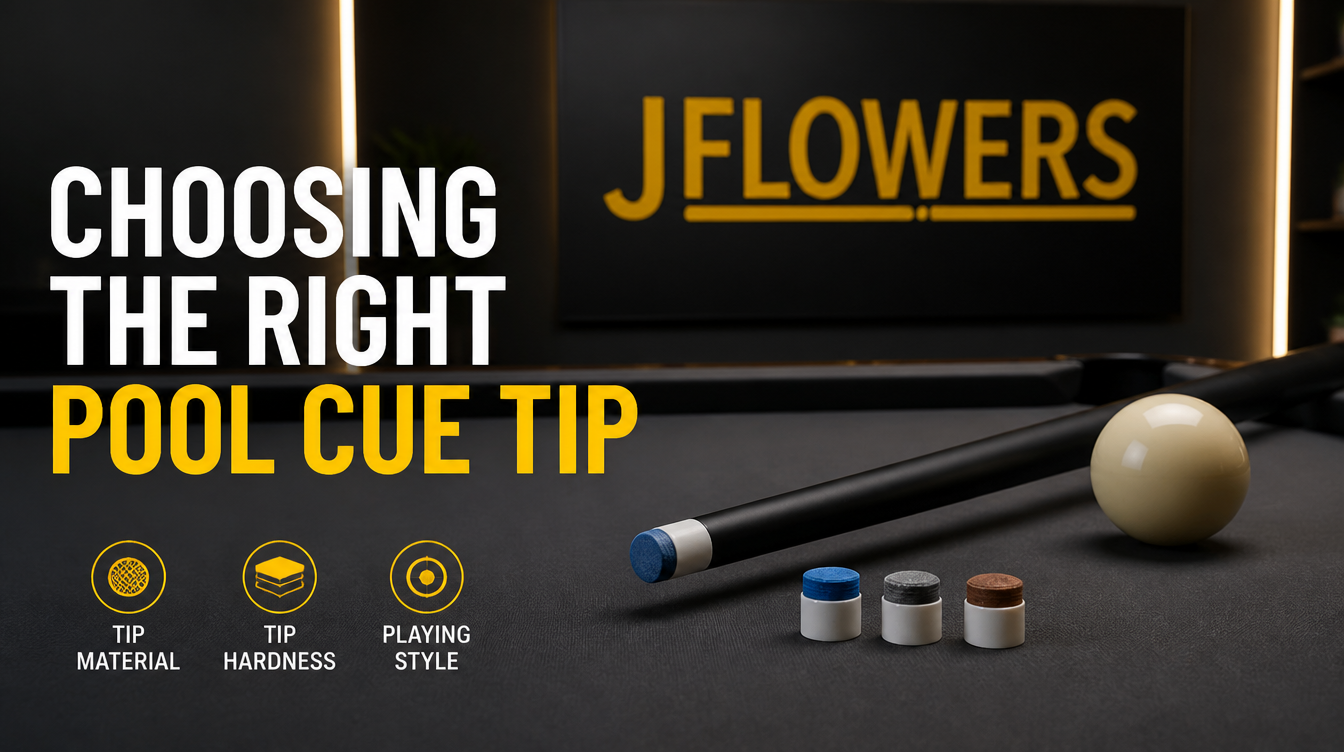
Tip hardness is the most important variable to get right. Everything else — brand, size, construction — builds on top of this foundational decision. Hardness determines spin capability, feel, and durability.
Rule of thumb: if you don’t know what you need, start with medium. It’s the most versatile option, the most widely recommended for developing players, and the easiest to maintain. You can adjust from there once you know what your game demands.
Choose Soft If:
You rely heavily on english, draw, and follow for position play
Maximum spin capability is your priority
You play often enough to manage frequent maintenance (reshaping, chalk discipline)
You’re an advanced player comfortable with tip upkeep
Choose Medium If:
You’re not sure — this is the right default
You want reliability and versatility across all shot types
You play regularly but don’t want to maintain your tip constantly
You’re developing your game and haven’t identified a specific need yet
Choose Hard If:
It’s for a break cue — hard or phenolic is standard for breaking
You primarily play precision straight pool with minimal spin
Longevity is your top priority and you don’t use heavy english
Tip diameter is determined by your shaft — you don’t choose the tip size independently of the shaft. The tip must match the ferrule diameter of your specific shaft. Most playing cues use tips between 11.75mm and 13mm, with 12mm and 12.5mm being the most common diameters on modern shafts. That said, diameter does affect feel and precision:
Smaller diameter (11.75-12mm): More precise placement of english possible, smaller contact patch, slightly less forgiving on off-center hits. Common on carbon fiber and performance maple shafts.
Larger diameter (12.5-13mm): More forgiving on off-center contact, slightly larger hitting surface. Common on traditional maple shafts and entry-level cues.
If you’re replacing a tip on your existing shaft, match the diameter to the ferrule. Don’t try to go significantly smaller — the tip should sit cleanly on the ferrule without overhang or gaps.
For serious players, layered tips are almost always the better choice. Here’s why: Single-layer tips are cut from one piece of leather. They work, but they compress and change shape unevenly as they wear. Performance can be good when new and significantly different when nearly worn out.
Layered tips are built from multiple compressed layers of leather. They hold their shape better, maintain more consistent hardness throughout their lifespan, and chalk more evenly because the layered surface creates more consistent micro-texture.
The premium tip brands — Kamui, Taom, Moori, Tiger Everest — are all layered. Generic stock tips on production cues are usually single-layer. Upgrading to a quality layered tip is one of the most cost-effective performance improvements available for any cue.
Which Brand Should You Choose?
Brand matters because manufacturing quality directly affects consistency. A well-made tip performs reliably throughout its lifespan; a poorly made tip varies. Here are the brands worth knowing: Premium (Recommended for Serious Players)
Kamui Black: The global benchmark for competitive tips. Exceptional consistency, available in multiple hardnesses. Medium is the most versatile; soft is a favorite of spin-heavy players.
Taom: Strong European and Asian tour presence. Excellent grip and consistency. Works especially well with Taom chalk.
Moori: Japanese precision layered tip with a long track record. Medium is a widely trusted option.
Mid-Range (Excellent Value)
Tiger Everest: Good layered construction, reliable performance, significantly more affordable than Kamui. Medium is widely used in league and competitive play.
Predator Victory: Solid layered tip from a well-known manufacturer. Consistent performance.
Entry Level (Functional)
Triangle: Durable, affordable, widely available. Medium-hard is a reliable choice for budget-conscious players. Not layered, but quality enough to perform consistently.
Le Professional: Basic layered option at a low price point. Good starting point for players experimenting with layered tips before committing to premium options.
When to Replace Your Tip
Most players replace their tip too late — waiting until it’s obviously bad rather than replacing proactively. Here’s how to know it’s time:
The tip has worn down to 6-7mm or less from original height
It’s mushroomed beyond the ferrule edge and can’t be properly reshaped
Miscues are happening consistently despite proper chalk application
The tip feels different from when it was performing at its best — harder, inconsistent, or dead
Proactive tip replacement — before the tip fails rather than after — keeps your performance consistent and eliminates the tip as a variable when diagnosing shot inconsistency.
Essential Tip Maintenance
Chalk Before Every Shot This isn’t optional. Light, even chalk coverage before every shot protects against miscues and ensures consistent grip on the cue ball. Grind the chalk into the tip lightly rather than smashing it on — you want coverage, not compression.
Keep the Dome Shape A properly shaped tip has a dome — curved to roughly the curvature of a nickel coin. A flat tip miscues more easily and transfers spin inconsistently. Use a tip shaper tool when the dome starts to flatten.
Scuff Periodically Light scuffing with a tip pick helps chalk adhere better. Do it lightly — a few passes every several sessions is enough. Aggressive scuffing shortens tip life faster than necessary.
Don’t Miscue Into Tables Miscuing during practice — especially miscuing hard into cushions or the slate — can damage a tip faster than normal play. Practice shots deliberately; don’t let sloppy miscues become a repeated thing.
Frequently Asked Questions
Can I install a tip myself? Yes — tip installation is a learnable skill with the right tools. But for a first replacement or for an expensive tip on a quality shaft, having a cue technician do it is recommended. Improper installation can affect how the tip sits, how it adheres, and how it performs. The first several times, watch someone experienced do it before trying yourself.
How much should a tip replacement cost? Tip replacement by a cue technician typically costs $10-25 for labor plus the cost of the tip itself ($5-40 depending on brand). Total cost for a professional installation with a quality tip: $20-60. For the performance benefit, this is one of the best-value investments in cue maintenance.
Should I get the same tip my favorite player uses? Copying a professional player’s tip choice is a reasonable starting point — but they chose that tip for their specific game, stroke, and playing style. Use their choice as a starting point and adjust based on your own experience.
My tip keeps miscuing even with chalk. What’s wrong? If a well-chalked tip miscues consistently, the tip surface is likely glazed — compressed and smooth from use, no longer holding chalk effectively. Scuffing the tip with a tip pick restores the surface texture. If scuffing doesn’t fix it, the tip is done and needs replacing.
Does the tip affect cue ball deflection? Minimally. Deflection is primarily determined by shaft mass distribution — not tip hardness. Changing your tip won’t meaningfully change your shaft’s deflection profile.
Final Thoughts
Tip selection is one of the most accessible and impactful equipment decisions available to any pool player. Start with medium from a quality brand (Kamui, Tiger, Taom, or Triangle).
Maintain it consistently. Replace it proactively rather than waiting for failure. And as your game develops and you understand what you need from your spin game, adjust to softer or harder based on what your playing style actually demands.
After comparing JFlowers to Predator, Mezz, McDermott, Meucci, Jacoby, Pechauer, and a dozen more brands across every price point and construction philosophy — the question that started all of it deserves a direct answer: which pool cue brand actually offers the best value for serious competitive players in
2026?
Players Technology is one of the most widely used cue brands in American pool halls. Their two-piece cues at $40-$150 have introduced millions of American players to personal cue ownership. Nearly every serious pool player in America either started on a Players cue or played against someone who did. Comparing Players to JFlowers isn’t really a direct competition — it’s a marker on the journey from beginner to serious competitor.