Pool has been played with essentially the same basic equipment for centuries — a stick, a tip, a felt table. But under that simple surface, cue technology has evolved dramatically, especially over the last two decades. The materials are different. The engineering is more sophisticated. The understanding of what makes a cue perform at a high level has deepened considerably.
Listen to this article
A complete overview of how modern cue technology works — materials, construction, and innovation
This guide is a complete overview of modern pool cue technology — covering every major component, what the engineering behind it actually does, and how to think about all of it when evaluating equipment.
The Anatomy of a Modern Pool Cue
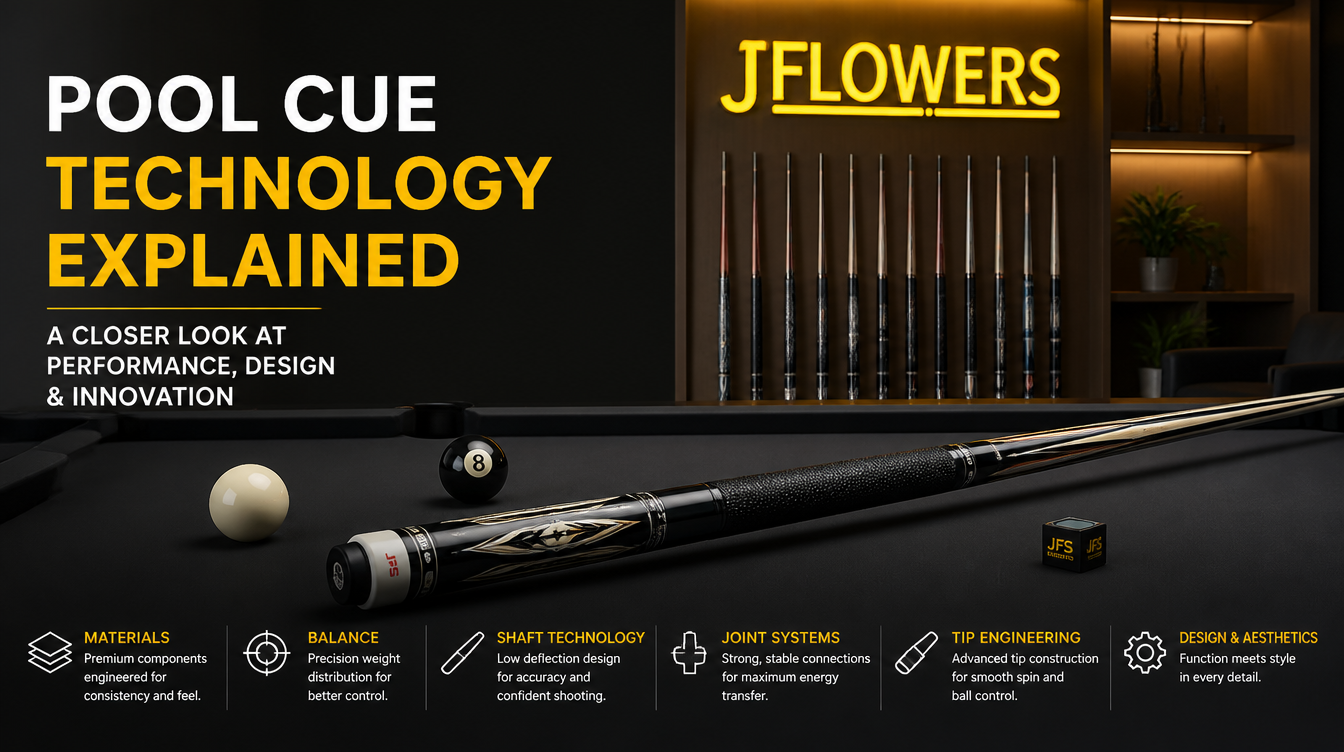
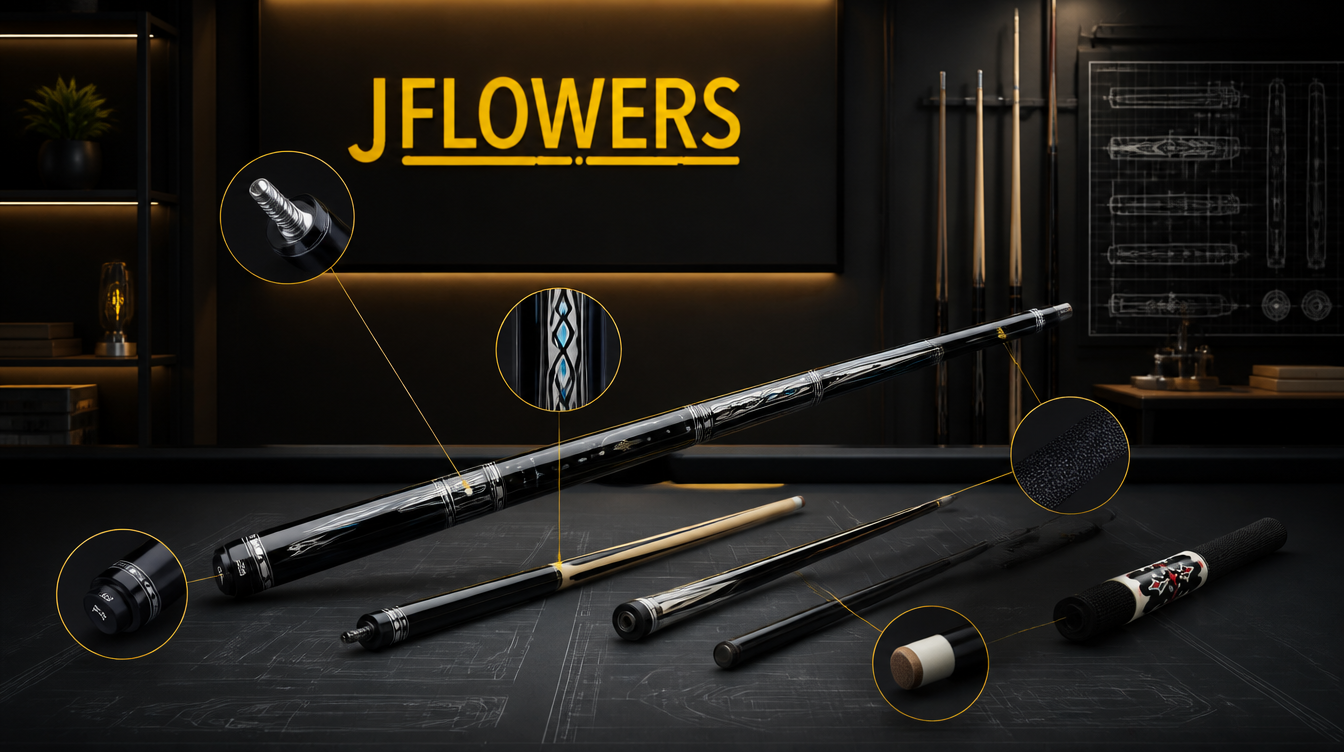
A standard two-piece pool cue consists of six main components: the tip, the ferrule, the shaft, the joint, the butt, and the wrap. Each one has a specific function and specific technology behind it. Understanding all six is the foundation of understanding pool cue technology.
The Tip: Where the Game Happens
The tip is the only part of the cue that contacts the cue ball. Every shot — every piece of spin, every speed decision, every english application — goes through the tip. Despite its small size, it has an enormous influence on how the cue plays.
Modern tip technology has moved significantly from simple single-layer leather cuts to precision-manufactured layered constructions. Premium tips like Kamui Black and Taom use multiple compressed layers of leather specifically engineered to maintain consistent hardness and shape throughout the tip’s lifespan. The layered construction keeps the dome shape longer, chalks more evenly, and performs more consistently from new through nearly-worn-out than single-layer alternatives.
Tip hardness determines spin transfer and durability. Soft tips grip the cue ball longer for more spin. Hard tips contact briefly for durability and direct feel. Medium is the balanced default. For break cues, phenolic tips (essentially plastic) provide maximum durability under repeated extreme impact.
The ferrule is the small cylindrical piece that connects the tip to the shaft. Most players never think about it — but ferrule technology has become one of the more interesting areas of modern cue engineering, particularly in the context of carbon fiber shafts.
On traditional maple shafts, ferrules are typically made from phenolic, ivory-tone plastic, or similar hard materials. The ferrule protects the end of the shaft from impact and provides a consistent mounting surface for the tip.
On carbon fiber shafts, the ferrule takes on additional significance. Because carbon fiber is very stiff and produces a crisper hit than maple, ferrule material is one of the primary ways manufacturers tune the feel of the shaft. Harder ferrule materials (phenolic, hard composite) amplify carbon fiber’s crisp, direct feel. Softer ferrule materials (engineered polymers, softer composites) moderate that feel and bring it closer to traditional maple. The choice of ferrule material in a carbon fiber shaft is a deliberate design decision with real consequences for feel.
The shaft is the most technologically complex component of the modern pool cue. It’s where material choices, taper design, mass distribution engineering, and low deflection technology all come together.
Maple Shaft Technology Quality maple shafts start with carefully selected billets — wood chosen for consistent grain, appropriate density, and minimal knots or defects. The wood is dried to specific moisture content, then precision-tapered on CNC equipment. The taper profile (pro taper vs. European conical taper) is a design decision that determines how the shaft feels through the stroke.
Low deflection engineering in maple shafts involves one of several approaches: hollow core construction (removing mass from the tip section to reduce lateral force on the cue ball), lightweight ferrule materials, or aggressive tapering that naturally reduces tip-section mass. The best engineered low-deflection maple shafts close the gap considerably with carbon fiber.
Carbon Fiber Shaft Technology Carbon fiber shafts represent the most significant material innovation in pool in the modern era. They’re built from layers of carbon fiber composite material around a core — typically foam, hollow, or composite — with specific layer orientation (the layup) engineered to optimize stiffness, weight distribution, and flex characteristics.
Carbon fiber is inherently low deflection because the material is simultaneously very light and very stiff. Less tip-section mass means less lateral force on the cue ball during off-center contact. The material also doesn’t respond to humidity or temperature, eliminating the warping that affects maple. And it requires virtually no maintenance beyond tip replacement.
Shaft Taper: The Design Variable Nobody Talks About
How the shaft narrows from joint to tip — the taper profile — significantly affects feel, stiffness, and how the shaft flexes during the stroke. Two main approaches dominate modern pool cue design.
Pro taper maintains a relatively consistent diameter for most of the shaft length before narrowing toward the tip. This produces a stiffer, more direct stroke feel — the dominant standard in American pool. European conical taper narrows continuously from joint to tip, producing a softer, more whippy feel — the standard in snooker.
In 2026, virtually every quality American pool shaft uses some form of pro taper. Carbon fiber shafts are universally pro taper, which combined with the material’s inherent stiffness produces a very direct, precise stroke feel.
The joint is where the shaft screws into the butt. It’s an easy component to overlook, but joint design has a real effect on how energy transmits through the cue on contact and how consistent the connection is over the life of the cue.
Joint materials include stainless steel, phenolic, titanium, and wood-to-wood designs. Stainless steel is the most common at the competitive level — durable, consistent, and good energy transmission. Phenolic joints are stiffer and produce a crisper hit. Wood-to-wood joints produce the softest, most traditional feel — closest to playing with a one-piece cue.
Joint thread specifications (5/16×18, 3/8×10, Uni-Loc, and others) determine which shafts are compatible with which butts. This is the critical spec to verify when buying a replacement shaft — the joint must match.
The Butt: Construction and Weight Management
The butt is the back half of the cue — everything from the joint to the end of the cue. It’s where the majority of the cue’s decorative work lives, and where adjustable weight systems are typically located.
Modern butt construction uses a variety of materials: exotic hardwoods for aesthetics, composite and fiberglass for durability, layered construction for strength. The internal core of many quality butts features weight chambers that accept removable weight bolts — allowing players to fine-tune total cue weight and balance point.
The butt’s primary technical contributions are weight, balance point, and joint housing. Its contribution to the playing characteristics of the cue is secondary to the shaft — the butt is important, but the shaft is where the technical performance of the cue actually lives.
The wrap covers the grip area of the butt and affects feel, moisture absorption, and aesthetics. Three main options in modern cues: Irish linen (the traditional standard — textured, absorbs moisture, widely available in colors), leather (softer, premium feel, molds slightly to the hand over time), and wrapless (direct contact with the butt material — cleaner feel preferred by many modern players).
Wrapless designs have grown significantly in popularity alongside the broader trend toward modern, minimalist cue aesthetics. Many quality cues now offer both wrapped and wrapless options in the same model.
The clearest trend in modern cue technology is the continued refinement and adoption of carbon fiber. Better ferrule designs are closing the feel gap with maple. More manufacturers are entering the market with competitive carbon fiber products, driving prices toward accessibility. And as younger players who started on carbon fiber advance into the competitive ranks, demand for further refinement will only grow.
The other significant trend is integration — understanding how all the components of a cue work together as a system rather than evaluating each in isolation. Shaft material, ferrule design, taper profile, joint type, and balance all interact. The cues that perform best in 2026 are the ones designed with that system-level thinking, not just optimized for any single component.
What is the single most important technological advance in pool cues in the last 20 years?
Carbon fiber shafts. The material’s combination of low deflection, zero warping, and minimal maintenance represents the most significant performance improvement over traditional maple that the game has seen.
Do more expensive cues use better technology? Not always. Price reflects materials, craftsmanship, brand premium, and aesthetics — not purely technology. A mid-range cue from a technology-focused manufacturer can out-perform an expensive cue with mediocre shaft engineering. Evaluate the shaft technology specifically, not just the price.
Is there any technology that eliminates the need for good technique? No. Equipment removes variables and reduces barriers — it doesn’t replace skill. The best cue technology in the world doesn’t run balls for you. Technique, pattern recognition, and experience remain the primary determinants of result at every level.
How do I know if my cue has good technology or is just aesthetically nice? Look at the shaft. What material? What taper? Is it engineered for low deflection or is it a standard taper maple? A beautiful butt with a mediocre shaft is a cue that prioritizes aesthetics over performance. A simple butt with a quality low-deflection shaft is the reverse — and the better performer.
Will cue technology keep improving? Yes. Carbon fiber construction will continue to refine. Ferrule materials will get better at closing the feel gap with maple. Manufacturing precision will improve. And as the competitive community continues to push the technology with real-world feedback, the products available to all players will improve with it.
Final Thoughts
Modern pool cue technology is more sophisticated than it appears from the outside. The tip, ferrule, shaft, joint, butt, and wrap all contribute to how the cue plays — and all have experienced meaningful engineering advances in recent years. Understanding how each component functions and how they interact gives you the foundation to make genuinely informed equipment decisions rather than buying based on looks or brand name alone.
The technology is a tool. Use it to support your game — not to replace the practice and technique development that actually makes you better at the table.
After comparing JFlowers to Predator, Mezz, McDermott, Meucci, Jacoby, Pechauer, and a dozen more brands across every price point and construction philosophy — the question that started all of it deserves a direct answer: which pool cue brand actually offers the best value for serious competitive players in
2026?
Players Technology is one of the most widely used cue brands in American pool halls. Their two-piece cues at $40-$150 have introduced millions of American players to personal cue ownership. Nearly every serious pool player in America either started on a Players cue or played against someone who did. Comparing Players to JFlowers isn’t really a direct competition — it’s a marker on the journey from beginner to serious competitor.