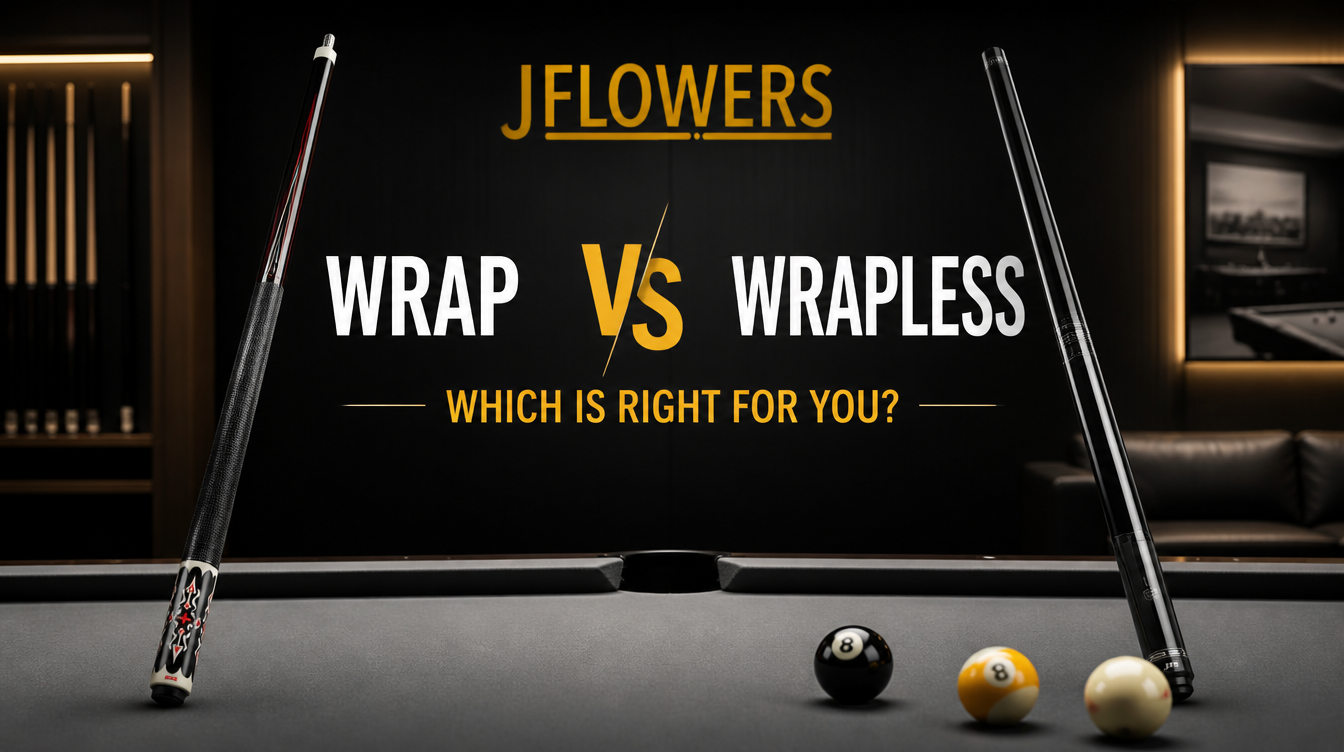
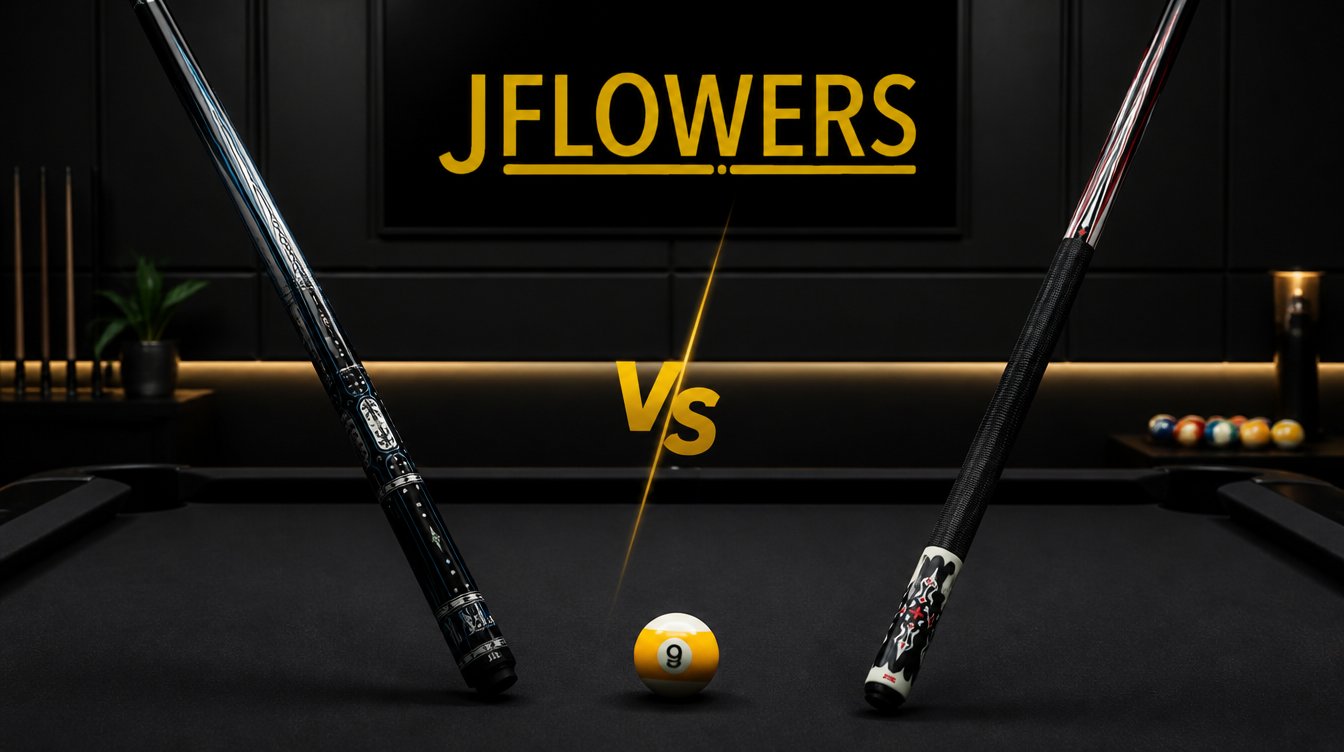
Wrap vs Wrapless Pool Cue: Which Is Right for You?
JFlowers Cues
The wrap — or lack of one — on a pool cue is one of those variables that players either have strong opinions about or haven't thought much about at all. It's not the most performance-critical factor in cue selection, but it affects feel in the hand significantly and can genuinely affect how comfortable and consistent your grip is over a long session.
Listen to this article
A complete breakdown of grip options and how to choose
This guide covers every wrap type, what wrapless cues offer, and how to figure out which is right for you.
What Is a Cue Wrap?
The wrap refers to the material covering the grip area of the cue butt — typically the area where your bridge hand holds the cue during a stroke. Wraps serve two main purposes: providing texture for grip, and absorbing moisture from your hand during play.
Not all cues have wraps — a growing number of cues feature a wrapless design where the wood, composite, or other butt material is exposed in the grip area.
Types of Wraps
Irish Linen The most traditional and widely used wrap material. Irish linen has a firm, textured feel that provides reliable grip across a range of conditions. It absorbs some moisture, which helps players with sweaty hands maintain consistent grip throughout a session.
Over time, Irish linen wraps can loosen, discolor, or accumulate chalk and oils that affect their feel. They can be re-wrapped by a cue technician — a relatively affordable maintenance procedure. Linen is available in dozens of colors and patterns, making it a popular choice aesthetically as well.
Who it’s good for: Most players. It’s the reliable default that works well for a wide range of hand types and playing conditions.
Leather Wrap Leather wraps have a softer, slightly tackier feel than linen. They’re common on higher-end cues and often preferred by players who want a more premium tactile experience. Leather tends to mold slightly to the hand over time, which many players appreciate — the wrap starts to feel more personal as you use it.
Leather wraps are typically more expensive than linen and may require more careful maintenance to keep in good condition — avoid excessive moisture and condition the leather periodically.
Who it’s good for: Players who prefer a softer, more premium feel and are willing to maintain the wrap properly.
Rubber or Synthetic Wrap Less common on quality playing cues, rubber and synthetic wraps appear mostly on training cues and some entry-level options. They’re extremely durable and don’t require maintenance, but the feel is more utilitarian than the tactile experience most serious players prefer.
Who it’s good for: Players who prioritize durability over feel, training cue applications.
Nylon Wrap Nylon wraps bridge the gap between linen and synthetic materials — more durable than linen, more traditional feeling than rubber. Available in various colors and patterns. Less common but preferred by some players for its durability and lighter maintenance requirements.
Wrapless Cues Wrapless cues have become increasingly popular over the last decade, and the trend continues. In a wrapless design, the grip area of the butt is exposed — typically polished or sanded wood, composite, or other butt materials.
The Case For Wrapless Players who prefer wrapless cite several advantages. The feel is more direct — you’re in contact with the cue itself rather than a material over it. Many players describe the feel as cleaner and more connected. Wrapless cues are also easier to maintain — wipe them down with a cloth and they’re clean.
Wrapless designs have also become aesthetically associated with modern, premium cue design — a clean, minimalist look that many players prefer to the traditional wrapped appearance.
The Case Against Wrapless
Wrapless cues can be slippery, particularly for players whose hands sweat during play or who play in humid environments. Without the moisture absorption of a wrap, sweat on your hand affects the feel of the cue throughout a session.
Some players also find the direct contact with the butt material — particularly harder composite materials — less comfortable over a long session than the cushioning a wrap provides.
Does Wrap Type Affect Shot Performance?
Directly — not significantly. The wrap doesn’t affect the physics of the shot. The shaft, tip, and joint are the performance-critical components.
Indirectly — it can. If your grip feels uncomfortable or slippery because of your wrap choice, that discomfort and inconsistency affects your stroke. A grip that feels wrong creates tension in your hand, which affects stroke fluidity and consistency. So while the wrap itself doesn’t determine shot physics, grip comfort does affect how consistently you execute your stroke over time.
Choosing Based on Your Hands
If You Have Sweaty Hands A wrap is almost certainly the better choice — particularly Irish linen, which absorbs moisture well. The grip assistance it provides becomes more important as your hand gets wet, keeping the cue from sliding in your hand during a session.
If Your Hands Are Typically Dry Either works. You may find you prefer the feel of wrapless — the direct contact and clean feel resonates with many players who don’t have grip concerns. Try both if you get the chance.
If You’re Not Sure Start with Irish linen. It’s reliable, widely available, and works for the majority of players. You can always transition to wrapless if you try it and prefer the feel.
Can You Remove a Wrap or Add One Later?
Yes to both. A cue technician can remove a wrap from a wrapped cue and finish the wood underneath for a wrapless look — though the results depend on the butt design and what’s under the wrap. Going the other direction — adding a wrap to a wrapless cue — is also possible though requires the right butt construction to accommodate it.
Re-wrapping a worn linen wrap is a common and affordable maintenance procedure. If your current linen wrap is looking worn or feeling inconsistent, having it re-wrapped is much less expensive than buying a new cue.
Frequently Asked Questions
Does wrap color affect anything? Only aesthetics. The color or pattern of a linen wrap doesn’t affect performance — choose what you like the look of.
How long does a linen wrap last? A quality linen wrap lasts several years for most players. Frequent use and heavy sweating will shorten its life; careful maintenance extends it. Re-wrapping typically costs $20–$40 at a cue shop.
Are wrapless cues more expensive? Not inherently. Wrapless designs appear across all price points. The cost is driven by overall cue quality, shaft technology, and brand rather than the presence or absence of a wrap.
Can I use chalk and a wrap together without staining it? Chalk will eventually stain and discolor a linen wrap — it’s inevitable with regular use. This is cosmetic rather than performance-affecting. Keeping your hands clean and wiping the cue down after sessions slows the discoloration.
Is leather wrap better than linen? Not objectively — it’s a feel preference. Leather is softer and molds to the hand; linen is firmer and more textured. Many players have strong preferences one way or the other, but neither is universally superior.
Final Thoughts
Wrap vs. wrapless is ultimately a comfort and feel decision. Performance-wise, it’s one of the least critical variables in cue selection — far less important than shaft material, tip choice, or weight. But comfort matters over a long session, and a grip that feels right in your hand is worth having.
Try both if you get the chance. Most players develop a clear preference once they’ve experienced both styles — and that preference is worth knowing before you commit to a purchase.
After comparing JFlowers to Predator, Mezz, McDermott, Meucci, Jacoby, Pechauer, and a dozen more brands across every price point and construction philosophy — the question that started all of it deserves a direct answer: which pool cue brand actually offers the best value for serious competitive players in
2026?
Players Technology is one of the most widely used cue brands in American pool halls. Their two-piece cues at $40-$150 have introduced millions of American players to personal cue ownership. Nearly every serious pool player in America either started on a Players cue or played against someone who did. Comparing Players to JFlowers isn’t really a direct competition — it’s a marker on the journey from beginner to serious competitor.