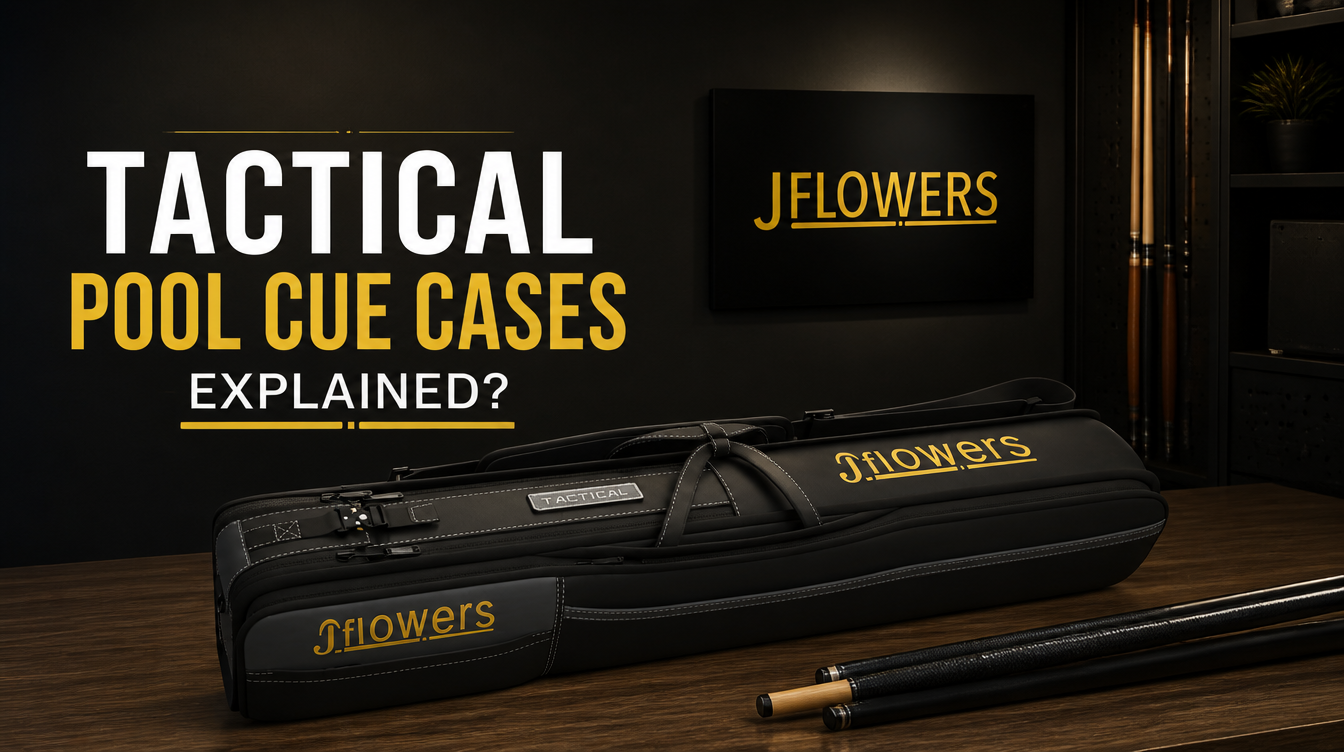
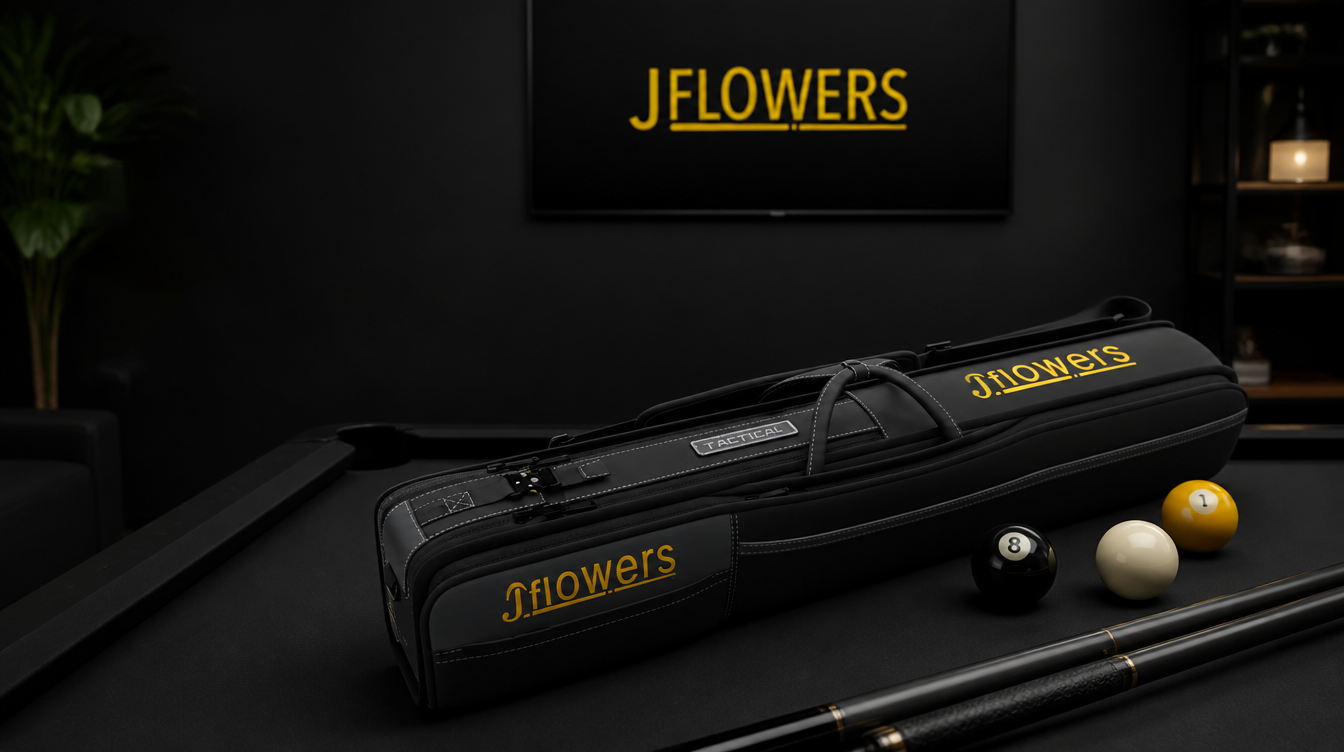
Tactical cue cases are the heavy artillery of pool cue protection. Derived from military rifle and equipment cases, these hard-shell cases with foam interiors, lockable latches, and rubber seal gaskets offer the most
complete protection available for pool cue travel.
Listen to this article
They’re not for everyone — they’re heavier, bulkier, and more expensive than standard cue cases. But for players who fly to tournaments, travel internationally, or simply want the absolute maximum protection for a significant equipment investment, tactical cases are in a different class from conventional pool cue cases.
What Makes a Case ‘Tactical’
The term tactical cue case refers to cases that share construction principles with military equipment transport cases. Key features:
Hard shell exterior — typically high-density polyethylene (HDPE) or ABS plastic, impact-resistant
Foam interior — custom-cut or pre-cut foam that immobilizes the cue completely
Lockable latches — typically two or more latches that can be padlocked
Rubber gasket seal — a rubber seal around the lid that provides dust and moisture resistance
Stacking ridges — exterior design allows cases to be stacked without crushing
Carry handles and optional wheels — for managing the heavier weight
The combination of these features means the cue inside experiences zero movement from impacts on the exterior. The hard shell absorbs impact; the foam immobilizes the cue; the seal keeps out dust and moisture.
Popular Tactical Case Brands for Pool Cues
Purpose-built pool cue tactical cases are available from several manufacturers. Players also adapt general-purpose tactical equipment cases to pool cue use:
Predator and other billiards brands offer purpose-built hard cases with tactical case characteristics
Pelican cases in appropriate lengths — the Pelican 1750 (50-inch) and similar sizes fit full pool cue setups and are popular with serious tournament travelers
Plano and similar tactical case manufacturers offer pool-cue-length options at lower price points
Nanook and other specialty travel equipment manufacturers
For Pelican-style cases, the foam interior is typically provided as a single block that you cut to fit your specific cue configuration. This requires some work but produces a perfectly fitted interior for your exact setup.
Foam Interior: The Critical Protection Element
The foam interior is what makes a tactical case different from a standard hard case with padding. Pick-and-pluck foam — where small squares can be removed to create custom cutouts — allows you to fit the case precisely to your butts, shafts, and accessories. The cue sits in a foam void exactly its shape, fully immobilized.
Closed-cell foam provides moisture resistance (doesn’t absorb water into the foam itself). Open-cell foam provides better cushioning but can absorb moisture. Quality tactical cases use closed-cell foam for the outer layer and softer open-cell for the inner cushioning.
When You Need a Tactical Case
Airline travel — particularly as checked baggage where the case will be handled by equipment
International tournament travel where the case may be in transit for 24+ hours
Players whose cue investment ($800+) justifies maximum protection
Players who travel to venues where equipment security or impact risk is elevated
For everyday local travel, a tactical case is significant overkill. The weight and bulk aren’t justified for walking to a pool hall or driving 30 minutes to league. For the airline travel guide that covers when tactical cases are essential, see Airline Travel with Pool Cues.
Tactical Cases and TSA
Tactical cases are ideal for checked baggage under TSA. Use TSA-approved locks on the lockable latches — these allow inspection without cutting the lock. The sealed, hard-case design is exactly what airport baggage handling demands. For the full TSA guidance, see TSA Rules for Traveling With Pool Cues.
Weight and Size Considerations
Tactical cases are the heaviest pool cue case option. A Pelican 1750 empty weighs approximately 16 lbs. Add the cue setup and it can reach 20-25 lbs checked. This matters for airline weight limits (most airlines have a 50 lb checked baggage limit) and for carrying through airports.
Size: most full tactical cases for pool cues run 40-55 inches long, which means they qualify as oversized checked baggage with corresponding fees. Factor the fee into your travel planning.
Protecting the JFlowers SMO in a Tactical Case
The JFlowers SMO Carbon Fiber Shaft in a well-cut tactical case foam interior is about as protected as a pool shaft can be. The foam immobilizes the shaft completely, the hard shell absorbs any external impact, and the sealed environment keeps dust and moisture away. This is the setup professional players use when flying internationally — complete protection for a significant equipment investment.
Pros and Cons
Tactical cue cases
Maximum physical protection against any reasonable impact
Moisture and dust resistant with gasket seal
Lockable for security
The professional standard for airline travel
Foam interior immobilizes cue completely
Heavy — typically 15-25 lbs with cue
Bulky — difficult to handle in crowded airport environments
Oversized baggage fees on most airlines
More expensive than standard hard cases
Expert Recommendation For any player flying to serious tournaments: a tactical case is worth the investment. The protection it provides for your equipment investment is complete — no impacts, no moisture, no movement. Pelican-style cases are the gold standard. Use TSA locks, cut the foam to fit your setup precisely, and arrive at your tournaments knowing your equipment is in the same condition it was when it left home.
Conclusion
Tactical pool cue cases are serious equipment for serious travel. They offer protection that conventional cases — even quality hard cases — simply can’t match when the cue is in the hands of baggage handlers and airport machinery. For tournament players who fly, a Pelican-style tactical case is the same kind of professional preparation as a backup shaft — not glamorous, but essential for showing up ready to compete.
Frequently Asked Questions
Q: What is a tactical pool cue case? A military-style hard case with foam interior, lockable latches, and rubber seal gasket. Provides the maximum available protection for pool cue travel. Q: Do I need a tactical cue case? For airline travel: yes. For everyday local transport: no. Tactical cases are the right tool for transport situations where maximum protection is required. Q: What size Pelican case fits a pool cue? The Pelican 1750 (50-inch) fits most two-piece pool cue setups. Measure your assembled case length before ordering. Q: How do I cut the foam for a pool cue case? Use an electric knife or box cutter with a straightedge. Mark the outlines first, cut slowly. Pick-and-pluck foam (pre-scored in small squares) is easier to work with than solid foam. Q: How heavy is a tactical cue case? Most Pelican-style cases for pool cues weigh 14-18 lbs empty, 18-25 lbs with a full cue setup. Q: Are tactical cases worth it for pool cues? For airline travel or significant investment cues ($800+), yes. The protection they provide compared to standard hard cases is a meaningful difference in high-impact transport scenarios.
After comparing JFlowers to Predator, Mezz, McDermott, Meucci, Jacoby, Pechauer, and a dozen more brands across every price point and construction philosophy — the question that started all of it deserves a direct answer: which pool cue brand actually offers the best value for serious competitive players in
2026?
Players Technology is one of the most widely used cue brands in American pool halls. Their two-piece cues at $40-$150 have introduced millions of American players to personal cue ownership. Nearly every serious pool player in America either started on a Players cue or played against someone who did. Comparing Players to JFlowers isn’t really a direct competition — it’s a marker on the journey from beginner to serious competitor.