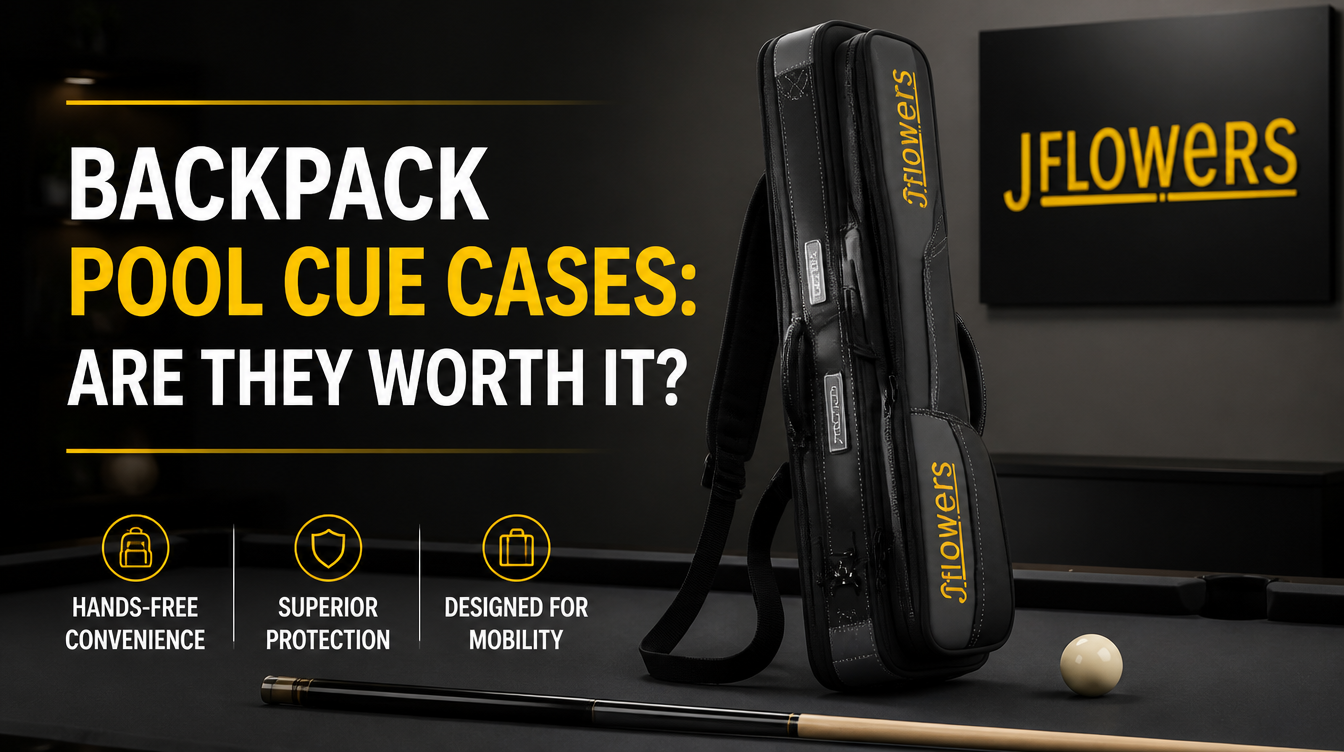
Backpack cue cases have grown in popularity over the past decade as pool has attracted younger, more urban players who commute to pool halls on foot, by bike, or on public transit. The hands-free carry of a backpack is genuinely convenient for players who walk or use public transportation with their cue every
session.
Listen to this article
But backpack cases have real trade-offs — in protection, in capacity, and in how they perform in tournament settings. This guide covers what backpack cue cases offer, where they fall short, and who should use one.
What a Backpack Cue Case Is
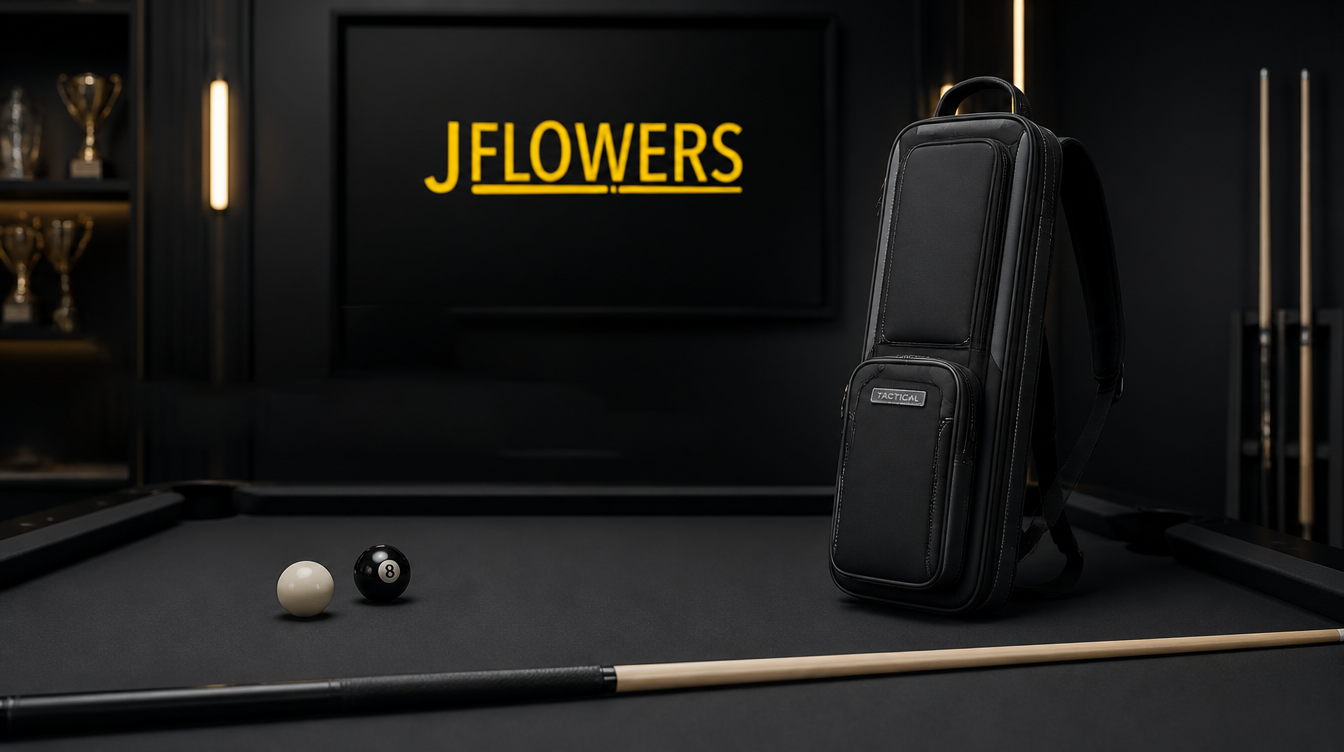
A backpack cue case incorporates one or more shaft/butt tubes into a backpack-style carrying system. The cue is secured in rigid or semi-rigid tubes along the back panel of the pack, and the pack body provides space for accessories, chalk, clothing, and other items.
Designs vary: some are essentially a standard cue tube bag with shoulder straps added; others are purpose-built backpacks with integrated cue tubes that sit flush against the back. The quality range is wide — from cheap designs where the cue tubes flex dangerously to well-engineered packs with rigid tube sections and proper padding.
The Hands-Free Advantage
This is the primary reason players choose backpack cases, and it’s a genuine advantage in specific situations:
Commuting on foot to pool halls — hands free for subway turnstiles, doors, and navigation
Cycling to venues — a backpack case worn while cycling is far more practical than a tube case hung from handlebars
Tournament venues where hands are needed for tournament paperwork, phone, drinks, and equipment at the table
Players who carry significant accessory loads — shoes, chalk, tips, mechanical bridge, extra shafts — benefit from backpack organization
Backpack Case Limitations
Protection Most backpack cue cases are soft-construction — the cue tubes are padded fabric rather than rigid shells. This means the same protection limitation as all soft cases: they cannot protect against direct impact or compression. The cue tubes along the back panel are particularly vulnerable to impacts when the pack is set down or leaned against surfaces.
For players who need maximum protection — particularly for carbon fiber shaft tip-end protection — a backpack case alone is not adequate for any travel beyond walking with the pack on your back at all times. For the impact protection comparison, see Hard Cue Cases Explained.
Capacity Backpack cue cases typically hold one to two cues (one or two butts and shafts). Players who carry a playing cue, a break cue, and backup shafts often find backpack cases insufficient without a supplementary case. The 2×4 configuration common among competitive players is difficult to find in backpack form without a very large pack.
Tournament Professionalism At higher-level tournaments, the backpack case aesthetic is less common than traditional tube bags or briefcase-style cases. This is a minor point and purely social, but worth knowing if you’re playing in settings where presentation matters.
Quality Markers for Backpack Cases
If you’re buying a backpack cue case, here’s what separates quality from budget:
Rigid tube sections — the cue tubes should be genuinely rigid, not just padded fabric tubes that compress under pressure
Proper tip-end protection — soft padding or rigid cap at the tip end of each shaft tube
Quality YKK or equivalent zippers — the pack opens and closes thousands of times over its life
Padded back panel — a comfortable carry system that distributes cue weight across the shoulders properly
Adequate main compartment — enough space for your accessory needs beyond the cue
When to Use a Backpack Case
Backpack cases are the right choice when: you commute on foot or by bike, you carry significant accessories alongside your cue, you value hands-free convenience over maximum protection, and you understand the impact protection limitation and accept it for your use case.
For players who drive to venues, for tournament travel, or for any situation where the case might leave your back — use a traditional hard or soft tube case. The backpack case is a commuter tool, not a protection tool.
The JFlowers SMO in a Backpack Case
The JFlowers SMO Carbon Fiber Shaft can be carried in a quality backpack case for foot commuting with reasonable safety — the carbon fiber construction is robust along its length. The tip end remains the vulnerability point: ensure the backpack case has genuine soft padding at the shaft tube tips, not just fabric end caps. Avoid setting the pack down tip-end-first on hard surfaces. For comprehensive shaft protection during transit, see Protecting Carbon Fiber Shafts.
Pros and Cons
Backpack cue cases
Hands-free carry ideal for commuters and cyclists
Good accessory organization in larger backpack designs
Convenient for tournament venues where hands are needed
Limited impact protection — soft construction in most designs
Lower capacity than equivalent tube cases in most designs
Not appropriate for airline travel or car trunk storage
Expert Recommendation For urban commuters and cyclists: a quality backpack case with rigid tube sections is a legitimate and practical choice for everyday transport. Pair it with a hard case for any situation where the cue leaves your back. The convenience advantage in the right context is real — just know the protection limitation and plan around it.
Conclusion
Backpack cue cases fill a specific niche: the urban player who commutes to pool halls and values hands-free convenience over maximum impact protection. In that context they’re excellent. Outside that context — travel, tournament transport, car storage — a traditional hard case is the right choice. Know which situation you’re in and choose accordingly.
Frequently Asked Questions
Q: Are backpack cue cases good? For foot commuting and cycling to venues, yes. They provide genuine hands-free convenience. They don’t provide hard-case level impact protection and shouldn’t be used for airline travel or car trunk storage. Q: How do I carry a pool cue on a bike? A backpack cue case worn on your back is the safest way to carry a pool cue while cycling. Never attach a case to the bike frame — vibration and impact risk is high. Q: Can I take a backpack cue case on public transit? Yes — that’s one of the best use cases for backpack cue cases. Hands-free carry through turnstiles, escalators, and crowded transit environments. Q: How many cues does a backpack case hold? Most backpack cue cases hold one to two cues. Some larger designs accommodate 2×2 configurations. Q: Are backpack cue cases waterproof? Quality backpack cases with DWR-treated nylon provide good splash resistance. Few are genuinely waterproof. Q: Should I use a backpack case for tournament travel? For walking within a tournament venue, it’s fine. For driving to tournaments or airline travel, use a dedicated hard case.
After comparing JFlowers to Predator, Mezz, McDermott, Meucci, Jacoby, Pechauer, and a dozen more brands across every price point and construction philosophy — the question that started all of it deserves a direct answer: which pool cue brand actually offers the best value for serious competitive players in
2026?
Players Technology is one of the most widely used cue brands in American pool halls. Their two-piece cues at $40-$150 have introduced millions of American players to personal cue ownership. Nearly every serious pool player in America either started on a Players cue or played against someone who did. Comparing Players to JFlowers isn’t really a direct competition — it’s a marker on the journey from beginner to serious competitor.