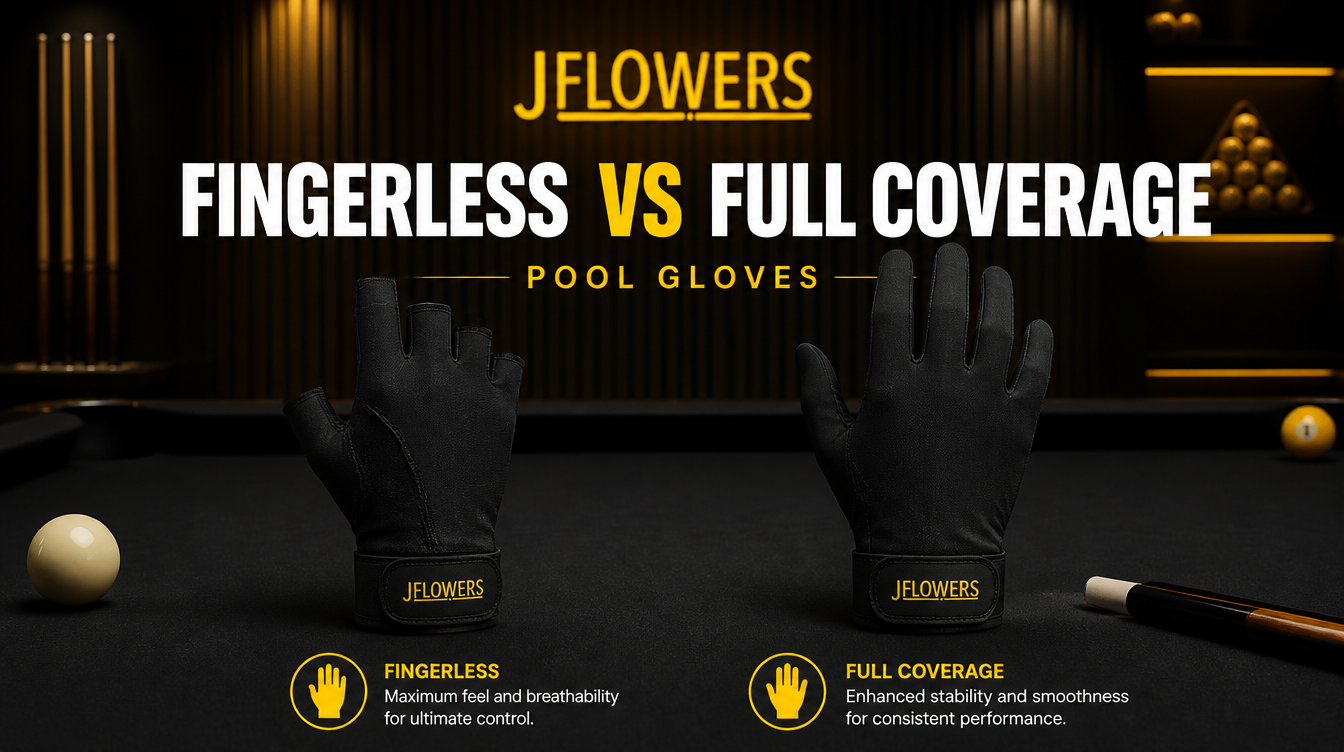
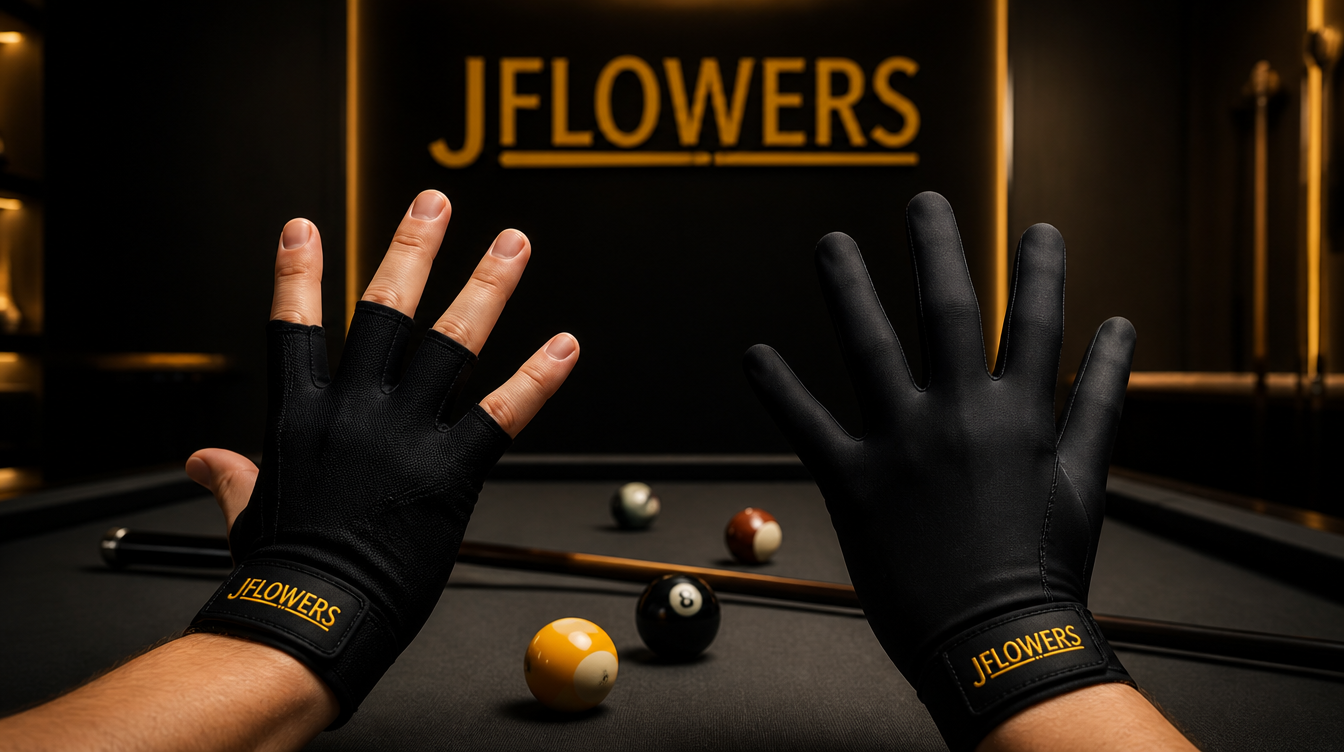
Pool gloves come in two primary design configurations: fingerless (open fingertip) designs that cover the palm and fingers down to the first knuckle, and full-coverage designs that cover the entire bridge hand
including fingertips. The difference in coverage affects feel, tactile feedback, and which bridge styles benefit most from each design.
Listen to this article
Fingerless Gloves
Fingerless pool gloves cover the palm and the mid-sections of the bridge fingers, leaving the fingertips exposed. The design allows direct tactile feedback at the fingertips — you can feel the table, feel cloth texture changes, and maintain the familiar sensation of direct finger contact on the cue ball’s path.
Bridge Styles That Suit Fingerless Fingerless designs are particularly well-suited for players who use open bridge styles — where the shaft slides through a loop formed by the fingers with the fingertips in contact with the table felt. The exposed fingertips maintain the tactile feel of the felt surface while the gloved palm and finger shafts provide the consistent friction surface for the shaft.
The Fingerless Advantage Many players find the fingerless design more natural to transition to. The exposed fingertips maintain familiar sensations, reducing the adjustment period. The lighter construction of fingerless gloves also makes them cooler during long sessions.
Full-Coverage Gloves
Full-coverage pool gloves cover the entire bridge hand including fingertips. The covered fingertips interact with the felt differently than bare skin — typically providing a more consistent surface across different felt conditions and different shot positions.
Bridge Styles That Suit Full Coverage Full-coverage designs suit players who use closed bridge styles or who make significant contact with the table felt through their fingertips. The consistent coverage across the entire hand eliminates any variation between the gloved palm section and bare fingertips.
The Full Coverage Advantage For players whose game involves significant fingertip contact with the table felt — certain low bridge positions, masse shots, draw shots that require a very low bridge — full coverage maintains consistency across the full contact area. No inconsistency between gloved and ungloved sections of the hand.
Which Design for Which Player
The design choice depends primarily on your bridge style:
Open bridge players who primarily contact the felt with their palm and knuckles: fingerless works well
Closed bridge players with significant fingertip contact: full coverage provides more complete consistency
Players who frequently switch between bridge styles: full coverage handles both scenarios
Practically, the majority of pool players find either design works adequately. The tactile difference from full coverage vs fingerless at the fingertips is subtle for most players. The more important factor is the palm and shaft-contact sections, where both designs perform the same function.
Cue Armour Glove Design
Cue Armour pool gloves incorporate thoughtful coverage design based on the actual contact points in competitive pool bridge positions. The construction covers the critical friction zones while maintaining comfort and breathability for long sessions. For the full Cue Armour glove comparison, see Best Pool loves (2026).
Material and Seam Placement
Beyond coverage area, material quality and seam placement affect whether a pool glove works well in practice:
Seams on the palm side create lumps that affect the shaft’s sliding path — quality gloves place seams on the back of the hand
Material thickness at the key shaft-contact zones should be consistent — variable thickness creates friction variation
Wrist closure should secure the glove without restricting circulation or movement
Pros and Cons
Fingerless pool gloves
Direct fingertip tactile feedback on table felt
Generally cooler and lighter construction
More natural transition for players new to gloves
Exposed fingertips may create inconsistency on certain bridge positions
Full coverage pool gloves
Complete consistency across all bridge hand contact zones
Suits players with significant fingertip table contact in bridge position
Some players find full coverage reduces familiar fingertip felt sensation
Expert Recommendation Most players starting with pool gloves: try fingerless first. The more natural transition and exposed-fingertip feel suits the majority of playing styles. If you find inconsistency between the gloved and ungloved sections in certain bridge positions, try full coverage. Cue Armour offers their glove in a design that covers the critical contact zones for competitive pool bridge styles.
Conclusion
Fingerless vs full coverage is a secondary glove decision — the primary one is whether to use a glove at all. For most players, fingerless designs provide the core benefit (consistent shaft friction) with a more natural transition. Full coverage is the better choice for players whose bridge style involves significant fingertip contact with the table surface. Try fingerless first and switch to full coverage only if you find inconsistency at the fingertip contact zones.
Frequently Asked Questions
Q: Are fingerless pool gloves better? Fingerless gloves suit most open bridge styles and provide a more natural transition for new glove users. Full coverage suits players with more fingertip table contact in their bridge position. Q: What’s the difference between fingerless and full pool gloves? Fingerless gloves leave the fingertips exposed; full gloves cover the entire hand. The fingertip coverage affects tactile feedback on table felt and suits different bridge styles. Q: Do pool professionals use fingerless or full gloves? Both designs are used at the professional level. The choice depends on individual bridge style and preference. Q: Can I play pool without a full-coverage glove? Yes — fingerless gloves provide the key shaft-friction consistency benefit while maintaining fingertip feel. Most players don’t need full coverage.
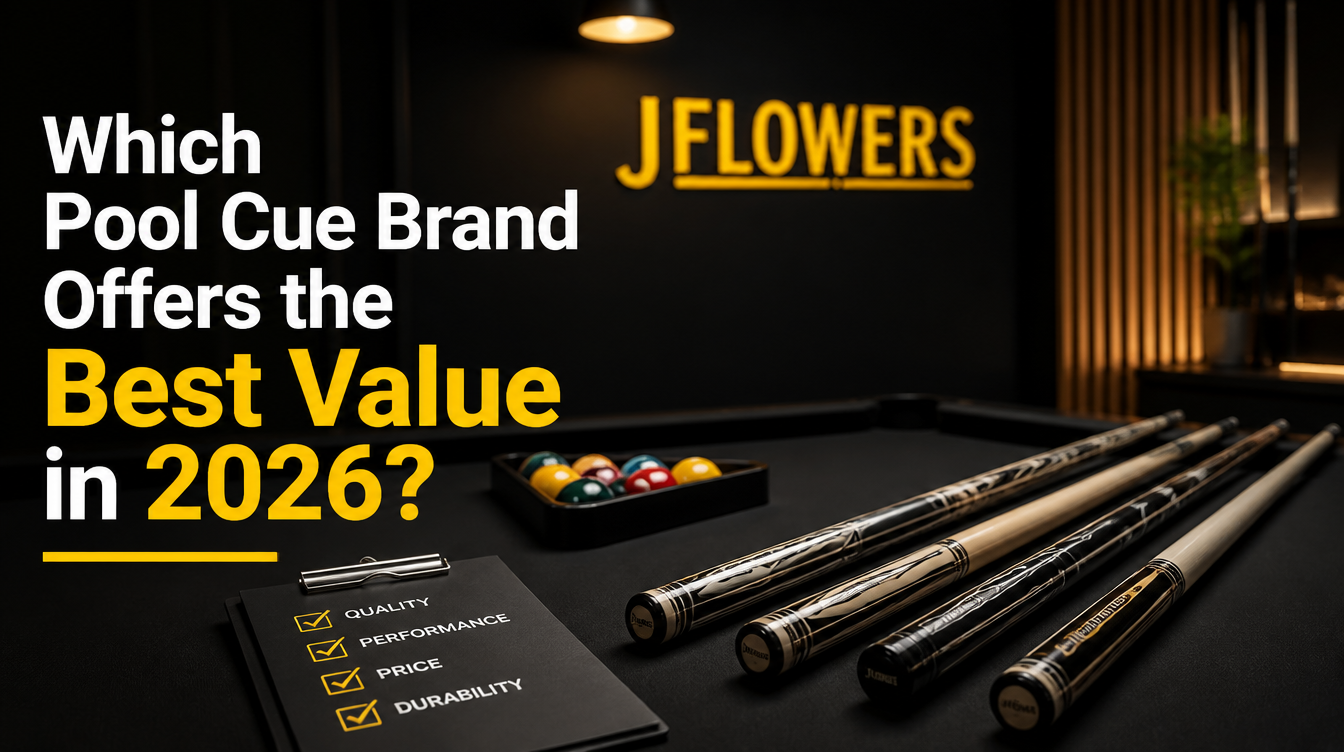
After comparing JFlowers to Predator, Mezz, McDermott, Meucci, Jacoby, Pechauer, and a dozen more brands across every price point and construction philosophy — the question that started all of it deserves a direct answer: which pool cue brand actually offers the best value for serious competitive players in
2026?
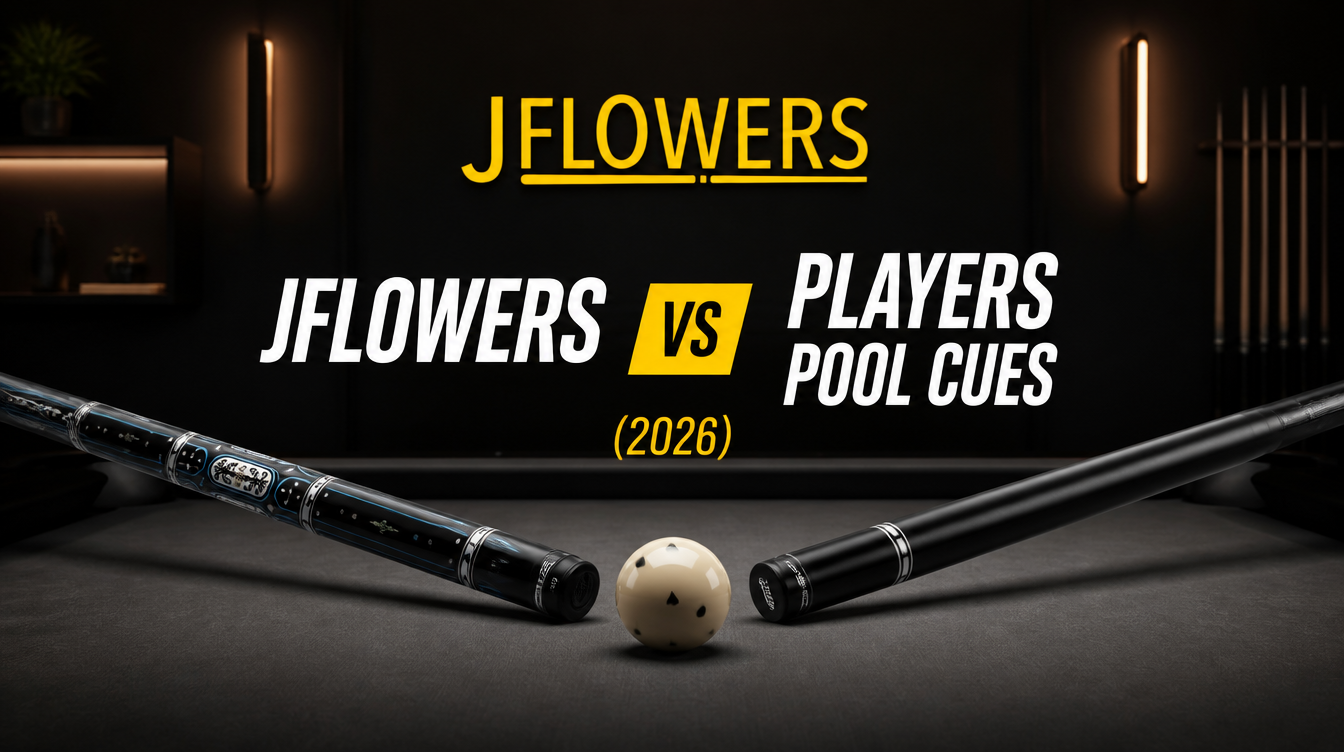
Players Technology is one of the most widely used cue brands in American pool halls. Their two-piece cues at $40-$150 have introduced millions of American players to personal cue ownership. Nearly every serious pool player in America either started on a Players cue or played against someone who did. Comparing Players to JFlowers isn’t really a direct competition — it’s a marker on the journey from beginner to serious competitor.