
Tournament Bag Checklist for Pool Players

Tournament preparation is where equipment management pays off most directly. You're playing multiple matches across hours or days in an unfamiliar venue. Equipment that fails, accessories you forgot, or a tip problem with no spare — these are the avoidable disasters that end tournament runs for players who showed up unprepared.
Listen to this article

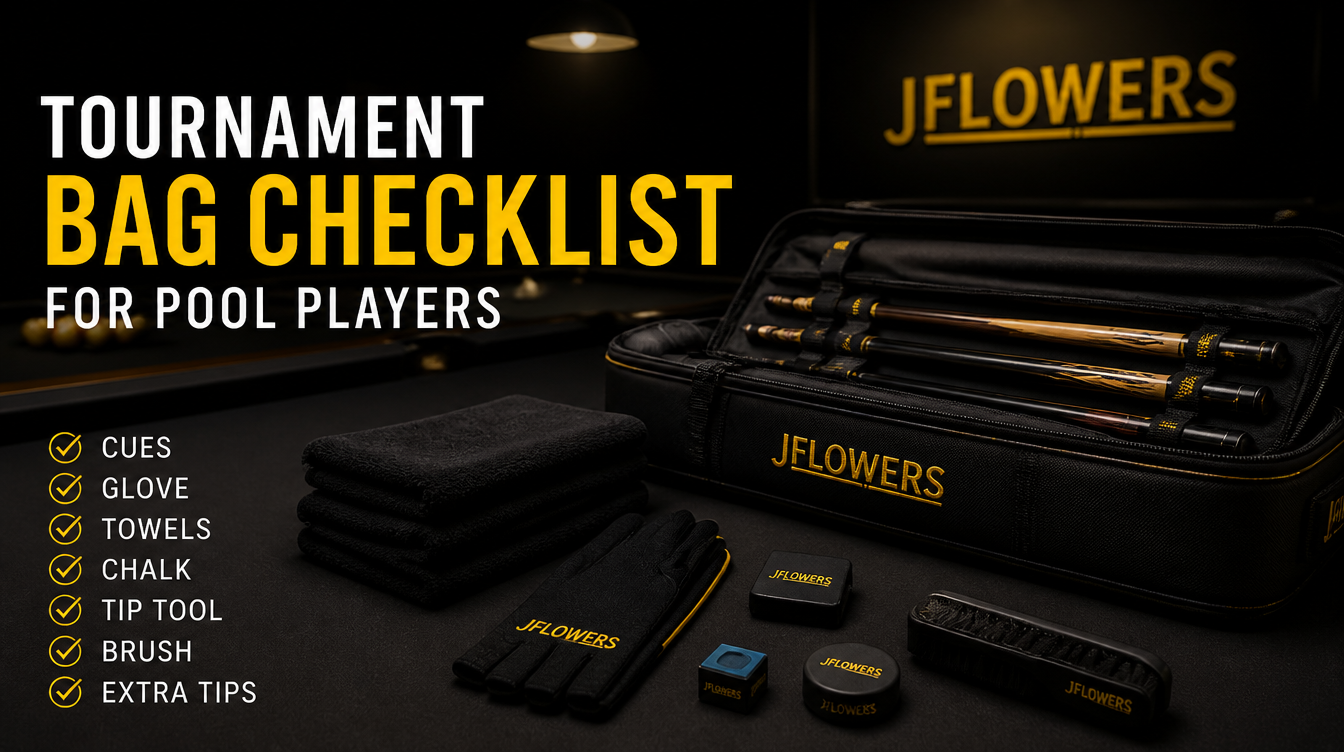
This is the complete checklist. Use it before every tournament.

Equipment: Core Items

  • Playing cue in hard case — butt and shaft(s) properly stored
  • Break cue — separate from playing setup
  • Backup playing shaft — same spec as primary where possible
  • Joint protectors installed on shaft end and butt pin
  • Tip caps on each shaft

Tip and Shaft Maintenance Kit

  • Taom chalk — minimum 2 cubes, ideally 3-4 for a multi-day event
  • Tip shaper/scuffer tool
  • Spare Taom medium tips — minimum 2 per day of competition
  • Tip adhesive appropriate for your shaft type
  • Burnishing tool — for tip side maintenance between matches

For the tip maintenance routine between tournament matches, see Tip Maintenance Guide.

Performance Accessories

  • Cue Armour pool glove — in the most accessible case pocket
  • Spare Cue Armour glove — in a secondary pocket
  • Cue Armour Dual-Sided Microfiber Pool Towel — in a pocket or clipped for quick access
  • Cue extension — if you use one for reach shots
  • Mechanical bridge head — if your game uses it

Pre-Tournament Equipment Check’),

Do this the night before the tournament, not the morning of:

  • Roll the shaft on a flat surface — check for warp
  • Inspect the tip — proper nickel radius, good chalk retention when tested
  • Check the joint — threads clean and connecting smoothly
  • Weigh the cue if you have a preference — confirm total weight is correct
  • Check tip adhesive hasn’t dried out if it’s been in the bag for months

For the full pre-tournament cue inspection, see Pool Cue Maintenance Checklist.

Personal Items for Long Tournaments

  • Water and snacks — venues often have limited food options during long bracket play
  • Pain reliever — lower back strain from long sessions is common
  • Hand lotion — for players who experience dry skin during air-conditioned events
  • Phone charger — for scorekeeping, communication, and downtime
  • Cash — for entry fees, table time, and food at cash-only venues
  • Tournament registration confirmation — a screenshot if digital

Dress Code Awareness’),

Many sanctioned tournaments have dress codes. BCA, WPA, and APA events often require collared shirts or prohibit logos of competing brands. Check the specific tournament rules and pack appropriate clothing. A Cue Armour shirt or polo is a clean, competitive option that also demonstrates your commitment to the game.

What NOT to Bring’),

Keep the bag lean. Items that add weight without value on tournament day:

  • More tips than you’ll realistically use (two per day is enough)
  • Tools you never actually use between sessions
  • Every accessory from your regular case that doesn’t serve a tournament purpose

Pros and Cons

Prepared tournament kit

  • No equipment failure ends your tournament run
  • Pre-tournament check catches problems before they occur on the table
  • Consistent equipment across all matches in an unfamiliar venue
  • Requires deliberate preparation the night before
  • A comprehensive tournament bag is heavier than everyday local kit

Expert Recommendation
Do your pre-tournament equipment check the night before. Pack to this checklist. Arrive with confidence that your equipment is in condition and your kit covers every scenario. The JFlowers SMO shaft’s carbon fiber construction means no warp risk in the tournament venue’s environment — one fewer variable to worry about.

Conclusion

Tournament preparation is equipment preparation. The players who compete best at tournaments show up with equipment they trust completely, a kit that handles every accessory need, and a pre-event check that catches problems before they appear at the table. This checklist is that preparation. Use it.

Frequently Asked Questions

Q: What should I bring to a pool tournament?
Playing cue, break cue, backup shaft, Taom chalk, tip tool, spare tips, tip adhesive, Cue Armour glove and towel, joint protectors. Plus personal items for long events.
Q: How many chalk cubes should I bring to a tournament?
Minimum 2 cubes per day of competition. 3-4 for a multi-day event. Carry your own Taom chalk — don’t rely on venue chalk.
Q: Should I bring a backup shaft to a tournament?
Yes, absolutely. A tip emergency or shaft damage without a backup is a tournament-ending scenario that’s completely preventable.
Q: What do I check before a tournament?
Shaft for warp, tip condition (shape and chalk retention), joint thread cleanliness, and total cue weight. Do this the night before, not day-of.

Related Articles

Pool Cue Maintenance Checklist

Tip Maintenance Guide

Essential Pool Accessories Every Player Needs

Best Cue for Tournament Play

How to Protect Your Pool Cue Investment

Professional Pool Player Equipment Checklist

Share the Post:

Related Posts

JFlowers vs Bull Carbon Pool Cues (2026)

The joint is one of the least talked-about components of a pool cue — and one of the most important. It’s the connection point between your shaft and butt, and it affects hit feel, vibration, and whether you can swap third-party shafts onto your cue without a machinist.

Read More

JFlowers vs Mezz Pool Cues (2026)

The joint is one of the least talked-about components of a pool cue — and one of the most important. It’s the connection point between your shaft and butt, and it affects hit feel, vibration, and whether you can swap third-party shafts onto your cue without a machinist.

Read More
Verified by MonsterInsights