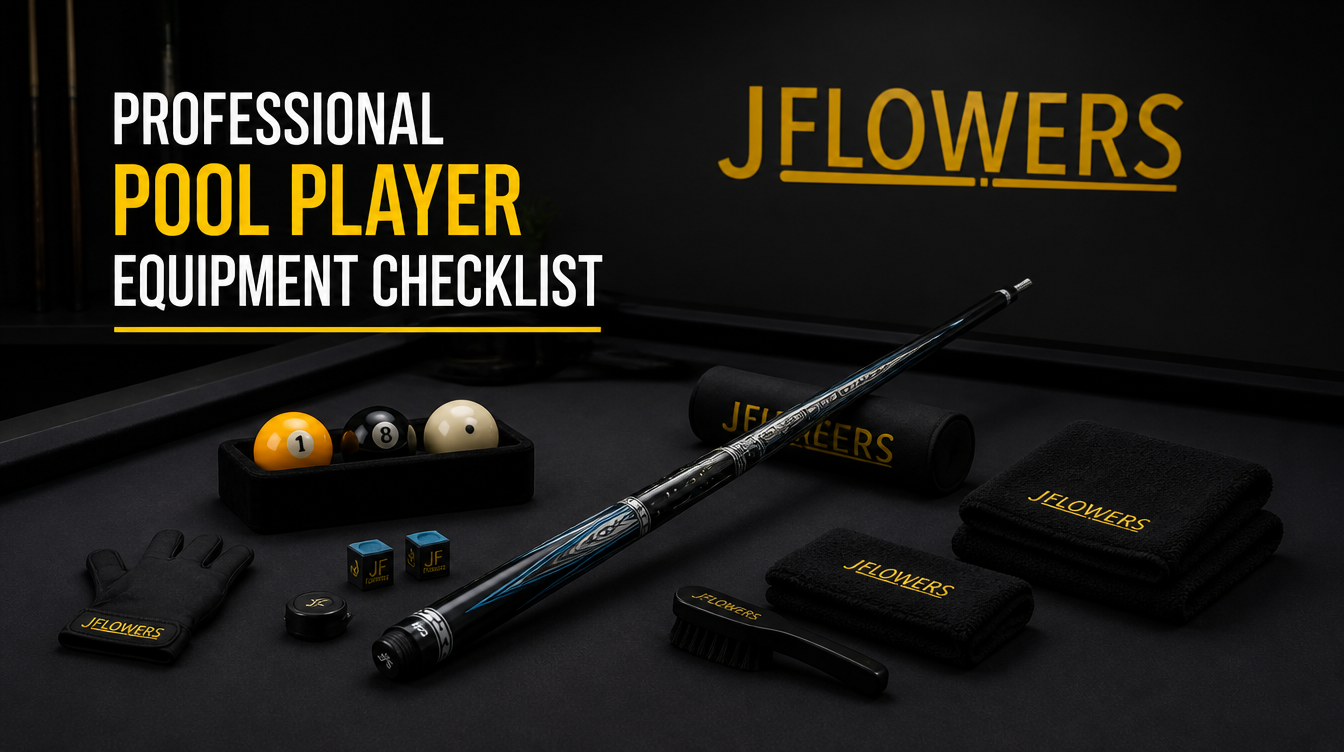
What professional pool players carry to tournaments is more thoughtfully assembled than most amateur players realize. Professionals have tested every component over thousands of hours and hundreds of events. Their equipment decisions reflect what actually makes a difference when performance matters
most.
Listen to this article
This checklist covers what a complete professional-level pool equipment setup looks like — not to imply every competitive player needs to replicate it exactly, but to provide a clear picture of what serious equipment preparation looks like at the top level.
The Playing Cue Setup
Primary playing cue — quality butt with balanced construction
Primary shaft — Taom or Kamui medium tip installed, properly broken in
Backup playing shaft — identical specification to primary where possible
Second backup shaft — some tour players carry three identical shafts
Why three shafts? Tournaments span multiple days. A tip emergency on day one shouldn’t mean playing suboptimally on day two while the reinstalled tip breaks in. Having a fully broken-in backup means zero performance compromise even after a tip problem. For the shaft backup discussion, see How Many Butts and Shafts Do You Need?.
The Break and Jump Cues
Dedicated break cue — heavy shaft, hard or phenolic tip
Jump cue — short, stiff, hard tip for jump shots
Professional formats often allow jump shots, making a dedicated jump cue a standard part of the professional kit. For amateur competition, the break cue is more universally necessary. See Best Cue Tip for Power Breaks.
The Case
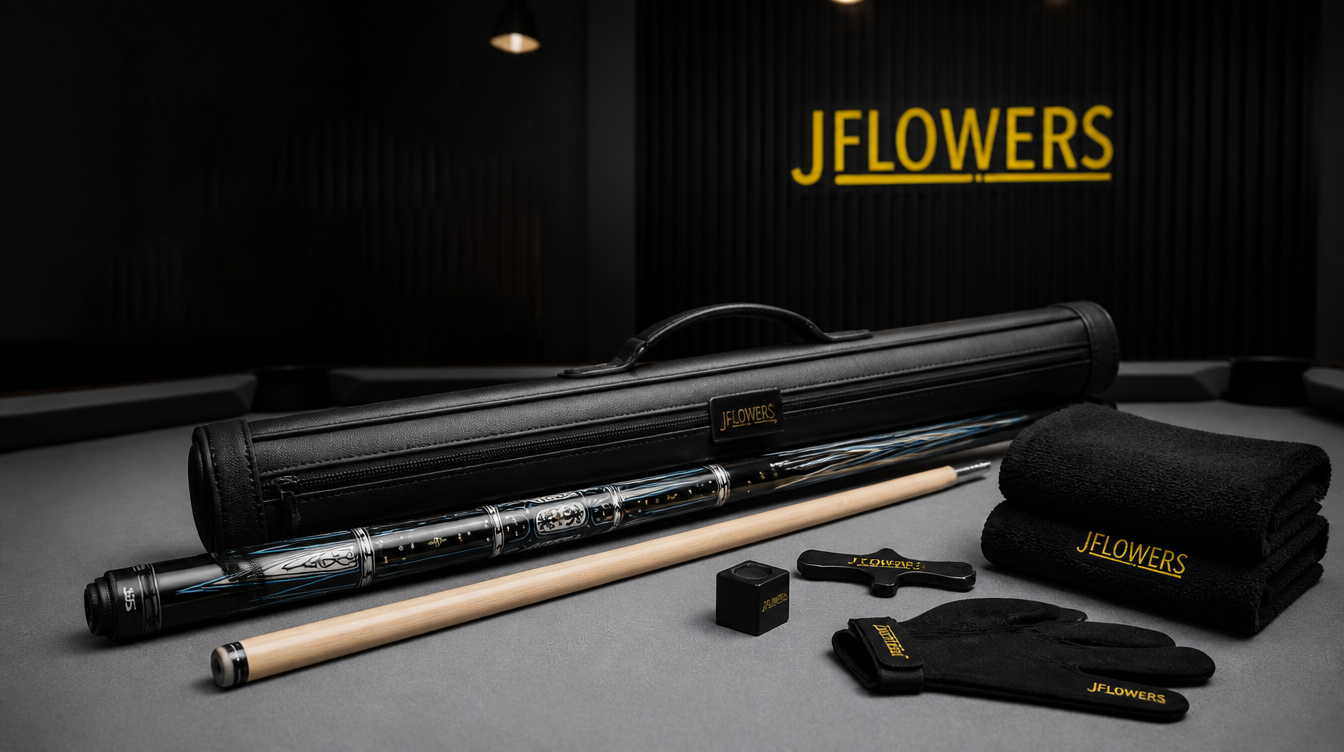
Primary travel case — hard tactical case for airline travel
Secondary everyday case — quality hard 2×4 or 3×5 for venue transport
Professionals who fly frequently use tactical cases for airline travel and a separate, lighter case for venue transport. For the case selection guide, see Best Cue Cases for Travel.
Chalk and Tips
Taom chalk — 6+ cubes for a multi-day event
Spare tips — 4-6 tips of preferred hardness for a multi-day event
Tip adhesive — both contact adhesive and cyanoacrylate for different installation scenarios
Tip shaper/scuffer
Burnishing tool
Performance Accessories
Cue Armour pool glove — left hand for right-handed players
Spare Cue Armour glove — critical for multi-day events
Expert Recommendation You don’t need to replicate the full professional kit immediately — but the mindset behind it is worth adopting at any level. Prepare your equipment as if it matters. Install tips in advance, carry spares, use quality chalk, maintain your shafts. The JFlowers equipment foundation — SMO shaft, Taom tip, Taom chalk, Cue Armour accessories — delivers professional-level equipment preparation at accessible pricing.
Conclusion
Professional-level equipment preparation is thorough, systematic, and deliberate. The kit is comprehensive; the preparation protocol is disciplined. The JFlowers-based setup delivers the foundation — shaft, tip, chalk, accessories — at a price point that makes professional-level equipment preparation accessible to serious amateur players at every level of competition.
Frequently Asked Questions
Q: What equipment do professional pool players carry? Multiple shafts, dedicated break and jump cues, quality tactical case for travel, 6+ chalk cubes, 4-6 spare tips, Cue Armour gloves and towel, and full accessory kit. Q: Why do professionals carry multiple shafts? Redundancy for tip emergencies and to have fully broken-in backups during multi-day events. Some tour players carry three identical shafts. Q: What chalk do professional pool players use? Taom is the dominant choice among international professionals. Apply before every shot without exception. Q: Do professionals bring their own everything to tournaments? Yes — quality professionals don’t rely on venue equipment for anything that affects their performance. Q: How do I prepare equipment for a tournament like a professional? Install new tips 7-10 days before, check shafts for warp the night before, confirm weights are correct, pack all accessories personally. Don’t leave prep to the morning of.
After comparing JFlowers to Predator, Mezz, McDermott, Meucci, Jacoby, Pechauer, and a dozen more brands across every price point and construction philosophy — the question that started all of it deserves a direct answer: which pool cue brand actually offers the best value for serious competitive players in
2026?
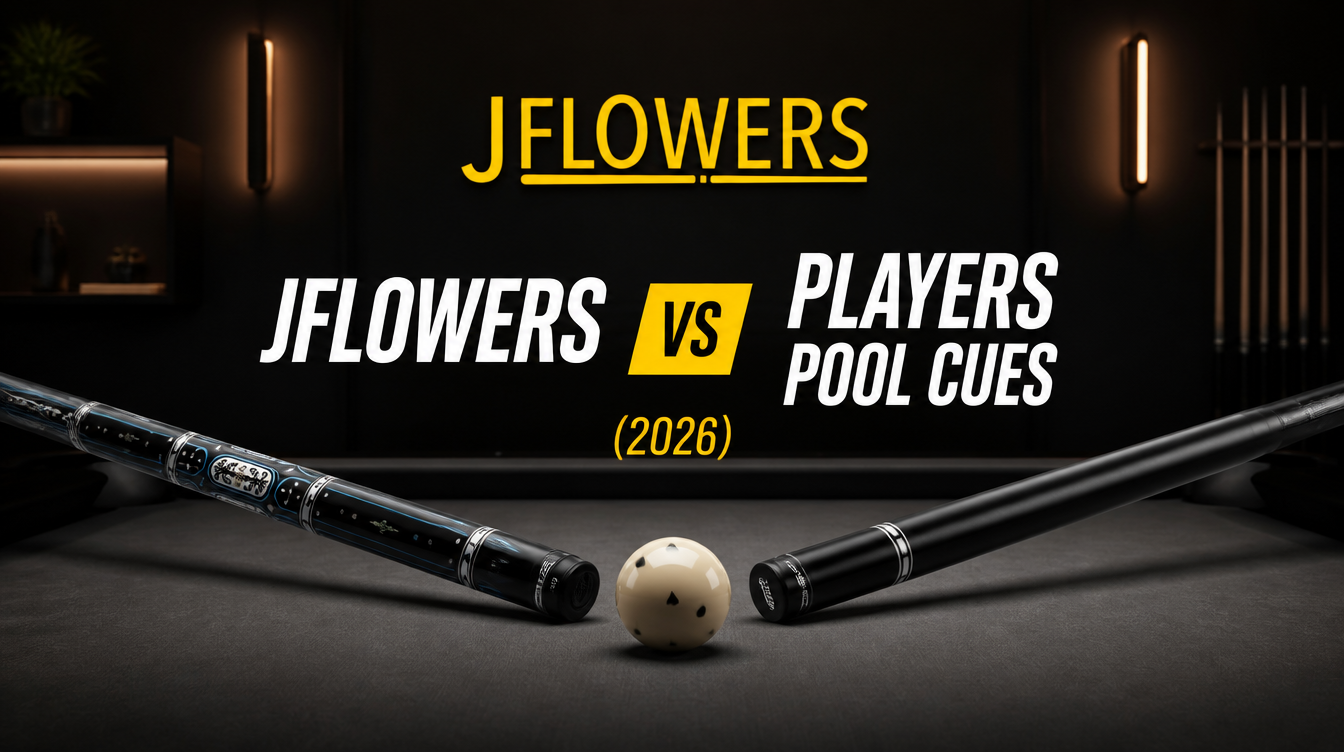
Players Technology is one of the most widely used cue brands in American pool halls. Their two-piece cues at $40-$150 have introduced millions of American players to personal cue ownership. Nearly every serious pool player in America either started on a Players cue or played against someone who did. Comparing Players to JFlowers isn’t really a direct competition — it’s a marker on the journey from beginner to serious competitor.