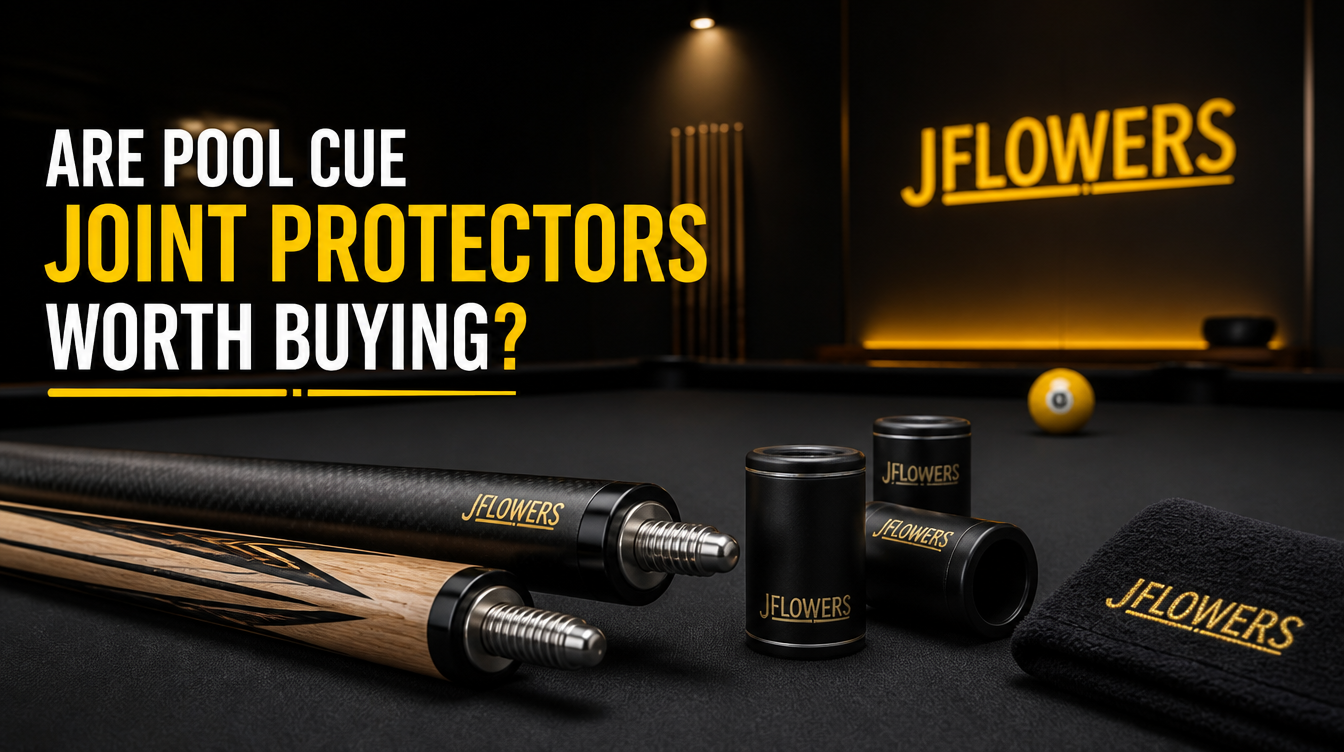
Joint protectors are small, inexpensive accessories that screw onto the exposed joint ends of a disassembled cue — one fits the shaft's joint end, one fits the butt's joint pin. They cost $5-$20 per pair and take seconds to apply. And yet most beginner players have never used them, and many intermediate players skip them routinely.
Listen to this article
Are they worth adding to your kit? For most serious players: yes. Here’s the straightforward case.
What Joint Protectors Do’),
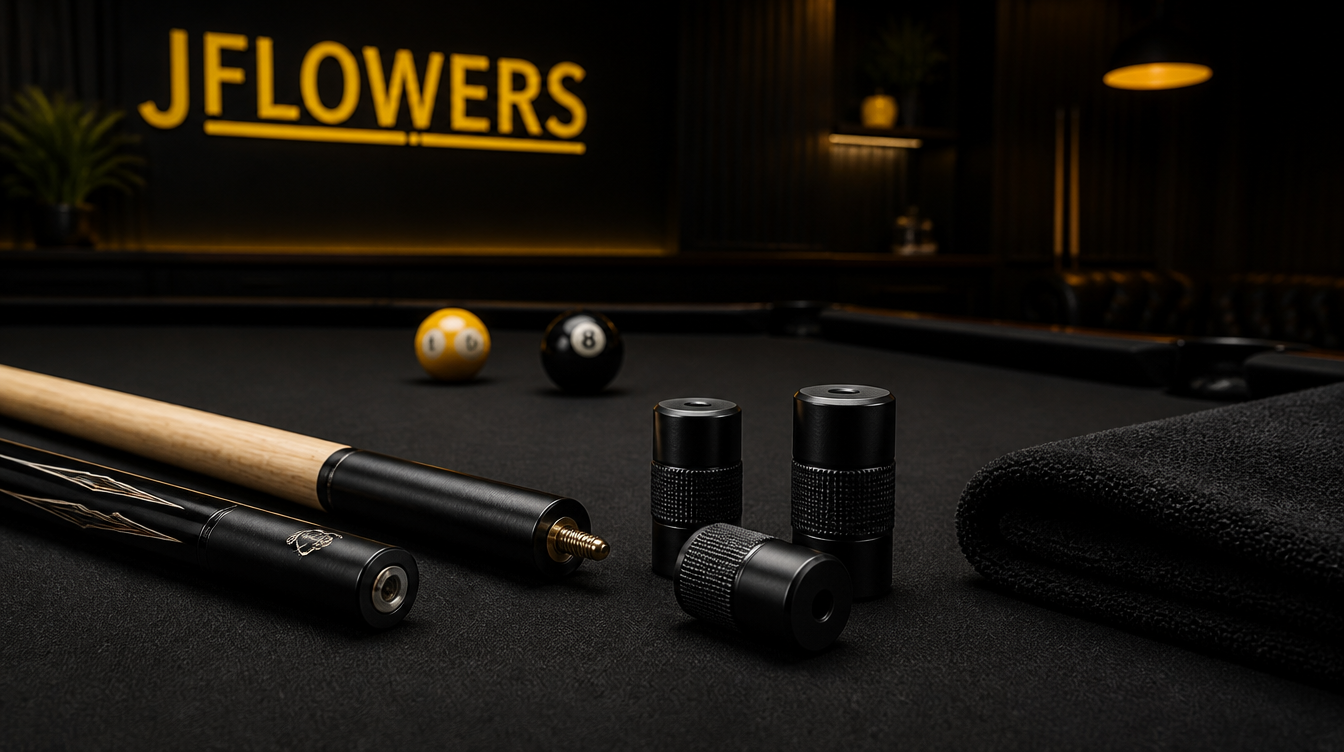
When a two-piece cue is disassembled — shaft off the butt — both ends have exposed joint components:
The shaft has exposed joint threads at its joint end
The butt has an exposed joint pin at its joint end
These exposed surfaces are vulnerable to damage when the cue components are stored in the case, transported, or handled. Joint protectors provide a threaded cap that covers and protects these surfaces.
What Joint Protectors Protect Against’),
Thread Damage The threads on the shaft’s joint end and the threads on the butt’s joint pin can be damaged by impact, by contact with metal accessories in the case, or by cross-threading from repeated assembly. Damaged threads affect how accurately the shaft seats — even slight thread wear can introduce inconsistency in how the shaft aligns to the butt. Joint protectors physically shield the threads during storage and transport.
Debris Accumulation Without protectors, chalk dust and case lining debris accumulates in the thread grooves between sessions. This debris doesn’t just look bad — it affects thread engagement quality and can be ground into the threads during assembly, accelerating wear. Joint protectors keep debris out of the threads entirely.
Butt Pin Damage The joint pin on the butt is a protruding metal component that can be bent or damaged if the butt end impacts something hard — in a dropped case, in a trunk with shifting luggage. A butt pin protector acts as a hard cap over the pin, absorbing impact that would otherwise reach the pin.
Matching Joint Protectors to Your Joint’),
Joint protectors must match your cue’s joint specification. A 5/16×18 protector won’t fit a Uni-Loc joint. Before purchasing, confirm your joint type (usually 5/16×18 for most American production cues, Uni-Loc for Predator cues). For the full joint type guide, see How to Choose the Right Pool Cue Joint.
For the JFlowers SMO Carbon Fiber Shaft’),
On a ferrule-less carbon fiber shaft like the JFlowers SMO, the shaft joint end is the carbon fiber tube with threads machined in. A well-fitted joint protector covers these threads and provides additional protection for the transition between the carbon fiber shaft body and the joint section. This is particularly useful during airline travel where checked baggage may expose the case to impacts.
Are They Worth It? The Clear Answer’),
At $5-$20 per pair, joint protectors are one of the lowest-cost accessories in pool equipment. They protect joint components that, if damaged, affect cue performance and could require professional repair or cue replacement. The cost-benefit ratio is strongly favorable for any player with a cue worth $200 or more.
The case for skipping them: if you play locally, always have full control of your case, and reassemble and disassemble your cue with care, joint damage is unlikely. But for travelers, tournament players, or anyone whose case goes in car trunks or airline holds: joint protectors are non-optional insurance.
Pros and Cons
Joint protectors
Protect threads from impact damage, debris, and cross-threading wear
Prevent debris accumulation in thread grooves between sessions
Protect butt pin from impact damage during transport
Very low cost ($5-$20) relative to protection value
Adds a step to assembly and disassembly routine
Must match joint specification — wrong spec won’t fit
Expert Recommendation Buy joint protectors that match your joint specification and use them every time the cue is disassembled for transport. They’re a $15 investment in protecting a $400+ cue. For the JFlowers SMO shaft and any quality cue butt: joint protectors belong in your accessories kit as a standard item, not an optional extra.
Conclusion
Joint protectors are the easiest case to make for any pool accessory: low cost, clear protection benefit, easy to use. They protect the joint components that determine how precisely your shaft seats every session. For $15, they’re a non-negotiable part of any serious player’s equipment kit.
Frequently Asked Questions
Q: Are joint protectors necessary for pool cues? Not strictly necessary, but strongly recommended for transport and storage. They protect joint threads and butt pins from damage that affects cue performance. Q: What do joint protectors do? They cover and protect exposed joint threads and butt pins when the cue is disassembled, preventing debris accumulation, thread damage, and pin impact damage. Q: How do I know what joint protectors to buy? Match the protector to your cue’s joint specification. Most American production cues use 5/16×18 — the most common available joint protector size. Q: How much do joint protectors cost? Typically $5-$20 per pair for shaft end + butt end protectors. Q: Do I need joint protectors on a carbon fiber shaft? Yes — the joint threads on a carbon fiber shaft benefit from the same protection as any other shaft. Joint protectors are recommended for any quality shaft. Q: Can I use joint protectors with the JFlowers SMO shaft? Yes — standard 5/16×18 joint protectors fit the JFlowers SMO shaft joint end.
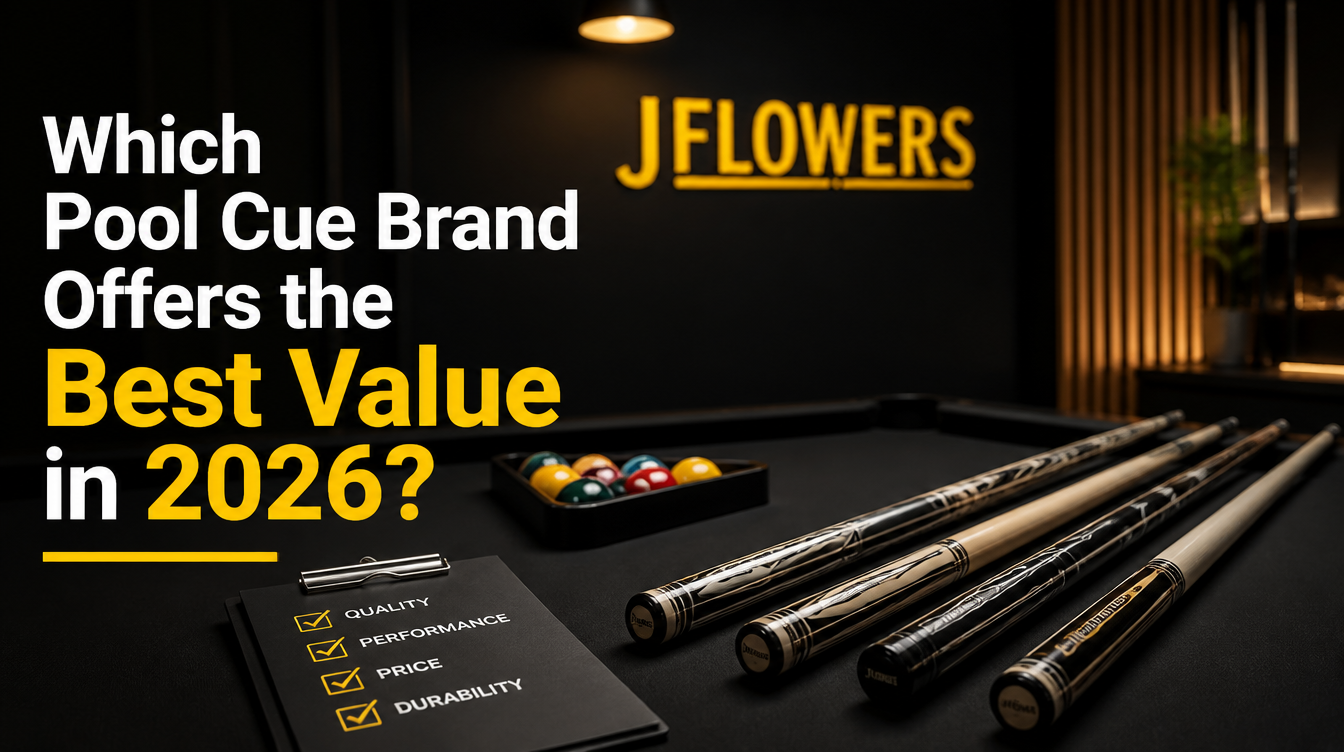
After comparing JFlowers to Predator, Mezz, McDermott, Meucci, Jacoby, Pechauer, and a dozen more brands across every price point and construction philosophy — the question that started all of it deserves a direct answer: which pool cue brand actually offers the best value for serious competitive players in
2026?
Players Technology is one of the most widely used cue brands in American pool halls. Their two-piece cues at $40-$150 have introduced millions of American players to personal cue ownership. Nearly every serious pool player in America either started on a Players cue or played against someone who did. Comparing Players to JFlowers isn’t really a direct competition — it’s a marker on the journey from beginner to serious competitor.