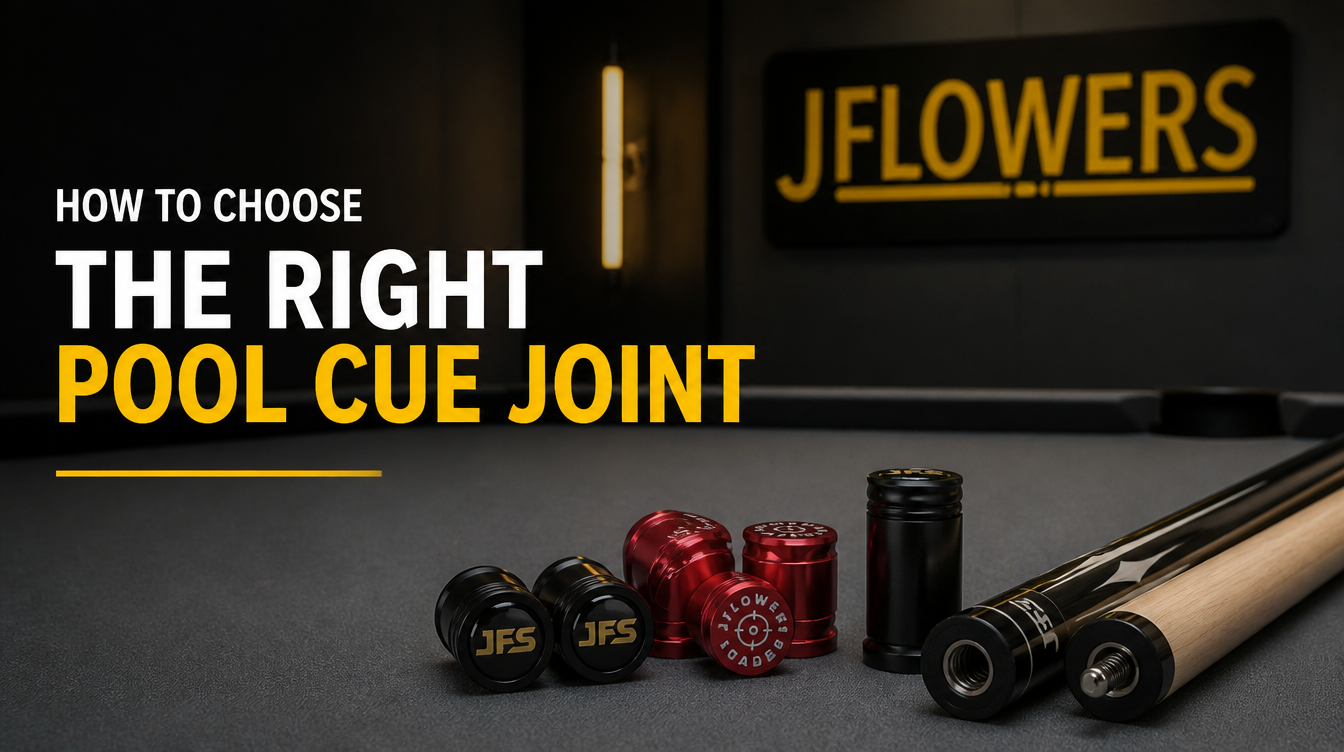
The joint is one of the least talked-about components of a pool cue — and one of the most important. It's the connection point between your shaft and butt, and it affects hit feel, vibration, and whether you can swap third-party shafts onto your cue without a machinist.
Listen to this article
Most players don’t think about joint type until they’re trying to add a premium shaft to a cue and discover the threads don’t match. Or until they notice their current joint feels spongy and wonder if the cue is actually the problem.
This guide covers every major joint type on the market, what each one does for your hit feel and shaft compatibility, and how to choose the right one for your game. For the broader context of how joints fit into a cue’s overall technology, see Pool Cue Technology Explained.
What a Cue Joint Actually Does
The joint serves two functions: it connects the shaft to the butt mechanically, and it transmits energy and feedback from the hit point back through the cue to your hand. The material, design, and precision of the joint affect both functions.
A tight, well-machined joint transmits energy cleanly and gives you consistent feedback on every shot. A loose or poorly made joint absorbs energy unpredictably, makes the hit feel dead or mushy, and undermines aim repeatability because the shaft doesn’t seat in exactly the same position every time you assemble the cue.
The Major Joint Types
5/16 x 18 The 5/16 x 18 is the most common joint specification in pool cues, particularly in American-market cues. The numbers refer to the thread diameter (5/16 inch) and thread count (18 threads per inch). It’s an industry-standard specification that gives players the widest shaft compatibility — most production cues and aftermarket shafts from brands like JFlowers are built around this spec.
If you own a cue with a 5/16×18 joint and want to add a JFlowers SMO Carbon Fiber Shaft, you’re almost certainly compatible without any modification. This universality is one of the biggest advantages of the 5/16×18 standard.
5/16 x 14 The 5/16 x 14 uses the same diameter but fewer threads per inch, producing a faster thread engagement that seats with fewer rotations. Popular on some older American-made cues and certain European brands. Less common than 5/16×18 and limits your aftermarket shaft options.
Radial (Uni-Loc Style) The Radial joint, most associated with Predator’s Uni-Loc system, uses a quick-release pin-and-catch design that seats and releases with a quarter-turn rather than a full thread rotation. The result is extremely repeatable shaft seating — the shaft drops into the same position every time.
The Uni-Loc/Radial system is proprietary to Predator. It’s excellent technology for shaft-swapping convenience, but it limits you to Predator-compatible shafts. If you’re building around the Predator REVO shaft, Uni-Loc is the natural joint choice.
Mezz WJ (White Joint) Mezz uses their own joint specification on their higher-end cues — clean, tight tolerances with a distinctive appearance. Compatible with Mezz shafts. Like Radial, it’s a proprietary system.
3/8 x 10 Common on older American-made cues and some custom cue makers. Coarser thread, less common in modern production cues. If you own an older cue with this joint, your aftermarket shaft options are more limited.
3/8 x 16 Another older American standard. Found on vintage cues and some traditional custom builds. Not widely produced for modern aftermarket shafts.
Wood-to-Wood Joints Some cues, particularly vintage or custom pieces, use wood-to-wood joints where the shaft and butt connect directly without a metal pin or collar. These produce the softest, most organic hit feel and maximum vibration feedback. They require careful maintenance and are more susceptible to moisture-related changes in fit.
Joint Materials and Hit Feel
Beyond the thread spec, the material of the joint collar and pin significantly affects how the cue feels at impact.
Stainless Steel Stainless steel joints produce a clean, crisp hit with clear feedback. They’re extremely durable and hold tolerances well over time. Popular with players who prefer a more solid, defined feel on contact. Most modern production cues use stainless steel or a stainless-and-phenolic combination.
Brass Brass joints produce a slightly warmer, less sharp hit feel than stainless. Common on mid-range cues. Durable but slightly softer in transmission character than stainless.
Phenolic Resin Phenolic joints are extremely hard and produce a very crisp, almost glassy hit feel. Popular on break cues and on playing cues for players who want maximum feedback. Some players find it too sharp — it’s a personal preference.
Ivory / Synthetic Ivory Found on vintage and some high-end custom cues. Produces a distinctive soft feel. Synthetic ivory alternatives are used in modern cues to achieve a similar feel legally.
How Joint Type Affects Shaft Compatibility
This is the practical point most players eventually run into. If you want to upgrade to a premium third-party shaft — whether a Predator, Mezz, or JFlowers SMO — the shaft needs to match your joint spec.
5/16×18: widest compatibility, most third-party shaft options
Uni-Loc/Radial: Predator shafts only
Mezz WJ: Mezz shafts only
3/8×10 or 3/8×16: very limited modern shaft availability
If you’re buying a new cue or upgrading your joint, 5/16×18 gives you the most flexibility for the future. When considering a carbon fiber shaft upgrade, see Carbon Fiber vs Maple Shafts: The Complete Comparison to understand what you’re gaining.
Joint and Shaft Balance
The joint material contributes slightly to the cue’s overall weight and balance point. Heavy stainless steel joints push the balance toward the center or slightly butt-heavy. Lighter joint materials (like some phenolicdesigns) shift balance toward the tip end.
A quality joint should thread together firmly and smoothly with no wobble at full seat. You shouldn’t need excessive force to tighten it, and it should release cleanly without binding. If you feel grinding, looseness, or if the shaft has any movement after seating, the joint needs attention.
Thread wear is a real issue on heavily used cues. If you’re noticing inconsistent shaft seating on an older cue, the joint may need professional attention or re-tapping.
Joint Protectors
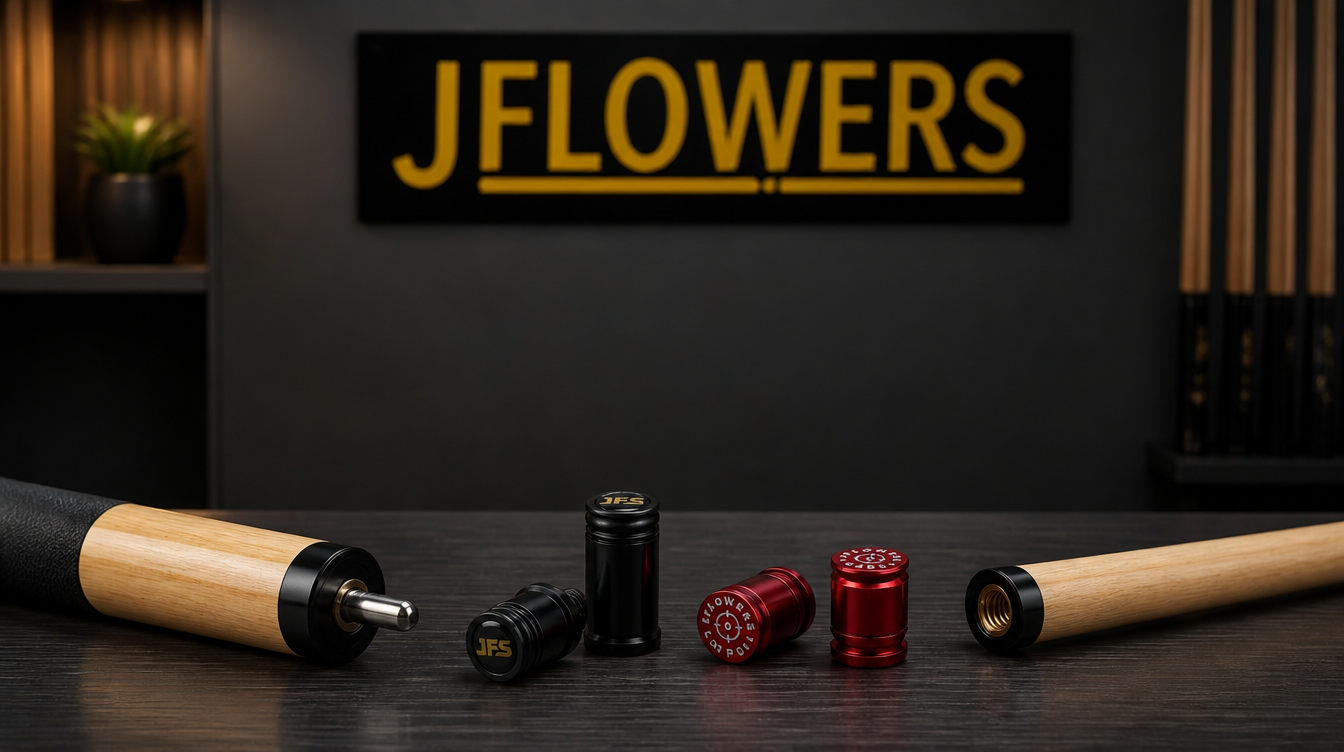
If you carry multiple shafts or frequently swap shafts at the table, joint protectors are a worthwhile investment. They protect the exposed joint threads when the shaft is off the butt. Cheap joint protectors often fit poorly and can cross-thread the joint over time — buy ones that are made for your specific joint spec.
Pros and Cons
5/16×18 joint
Industry-wide compatibility — most third-party shafts available
Easy to find replacement shafts and accessories
Standard for most new JFlowers and production cues
Slightly more rotations to seat than quick-release designs
Proprietary joints (Uni-Loc, Mezz WJ)
Extremely repeatable shaft seating
Quick-release convenience for shaft-swappers
Locked into that brand’s shaft ecosystem
Limited third-party shaft options
Expert Recommendation For most players building or upgrading a playing setup: choose a cue with a 5/16×18 joint. It gives you the flexibility to upgrade your shaft independently as your game develops — including dropping in a JFlowers SMO Carbon Fiber Shaft whenever you’re ready to make that move. If you’re already invested in the Predator ecosystem and planning to stay there, Uni-Loc makes sense. But for everyone else, the 5/16×18 standard is the smart, future-proof choice.
Conclusion
Choosing the right joint comes down to two things: hit feel preference and shaft compatibility. For most players, the 5/16×18 standard is the clear choice — it’s the most widely supported specification and gives you the freedom to upgrade your shaft independently as your game grows. If you’re building a setup around a JFlowers playing cue, the 5/16×18 joint and the JFlowers SMO shaft are a natural pairing that requires zero compromise on either end.
Frequently Asked Questions
Q: What is the most common pool cue joint? The 5/16×18 is the most common joint specification in American pool cues. It offers the widest shaft compatibility and is used by most production cue brands including JFlowers. Q: Does the joint type affect how a cue hits? Yes. Joint material (stainless, brass, phenolic) affects vibration transmission and hit feel. Stainless steel is crispest. Brass is slightly warmer. Phenolic is the hardest and most defined. Q: Can I put any shaft on any cue? No. The shaft must match the joint specification of the butt. 5/16×18 is the most universal. Proprietary joints like Uni-Loc are limited to brand-specific shafts. Q: What is a Uni-Loc joint? Uni-Loc is Predator’s proprietary quick-release joint system. It uses a pin-and-catch design that seats with a quarter-turn. Extremely repeatable but locks you into Predator-compatible shafts. Q: How do I know what joint my cue has? Check the manufacturer’s specifications or measure the thread diameter and count. Most cues in the American market are 5/16×18. You can also take the cue to a billiards retailer for identification. Q: Does joint tightness matter? Significantly. A loose joint creates micro-movement that undermines aim consistency. A well-machined joint should seat firmly with no play whatsoever. Q: What is a wood-to-wood joint? A direct connection between shaft and butt wood without a metal pin or collar. Produces the softest hit feel and maximum vibration feedback. Requires careful maintenance and is moisture-sensitive. Q: Can a worn joint be repaired? Sometimes. Worn threads can be re-tapped by a qualified cue repairman. Joint pins can sometimes be replaced. Significant wear usually means the cue needs a professional assessment. Q: What joint does the JFlowers SMO shaft use? The JFlowers SMO Carbon Fiber Shaft is compatible with the industry-standard 5/16×18 joint, making it compatible with the majority of production cues on the market.
After comparing JFlowers to Predator, Mezz, McDermott, Meucci, Jacoby, Pechauer, and a dozen more brands across every price point and construction philosophy — the question that started all of it deserves a direct answer: which pool cue brand actually offers the best value for serious competitive players in
2026?
Players Technology is one of the most widely used cue brands in American pool halls. Their two-piece cues at $40-$150 have introduced millions of American players to personal cue ownership. Nearly every serious pool player in America either started on a Players cue or played against someone who did. Comparing Players to JFlowers isn’t really a direct competition — it’s a marker on the journey from beginner to serious competitor.