Premium Pool Cue Cases: What You’re Actually Paying For
JFlowers Cues
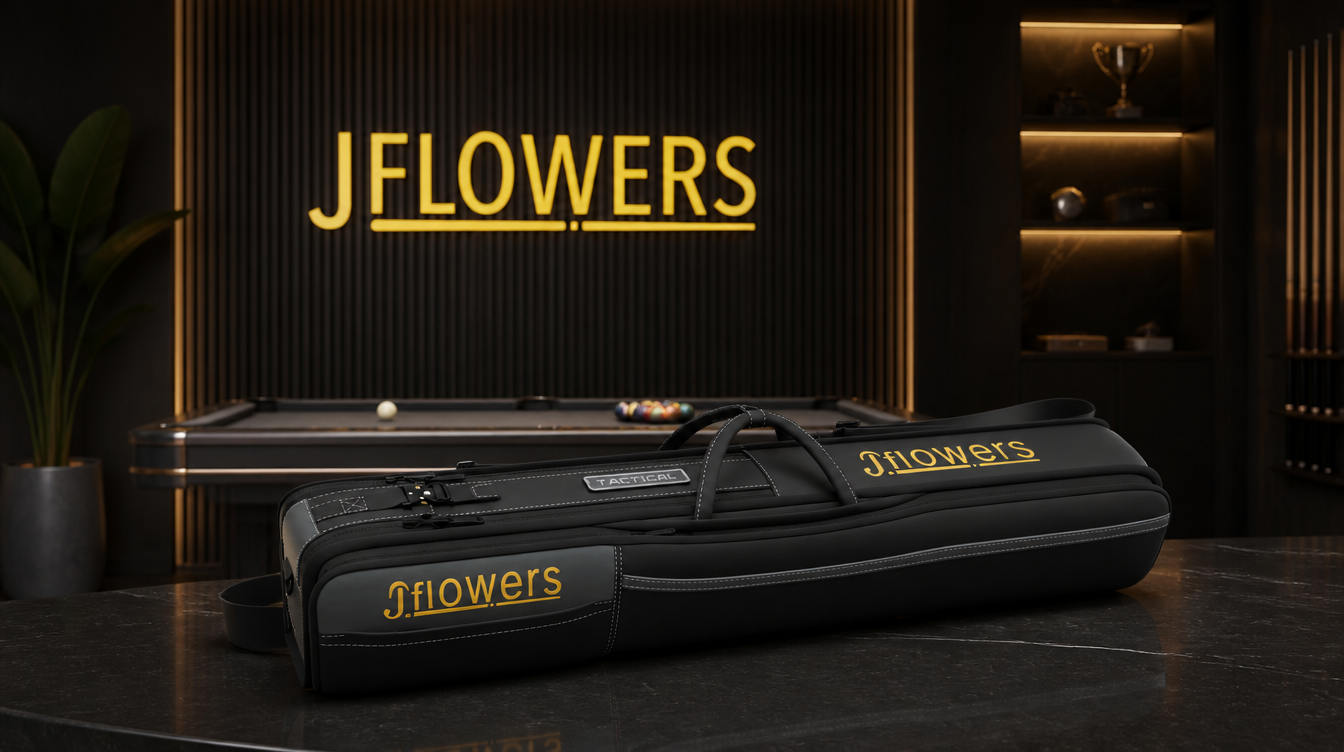
Premium cue cases exist at a different level from the $60-$150 quality cases that most competitive players use. We're talking about hand-crafted leather cases, cases with exotic materials and custom interior work, and purpose-built protective systems that approach $500-$1,000 or more.
Listen to this article
This guide covers what genuinely separates a premium case from a quality standard case, who actually benefits from premium case investment, and when the extra cost is justified versus when it’s purely about aesthetics.
What Premium Means in Cue Cases
Premium cue cases earn their designation through a combination of:
Materials — genuine full-grain leather or exotic materials versus synthetic alternatives
Craftsmanship — hand-stitched seams, hand-finished edges, artisan construction details
Interior work — custom-fitted interior with quality velvet or suede lining, precisely cut foam, hand-finished shaft tubes
Hardware — solid brass or stainless steel fittings, quality latches and locks, substantial weight that signals real material
Durability — materials and construction that improve with age rather than degrading
Leather Quality in Premium Cases
The biggest single differentiator between a quality standard case and a premium case is leather grade. Premium cases use full-grain leather — the most durable and beautiful grade, which includes the full natural grain of the hide and develops a rich patina over years of use.
Standard cases often use corrected-grain leather (sanded and embossed to a uniform appearance) or bonded leather (scraps bound with adhesive). These look similar to full-grain in product photos but perform very differently over time — corrected-grain wears acceptably, bonded leather peels.
Full-grain leather on a premium case ages like a quality leather good: it develops character, holds up to handling, and looks better at 10 years than at 1. For the material comparison context, see Leather vs Synthetic Cue Cases.
Interior Construction at the Premium Level
Premium cases often feature interiors that go beyond standard padded tubes:
Velvet or suede-lined shaft tubes that protect finish without any abrasion risk
Custom-cut foam that fits specific cue configurations precisely
Hand-stitched shaft retainers that hold cues firmly without any contact pressure
Dedicated tip protection end caps with soft materials at every tip contact point
This level of interior work protects the cue’s cosmetic finish as much as its structural integrity — important for collectors who care about the appearance of their cue as much as its performance.
Protection Comparison: Premium vs Standard
Here’s where premium soft cases meet their limitation: a $600 leather premium case provides essentially the same impact protection as a $100 quality soft case. The premium materials, craftsmanship, and interior work protect against scratches, abrasion, and moisture. They don’t protect against the impact and compression forces that require a hard exterior shell.
For maximum physical protection regardless of case price, a tactical hard case is still the standard. Premium leather cases are the choice when aesthetics and material quality matter as much as protection — for collectors, for players who value the cue as an object as well as a tool.
Who Premium Cases Are For
Premium cue cases are right for:
Collectors who own high-value custom cues ($1,000+) and want cases that match the cue’s quality and presentation
Players who use their cue case as a statement piece — at high-level tournaments, in professional settings
Players who travel locally with full control of their case and value aesthetics alongside protection
Players who own vintage or collectable cues where the case is part of the overall presentation value
Premium cases are not necessary for: competitive players who prioritize performance over aesthetics, players who need airline-quality protection (tactical case does this better), or players for whom the case investment doesn’t match the cue investment.
Matching Case Quality to Cue Quality
A useful rule of thumb: your case investment should reflect your cue investment. A $200 cue in a $600 case is an imbalance. A $1,500 custom cue in a $50 vinyl bag is a different kind of imbalance. For most competitive players with a $400-$800 JFlowers playing setup, a quality standard case at $80-$200 is the appropriate match. For custom cue collectors with $1,500+ investments, a premium case starts to make sense as part of the overall presentation. For the full cue investment framework, see How to Protect Your Pool Cue Investment.
Pros and Cons
Premium cue cases
Materials that age well and develop character over years Craftsmanship that reflects pride in the overall cue presentation Interior work that protects cue finish as well as structure Appropriate for high-value cue investments Same impact protection limitation as all soft cases High cost that must be justified by cue investment level Requires leather maintenance to realize the aging advantage
Expert Recommendation For most competitive players with JFlowers setups in the $400-$800 range: a quality standard case at $80-$200 provides all the protection you need at a cost that matches the cue investment. If you own a custom cue at $1,000+ and value the overall presentation of your equipment: a premium case is a legitimate investment in how the cue is presented and preserved.
Conclusion
Premium cue cases are a legitimate investment for the right player with the right cue. The craftsmanship, materials, and interior quality are genuinely superior — and for collectors who view their cue as an object worth presenting properly, premium cases are part of that presentation. For most competitive players focused purely on performance, quality standard cases deliver all needed protection at a fraction of the price.
Frequently Asked Questions
Q: Are premium pool cue cases worth it? For high-value custom cues and collectors who value aesthetics and material quality: yes. For most competitive players with production cue setups: standard quality cases provide all necessary protection at a fraction of the cost. Q: What makes a cue case premium? Full-grain leather, hand-stitched construction, quality hardware, velvet or suede-lined interior, and craftsmanship that improves with age. Q: Do premium cases protect better? Against scratches and minor contact: yes. Against impacts and compression: not more than standard soft cases. Premium leather doesn’t add impact protection — for that, you need a hard case. Q: What is the best luxury cue case brand? Several custom case makers produce premium pool cue cases. Research brands at your price point and inspect the leather grade and interior finish quality before purchasing. Q: How much should I spend on a premium cue case? Match the case cost to the cue cost. $1,500+ custom cue: $300-$600 premium case is appropriate. $400-$800 production cue: quality standard case at $80-$200 is the right match.
After comparing JFlowers to Predator, Mezz, McDermott, Meucci, Jacoby, Pechauer, and a dozen more brands across every price point and construction philosophy — the question that started all of it deserves a direct answer: which pool cue brand actually offers the best value for serious competitive players in
2026?
Players Technology is one of the most widely used cue brands in American pool halls. Their two-piece cues at $40-$150 have introduced millions of American players to personal cue ownership. Nearly every serious pool player in America either started on a Players cue or played against someone who did. Comparing Players to JFlowers isn’t really a direct competition — it’s a marker on the journey from beginner to serious competitor.