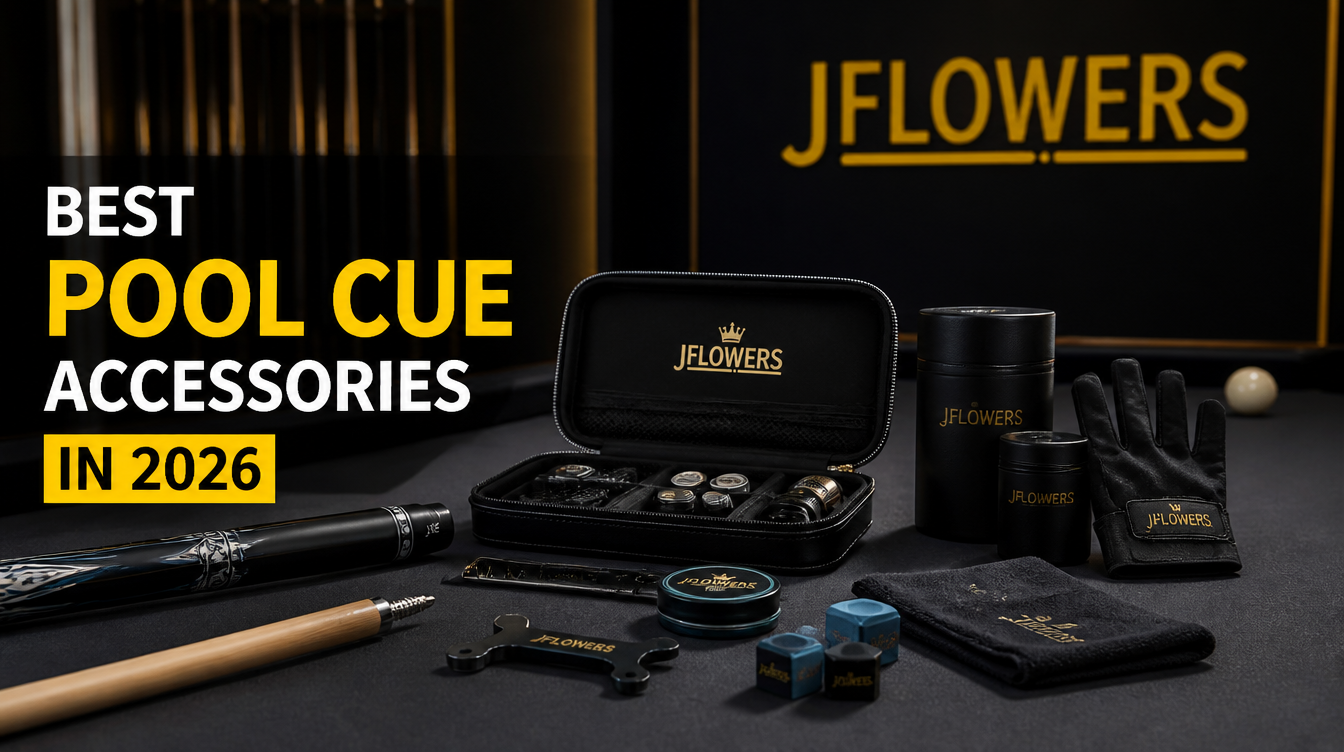
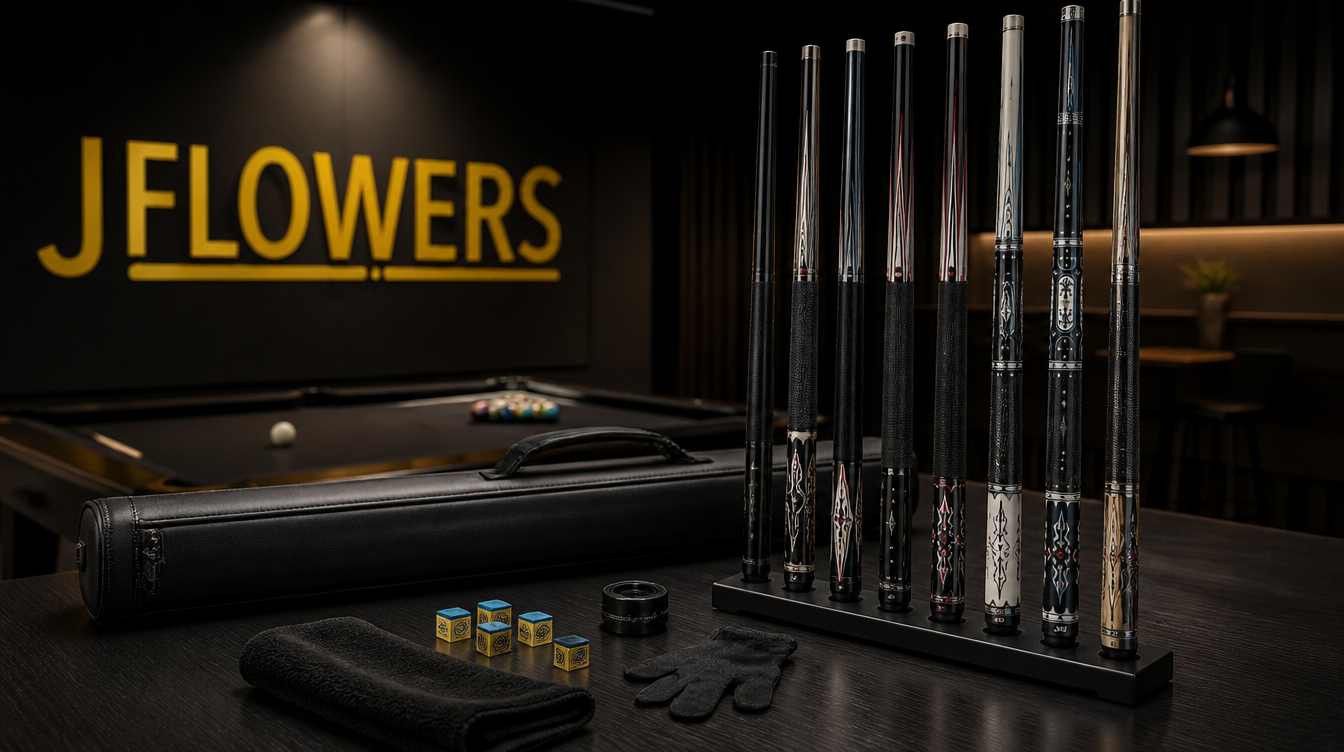
Beyond the cue itself, the accessories you carry and use have a real effect on how consistently you play and how well your equipment performs. Some accessories are genuinely essential — you'll use them every session without thinking about it. Others are useful for specific situations. And some are nice ideas that don't end up getting used much.
Listen to this article
Everything worth having in your setup — and what actually makes a difference
This guide covers every major pool cue accessory category, what it does, who needs it, and what’s worth spending money on.
Essential: The Accessories You Use Every Session
Chalk The most-used accessory in pool, by far. Chalk before every shot — that’s the rule. The quality of your chalk matters more than most players realize. Standard chalk (Master, Silver Cup) works fine for recreational play. Premium chalk (Kamui Black, Taom, Blue Diamond) provides better adhesion, less spray, and more consistent coverage — noticeable differences for players who care about consistent tip performance.
Keep 2-3 pieces of your preferred chalk in your case. Running out mid-session is avoidable and irritating. Kamui chalk lasts significantly longer per piece than standard chalk despite its higher price per unit.
Tip Tool (Pick and Scuffer) A tip pick scuffs the tip surface to improve chalk adhesion. A tip shaper maintains the proper dome. These are the two most-used maintenance tools in your case — use them regularly and your tip performs better and lasts longer.
Multi-function tip tools that combine pick, scuffer, and shaper are compact and practical for the case pocket. Several good options exist at low price points — this doesn’t need to be an expensive purchase.
Clean Cloth A clean microfiber cloth in the case pocket lets you wipe the shaft between racks during play and do a proper wipe-down after the session. The cloth you use to clean your shaft should be dedicated to that purpose — don’t use a chalk-covered towel that adds more residue than it removes.
Highly Useful: Accessories That Improve Specific Aspects of Your Game
Cue Glove A pool glove covers the bridge hand — specifically the fingers that the shaft slides across during the stroke. For players whose hands sweat, who play in warm environments, or who find a natural bridge inconsistent, a glove provides a smoother, more consistent shaft slide.
Not every player uses a glove, and it’s a personal preference. But players who benefit from one — particularly those with sweaty hands — find it makes a noticeable difference in stroke consistency. Cue Armour gloves are designed specifically for the pool application with smooth bridge fingers and breathable construction.
Mechanical Bridge A mechanical bridge (sometimes called a spider or rake) lets you reach shots where a standard bridge hand isn’t practical — over balls, from an awkward angle, or for players with limited mobility. Quality venues provide these, but serious players who play at multiple locations sometimes carry their own to guarantee availability.
Shaft Cleaning Cloth (Dedicated) A shaft-specific cleaning cloth — either a standard microfiber or a product like a Q-Wiz cleaning pad — keeps the shaft feeling smooth during play. For maple shaft players especially, a quick wipe during long sessions maintains shaft feel in a way that makes a tangible difference.
Chalk Holder A chalk holder clips to your pocket or belt and keeps chalk accessible without setting it on the table rail where it rolls off or gets knocked around. For competitive players who chalk before every shot, having chalk immediately accessible without hunting for it on the rail is a convenience worth having.
Competitive Players: Additional Accessories That Matter
Replacement Tips Every serious player should carry at least one replacement tip in their case. Not because tip failure is common — it’s not — but because when it does happen during a tournament or important league match, having a replacement available is the difference between continuing and forfeiting.
Carry the same brand and hardness you currently play on, already broken in slightly if possible, so an emergency swap doesn’t completely change your tip feel mid-competition.
Tip Glue and Clamp Players who can install their own tips should carry a small container of tip glue and a tip clamp. An emergency tip installation takes 10-15 minutes and keeps you in the match. For players who can’t install their own tips, a tip that’s loose or coming off is an immediate trip to a cue technician — which may not be available at your venue.
Cue Wax or Shaft Conditioner (Maple Players) For maple shaft players who play long sessions or competitive events, a small amount of shaft conditioner or cue wax helps maintain shaft feel during extended play. Apply sparingly during breaks — not mid-match.
Cue Armour Performance Accessories
Cue Armour builds accessories for players who want performance-grade gear that matches the seriousness of their game. The glove line is designed specifically for pool — smooth bridge fingers, breathable construction, the fit that stays on through a full session without shifting. The towel line keeps your hands dry and your cue clean. These aren’t generic sporting goods adapted for pool — they’re built from the ground up for the demands of cue sport performance.
If you’re building out your competitive setup, Cue Armour accessories complete it the same way the right cue completes your game.
Accessories Worth Skipping
Generic chalk that came in a bundle — spend the extra $5-8 on quality chalk; the difference is real
Training aids that promise dramatic improvement without practice — none of them replace actual table time
Elaborate cue racks as gifts — they look nice but don’t protect the cue the way a case does
Cheap combination tools that do five things poorly instead of two things well
What accessories should a beginner start with? Quality chalk, a tip tool (pick and shaper), a clean cloth, and a hard case. Those four items cover the essentials for any player at any level. Everything else is added based on specific needs and playing frequency.
Do pool gloves actually help? For players with sweaty hands or inconsistent bridge hand feel, yes — a glove can make a measurable difference in stroke consistency. For players with naturally dry hands and a consistent bridge, the benefit is minimal. Try one if you’ve had any issues with bridge hand consistency.
Is premium chalk worth the price? For serious players who care about consistent tip performance, yes. Kamui chalk lasts significantly longer per piece than standard chalk, and the adhesion is noticeably better. For casual recreational players, standard chalk is completely adequate.
What’s the most overlooked accessory? A quality chalk holder. Players who chalk before every shot — as they should — find it genuinely useful to have chalk immediately accessible rather than sitting on the rail somewhere. It’s a small convenience that adds up over a long session.
Final Thoughts
The right accessories don’t transform your game. But they support consistent performance, protect your equipment, and remove the small frictions that accumulate over a long session or tournament day. Build your accessory setup the same way you built your cue setup: deliberately, based on what your game actually needs, from quality products that hold up to regular use.
After comparing JFlowers to Predator, Mezz, McDermott, Meucci, Jacoby, Pechauer, and a dozen more brands across every price point and construction philosophy — the question that started all of it deserves a direct answer: which pool cue brand actually offers the best value for serious competitive players in
2026?
Players Technology is one of the most widely used cue brands in American pool halls. Their two-piece cues at $40-$150 have introduced millions of American players to personal cue ownership. Nearly every serious pool player in America either started on a Players cue or played against someone who did. Comparing Players to JFlowers isn’t really a direct competition — it’s a marker on the journey from beginner to serious competitor.