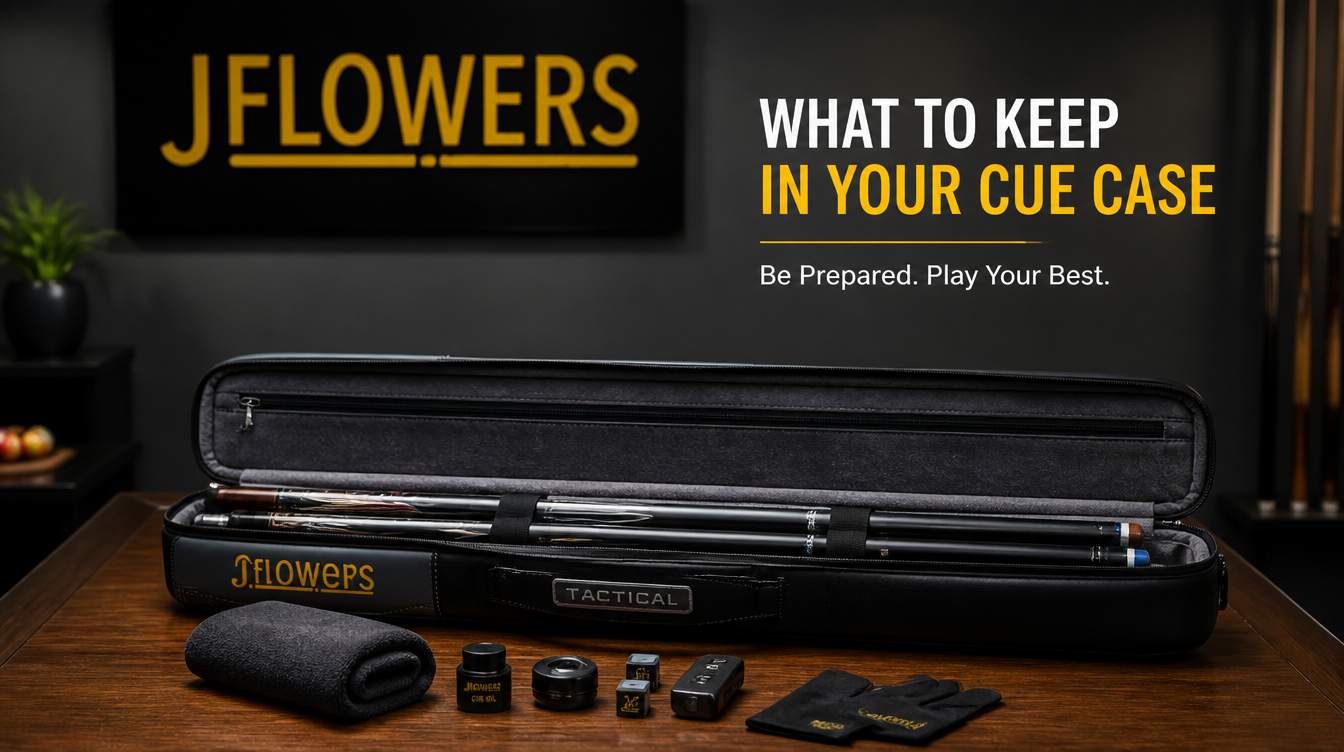
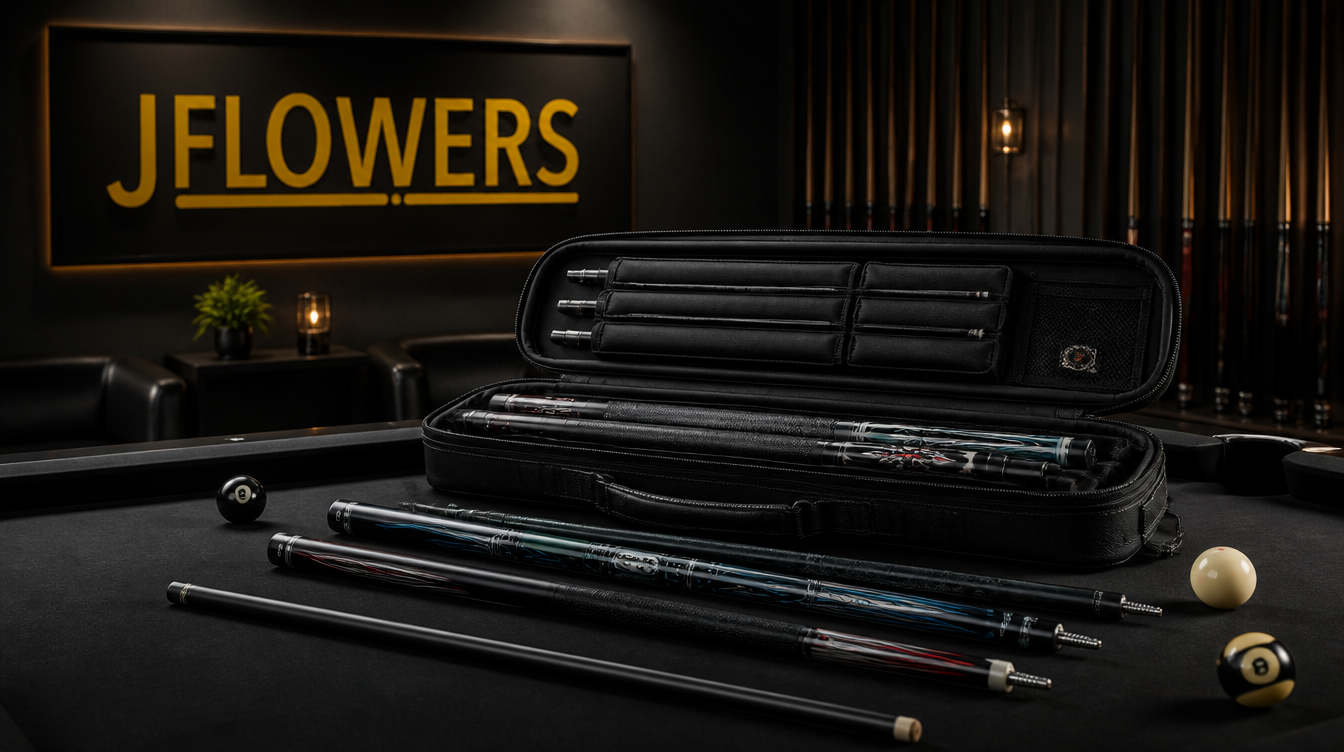
What's in your cue case says a lot about how seriously you take your game. Not because having the right stuff makes you a better player — it doesn't. But because having what you actually need, when you need it, removes the small disruptions and emergencies that affect your focus and your performance.
Listen to this article
The complete packing list — for league nights, practice sessions, and tournaments
This guide gives you the complete, practical list of what to keep in your case — separated by the always-carry essentials, the situational additions for league play, and the full tournament kit. Take what applies to your situation.
Always-Carry Essentials: Every Single Session
Your Cue (Obviously) The shaft and butt stored in their dedicated compartments, disassembled. This is why you have a case.
Chalk — Multiple Pieces Never go to the table with one piece of chalk. Carry three. Chalk falls on the floor, rolls off the rail, gets left at the wrong table. Having multiple pieces means you never play without chalk — which is not optional, it’s the most basic piece of shot preparation.
Use your preferred brand. If you’ve upgraded to premium chalk (Kamui, Taom), keep it in the case pocket where it won’t fall out. A chalk holder that clips to the case pocket opening is a practical solution for frequent players.
Tip Tool A compact tip tool with a pick and shaper is the most-used maintenance item after chalk. Before play: quick scuff to ensure chalk adhesion. After play: check the dome and reshape if needed. The two minutes this takes makes a real difference in tip consistency and longevity.
Clean Cloth One clean microfiber cloth dedicated to wiping the shaft. Between racks during long sessions and at the end of every session. This is the single most important shaft maintenance habit — and you can’t do it without a cloth in your case.
League Player Additions
Break Cue If you have a dedicated break cue — and you should, if you play league regularly — it lives in the case too. A 2×2 configuration accommodates a playing cue and a break cue comfortably. Breaking with your playing cue accelerates tip wear significantly; the break cue protects that investment.
Backup Chalk League nights are long. An extra piece or two beyond your standard carry means you’re never asking the house for chalk or borrowing from a teammate.
Spare Tip One replacement tip in your preferred brand and hardness. Not because tips fail often — they don’t. But because league nights where you’re mid-match when a tip goes wrong are the worst possible time to not have a backup. A $10-20 spare tip prevents a $0 forfeit from becoming a real problem.
Small Towel or Hand Cloth A small towel for keeping your hands dry during play. In warm pool rooms, hands sweat. Sweaty hands affect your bridge and your stroke. A small towel keeps hands dry and keeps chalk off your bridge fingers between shots. Cue Armour performance towels are designed specifically for the pool environment — low lint, right size, proper material.
Backup Shaft At a tournament — particularly a multi-day event — a backup shaft in the same joint specification as your primary is not optional. Equipment failures happen. A cracked ferrule, a tip that comes off, an unexpected joint issue — any of these can end your tournament day without a backup shaft. The backup shaft should be one you’ve played with, not a brand-new one, so switching isn’t completely disorienting.
Complete Tip Kit A replacement tip, tip glue, a small piece of sandpaper (for surface preparation before gluing), a tip clamp, and a tip shaper. This covers any tip emergency from a partially loose tip to a full replacement. For players who can’t install their own tips, knowing where the nearest cue technician is in the tournament venue is worth finding out before you need it.
Multiple Chalk Pieces (5-6) A full tournament day means significantly more chalk use than a single league session. Start with a full supply so you’re not relying on what’s left from the day before.
Cue Glove Tournament venues are often warmer than your home pool room. For players who ever experience bridge-hand sweat issues — even occasionally — carry the glove. The downside of having it and not needing it is nothing. The downside of needing it and not having it is stroke inconsistency in important matches.
Phone Charger Not pool-related, but tournament days are long. Your phone bracket app, your notes, your contact list for traveling players — all of it runs on a charged phone. A portable battery pack or charger is standard tournament packing.
Snacks and Water Long tournament days with inconsistent venue food options are real. Players who show up prepared with their own snacks and water maintain focus and energy better than players who rely on whatever’s available at the venue. This sounds obvious but gets skipped constantly.
What NOT to Keep in Your Cue Case
Excessive weight — a case stuffed with unnecessary items becomes uncomfortable to carry for a full day
Products not appropriate for your shaft material — don’t keep maple shaft conditioner if you play carbon fiber
Items that might leak or spill near your cue — liquids near cue components are a bad idea
Items that create chalk contamination — keeping highly chalk-covered items next to your clean cloth defeats the purpose
Organization Tips
Dedicate specific pockets to specific items — chalk always in the same pocket, tip tool always in another
Check and restock after every session — replace chalk, verify the tip tool is where it belongs
Keep the cleaning cloth in its own pocket away from chalk — a chalk-covered cloth doesn’t clean the shaft
For tournament packing, do a checklist the night before — don’t rely on memory when you’re rushing out the door
Frequently Asked Questions
How many pieces of chalk should I carry? Minimum three for a regular session. Five to six for a tournament day. The cost of extra chalk is trivial; the cost of running out mid-match is real.
Do I need a glove in my case if I rarely use one? If you rarely need it, you might not bother. But if there’s any situation where hand sweat has ever been a factor in your bridge — especially in warm tournament environments — keep the glove in the case. It weighs almost nothing.
Should I keep cue oil or conditioner in my case? Not in the case during play — it can leak. For maple shaft players who want to condition the shaft periodically, apply at home after cleaning. Carbon fiber players don’t need shaft conditioner at all.
What’s the most important thing most players forget? A replacement tip. It’s the lowest weight, lowest cost item that can save an entire tournament day. It gets forgotten constantly because tip failures are uncommon — until they happen at the worst possible moment.
Final Thoughts
What’s in your case reflects how you approach your game. A case stocked with the right items— chalk, tip tool, clean cloth, backup tip, glove if needed — sets you up to focus entirely on playing rather than managing equipment problems. Build the habit of restocking after every session so your case is always ready. The five minutes it takes to check and restock saves significant disruption when it matters.
After comparing JFlowers to Predator, Mezz, McDermott, Meucci, Jacoby, Pechauer, and a dozen more brands across every price point and construction philosophy — the question that started all of it deserves a direct answer: which pool cue brand actually offers the best value for serious competitive players in
2026?
Players Technology is one of the most widely used cue brands in American pool halls. Their two-piece cues at $40-$150 have introduced millions of American players to personal cue ownership. Nearly every serious pool player in America either started on a Players cue or played against someone who did. Comparing Players to JFlowers isn’t really a direct competition — it’s a marker on the journey from beginner to serious competitor.