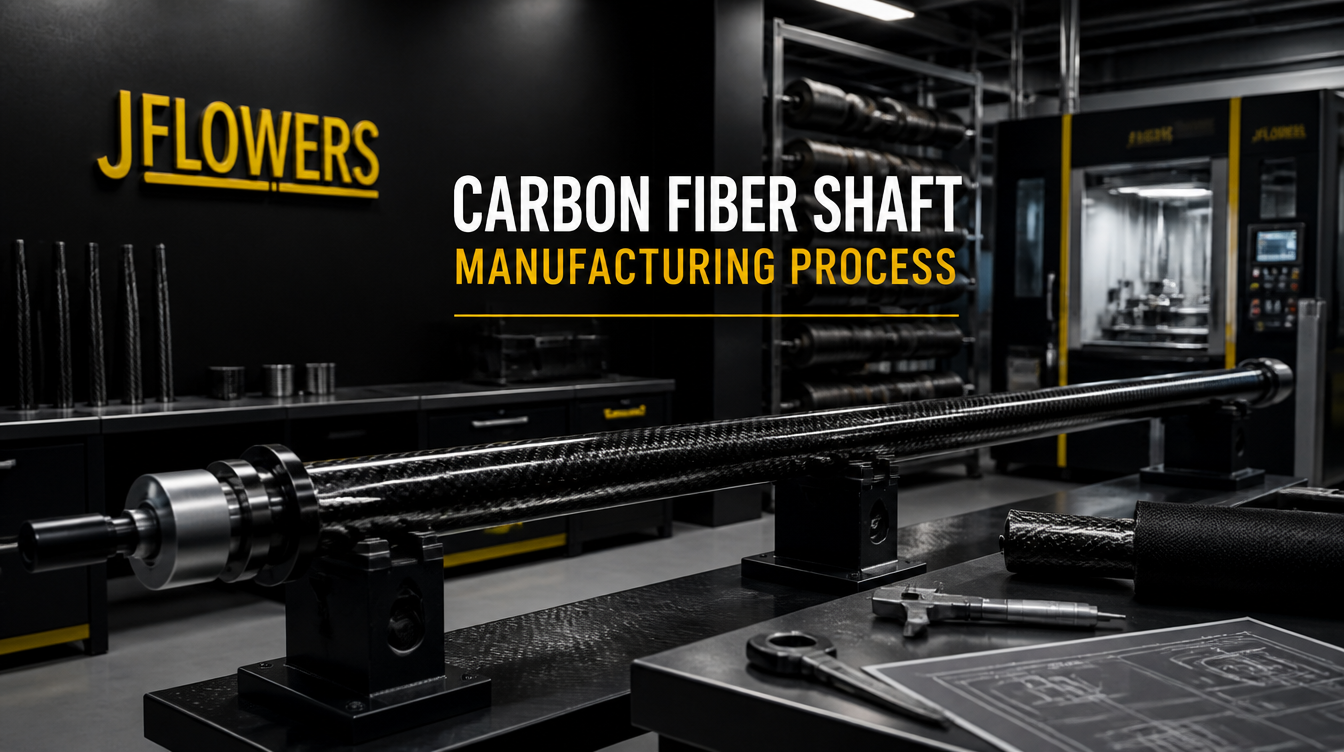
Understanding how a carbon fiber pool cue shaft is made helps you understand why quality varies so significantly between manufacturers — and why the difference between a $300 carbon fiber shaft and a
$100 one is not just branding. The manufacturing process is technically demanding, and the quality of each step directly affects the finished shaft's performance.
Listen to this article
This guide walks through the production of a carbon fiber pool cue shaft from raw material to finished product. It’s not a manufacturing manual — it’s a buyer’s education that helps you understand what you’re paying for.
Step 1: Raw Material Selection
Carbon fiber composite shafts begin with raw carbon fiber in the form of tows — bundles of carbon filaments — which are woven into fabric. The grade of carbon fiber used significantly affects the final product’s properties.
Higher-grade carbon fiber has more consistent filament diameter, more uniform crystalline structure, and tighter manufacturing tolerances. The modulus (stiffness) and tensile strength of the fiber vary by grade. Pool shaft manufacturers choose carbon fiber grades that produce the specific combination of stiffness, strength, and weight that their shaft design requires.
This is the first quality branch point: a manufacturer using lower-grade carbon fiber produces a shaft with less consistent properties, even if every other step is identical.
Step 2: Fabric Layup and Fiber Orientation
The carbon fiber fabric is cut and arranged around a mandrel (a cylindrical form tool) in specific orientations. As we covered in Carbon Fiber Shaft Technology, the orientation of the fibers determines the mechanical properties of the finished shaft.
For a pool shaft, the layup typically includes:
Axial layers — fibers running along the shaft’s length for stiffness and low deflection
Hoop layers — fibers wrapped around the shaft circumference for torsional stability
Angle-ply layers — fibers at intermediate angles for balanced mechanical properties
The number of layers, their orientation, and the sequence in which they’re applied are proprietary to each manufacturer and directly determine the shaft’s stiffness profile. This is where the most significant performance differentiation between manufacturers occurs.
Step 3: Resin Infusion and Consolidation
The dry carbon fiber layup is infused with epoxy resin — either pre-impregnated (prepreg) fabric or infused during the layup process. The resin serves as the binding matrix that holds the fibers in position and distributes loads between them.
Resin quality matters: the right resin viscosity, formulation, and compatibility with the specific carbon fiber grade affects how well the matrix bonds to the fibers and how the composite performs mechanically. Too little resin and the fibers don’t bond properly. Too much resin adds unnecessary weight and can reduce stiffness.
Step 4: Curing Under Heat and Pressure
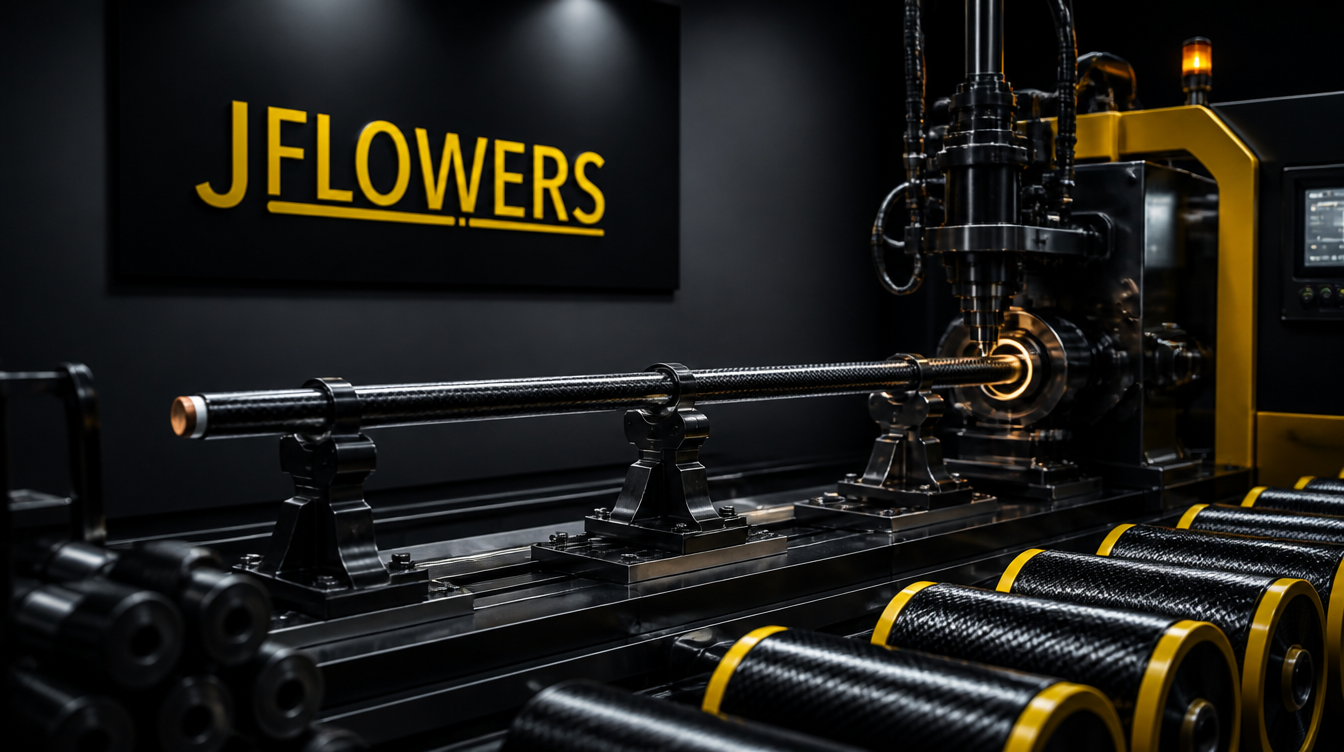
The resin-infused layup is cured — the epoxy is activated and cross-linked through a controlled application of heat and, in many processes, pressure. Autoclave curing (pressure vessel with controlled temperature and pressure) produces the highest quality, most void-free composite. Oven curing is less expensive but requires careful process control.
The cure cycle — temperature profile, hold time, cool-down rate — is critical to the mechanical properties of the finished composite. An improperly cured shaft has inconsistent properties and may contain internal voids or delaminations that degrade performance and durability.
Step 5: Mandrel Extraction
After curing, the mandrel is extracted from the center of the cured carbon fiber tube. The precision of the mandrel’s surface finish directly affects the interior surface quality of the tube. This is a critical manufacturing step — if the mandrel doesn’t release cleanly, it can damage the interior surface and cause structural inconsistencies.
Step 6: Machining and Finishing
The raw carbon fiber tube is machined to final shaft specifications. This includes:
Turning to final outer diameter and taper profile
Cutting to final length
Machining or threading the joint end for pin or thread compatibility
Finishing the surface — sanding to achieve matte, textured, or glossy surface as designed
The machining precision at this stage determines the shaft-to-shaft consistency of finished products. A manufacturer with tight machining tolerances produces shafts that perform identically across the production run. For what this consistency means in practice, see Carbon Fiber Shaft Durability Explained.
Step 7: Tip Installation
The tip — either a traditional ferrule-and-tip assembly or a direct ferrule-less installation — is bonded to the finished shaft. The adhesive selection, surface preparation, and installation technique affect the tip-to-shaft bond quality, which matters for tip retention under repeated impacts.
On ferrule-less designs like the JFlowers SMO, the tip bonds directly to the carbon fiber surface. The carbon fiber surface requires specific preparation for good adhesive bonding — it’s not the same process as bonding a tip to a maple shaft or a phenolic ferrule.
Step 8: Quality Control
High-quality manufacturers test finished shafts for diameter consistency, straightness, and deflection profile before they ship. This step is what separates manufacturers who deliver consistent performance from those who deliver inconsistent results across their production run.
JFlowers applies quality control standards at this stage that ensure every SMO shaft that reaches a customer meets the performance specifications that define the product. This is the final quality gate that makes the manufacturing investment worthwhile.
Pros and Cons
High-quality carbon fiber shaft manufacturing
Premium raw materials, precise fiber orientation, and controlled curing produce consistent performance
Rigorous quality control means the shaft you receive matches the shaft’s reputation
Higher manufacturing complexity and quality control costs are reflected in price
Manufacturing quality is invisible from the outside — buyers rely on manufacturer reputation
Expert Recommendation Understanding the manufacturing process helps you evaluate why there’s a meaningful performance difference between a well-made carbon fiber shaft like the JFlowers SMO and a lower-cost alternative. The process steps are the same in name, but the quality at each step varies dramatically. Buy from manufacturers whose quality control reputation matches the performance claims.
Conclusion
The manufacturing of a carbon fiber pool cue shaft is a technically demanding, multi-step process where quality matters at every stage. Understanding what’s involved helps you recognize that the meaningful performance differences between manufacturers aren’t arbitrary — they reflect real differences in how carefully each step is executed. The JFlowers SMO is the product of a manufacturing process that takes each step seriously.
Frequently Asked Questions
Q: How is a carbon fiber pool cue shaft made? Carbon fiber fabric is wrapped around a mandrel, infused with epoxy resin, cured under heat and pressure, machined to precise specifications, and finished with a surface treatment and tip installation. Q: Why do some carbon fiber shafts cost more than others? Higher-grade raw materials, more precise fiber orientation, better controlled curing processes, tighter machining tolerances, and more rigorous quality control all add cost and improve performance. Q: What is prepreg carbon fiber? Carbon fiber fabric pre-impregnated with resin before layup. Prepreg materials offer more consistent resin content than wet layup processes, producing more consistent mechanical properties. Q: How long does it take to make a carbon fiber pool cue shaft? The manufacturing process from raw material to finished shaft typically takes several days, including curing time. High-volume manufacturers have streamlined processes, but quality curing cannot be rushed without affecting mechanical properties. Q: Can carbon fiber shafts be recycled? Carbon fiber composite recycling is an active area of industrial research. Current recycling methods exist but are not widely implemented at consumer product scale. Q: What makes one carbon fiber shaft better than another? Raw material grade, fiber orientation precision, resin quality, cure process control, machining tolerances, and quality control rigor — all of these vary between manufacturers and directly affect performance and consistency.
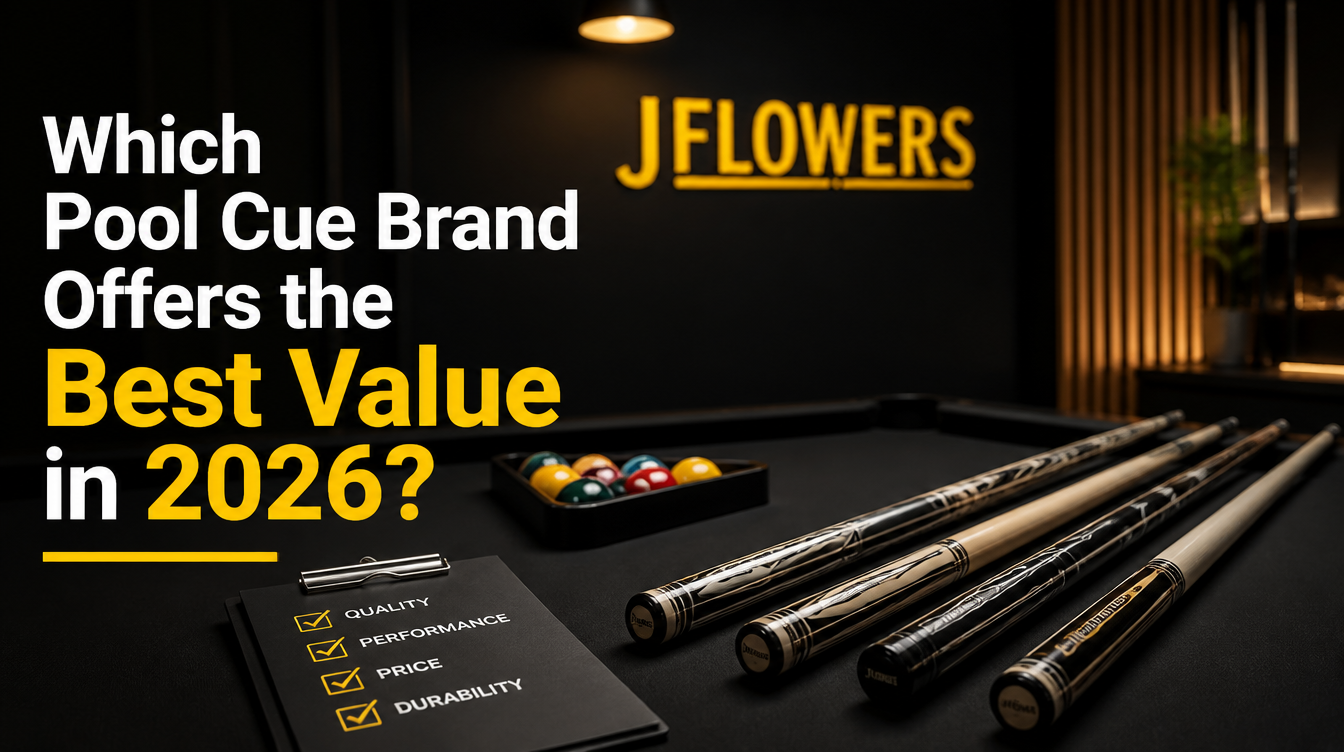
After comparing JFlowers to Predator, Mezz, McDermott, Meucci, Jacoby, Pechauer, and a dozen more brands across every price point and construction philosophy — the question that started all of it deserves a direct answer: which pool cue brand actually offers the best value for serious competitive players in
2026?
Players Technology is one of the most widely used cue brands in American pool halls. Their two-piece cues at $40-$150 have introduced millions of American players to personal cue ownership. Nearly every serious pool player in America either started on a Players cue or played against someone who did. Comparing Players to JFlowers isn’t really a direct competition — it’s a marker on the journey from beginner to serious competitor.