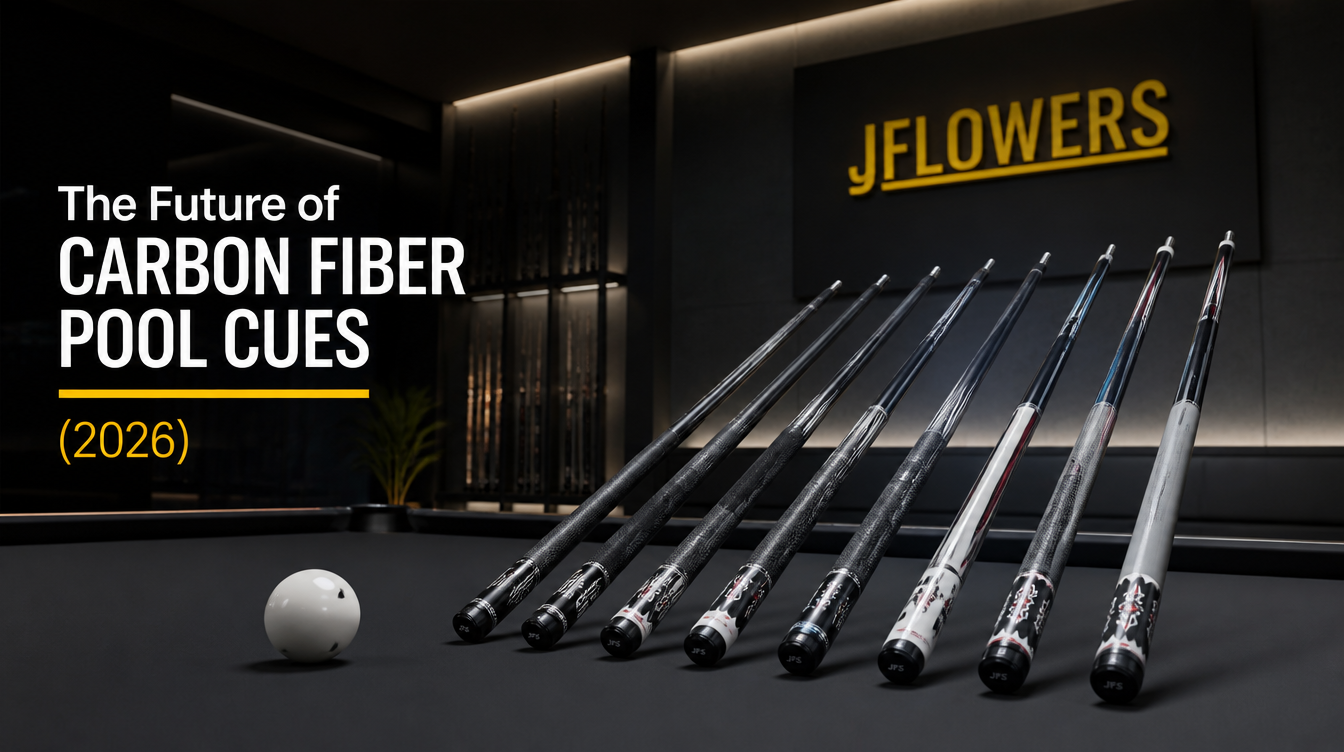
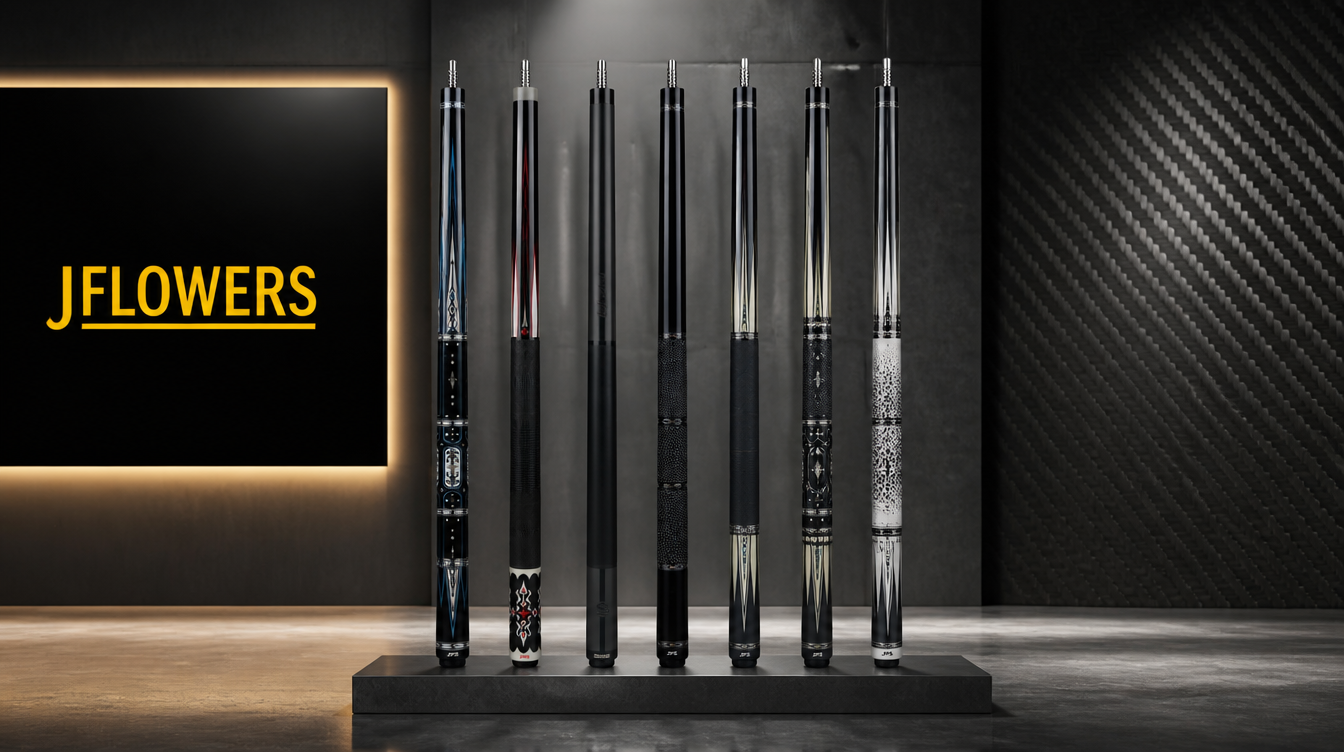
Carbon fiber pool cue technology has evolved rapidly since the first commercial shafts appeared in the early 2010s. What started as an experimental alternative to maple has become a mainstream competitive technology used at every level of the game, from local APA leagues to world championship finals. The question now isn't whether carbon fiber has a place in pool — it clearly does. The question is where the technology goes from here.
Listen to this article
This guide looks at the trends shaping carbon fiber pool cue development in 2026 and beyond: material advances, construction innovations, integration with cue design, and what changing technology means for players making equipment decisions today.
Where the Technology Stands in 2026
The current generation of quality carbon fiber shafts — including the JFlowers SMO, Predator REVO, and Mezz WX700 — represents a mature technology. The fundamental advantages of carbon fiber over wood (lower deflection, no warping, lower maintenance, longer lifespan) are well-established and consistent across multiple quality manufacturers.
The first generation of carbon fiber shafts had issues that early adopters experienced: inconsistent feel, variable deflection profiles between production batches, and hit characteristics that were genuinely too harsh for many players. Most of those issues have been resolved in the current generation through better material selection, manufacturing process control, and design refinement. For the current state of what carbon fiber delivers, see Carbon Fiber Shaft Technology and Carbon Fiber Shaft vs Wood Shaft: The Complete Comparison.
Trends Shaping Carbon Fiber Shaft Development
Further Deflection Reduction The engineering pursuit of lower deflection continues. Current quality shafts are already significantly lower deflection than wood, but further reductions are theoretically possible through advanced fiber orientation strategies, new composite formulations, and refined tip-end mass design. The practical question is whether further deflection reduction produces meaningful playing benefits once you’re below a certain threshold — but the research continues.
Feel Refinement The feel gap between carbon fiber and wood has narrowed significantly over the past decade. Early carbon fiber shafts felt jarring and plastic-like to many players. Current quality shafts have much more acceptable feel for the broad competitive market. The next frontier is further refining the hit and feedback feel to appeal to the remaining portion of competitive players who choose maple primarily for its feel character.
This involves both material science (resin formulations that dampen specific vibration frequencies) and construction design (wall thickness variations, internal structure design). Some manufacturers are experimenting with hybrid constructions that attempt to capture the stiffness advantages of carbon fiber with the feel characteristics of wood.
Integrated Cue Design
One development trend is the move toward cue systems where the carbon fiber shaft and the butt are co-designed as an integrated system rather than as separate components that happen to fit together. Cues where the balance, flex profile, and feel of shaft and butt are engineered together from the start can potentially produce better overall playing experiences than mix-and-match component approaches.
JFlowers’ approach to their playing cue and SMO shaft reflects this thinking — the shaft and butt are designed with complementary performance characteristics rather than being developed in isolation. This integration trend is expected to deepen across the industry.
Democratization of Premium Performance
Perhaps the most important trend for most players: the cost of quality carbon fiber shaft technology has been coming down as manufacturing processes mature and more manufacturers enter the market. The JFlowers SMO represents this democratization — genuine premium-level carbon fiber performance at a price point that makes it accessible to league and tournament players, not just professionals with sponsorships.
This trend will continue. As carbon fiber becomes the standard rather than the premium option, the price differential versus quality maple will narrow further. Players considering carbon fiber today are buying into a technology that will only become more accessible over time.
New Joint Technologies Joint technology for carbon fiber shafts is an area of ongoing development. The current standard of 5/16×18 threaded connections works but was designed for wood shafts. Joint designs optimized specifically for carbon fiber shaft properties — different thread forms, new quick-release mechanisms, designs that better preserve the shaft’s stiffness through the connection — are areas of active development. For the current state of joint options, see How to Choose the Right Pool Cue Joint.
Advanced Surface Treatments Surface finish technology for carbon fiber shafts continues to develop. New coating technologies aim to produce finishes that handle moisture better than current options without sacrificing the clean stroke feel of matte and textured designs. Some manufacturers are exploring antimicrobial and sweat-resistant treatments that specifically address the grip feel under tournament conditions.
What This Means for Players Buying Today
For players considering a carbon fiber shaft purchase in 2026, the practical implication of these trends is reassuring: current technology is genuinely excellent and worth buying. The JFlowers SMO and comparable quality shafts represent mature, proven technology. You’re not buying into an early-adopter situation that will be obsolete in two years.
Future improvements will be incremental refinements, not step-change replacements. A quality carbon fiber shaft purchased today will be competitive equipment for many years — the lifespan advantage of carbon fiber means the technology you buy now will still be performing when future generations of shafts appear. For the lifespan context, see Carbon Fiber Shaft Lifespan.
Will Carbon Fiber Replace Wood Entirely?
No. Wood shafts have genuine advantages in feel character and price accessibility that will maintain a market permanently. The most likely long-term outcome is that carbon fiber becomes the dominant material in competitive play while wood remains a strong presence in recreational play, straight pool traditionalism, and among players with deep preference for organic feel.
The professional adoption trend suggests that at the top levels, carbon fiber’s advantages become compelling enough to outweigh feel preference for most players. At the amateur and recreational levels, the market will remain genuinely bifurcated for the foreseeable future.
Pros and Cons
Carbon fiber technology trajectory
Technology is mature — current quality is excellent and worth buying now Democratization trend means good value is available at accessible prices Improving feel refinement is making CF more acceptable to feel-sensitive players Long shaft lifespan means today’s purchase stays competitive for years Further deflection reduction may have diminishing practical returns at current levels Feel gap versus wood, while narrowing, persists for players with strong maple preference
Expert Recommendation The future of carbon fiber pool cues is a continuation of the present trend: better, cheaper, more refined, more widely adopted. Players buying a JFlowers SMO shaft today are investing in mature, proven technology that will serve their game for many years — and they’re positioned at the front of the mainstream adoption curve that is reshaping competitive pool at every level.
Conclusion
Carbon fiber pool cue technology in 2026 is mature, proven, and pointing in one direction: forward. The current generation of quality shafts, including the JFlowers SMO, delivers genuine competitive advantages that are worth the investment. Future refinements will make the technology better, cheaper, and more widely adopted — but players who buy quality carbon fiber today are not waiting for a better version. They’re playing with the best available technology right now.
Frequently Asked Questions
Q: Will carbon fiber shafts get better? Yes, incrementally. Feel refinement, further deflection optimization, and better surface treatments are active development areas. But current quality is already excellent. Q: Will carbon fiber replace maple shafts? At the competitive level, carbon fiber adoption will continue growing. Wood will remain a permanent presence in recreational play and among players with strong traditional preferences. Q: Is now a good time to buy a carbon fiber shaft? Yes. The technology is mature and the current generation of quality shafts delivers excellent performance. You’re not buying into an early-adopter situation. Q: How will carbon fiber shaft prices change? The trend is toward lower prices as manufacturing matures and competition increases. Quality carbon fiber will become more accessible to more players over time. Q: What is the next innovation in carbon fiber pool shafts? Feel refinement, integrated cue design, new joint technologies for carbon fiber systems, and advanced surface treatments are the active development areas in 2026. Q: Is carbon fiber the future of pool cues? It’s a significant part of the future, particularly in competitive play. Wood remains a legitimate technology with a permanent market presence. Q: How long will a carbon fiber shaft purchased today stay competitive? Many years. Carbon fiber shafts don’t degrade from use, and future improvements will be incremental rather than revolutionary. A quality shaft purchased today is a long-term investment. Q: Will JFlowers continue developing carbon fiber technology? Yes. JFlowers is committed to carbon fiber as a core technology and continues refining the SMO shaft’s performance characteristics. The brand’s growth trajectory reflects this commitment.
After comparing JFlowers to Predator, Mezz, McDermott, Meucci, Jacoby, Pechauer, and a dozen more brands across every price point and construction philosophy — the question that started all of it deserves a direct answer: which pool cue brand actually offers the best value for serious competitive players in
2026?
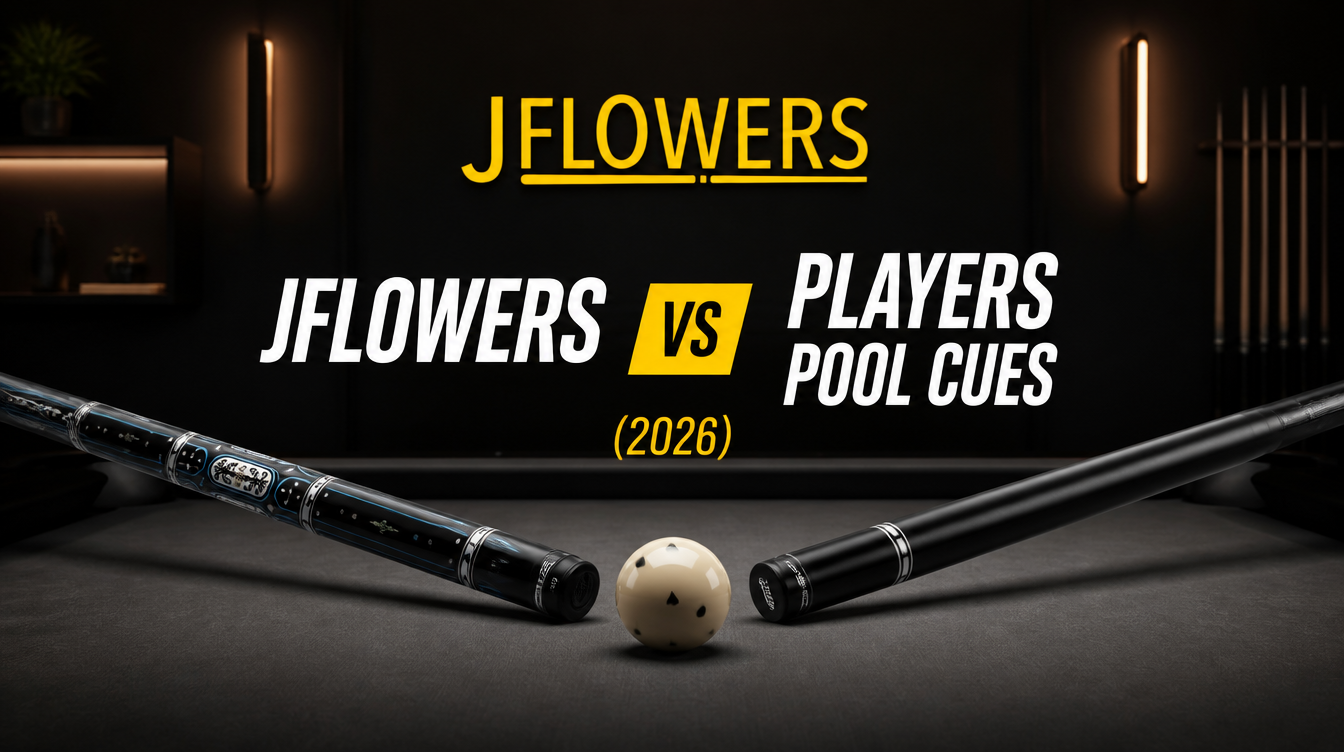
Players Technology is one of the most widely used cue brands in American pool halls. Their two-piece cues at $40-$150 have introduced millions of American players to personal cue ownership. Nearly every serious pool player in America either started on a Players cue or played against someone who did. Comparing Players to JFlowers isn’t really a direct competition — it’s a marker on the journey from beginner to serious competitor.