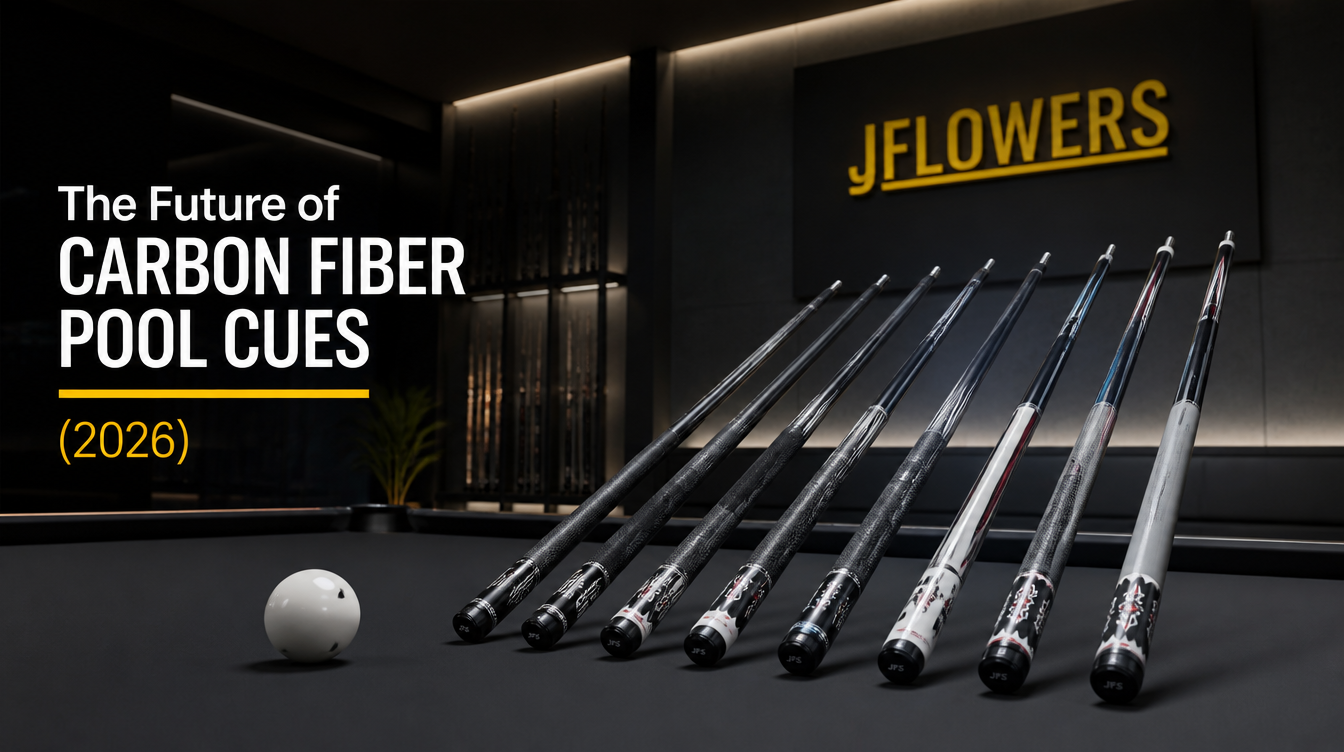
Carbon fiber pool cue technology has evolved rapidly since the first commercial shafts appeared in the early 2010s. What started as an experimental alternative to maple has become a mainstream competitive technology used at every level of the game, from local APA leagues to world championship finals. The question now isn’t whether carbon fiber has a place in pool — it clearly does. The question is where the technology goes from here.
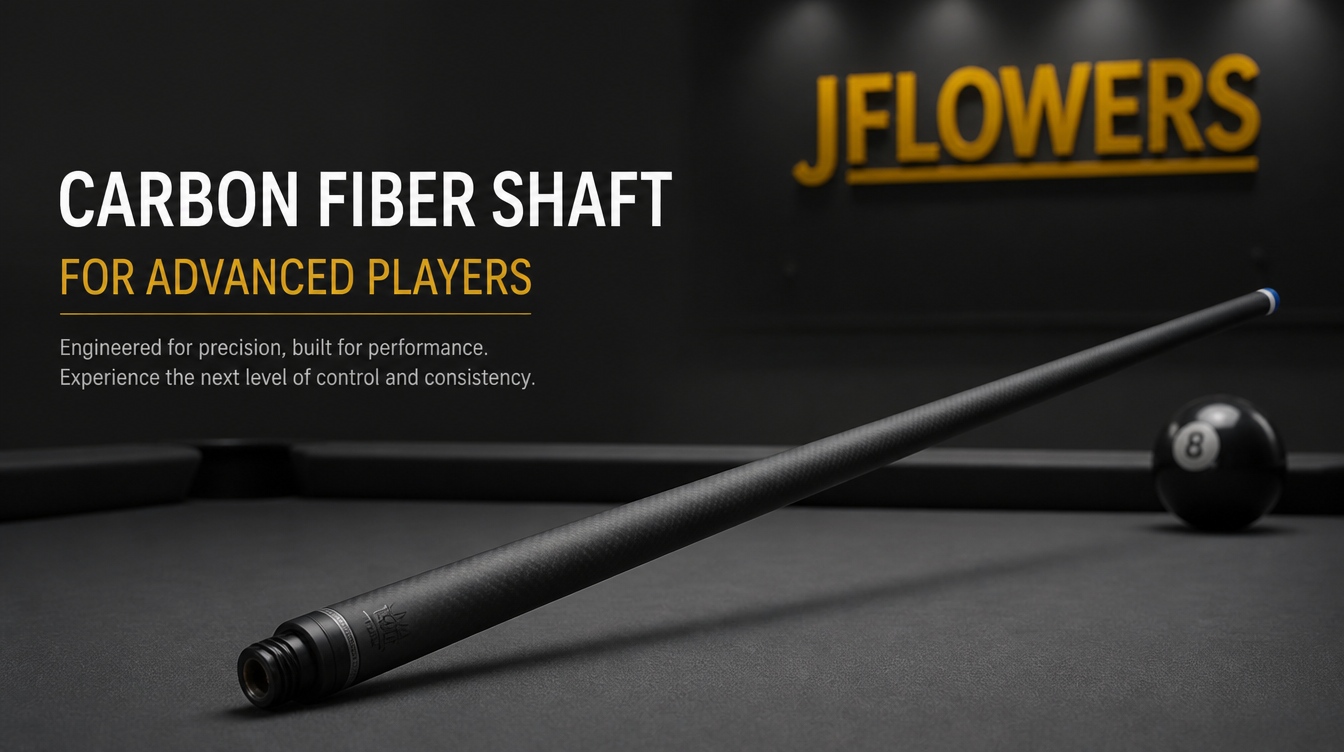
Category Archives: Carbon Fiber Shaft Guides
Advanced pool players have a more complex relationship with carbon fiber than beginners do. You’ve spent years building your game on a specific shaft’s deflection profile. Your aim compensation for english is automatic. Your feel for the cue ball under different spin types is ingrained. Switching to carbon fiber means disrupting all of that — at least temporarily.
If you’ve just started playing pool and you’re already reading about carbon fiber shafts, you’re either a serious person or you went down a YouTube rabbit hole. Either way, the question deserves a direct
answer: should beginners use a carbon fiber pool cue shaft?
The question comes up constantly when players are considering the switch to carbon fiber: do the pros actually use it? If the best players in the world are still on maple, that says something. If they’ve moved to carbon fiber, that says something too.
Carbon fiber shafts raise a lot of questions — and the internet is full of partial answers, brand marketing, and forum debates that go in circles. This FAQ collects the most common and most important questions serious players ask about carbon fiber pool cue shafts, with straight honest answers.
Carbon fiber shafts have been in the pool market for over a decade now, and the myths have accumulated almost as fast as the real players endorsing them. Some come from genuine misunderstanding of the technology. Some from players who tried a cheap shaft and had a bad experience. Some from players who simply don’t want to change what they know.
The lifespan question is one of the most practical considerations when justifying a carbon fiber shaft investment. A quality carbon fiber shaft costs $250-$500. If it lasts 10 years, that’s a strong value proposition. The honest answer: a well-maintained quality carbon fiber shaft will last many years — often adecade or more of competitive play.
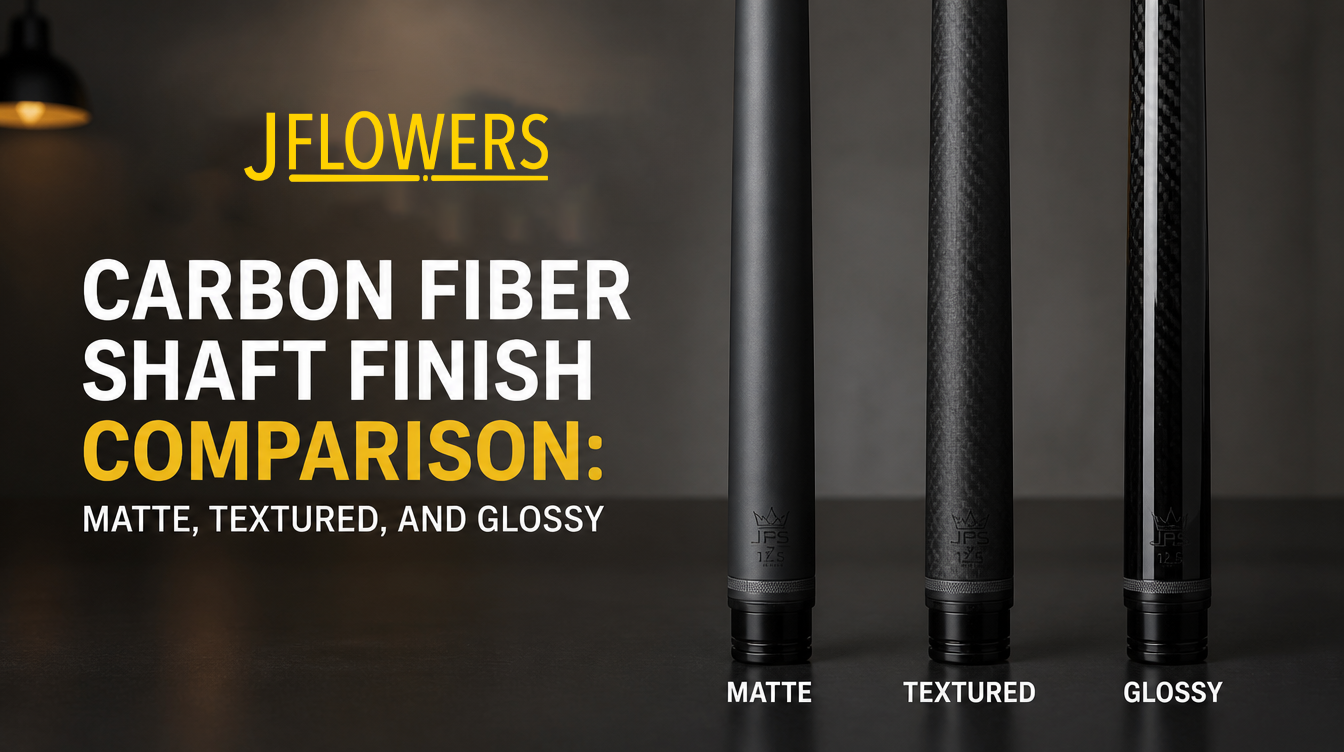
When you pick up different carbon fiber pool cue shafts, one of the first things you notice is that they don’t all feel the same — even if the underlying construction is similar. The surface finish plays a much bigger role in the playing experience than most players expect.
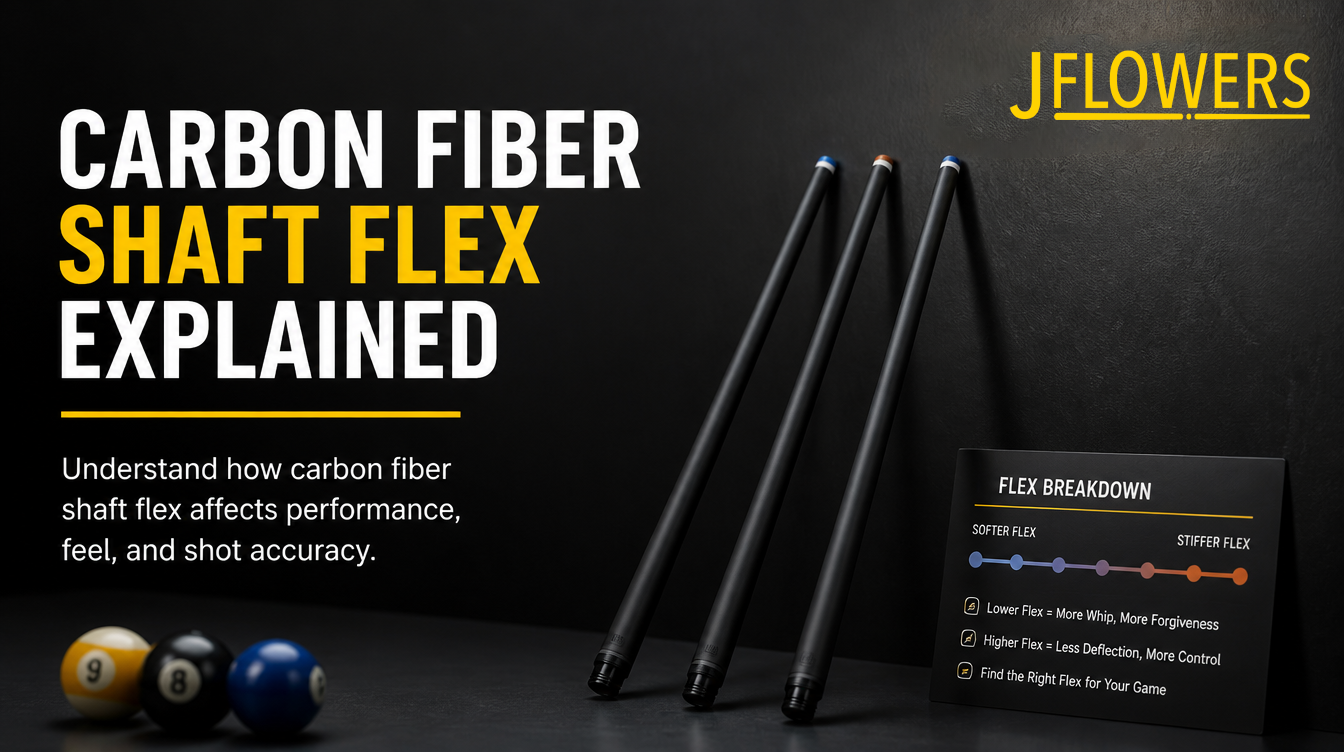
When a pool cue shaft strikes the cue ball off-center, it flexes. That flex is what causes cue ball deflection — the sideways movement of the cue ball away from your aim line when you apply english. Understanding how carbon fiber shafts flex differently from wood explains the core performance advantage of carbon fiber technology.
Feel is the most personal and hardest-to-describe aspect of switching to carbon fiber. Ask ten players what a carbon fiber shaft feels like and you’ll get ten slightly different answers — but most will include
words like ‘crisp,’ ‘direct,’ ‘different,’ and eventually, for players who stuck with it, ‘better.’