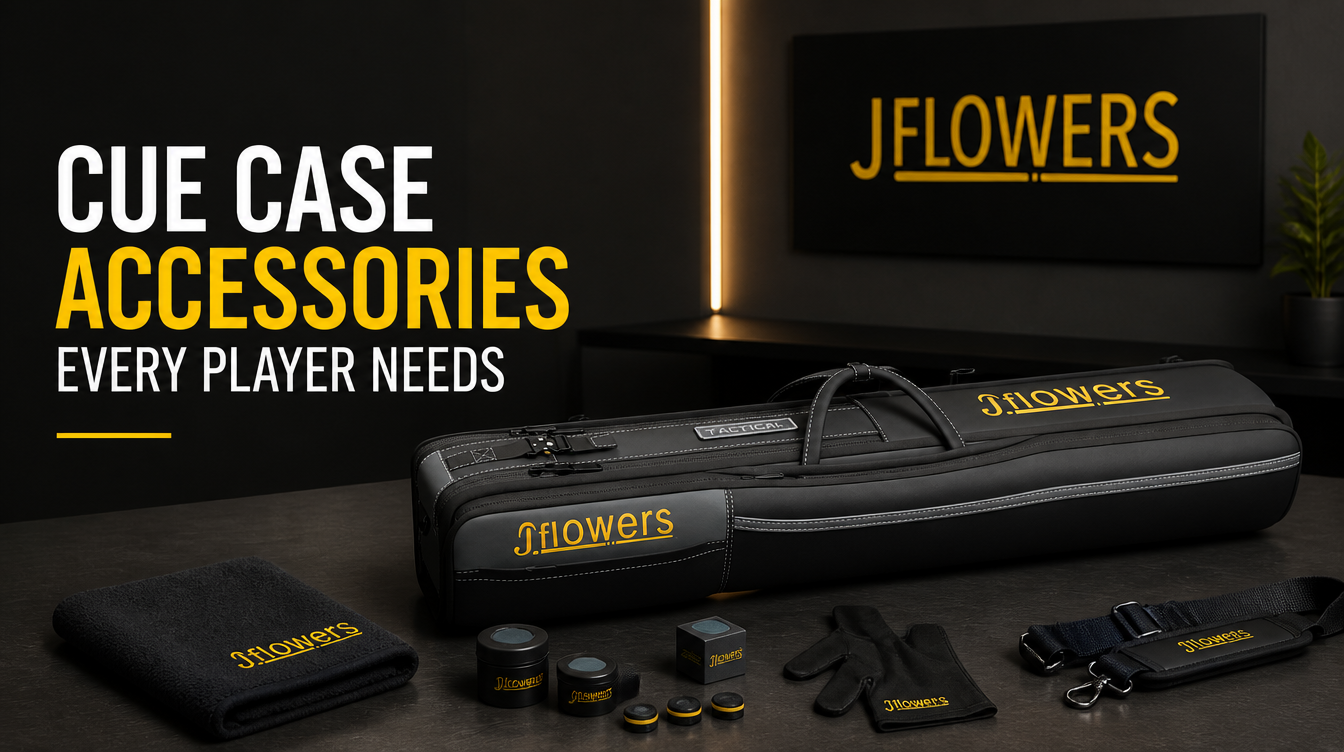
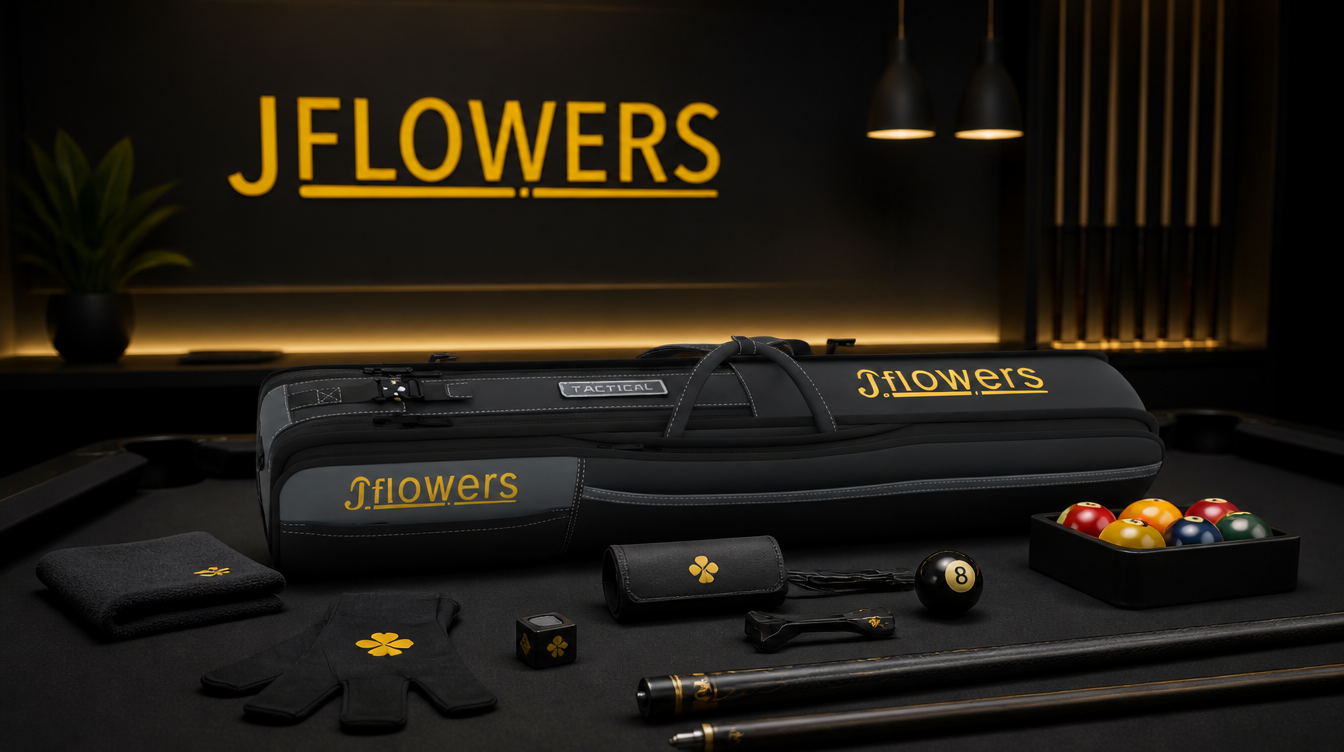
The cue case isn't just for the cue — it's the equipment system you arrive at every session with. What's inside the pockets alongside your cue determines whether you're prepared for everything that happens at the table: a tip that needs refreshing, a joint that needs protecting during a shaft swap, chalk running out on a crucial shot.
Listen to this article
This guide covers the essential accessories every serious player should carry in their case, the useful-but optional additions, and the things that sound useful but aren’t worth the space.
Essential Accessories
Chalk Carry your own chalk. Always. House chalk is typically a low-grade product used by hundreds of players who’ve misused it — gouged, ground down, and contaminated with cue ball deposits. Taom chalk is our recommendation: it transfers cleanly, holds on quality tip surfaces, and produces minimal excess on the cue ball. Carry at least two fresh cubes per session; chalk cube use depends on your chalking frequency and session length.
Tip Shaper / Scuffer Tool A combination tip shaper and scuffer is non-negotiable equipment for any serious player. Pre-session tip check and maintenance takes 60-90 seconds. Having the tool in your case makes this habit automatic rather than remembered. For the full tip maintenance routine, see Tip Maintenance Guide.
Spare Tips Carry at least one spare tip in your preferred hardness. Tip emergencies — a tip that pops off, a tip that suddenly feels dead, a tip that mushrooms past usability mid-session — happen. Having a spare tip in the case means you can address the problem. For most players: one Taom medium spare is adequate. For tournament players who play multiple sessions over a weekend: two spares.
Joint Protectors Joint protectors screw onto both the shaft end and the butt pin end when the cue is disassembled. They protect the threads from damage, keep chalk and debris out of the joint, and prevent the joint pin from catching on case lining. If you frequently swap shafts at the table, joint protectors are essential. Match the joint protector to your joint specification (5/16×18 is the most common standard).
Shaft Cleaning Cloth A clean microfiber cloth for shaft wipe-down after play. The cloth lives in the case so it’s always available. After every session: shaft wipe-down before putting the cue away. This prevents chalk and hand oil accumulation that affects stroke feel over time. For the full shaft cleaning guide, see How to Clean a Carbon Fiber Shaft for carbon fiber, or How to Clean a Pool Cue for wood shafts.
Highly Recommended Accessories
Cue Armour Glove A pool glove on the bridge hand provides consistent friction regardless of hand moisture, sweat, or hand temperature variation. This is particularly valuable during tournament play when nerves affect hand conditions, and for players who experience inconsistent bridge hand feel. Cue Armour gloves are specifically designed for pool play — comfortable, durable, and available in left and right hand versions. For players using a smooth or wrapless cue, a glove effectively solves the moisture-handling issue that smooth finishes create.
Cue Armour Towel A dual-sided microfiber towel serves two purposes: cleaning your hands before play (removing moisture, chalk dust, and oils) and wiping down the shaft and table rail. The Cue Armour dual-sided microfiber pool towel has a rougher side for hand cleaning and a softer side for shaft and surface care. Having one in your case is a small investment with direct benefits for every session.
Tip Replacement Adhesive Players who install their own tips should carry a small tube of appropriate tip adhesive. For ferrule-less carbon fiber shafts: a cyanoacrylate adhesive formulated for carbon fiber bonding. For traditional ferruled shafts: standard tip cement or cyanoacrylate. A tip that has popped off can be reinstalled within minutes if you have the adhesive in your case.
Useful for Competitive Play
Mechanical Bridge A compact mechanical bridge (rest) in the case covers situations where a natural bridge isn’t possible — over obstacle balls, very long shots, or shots against the rail. Not all venues have quality mechanical bridges available. Compact folding bridge heads and extension attachments are available that fit in case pockets.
Ball Marker / Rack Template For players who compete in formats where precise racking matters: a rack template ensures legal and consistent racks. Small enough to fit in a case pocket; useful for competitive nine ball and ten ball play.
Weight Bolt System Components Players who use adjustable weight bolt systems sometimes carry additional weight bolt increments in the case for fine-tuning total cue weight between sessions or for different table formats.
Things That Sound Useful But Usually Aren’t
Cue cases marketed with built-in billiard accessories sometimes include items that take up space without providing real value: pocket scoreboards that nobody uses, cue tip picks of questionable quality, and chalk holders that add bulk without adding capacity. Focus on the essentials above rather than bundled accessories.
Pros and Cons
Well-stocked cue case
Prepared for any equipment situation during play
Pre-session maintenance is fast when tools are always with the case
Reduces dependence on venue-provided equipment of unknown quality
Added weight to the case from accessories
Easy to over-pack — unnecessary items add bulk and weight
Expert Recommendation The minimum essential kit: Taom chalk (two cubes), tip shaper/scuffer, one spare Taom medium tip, joint protectors matched to your joint spec, and a clean microfiber cloth. Add a Cue Armour glove and towel for competitive play. This kit fits in any reasonable case accessory pocket and covers every equipment situation that commonly arises during a session.
Conclusion
A well-stocked cue case is a complete competition preparation system. The accessories you carry determine whether you’re prepared for the equipment situations that arise during play — or whether you’re scrambling for house chalk and borrowing tools from other players. Build the essential kit, add the recommended accessories for your competitive level, and arrive at every session with everything you need.
Frequently Asked Questions
Q: What accessories should I keep in my cue case? Essentials: chalk, tip shaper/scuffer, spare tip, joint protectors, and a cleaning cloth. Highly recommended: Cue Armour glove and towel, tip adhesive. Q: What chalk should I carry? Taom chalk is our recommendation for its clean transfer and consistent performance on quality tip surfaces. Q: Do I need joint protectors? Yes, if you frequently swap shafts or transport the cue disassembled. Joint protectors protect threads from damage and keep debris out of the joint. Q: What is a pool glove used for? A pool glove on the bridge hand provides consistent friction regardless of hand moisture, reducing grip variability during play. Particularly useful during competitive play where nerves affect hand conditions. Q: How many spare tips should I carry? At minimum one in your playing hardness. For tournament weekends where you play multiple sessions: two spares.
After comparing JFlowers to Predator, Mezz, McDermott, Meucci, Jacoby, Pechauer, and a dozen more brands across every price point and construction philosophy — the question that started all of it deserves a direct answer: which pool cue brand actually offers the best value for serious competitive players in
2026?
Players Technology is one of the most widely used cue brands in American pool halls. Their two-piece cues at $40-$150 have introduced millions of American players to personal cue ownership. Nearly every serious pool player in America either started on a Players cue or played against someone who did. Comparing Players to JFlowers isn’t really a direct competition — it’s a marker on the journey from beginner to serious competitor.