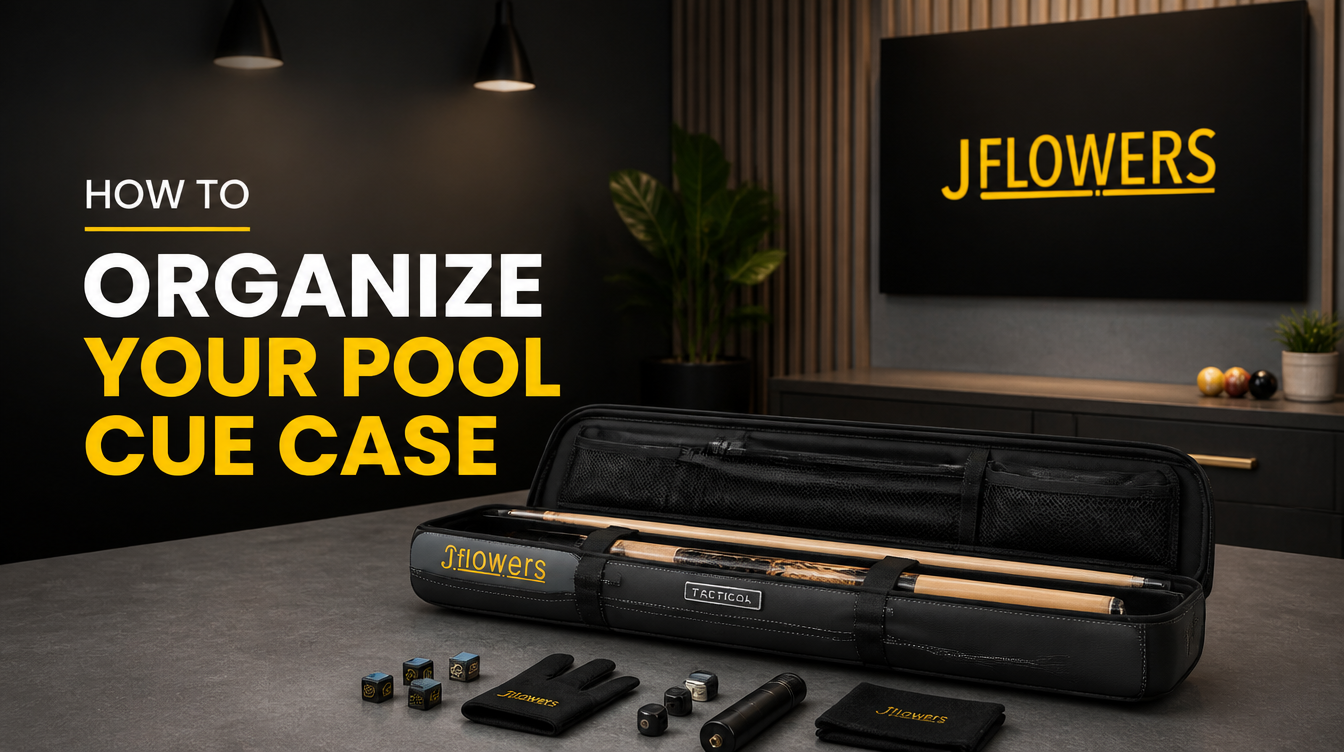
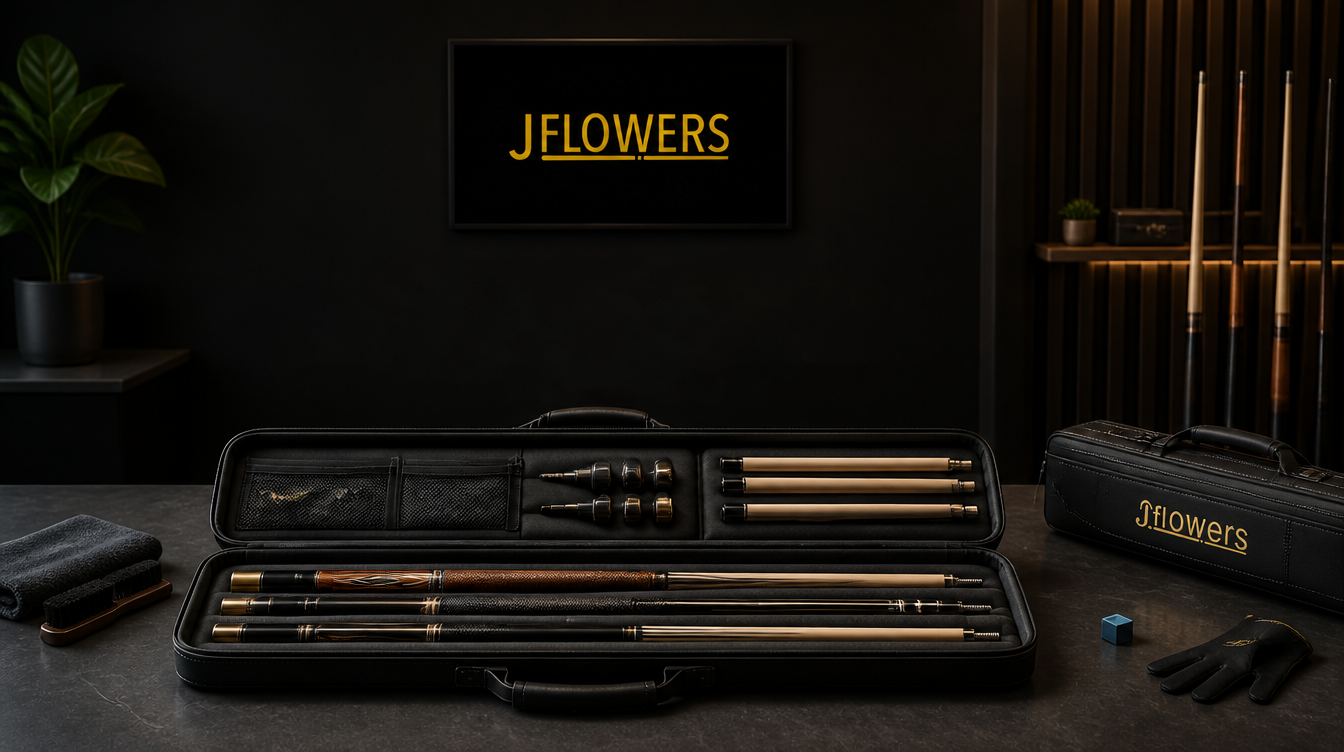
A well-organized cue case is one you can work from efficiently — at the table between games, in a tournament staging area, or during a quick pre-session setup. An unorganized case where chalk hides
under spare tips, the tip tool isn't where you last put it, and the shaft cleaning cloth is buried means fumbling during play.
Listen to this article
This guide covers how to organize your cue case for maximum efficiency: where each item should go, how to think about pocket assignment, and how to maintain the organization across sessions.
The Organization Principle: Frequency of Access
The most useful organizing principle for a cue case is frequency of access. Items you use every game (chalk) should be in the most accessible spot. Items you use occasionally (spare tip) can be in a deeper pocket. Items you almost never need but must have available (tip adhesive, extra joint protectors) can be in the least-accessible storage.
Map your pockets and compartments by accessibility:
Most accessible: whatever pocket or strap holder you can reach and open without setting the case down
Second tier: external pockets that require opening a zipper but are on the case’s main body
Third tier: interior pockets accessed by fully opening the case
Deep storage: any bottom layer or zippered inner compartment
Chalk: Always Accessible
Chalk is used before every shot — the most frequently needed item in the case. It belongs in the most accessible external pocket or, ideally, in a dedicated chalk holder that can be reached while the case is closed. Many cases have external chalk pockets specifically for this purpose.
Keep two cubes of Taom chalk in the chalk pocket. One is your playing chalk; the second is backup. When the first runs down, rotate the second to active and add a fresh cube when you buy your next batch.
Tip Tool: Second Most Accessible
The tip shaper/scuffer is used before every session and periodically mid-session for maintenance. It belongs in an easily-reached external pocket alongside the chalk. Some players clip the tip tool to an internal strap or loop inside the case so it doesn’t get buried under accessories.
Cleaning Cloth: Accessible After Play
The shaft cleaning cloth comes out after every session — after the last shot, before the cue goes back in the case. It belongs in an accessible pocket you can reach easily when packing up, not buried in a deep pocket. A dedicated microfiber cloth pocket in the case top flap or main external pocket works well.
Spare Tips, Joint Protectors, Adhesive: Second Tier
These items are used occasionally — when a problem arises, not before every game. They belong in a secure external pocket that’s easily reached when needed but doesn’t eat into your most accessible space. A side zippered pocket or interior pocket accessible without fully opening the case is ideal.
Group these together: spare tips in a small case or envelope (to prevent them getting loose in the pocket), joint protectors together (they’re small and easy to lose), adhesive in a sealed container or bag. For what to include in this kit, see Cue Case Accessories.
Cue Armour Glove: On Top or Accessible Exterior
The glove goes on before play and comes off after. It should be in a spot you can reach quickly when approaching the table. Many players keep the glove in the top exterior pocket or clipped inside the case lid so it’s visible and immediately accessible when opening the case.
The Cue Itself: Set Up for Quick Assembly
When putting the cue away: always disassemble (shaft off the butt), wipe down both pieces with the cleaning cloth, apply joint protectors if you carry them, and place them in their respective tubes. Butt in the butt tube, shaft in the shaft tube. Tip end of the shaft at the tip-protected end of the shaft tube. The shaft tube orientation matters: the tip end of the shaft should sit at the closed, padded end of the shaft tube — not the open end where joint insertion happens. This ensures tip-end protection between sessions.
Organizing a 2×4 or Larger Case
With multiple butts and shafts: assign tubes consistently. Playing cue butt always in the same tube, playing cue shaft always in the same tube, break cue in consistently assigned tubes. Consistent assignment means you reach for the right cue automatically rather than checking which is which. Label tube ends with tape if necessary during the habit-formation period.
Maintaining Organization Across Sessions
Organization is only useful if it’s maintained. The biggest enemy of case organization is the end-of session rush when everything gets stuffed in wherever it fits. Two habits prevent this:
Return items to their assigned spots immediately after use — chalk back in the chalk pocket after every use, not dropped in the main compartment
Pack up slowly — 60 seconds of deliberate packing after a session maintains organization for every subsequent session
Pros and Cons
Organized cue case
Chalk always accessible when you need it
Tip tool always available for pre-session maintenance
Emergency items (spare tips, adhesive) findable in the moment you need them
Professional appearance at tournaments and in pool hall settings
Requires consistent habits to maintain over time
Takes 60 seconds longer to pack up properly after each session
Expert Recommendation Set up your case organization once, deliberately, and then maintain it through the habit of returning items to assigned spots. The JFlowers competitive player setup: chalk in the most accessible external pocket, tip tool in the adjacent pocket, cleaning cloth accessible from the top, spare tips and joint protectors in a side pocket, glove in a visible interior position. This layout covers every common session need without searching.
Conclusion
Case organization is a five-minute setup task that pays off at every session for years. The organized case where chalk is always in reach, the tip tool is always where you left it, and the spare items are findable without unpacking the entire case is a competitive advantage — if a minor one — on the days when it matters.
Frequently Asked Questions
Q: How should I organize my pool cue case? By frequency of access: chalk and tip tool in the most accessible spots, spare items in secondary pockets, emergency items in deep storage. Q: Where should I put chalk in my cue case? In the most accessible external pocket or dedicated chalk holder. Chalk is the most frequently needed accessory — make it the easiest to reach. Q: How do I keep my cue case organized? Return items to assigned spots immediately after use rather than dropping them wherever. 60 seconds of deliberate end-of-session packing maintains organization indefinitely. Q: What order should I put my cue away? Disassemble, wipe down both pieces, apply joint protectors, place shaft tip-end in the padded tube end, close all zippers, return chalk and tools to their assigned spots. Q: Should the tip or the joint end go in first in the shaft tube? The tip end goes into the closed, padded end of the shaft tube. The joint end is inserted into the open end. This ensures tip protection between sessions.
After comparing JFlowers to Predator, Mezz, McDermott, Meucci, Jacoby, Pechauer, and a dozen more brands across every price point and construction philosophy — the question that started all of it deserves a direct answer: which pool cue brand actually offers the best value for serious competitive players in
2026?
Players Technology is one of the most widely used cue brands in American pool halls. Their two-piece cues at $40-$150 have introduced millions of American players to personal cue ownership. Nearly every serious pool player in America either started on a Players cue or played against someone who did. Comparing Players to JFlowers isn’t really a direct competition — it’s a marker on the journey from beginner to serious competitor.