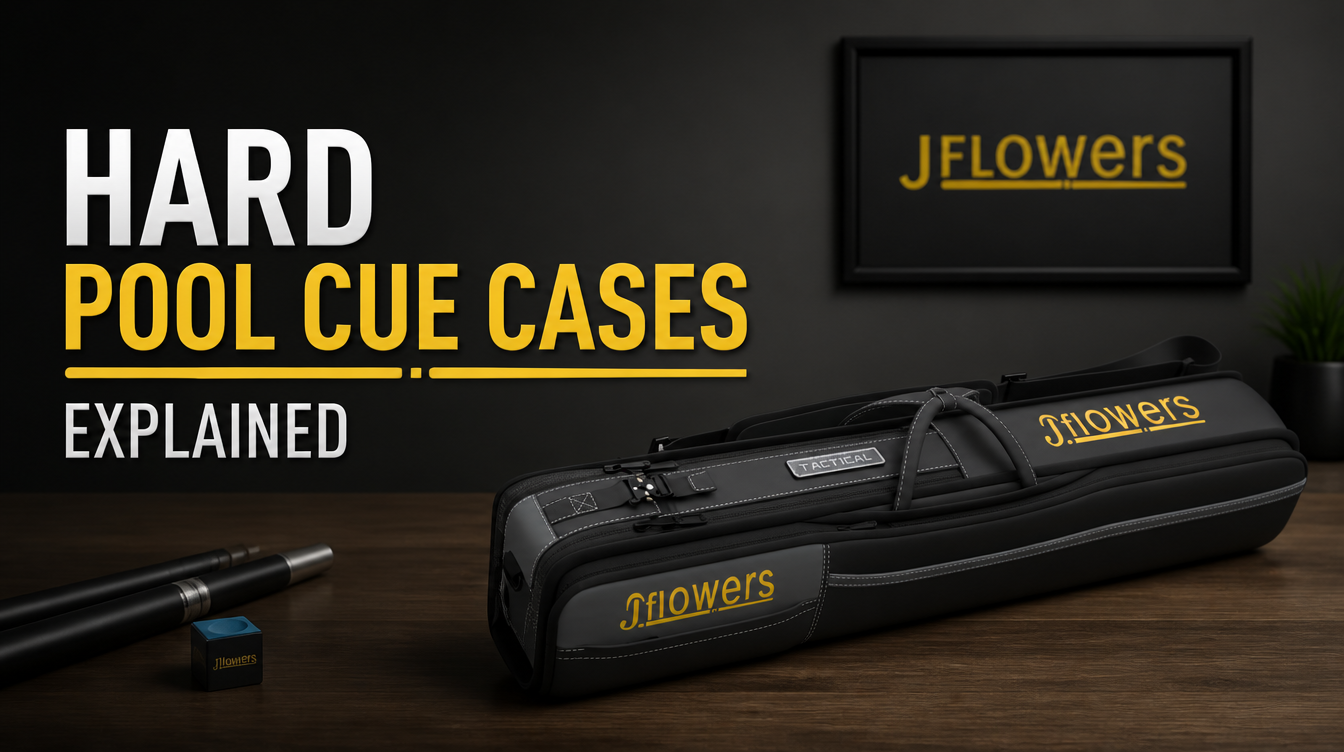
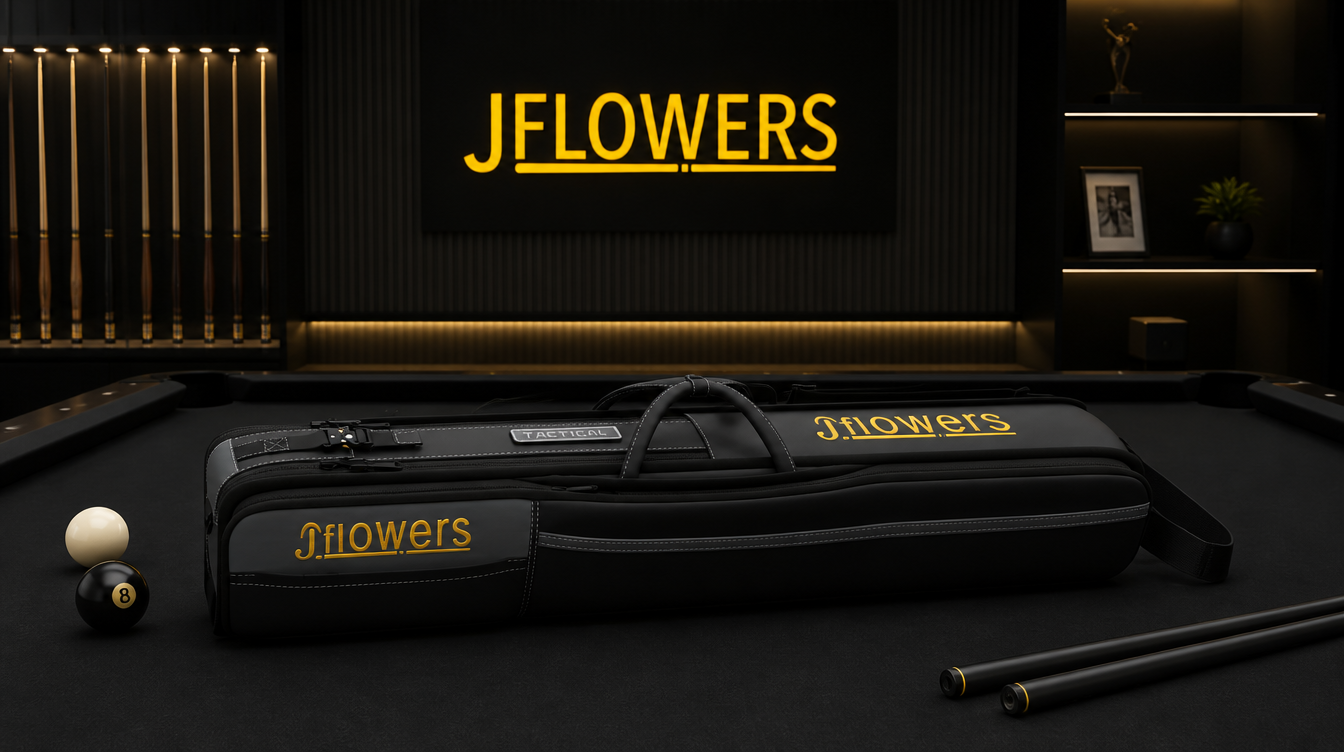
A hard cue case is the difference between a cue that survives travel and one that doesn't. Soft bags and cases protect against dust, minor scrapes, and casual handling. Hard cases protect against the impacts, drops, and compression forces that happen in the real world — in car trunks, on airport conveyor belts, in crowded tournament venues.
Listen to this article
If you’ve invested in a quality cue and shaft, a hard case isn’t optional — it’s part of the protection system. This guide explains what hard cases are, what they protect against, the different types available, and how to choose the right one.
What Hard Cases Protect Against
Hard cases provide a rigid exterior shell that absorbs and distributes impact forces before they reach the cue inside. This protects against:
Direct impacts — the case being dropped, knocked off a table, or hit by other objects
Compression — bags stacked on top of the case, airport luggage handling equipment pressing against it
Lateral force — someone leaning against the case or it being wedged against hard surfaces
Accidental rollover — cases run over in parking lots or dropped from car trunks
Soft cases can only protect against the last and mildest of these. A soft bag around a cue provides essentially no protection against a direct impact or compression force — the force transmits directly to the cue inside.
Types of Hard Cases
Traditional Hard Tube Cases The classic hard cue case design — typically a cylindrical or rectangular tube with a rigid shell (often aluminum, ABS plastic, or composite) and an interior lined with foam or fabric. The cue sits in padded tubes inside the shell.
Traditional hard tube cases come in 1×1 (one butt, one shaft), 2×2 (two butts, two shafts), and larger configurations. They’re widely available from most billiards retailers and represent the most common hard case design.
Hard Shell Briefcase-Style Cases Wider, flatter hard cases that open like a briefcase and hold cues horizontally rather than in tubes. These typically offer more interior organization space — pockets for chalk, tips, accessories — with a hard exterior shell. Popular with competitive players who want the protection of a hard case with the organization of a soft bag.
Tactical / Rifle-Style Cases Military-grade hard cases (often derived from tactical rifle case designs) that offer the maximum possible cue protection. Typically feature foam-lined interiors, lockable latches, and rubber gaskets for dust and moisture sealing. Ideal for airline checked baggage. For the full tactical case breakdown, see Tactical Cue Cases Explained.
Hard Sleeve / Hybrid Cases Hard outer tubes with soft accessory compartments attached. These offer rigid shaft and butt protection in the tubes while providing flexible accessory storage in attached pockets. A good middle ground between pure hard cases and soft bags.
Interior Construction: What Actually Protects the Cue
The hard exterior protects against impacts from outside. The interior construction protects the cue from moving around inside the case. Both matter.
Interior shaft tubes should fit snugly without being tight — the shaft should be fully supported without lateral movement. Poor interior construction that lets the cue rattle inside the hard shell still risks damage. Look for:
Shaft tubes that support the full length of the shaft from tip to joint
Tip caps or padding at the tip end where the shaft is most vulnerable
Snug fit — the cue shouldn’t rattle or have lateral movement inside the tube
Quality foam or fabric lining that won’t abrade the shaft surface
For the JFlowers SMO Carbon Fiber Shaft, tip-end support is particularly important — the tip end of a ferrule-less carbon fiber shaft can chip if it contacts a hard surface without cushioning. Choose a case where the shaft tube’s tip end has soft padding.
Hard Cases for Airline Travel
If you’re flying with your cue, a hard case is non-negotiable. Checked baggage undergoes impacts and handling that would destroy any soft case. The airline environment demands a case that can be dropped, thrown, and stacked without transmitting force to the cue inside.
For airline travel, prioritize: sturdy lockable latches, foam or padded interior that immobilizes the cue, and if possible, a TSA-compatible lock. See Airline Travel with Pool Cues for the full airline travel guide.
Hard Case vs Soft Case: When to Choose Hard
Choose a hard case when: you travel frequently (car, flight, or transit), you play at venues with crowded, high-traffic environments, you have a significant cue investment to protect ($300+), or you’ve experienced damage to a cue from inadequate case protection.
The only scenario where a soft case might be acceptable: walking to and from a single local pool hall where you have full control over the case at all times. Even then, hard offers better protection at minimal additional weight. For the soft case context, see Soft Cue Cases Explained.
Pros and Cons
Hard cue cases
Best protection against impacts, compression, and lateral force
Essential for airline travel and frequent travel
Protects the significant investment in quality cues and shafts
Wide range of sizes and configurations available
Heavier than soft cases
Less flexible storage — typically less accessory organization
More expensive than equivalent soft cases
Expert Recommendation For any player with a cue worth $250 or more: invest in a hard case sized to your cue setup. The protection a hard case provides cannot be replicated by any soft alternative. The JFlowers playing cue and SMO shaft represent a real equipment investment — protect them with a hard case designed for the job.
Conclusion
Hard cue cases are not a luxury — they’re the minimum adequate protection for a quality pool cue setup. The physics are simple: soft materials transmit impacts; hard shells absorb them. Choose a hard case with quality interior construction that supports the full length of your shaft and cushions the tip end. Protect the investment.
Frequently Asked Questions
Q: Do I need a hard pool cue case? Yes, if you have a quality cue, travel with it, or play in environments where accidental impacts are possible. Soft cases don’t protect against impact or compression forces. Q: What is the best hard cue case material? ABS plastic and aluminum are both excellent. Tactical/composite hard cases offer the maximum protection for airline travel. Q: How much does a hard cue case cost? Quality hard cases start around $50-$60 for basic 1×1 or 2×2 configurations. Tactical or airline-rated hard cases run $100-$300+. Q: Can I take a hard cue case on an airplane? As checked baggage, yes. Hard cases designed for airline travel (tactical style) are the best choice for checked cue travel. Q: What size hard case should I get? Match the case to how many butts and shafts you carry. See our guide at https://jflowerscues.com/pool cue-reviews-buying-guides-expert-advice/how-many-butts-and-shafts-do-you-need/ for the sizing decision. Q: Do hard cases protect carbon fiber shafts? Yes — a quality hard case with padded shaft tubes and tip-end cushioning provides excellent protection for carbon fiber shafts.
After comparing JFlowers to Predator, Mezz, McDermott, Meucci, Jacoby, Pechauer, and a dozen more brands across every price point and construction philosophy — the question that started all of it deserves a direct answer: which pool cue brand actually offers the best value for serious competitive players in
2026?
Players Technology is one of the most widely used cue brands in American pool halls. Their two-piece cues at $40-$150 have introduced millions of American players to personal cue ownership. Nearly every serious pool player in America either started on a Players cue or played against someone who did. Comparing Players to JFlowers isn’t really a direct competition — it’s a marker on the journey from beginner to serious competitor.