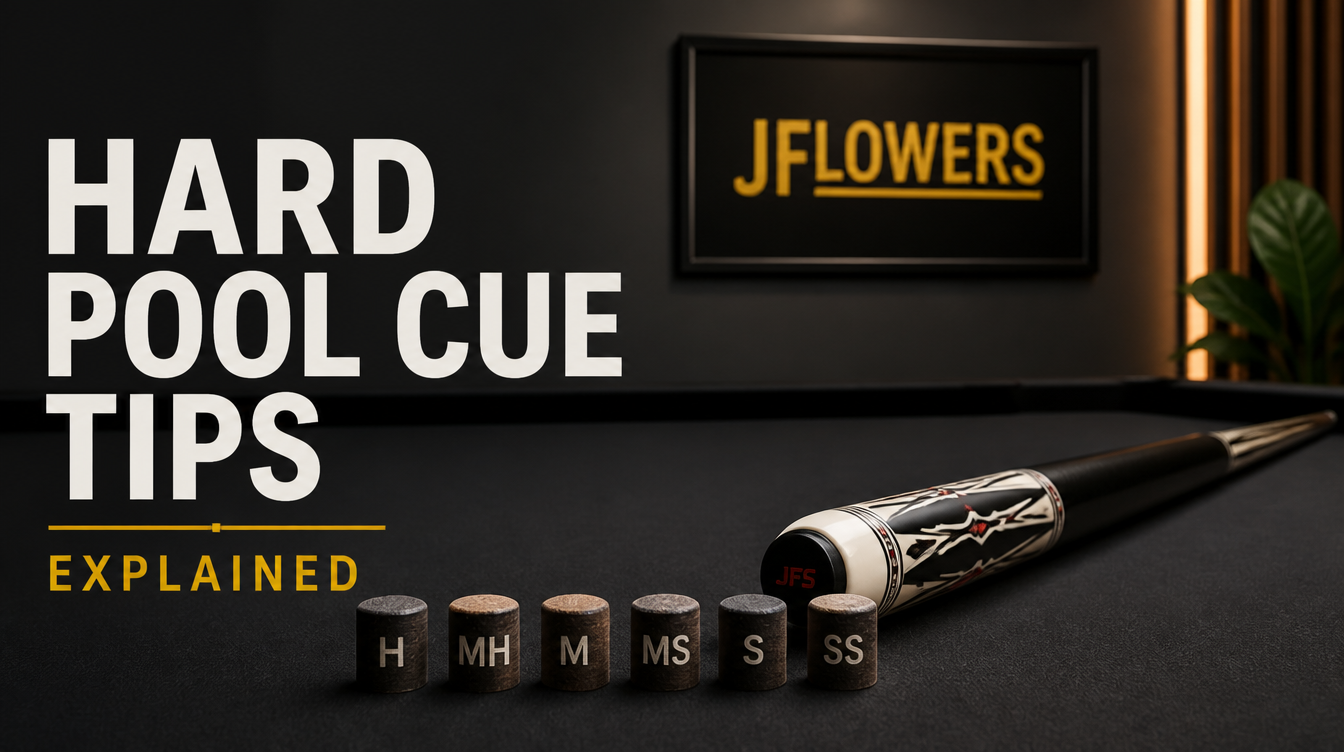
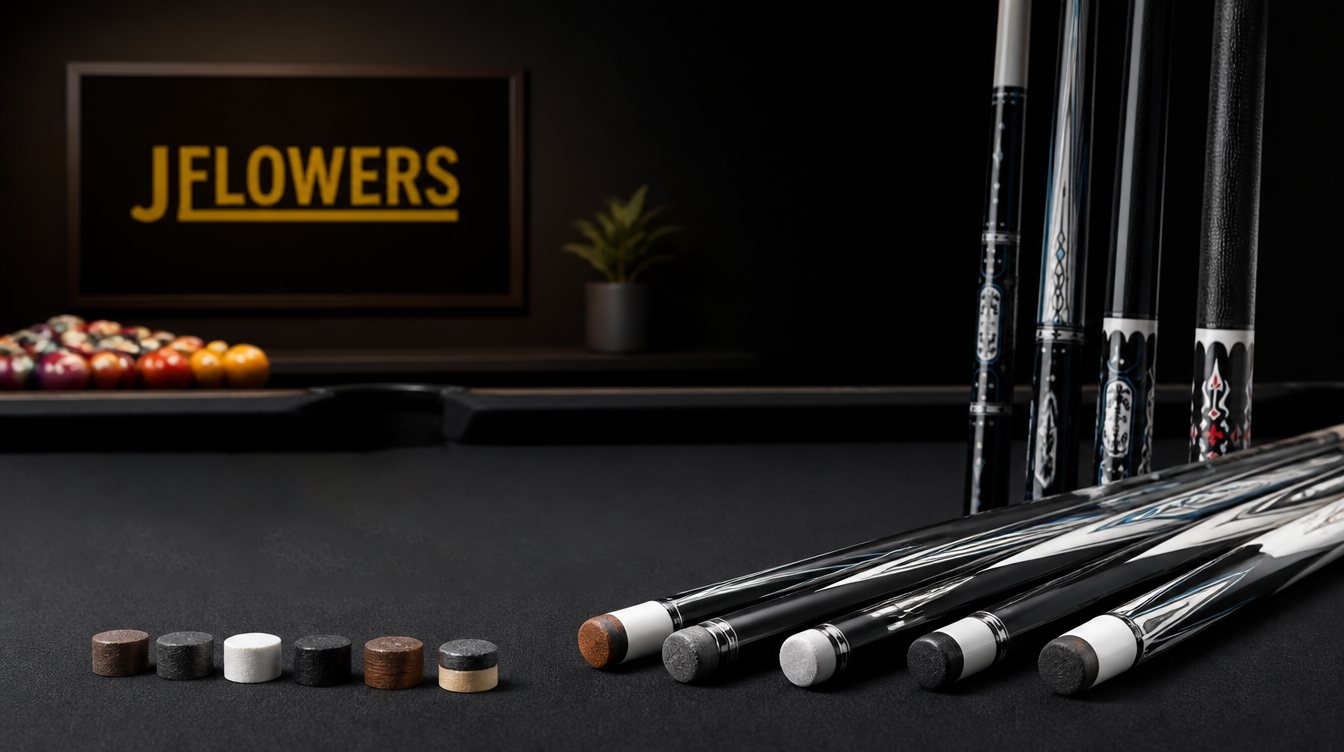
Hard tips are the least understood and most underused option in the pool cue tip market. The conventional wisdom says: soft tips for more english, medium tips for everything else, hard tips for breaks. That's partially right — but it misses the genuine case for hard tips in playing contexts, and it understates why hard tips dominate in certain formats and at certain levels of play.
Listen to this article
This guide covers everything about hard tips: what they actually do at contact, who benefits from using them, where they’re used on tour, and how to decide whether a hard tip belongs in your setup.
What Hard Tips Do at Contact
A hard tip deforms minimally during contact with the cue ball. The contact patch is smaller, the contact duration is shorter, and the feedback transmitted to the hand is crisper and more immediate than soft or medium alternatives. The practical effects:
Very precise, defined contact — you feel exactly where you hit the ball
Less tendency to miscue on extreme off-center contacts — the tip doesn’t slip as much as soft alternatives
Less spin transfer at low speeds — hard tips require more deliberate stroke technique to load spin
More direct cue ball feedback on stop shots and straight shots
Excellent power transfer for break shots — more of your stroke energy goes directly to the cue ball
Hard Tips for Break Cues
This is the most common application of hard tips in pool, and for good reason. Break shots prioritize power transfer over spin control. A hard tip — particularly a phenolic tip — maximizes the energy transfer from shaft to cue ball, producing maximum break speed from a given stroke speed.
Phenolic tips (a hard resin material rather than leather) are popular on dedicated break cues. They’re extremely hard, extremely durable, and produce the highest possible power transfer. The contact feel is very sharp and defined — nothing like a leather playing tip, but ideal for a shot where your only concern is moving the rack.
Here’s where hard tips are underappreciated: for players who have developed precise stroke mechanics, a hard tip on a playing cue can actually improve accuracy and feedback.
Advanced players who’ve built precise tip-placement technique don’t need the safety net of a soft tip’s larger contact area. They hit the cue ball where they intend to, consistently. For these players, a hard tip provides cleaner feedback, more precise contact definition, and excellent durability.
Straight pool (14.1 continuous) players are among the most common hard-tip playing cue users. The game’s precision demands and the relative absence of high-power shots make hard tips’ precision advantage valuable while their soft-tip disadvantages (less english grip) matter less.
Hard Tips and English
This is where the conventional wisdom requires nuance. Hard tips do transfer less spin than soft tips on identical off-center contacts — that part is true. But players who use hard tips don’t apply english the same way soft-tip players do. Hard tip english requires more deliberate, precise stroke technique — more pronounced off-center contact, more committed follow-through.
Players who’ve developed their english game on hard tips often describe it as cleaner and more precise. The spin they apply is intentional and committed, not dependent on tip compliance to transfer. For how tip hardness relates to english performance, see Best Cue Tip for English.
Hard Tips and Miscues
Counterintuitively, hard tips can reduce certain types of miscues. When you apply extreme english with a soft tip, the tip surface can slip across the cue ball rather than gripping — particularly on maximum english contact angles. A harder tip that deforms less provides a more stable contact geometry on these extreme shots.
Recommended Hard Tips
For playing cues: Taom hard and Kamui hard are both excellent. Consistent, well-manufactured, and significantly different from each other in feel character — Kamui hard is crisper and more defined; Taom hard is slightly warmer. Tiger hard offers good value at a lower price point.
For break cues: phenolic tips like the Tiger Everest or Predator approved phenolic options. These are not leather tips — they’re resin materials specifically designed for break performance.
Pros and Cons
Hard tips for playing cues
Precise, defined contact feedback
Excellent durability — hold shape significantly longer than soft or medium
Good power transfer for firm position shots
Less miscue risk on extreme off-center contacts
Less english grip at low speeds — requires more deliberate spin technique
Less forgiving on slightly off-center contacts than soft alternatives
Not ideal for beginners or players still developing stroke precision
Hard tips for break cues
Maximum power transfer from stroke to cue ball
Exceptional durability under break shot stress
Very consistent hit character
Not suitable for playing cue use — too harsh for position work
Expert Recommendation Hard tips on playing cues are a legitimate choice for advanced players with developed stroke precision who want cleaner feedback and longer tip life. If you’re intermediate or below, stick with medium until your stroke is consistent enough to feel the precision advantage of hard tips. For break cues at any level: hard leather or phenolic is the right choice.
Conclusion
Hard tips deserve more credit than they typically get in pool tip discussions. For break cues, they’re the obvious right choice. For advanced players with developed precision who want cleaner feedback and exceptional durability, hard tips on playing cues are a legitimate option worth trying. The key is matching tip hardness to your actual technique level — hard tips reward precision; they don’t create it.
Frequently Asked Questions
Q: Are hard pool cue tips good? Yes, for specific applications. Hard tips excel on break cues and on playing cues for advanced players who’ve developed precise stroke mechanics. Q: What is a phenolic cue tip? A phenolic tip is made from hard resin rather than leather. Used almost exclusively on break and jump cues for maximum power transfer and durability. Q: Should beginners use hard tips? No. Beginners benefit from medium tips’ forgiveness and all-round balance. Hard tips’ reduced english grip is a disadvantage when you’re still learning spin technique. Q: Do hard tips give less english? At low speeds with identical stroke technique, yes. But players who use hard tips develop more deliberate spin technique that compensates for this. Q: How long do hard tips last? Significantly longer than soft or medium tips. A quality hard leather tip can last 1-3 years of competitive play with proper maintenance. Q: What is the hardest cue tip available? Phenolic resin tips are the hardest commercially available pool cue tips. Among leather tips, grades like Kamui super-hard represent the hardest end of the leather tip market. Q: Are hard tips better for straight pool? Many serious 14.1 players prefer hard tips for the precise feedback and durability. The game’s precision demands suit hard tip characteristics. Q: Can I use a hard tip on a carbon fiber shaft? Yes. Hard tips work on both traditional ferruled and ferrule-less carbon fiber designs. The combination produces a very crisp, precise hit character.
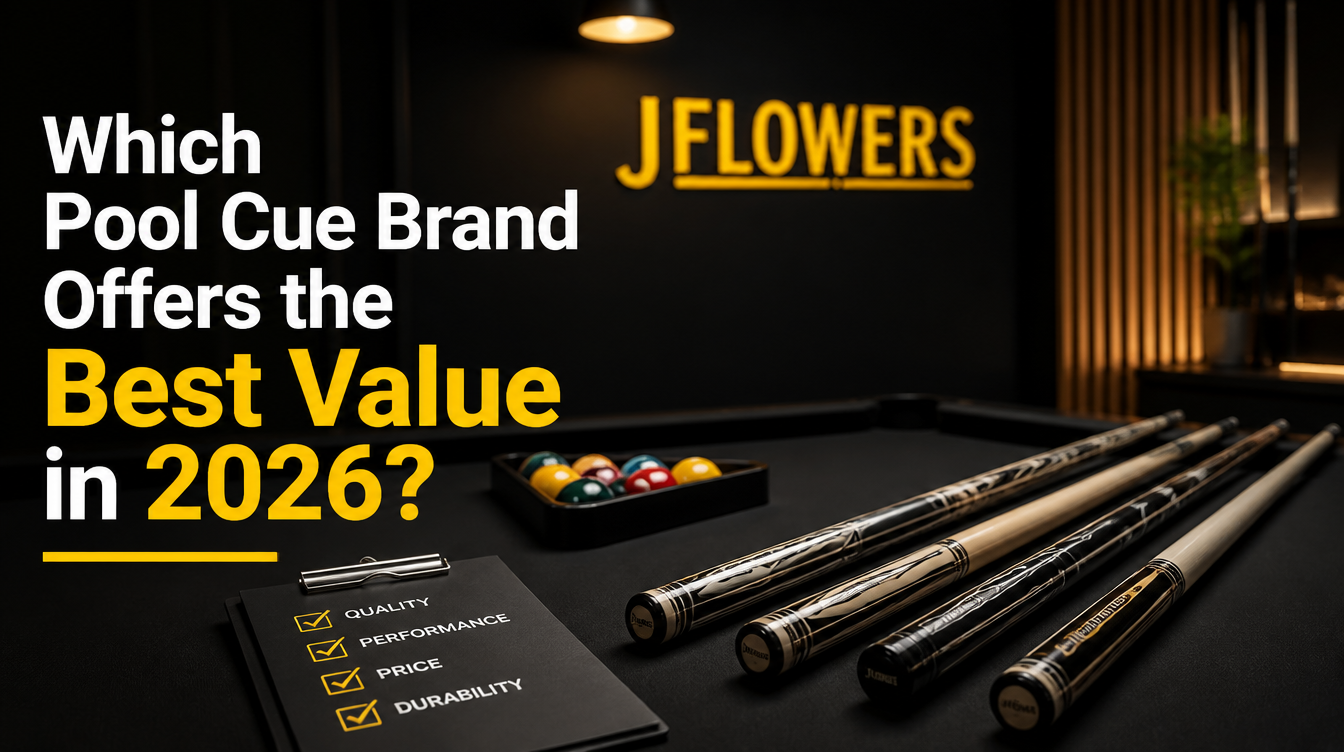
After comparing JFlowers to Predator, Mezz, McDermott, Meucci, Jacoby, Pechauer, and a dozen more brands across every price point and construction philosophy — the question that started all of it deserves a direct answer: which pool cue brand actually offers the best value for serious competitive players in
2026?
Players Technology is one of the most widely used cue brands in American pool halls. Their two-piece cues at $40-$150 have introduced millions of American players to personal cue ownership. Nearly every serious pool player in America either started on a Players cue or played against someone who did. Comparing Players to JFlowers isn’t really a direct competition — it’s a marker on the journey from beginner to serious competitor.