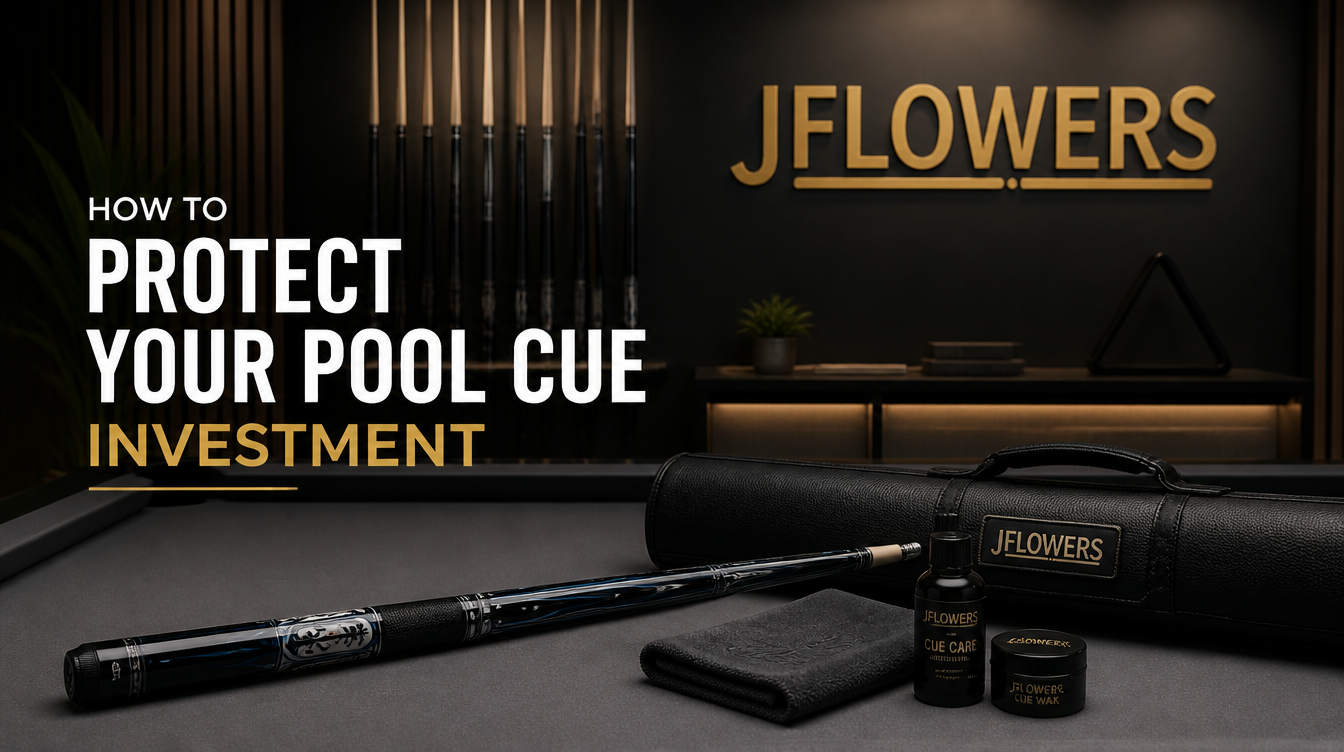
A quality pool cue is a real investment. Whether you spent $200 or $800, that cue represents deliberate money spent on something that directly affects how you play. Protecting that investment isn't complicated, but it requires thinking about a few things systematically — from the case you buy to the habits you build to the accessories you use.
Listen to this article
The complete protection strategy — from the day you buy it through years of play
This guide covers the complete protection strategy for your cue: what threatens it, what defends against those threats, and how to build the habits that keep a quality cue performing like new for years.
Understanding What Threatens Your Cue
Most cue damage comes from a small number of consistent sources. Understanding them makes it easy to know what to protect against.
Physical Impact Falls, knocks against hard surfaces, being bumped at the venue, getting thrown around in luggage. Impact is the primary threat to carbon fiber shafts (cracking, chipping) and can damage ferrules, joints, and tips on any shaft type.
Environmental Exposure (Humidity and Heat) The primary threat to maple shafts. High humidity causes wood fiber expansion; heat accelerates moisture movement. A hot car, a humid basement, a poorly ventilated storage space — all of these are genuine threats to a maple shaft’s straightness and consistency over time.
Tip Neglect The tip is the one consumable in your setup. Ignoring it — not reshaping, not replacing on schedule — degrades performance and can eventually damage the ferrule if the tip fails badly. Tip maintenance is inexpensive; tip failure is not.
Joint Wear The joint threads wear with use, particularly if the joint accumulates debris or if the cue is repeatedly assembled carelessly. A degraded joint means an unstable connection that affects performance and can eventually require repair.
Chemical Damage The wrong cleaning products — solvents on carbon fiber, inappropriate conditioners, lubricants in the joint — can damage shaft surfaces and joint hardware in ways that are difficult or impossible to reverse.
Protection Layer 1: The Right Case Everything else in your protection strategy depends on this foundation. A quality hard case eliminates or dramatically reduces impact and environmental threats simultaneously. If the case is wrong, everything else is working harder to compensate.
Hard-sided construction — the non-negotiable baseline for any cue that gets transported
Interior that holds components securely without joint pressure
Quality closures that won’t fail during regular transport
Configuration that fits your complete setup (playing cue + break cue at minimum for competitive players)
Protection Layer 2: Proper Storage Habits
The case protects the cue from the outside. Storage habits determine what the cue is exposed to inside the case.
Always case the cue — no exceptions, even for short-term storage
Store in climate-controlled spaces for maple shaft cues — avoid basements, garages, and hot cars
Store disassembled (shaft and butt separate) to eliminate joint stress during long storage
Store vertically for maple shafts — reduces gravity-related lean over time
Carbon fiber: case it, store it anywhere — environmental exposure is genuinely not a concern
Maintenance protects the cue from the gradual degradation that accumulates without active care. The routine is simple:
After every session: wipe the shaft, wipe the butt, check the tip, case the cue
Monthly: deep clean the shaft (maple), clean the joint threads, full visual inspection
Per tip schedule: replace tips proactively before they fail, not after
A cue that’s consistently maintained performs better and lasts longer than one that’s periodically repaired. The maintenance cost — in time and products — is trivially small compared to the cost of damage and repair.
Protection Layer 4: Using the Right Accessories
The accessories you use affect how well the cue holds up over time and sessions.
Quality chalk: better adhesion means less aggressive chalking motion, which is gentler on the tip over thousands of shots
Cue glove: protects the shaft surface from skin oils and reduces surface wear from the bridge hand
Proper tip tools: correct reshaping and scuffing extends tip life; improper technique shortens it
Break cue: using a dedicated break cue protects the playing cue’s tip from the most destructive shot in pool
Protection Layer 5: The Carbon Fiber Option
For players whose primary cue damage concern is environmental — particularly humidity and storage condition variability — carbon fiber eliminates the biggest threat entirely. A carbon fiber shaft doesn’t warp regardless of storage conditions, doesn’t respond to humidity or temperature, and requires almost no maintenance beyond tip replacement.
If you play a maple shaft cue and consistently deal with warp concerns, storage anxiety, or maintenance demands that you find burdensome — carbon fiber is the definitive solution to the environmental side of cue protection. The physical impact risks remain, so the case is still essential. But the environmental layer of risk is completely removed
The Cost of Not Protecting Your Cue
Players who don’t take cue protection seriously eventually deal with:
Warped maple shafts that require professional correction or replacement ($150-400 for a quality replacement shaft)
Cracked ferrules that affect tip retention and hit feel ($20-60 for ferrule replacement)
Damaged joints that create inconsistency and eventually require repair ($50-150 for joint work)
Degraded tips that affect performance for weeks before replacement — the cost here is in competitive results, not repair bills
Against these costs, a $80 quality hard case and a consistent 5-minute post-session maintenance routine are among the highest-return investments a pool player can make.
Cue Armour: Protection as a Philosophy
Cue Armour is built on the same principle that drives this article: your equipment deserves protection at the same level as the care you put into your game. The case lineup, the accessories, the apparel — everything Cue Armour makes is designed for players who take their equipment as seriously as they take their pool.
Protecting your cue investment isn’t just about the case. It’s about every layer of care you bring to your equipment — from the case to the maintenance routine to the accessories that support consistent performance session after session.
Frequently Asked Questions
What’s the single most important thing I can do to protect my cue? Always case it. A quality hard case, used consistently, eliminates the majority of cue damage risks in one action. Everything else builds on that foundation.
Is it worth protecting a budget cue the same way as an expensive one? Yes — the protection habits are the same regardless of cue cost. A well-protected $200 cue performs consistently for years. A neglected $600 cue degrades. The habits matter more than the starting price.
How do I know if my cue has already been damaged from poor storage? Roll the shaft on a flat surface — rocking indicates warp. Check the ferrule for cracks or looseness. Sight down the shaft to see any visible bend. If the joint feels loose or wobbly, that’s a sign of wear. Some damage is recoverable with professional help; significant warp often requires shaft replacement.
Final Thoughts
Protecting your pool cue investment is a system, not a single action. It starts with the right case, builds on proper storage habits, is maintained through consistent care, and is supported by the right accessories. Apply all five layers and a quality cue will perform consistently for years. Skip any of them and you’re accepting risks that compound over time.
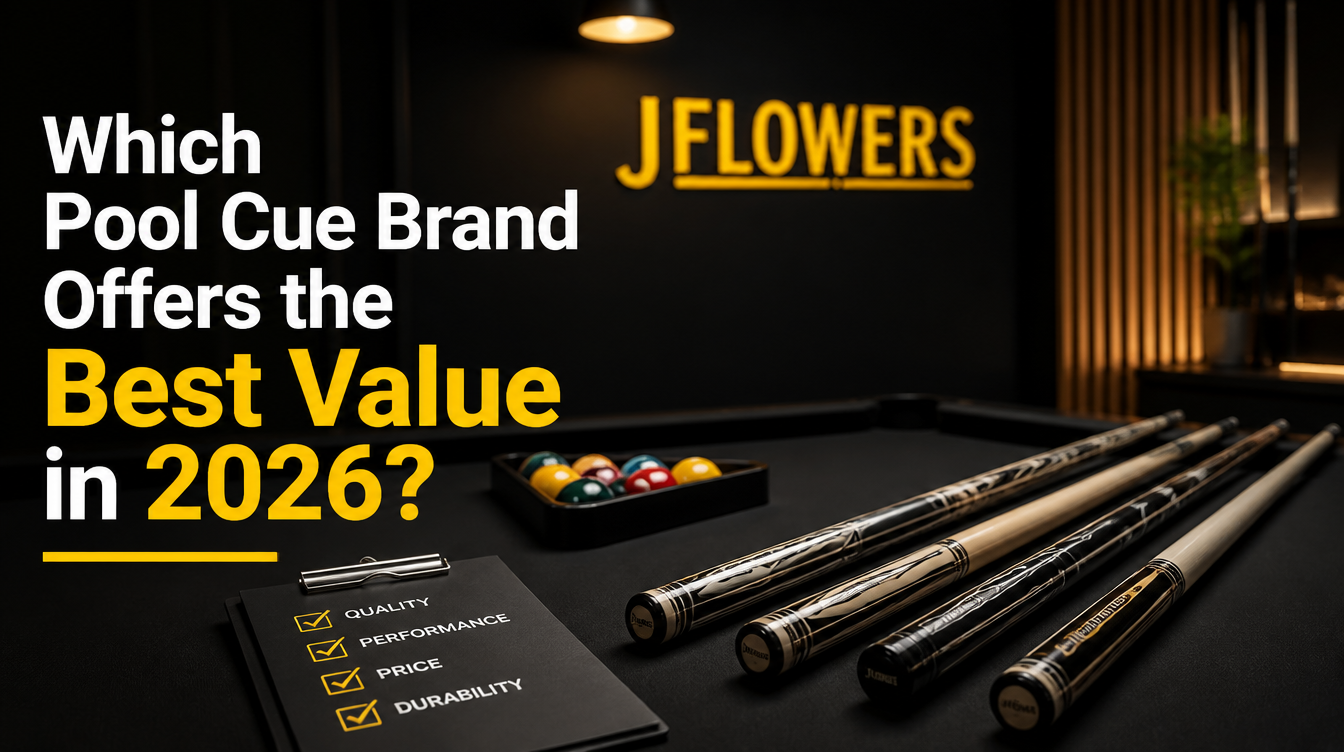
After comparing JFlowers to Predator, Mezz, McDermott, Meucci, Jacoby, Pechauer, and a dozen more brands across every price point and construction philosophy — the question that started all of it deserves a direct answer: which pool cue brand actually offers the best value for serious competitive players in
2026?
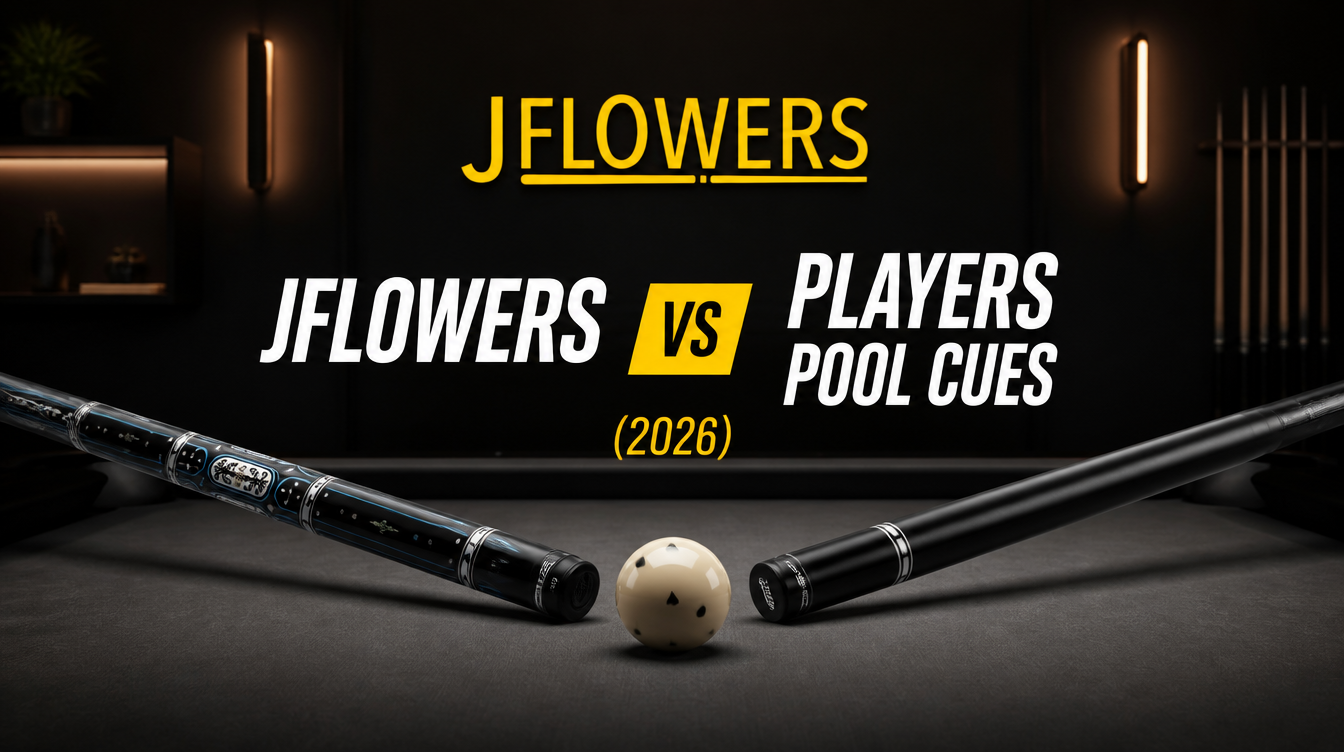
Players Technology is one of the most widely used cue brands in American pool halls. Their two-piece cues at $40-$150 have introduced millions of American players to personal cue ownership. Nearly every serious pool player in America either started on a Players cue or played against someone who did. Comparing Players to JFlowers isn’t really a direct competition — it’s a marker on the journey from beginner to serious competitor.