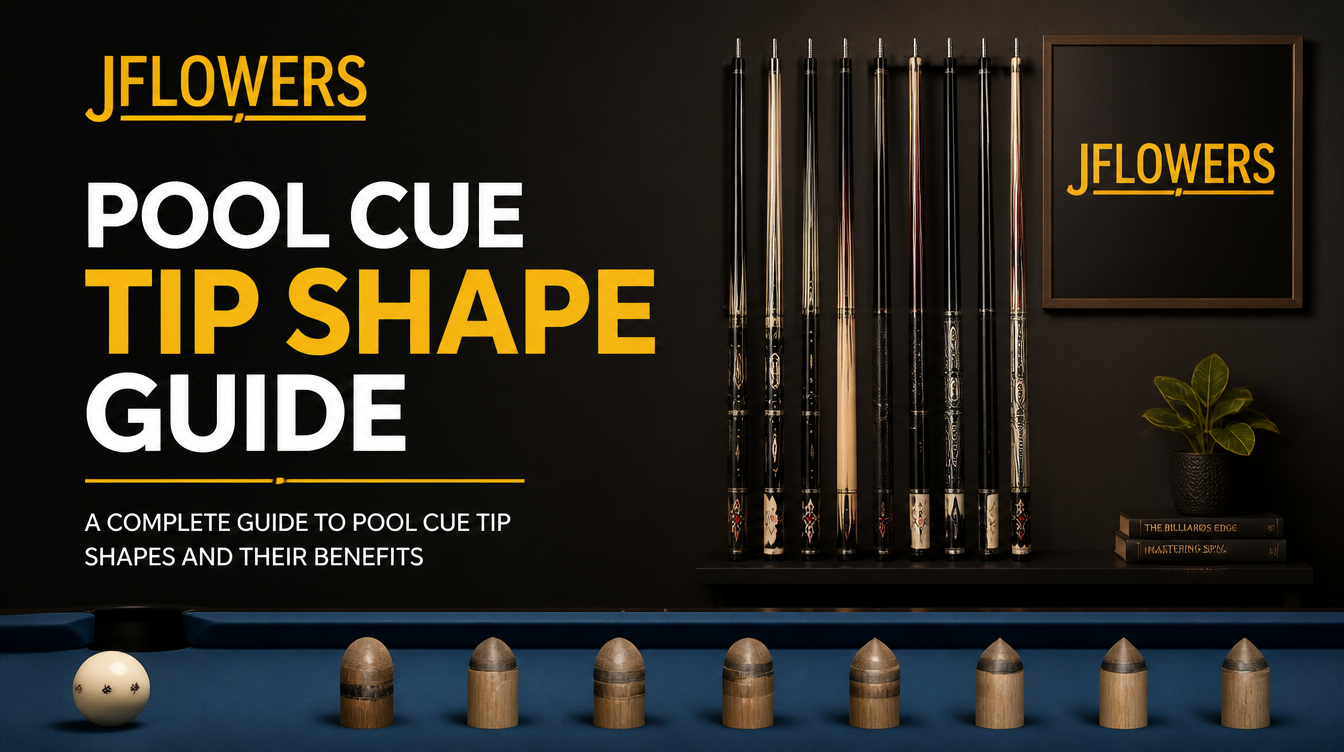
Most players think about tip hardness and brand but give almost no thought to tip shape — the curvature of the tip's contact face. That's a mistake, because tip shape directly affects your english performance, your miscue risk, and the consistency of your center-ball contact.
Listen to this article
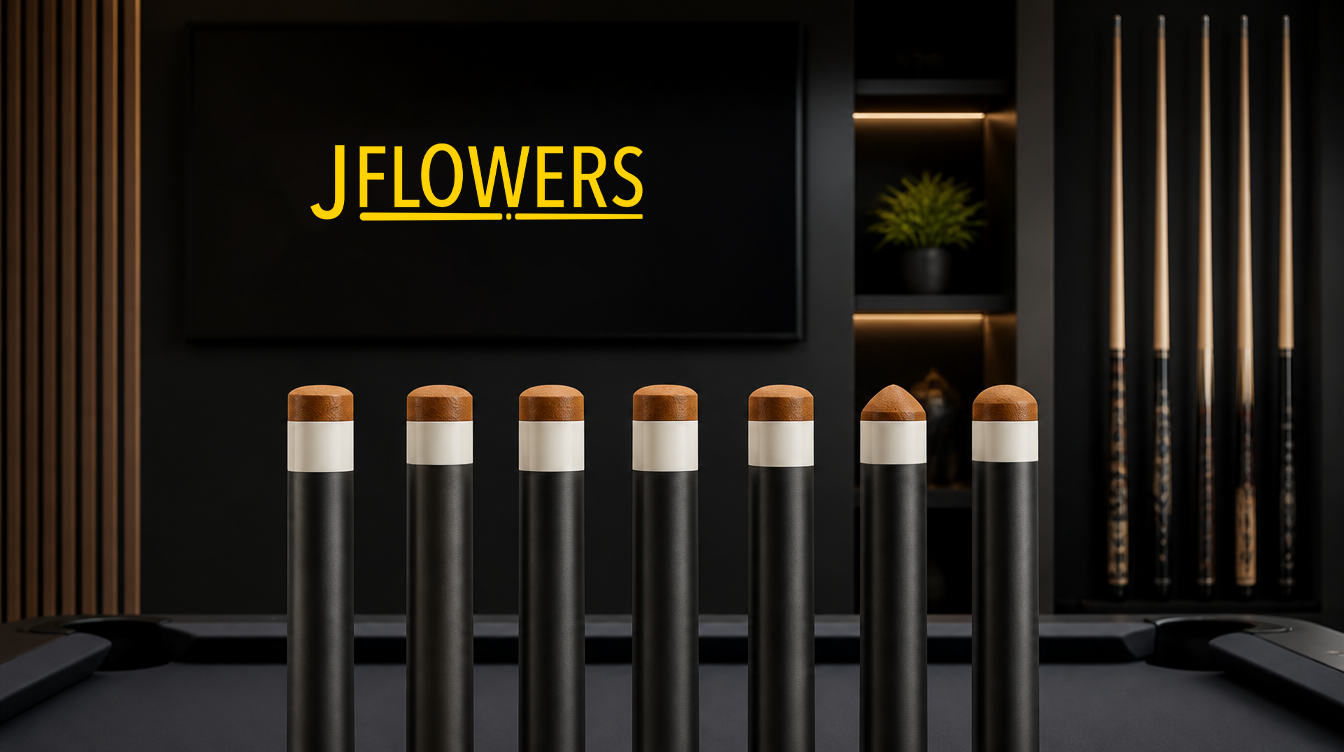
This guide covers the three main tip shapes — flat, nickel radius, and dime radius — what each one does at contact, and which shape you should be maintaining on your tip right now.
Why Tip Shape Matters
The tip’s curvature determines the geometry of how it contacts the cue ball. A flat tip hits the cue ball on a flat surface across the full tip diameter. A curved tip contacts the cue ball at a single point — the apex of the curve. This single-point contact geometry has significant consequences for off-center shots.
When you apply english, you’re striking the cue ball away from center. The angle at which the tip contacts the cue ball at that off-center point depends on the tip’s curvature. A flat tip contacts off-center balls at an increasing angle, which increases miscue risk. A curved tip contacts off-center balls at a more consistent geometry, maintaining better tip-to-cue-ball grip across the english range.
Flat Tip
A flat tip has no curvature — it contacts the cue ball on a flat surface. Flat tips are almost universally considered wrong for playing cues. The flat geometry means that even slightly off-center contacts become less consistent, and maximum english is much harder to apply without miscuing. If you roll your tip on a flat table and see the flat face, your tip needs shaping immediately. See How Often Should You Shape a Cue Tip? for the shaping cadence you should be following.
Nickel Radius
The nickel radius is the most common playing tip shape. The curvature matches the radius of a US nickel coin — a moderate, well-rounded dome that sits between flat and the more aggressive dime radius. What nickel radius provides: good contact geometry for the full english range, forgiving on slightly off-center center-ball shots, consistent contact across different shot types. It’s the all-round standard for good reason — it suits the balanced mix of straight shots, position english, and safety play that defines most pool formats.
Most Taom and Kamui tips are best maintained at nickel radius. The shape provides consistent performance across the formats where these tips excel.
Dime Radius
The dime radius matches the radius of a US dime coin — smaller than a nickel, producing a more pronounced dome. The dime radius concentrates the contact point more aggressively, which has specific advantages and trade-offs.
Advantages: maximum english range is achievable with less miscue risk because the curved tip contacts the cue ball at a consistent angle even at extreme off-center positions. Many serious english players prefer dime radius for this reason.
Trade-offs: center-ball contact is slightly less consistent on a more pronounced dome, and stop shots require more precise stroke because the contact area on a center hit is smaller. Players who play a lot of center-ball stun shots sometimes find dime radius less forgiving than nickel.
Which Shape Should You Use?
For most competitive players: nickel radius is the right default. It’s the standard for good reason — it performs well across the full range of shots that pool demands. Maintain it consistently and you’ll have reliable contact geometry on every shot.
Consider dime radius if: you play a lot of heavy english work, you play on tight pockets where extreme english position routes are necessary, or you’ve consciously decided the dime radius suits your style after testing both.
Avoid flat entirely. If your tip has gone flat from play without reshaping, it needs to be domed before your next session. For the step-by-step reshaping process, see Tip Shape Guide.
How Tip Shape Degrades
Tips naturally flatten over time from the repeated impacts of play. The center of the tip gets compressed more than the edges, gradually reducing the dome until the tip becomes flat. The rate at which this happens depends on tip hardness (soft tips flatten faster), play volume, and stroke style. Regular shaping — once every few sessions for competitive players — maintains the tip radius you’ve chosen and keeps your contact geometry consistent. Neglecting this is one of the most common maintenance mistakes players make. See Common Pool Cue Maintenance Mistakes for the full list of maintenance errors to avoid.
Tools for Shaping
A tip shaper/scuffer is the right tool — a small tool with a curved abrasive surface that lets you shape the tip to a specific radius. Quality tip shapers have different profiles for nickel and dime radius. Don’t use sandpaper alone for shaping — it’s hard to maintain consistent curvature. A dedicated tip tool is a $5-$10 investment that protects a $20-$30 tip.
Pros and Cons
Nickel radius
Best all-round performance for most playing styles
Consistent contact on both center-ball and english shots
Most forgiving on slightly off-center center-ball shots
Slightly less maximum english range than dime radius
Dime radius
Maximum english range with reduced miscue risk
Consistent contact geometry on extreme off-center shots
Less forgiving on center-ball contact than nickel
Requires more precise stroke on stop shots
Flat tip
None — avoid entirely
Expert Recommendation Maintain nickel radius consistently as your default shape. Invest in a quality tip shaper/scuffer and use it briefly after every few sessions to maintain the radius. If you’re playing heavy english and want to explore dime radius, try it for a month and compare — the difference is real and you’ll know quickly if it suits your game.
Conclusion
Tip shape is one of the most neglected aspects of cue maintenance and one of the most impactful. A flat tip is actively working against your english game. A well-maintained nickel radius keeps your contact geometry consistent on every shot — center ball and english alike. Buy a tip shaper, use it every few sessions, and stop leaving free performance on the table through maintenance neglect.
Frequently Asked Questions
Q: What shape should a pool cue tip be? A nickel radius dome is the standard for most competitive players. A dime radius is preferred by some players who use heavy english. Q: Why is a flat tip bad? A flat tip contacts the cue ball at an increasingly poor angle on off-center hits, dramatically increasing miscue risk and reducing english performance. Q: What is the difference between nickel and dime radius? Dime radius is more curved than nickel. Dime provides better maximum english geometry; nickel is more forgiving on center-ball shots. Q: How do I shape my cue tip? Use a dedicated tip shaper/scuffer tool with a nickel or dime radius profile. Light, even strokes across the tip face until the desired dome is achieved. Q: How do I know if my tip needs reshaping? Roll the cue on a flat table and look at the tip from the side. It should be visibly domed. If it looks flat or has gone mushroom-shaped, reshape immediately. Q: What tip shape do professional players prefer? Most professionals maintain nickel radius. Some nine-ball players who use extreme english work prefer dime radius. Q: Does tip shape affect english? Yes. A domed tip (nickel or dime radius) provides better contact geometry on off-center shots than a flat tip, allowing more reliable english application.
After comparing JFlowers to Predator, Mezz, McDermott, Meucci, Jacoby, Pechauer, and a dozen more brands across every price point and construction philosophy — the question that started all of it deserves a direct answer: which pool cue brand actually offers the best value for serious competitive players in
2026?
Players Technology is one of the most widely used cue brands in American pool halls. Their two-piece cues at $40-$150 have introduced millions of American players to personal cue ownership. Nearly every serious pool player in America either started on a Players cue or played against someone who did. Comparing Players to JFlowers isn’t really a direct competition — it’s a marker on the journey from beginner to serious competitor.