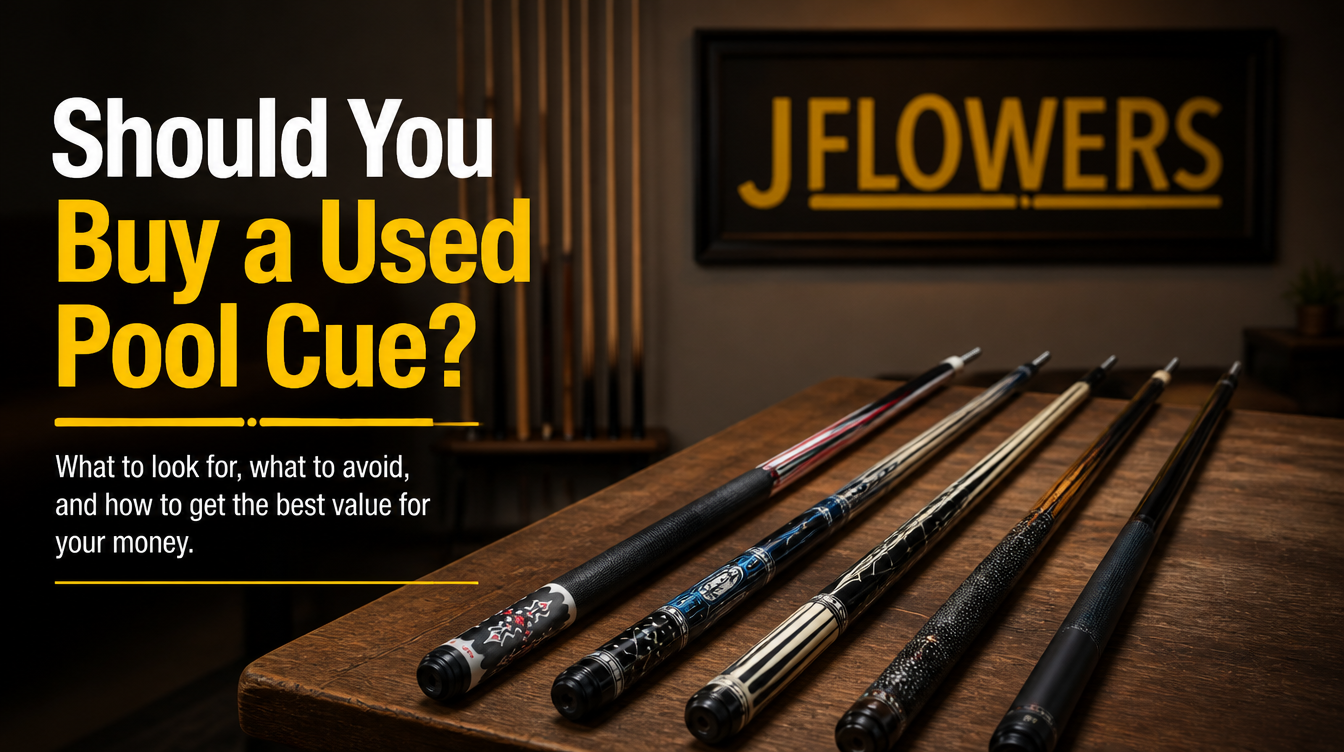
The short answer: buying used can be smart — if you know what you're doing. If you don't, you're often
better off buying new in the $200-$400 range from a brand like JFlowers and knowing exactly what you're
getting.
Listen to this article
The used cue market is bigger than ever. Facebook Marketplace, eBay, AZBilliards classifieds, local pool halls — there’s no shortage of players selling off old sticks. And the deals can look good on paper. A cue that retailed for $600 listed at $200 feels like a score.
But used pool cues come with real risks that aren’t obvious in photos. A warped shaft, a cracked ferrule, a loose joint, or a tip that’s been neglected for two years can turn a bargain into a money pit. This guide walks you through exactly what to look for, what red flags to avoid, and when buying used actually makes sense for your wallet and your game.
When Buying Used Makes Sense
There are legitimate reasons to buy a used pool cue, and experienced players do it all the time.
You Know What to Inspect If you’ve been playing long enough to roll a shaft on a flat table and immediately identify warp, feel a joint for play, and know what a mushroomed tip looks like before you buy — used is a viable market for you. Experienced players pick up quality cues at significant discounts regularly.
You’re Targeting a Specific Model Some cues are discontinued, limited edition, or simply not available new anymore. The used market is the only place to find them. If you know exactly what you want and the used listing is for that exact model in verified good condition, it can be a strong buy.
High-End Cues at Mid-Range Prices A $700 Predator or Pechauer in excellent used condition listed at $350 is genuinely good value — if the shaft is straight, the joint is tight, and the previous owner took care of it. Understanding how to protect your pool cue investment helps you evaluate whether the seller did the same.
When Buying Used Is a Bad Idea
You’re a Beginner If you don’t yet know what a straight shaft feels like versus a warped one, or what a tight joint feels like versus a sloppy one, you’re not equipped to evaluate a used cue accurately. Sellers on Marketplace aren’t always dishonest — but they often genuinely don’t know there’s a problem. Buy new in the $150-$300 range instead and know exactly what you’re starting with.
You Can’t Inspect It in Person Photos don’t show shaft warp. Photos don’t show joint play. Photos don’t show a ferrule that’s starting to crack. Online-only purchases of used pool cues are high risk unless the seller has a solid track record and you’re buying from a reputable platform with returns. If you can’t hold it and roll it, you’re gambling.
The Price Isn’t Actually That Low A used cue listed at 70-80% of retail price isn’t a deal. You’re paying near-new money for unknown wear, unknown storage history, and no warranty. If the gap isn’t at least 40-50% off retail for a cue in verified good condition, new is the smarter buy.
What to Inspect Before You Buy
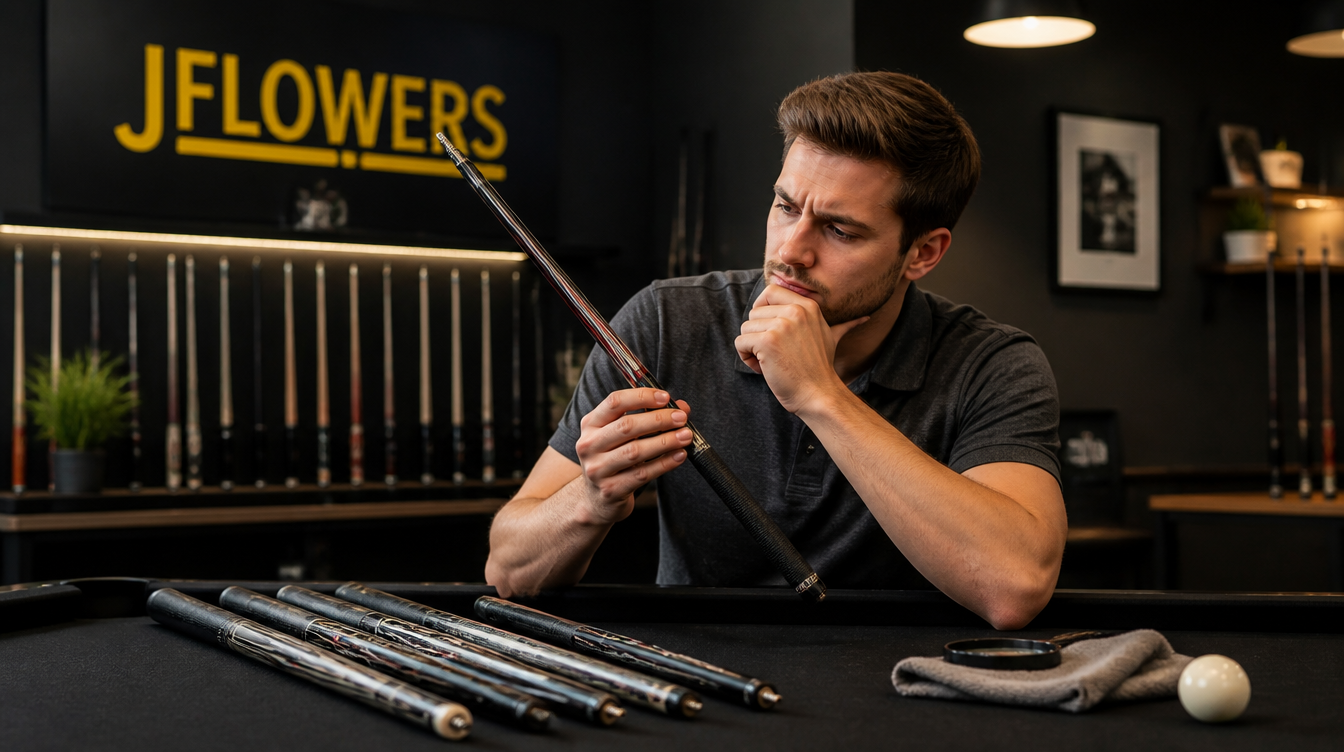
Roll the Shaft on a Flat Surface This is the first and most important check. Place the shaft on any flat table and roll it slowly. A straight shaft rolls smoothly and evenly. A warped shaft wobbles or rocks. Even subtle warp is visible this way. A warped shaft is not fixable to competition-grade straightness — walk away. Knowing what common pool cue maintenance mistakes cause warping helps you assess how the previous owner stored the cue.
Check the Joint Thread the shaft onto the butt and feel for play. Twist the shaft gently after fully seating it — any wobble or looseness is a problem. Joint wear is difficult to reverse. A sloppy joint undermines aim consistency on every single shot, and it usually means the cue has been assembled and disassembled thousands of times.
Inspect the Ferrule Look for cracks, chips, yellowing, or deformation. The ferrule should sit flush and even around the shaft’s tip end. Any cracking means the ferrule needs replacing before the cue is playable — factor that cost into your offer.
Check the Tip A flat, hardened, mushroomed, or cracked tip needs replacing before the cue is usable. This is inexpensive to fix ($15-$25 for a quality tip), but check signs your cue tip needs replacing so you know what you’re looking at and can price the repair into your offer.
Inspect the Wrap On linen-wrapped cues, look for unwrapping, gaps, or soiled sections that have absorbed years of hand oils and chalk dust. On leather wraps, check for cracking, peeling, or uneven wear. Wrap replacement is possible but adds cost.
Check the Finish and Inlays Look for deep scratches, chips in inlays, lacquer peeling, or cracks in the wood at the joint end. Cosmetic wear is acceptable. Structural damage is not.
Reassemble and Feel the Balance Assemble the full cue and hold it in your normal playing position. The balance should feel natural and consistent. A cue that feels tip-heavy or butt-heavy is often a sign of modifications or poor original manufacturing. To understand what good balance should feel like, see how cue balance affects performance.
How to Clean a Used Cue After Purchase
If you do buy used, cleaning before play is non-negotiable. Previous owners’ chalk buildup, hand oils, and general grime affect shaft performance and feel. Our full guide at How to Clean a Pool Cue walks through shaft and butt cleaning properly.
Used Carbon Fiber Shafts: A Different Set of Rules Used carbon fiber shafts are generally a safer buy than used maple shafts. Carbon fiber doesn’t warp, doesn’t absorb moisture, and doesn’t develop the grain issues that plague even quality maple over time. The things to check on a used carbon shaft are: tip condition, ferrule integrity (on shafts that have one), and joint end for any cracks or chips.
A used JFlowers SMO shaft in good condition is worth buying at the right price. The shaft’s carbon fiber construction means the performance degradation you see in used maple simply doesn’t apply.
The New Cue Alternative
Here’s the honest reality: in the $200-$400 range, the new cue market from brands like JFlowers, McDermott, and Predator is extremely strong. For the same money you’d spend on a risky used cue, you can get a new cue with a straight shaft, a warranty, and no unknown history. If you’re trying to decide between a $250 used cue of uncertain condition and a $280 new JFlowers cue, the new cue wins on certainty every time. For more on what your money buys at each price point, see How Much Should You Spend on a Pool Cue?.
Pros and Cons
Buying a used pool cue
Significant savings on high-end models if condition is verified
Access to discontinued models or rare finds
Good option for experienced players who know how to inspect
Shaft warp and joint wear are hard to spot without in-person inspection
No warranty — you own whatever problems come with it
Many online listings misrepresent condition, intentionally or not
Cost savings often disappear after tip, ferrule, and wrap repairs
Buying new
Known condition — straight shaft, tight joint, quality tip from day one
Warranty protection if something goes wrong
Strong options in the $200-$400 range from reputable brands
Higher upfront cost than a used listing
No collector or discontinued model availability
Expert Recommendation For players who know what they’re inspecting and can do it in person — used cues represent real value, especially in the $400+ original price range. For everyone else: new in the $200-$400 range from JFlowers, McDermott, or Predator is the smarter, safer investment. A $300 new JFlowers cue beats a $200 used mystery cue every time.
Conclusion
Buying a used pool cue can be a smart move — but only when you know what you’re inspecting and can do it in person. The risks are real and often invisible in photos. If you’re an experienced player who can evaluate a cue on the spot, the used market offers genuine deals. If you’re earlier in your playing journey, spend your money on a new cue from JFlowers or McDermott in the $200-$350 range and know exactly what you’re starting with. Equipment uncertainty is the last thing you need when you’re trying to improve your game.
Frequently Asked Questions
Q: Is it safe to buy a used pool cue? It can be — if you inspect it in person and know what to look for. Online purchases of used cues without inspection are risky. The main concerns are shaft warp, joint wear, ferrule cracks, and tip condition. Q: How do you check if a pool cue is warped? Roll the shaft slowly on a flat table. A straight shaft rolls smoothly. Any wobble, rocking, or uneven movement indicates warp. Even subtle warp is visible this way. Q: What is a fair price for a used pool cue? A used cue in good condition should sell for 40-60% of its original retail price. Anything above 70% of retail is not a meaningful deal — you’re better off buying new. Q: Can a warped pool cue shaft be fixed? Sometimes minor warp can be reduced with careful storage in controlled humidity, but a significantly warped shaft is not fixable to competitive standards. It’s a walk-away condition when buying used. Q: Are used carbon fiber shafts worth buying? Generally yes — carbon fiber doesn’t warp or develop the grain issues that affect used maple shafts. Check the tip, ferrule (if present), and joint end for chips or cracks. Q: Where is the best place to buy a used pool cue? AZBilliards classifieds, local pool halls, and established billiards retailers who take trade-ins are the most reliable sources. eBay and Marketplace are higher risk without in-person inspection. Q: What parts of a used cue can be easily replaced? Tips and ferrules are the most commonly replaced parts and are relatively inexpensive. Joint pins can sometimes be replaced. Shaft warp and joint thread wear are harder and costlier to address. Q: Should a beginner buy a used pool cue? No. Beginners don’t yet have the experience to evaluate cue condition accurately. A new cue in the $150-$300 range from a reputable brand is a far better starting point. Q: Is it worth buying a used Predator cue? Yes — if you can inspect it in person and the shaft is straight with a tight joint. Predator cues hold their value well, so verify you’re getting a meaningful discount before committing. Q: What should I do with a used cue after buying it? Clean the shaft and butt thoroughly, replace the tip if needed, and check the ferrule and joint carefully. Our guide on cleaning at https://jflowerscues.com/pool-cue-reviews-buying-guides-expert-advice/how-to-clean-a-pool-cue/ covers the process.
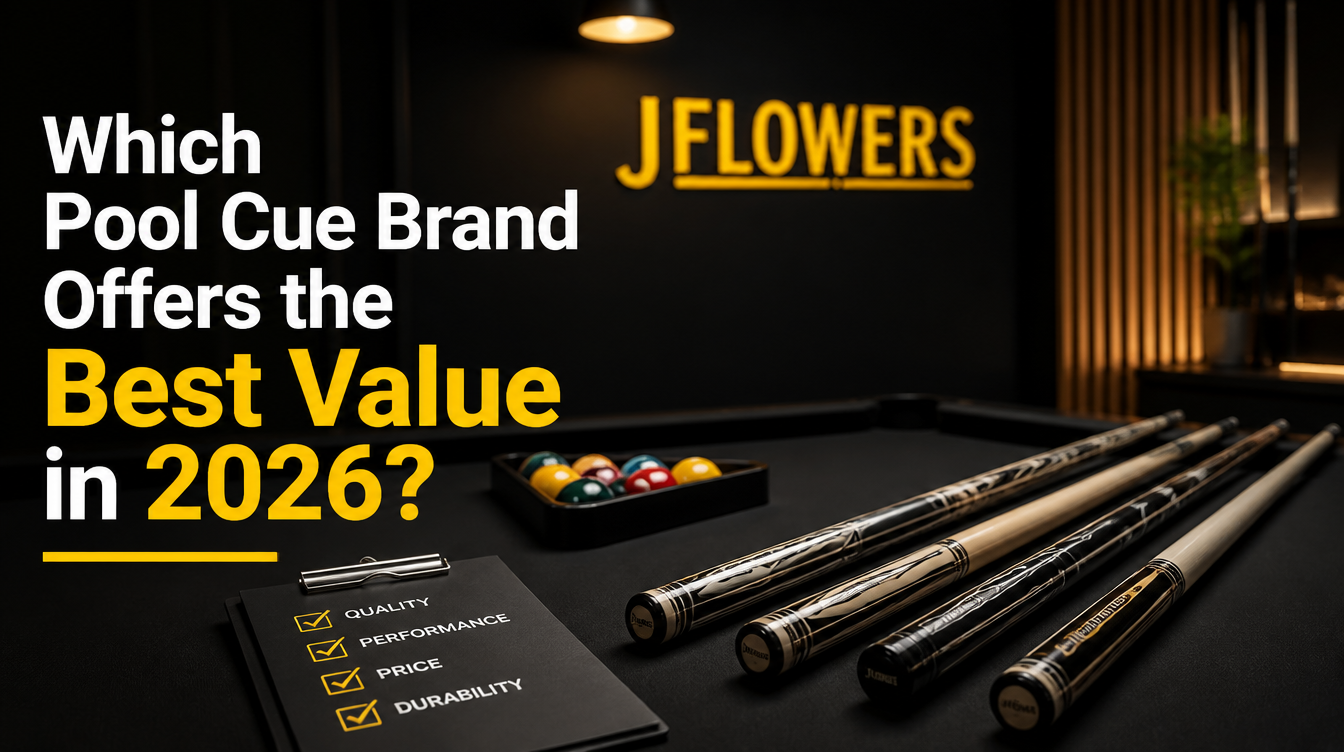
After comparing JFlowers to Predator, Mezz, McDermott, Meucci, Jacoby, Pechauer, and a dozen more brands across every price point and construction philosophy — the question that started all of it deserves a direct answer: which pool cue brand actually offers the best value for serious competitive players in
2026?
Players Technology is one of the most widely used cue brands in American pool halls. Their two-piece cues at $40-$150 have introduced millions of American players to personal cue ownership. Nearly every serious pool player in America either started on a Players cue or played against someone who did. Comparing Players to JFlowers isn’t really a direct competition — it’s a marker on the journey from beginner to serious competitor.